

 Apple Podcasts
 Spotify
 Castro
 RSS Feed
 175. Cynicism in Healthcare: New Surgeon General, Critiquing Viral Health Experts & Getting on Board with AI

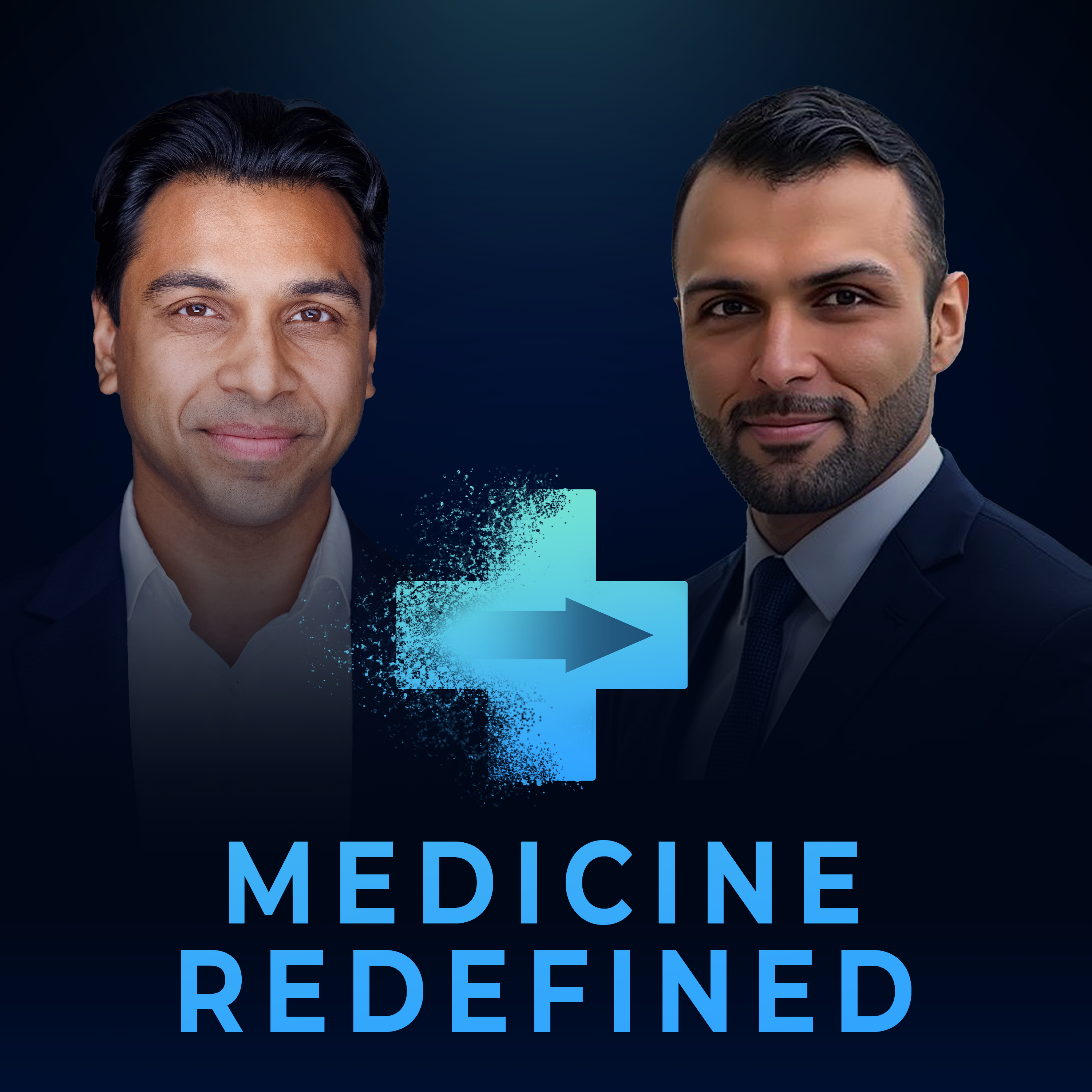
In this episode, Darsh and Altamash talk about why so many people feel let down by the healthcare system. They break down where trust has gone wrong, how rising costs and confusing policies leave both patients and doctors frustrated, and why it feels like "no one is coming to save you". They also get into AI’s growing role in medicine, the recent Surgeon General pick, and what it means to get on board with AI.
00:00 Introduction (Dr. Darsh hates on LeBron)
00:49 Setting the Stage: Healthcare System Frustrations
01:58 Theme 1: Erosion of Trust in Healthcare
15:12 Theme 2: Financial Burden and Affordability Crisis
23:32 Theme 3: Systemic Pressures and Burnout
31:28 The Future of Medical Education
31:48 AI in Medical Decision Making
33:15 The Rapid Advancement of AI
33:46 AI's Impact on Jobs and Society
37:24 Healthcare System Challenges and Layoffs
39:43 Controversial Surgeon General Nomination
47:22 Functional Health and Longevity Market
55:49 Accountability in Health and Society
Resources mentioned in the show:
-
30:14 People referenced:
-
47: 57 Function health
-
DEEP DIVE:
-
18:27 Laws and regulations for price transparency:
-
24: 17 Average doctor salary
-
37: 43 Stand up for science
Thank you for listening, let us know your thoughts!
Welcome to Medicine Redefined, a podcast focusing on helping you reclaim ownership of your health. I'm Dr. Darsha, and I'm Dr. Altamash Raja, where your hosts, hair to challenge conventional practices and uncover the stories behind pioneers shaping the future of medicine. Our conversations not only focus on the individual level to dissect common practices for health optimization, but also zoom out to enhance systemic change. Join us as we look to break the status quo, move the needle forward, and put the help back in healthcare. Dr. Darsha, we're back at it. Back. How you doing, man? I'm good, man. What's been up with you is you've been leading the hate club for LeBron James. Other than that, what else is going through you? Always. Always leading that club. You should see my Facebook. It's hilarious. All these jokes on LeBron and all these memes. You're putting up the jokes? I'm not putting up all I just. Because I like them, the algorithm just keeps feeding them to me. It's like tennis videos, and then LeBron hating memes. There's that. That's funny. Yeah, life's good, man. Can't complain. It's hot here now in Tampa, so. I see you were at a hoodie, I was like, yeah. Is it right now? It's like 90s, yeah. It is chilly here. And that's funny, because when I was booking that trip to come down in July, which of course you're not going to be there. But you know what? Dude, I was going to say, I was like, man, when we get down there, this will be like, I was like, we're in record, an in-person session, because we have yet to do that. I'll never have the audience listening to it. Given that a weven. Yeah. All right, man. So what are we talking about today? I think this is a topic. I texted you about this, maybe, I don't know, two months ago. It's been a while since we did this, and just set the stage for the audience. I was having a conversation, a dinner conversation with a couple of friends, and they were just sharing their experiences, their journeys, and their interactions with the healthcare system, and their frustrations. And I tried to empathize with them as much as possible, but I also realized how misinformed they were in terms of what their expectations were of the healthcare system. And I was like, man, that's crazy. And so I just got to thinking about how people have this. I'm guessing high expectations. Yeah. Yeah. Yeah. And I want to talk to you about that in terms of accountability, because people like, there's that thing going on, and nobody's coming to save you and that kind of stuff. And so people have these, just they're expecting things that are just like, that's not what the system is created for, and that's not to say the system works for whatever it is created for, but still. And so I got to be thinking that people have this illusion of what it should be, and they just don't have any understanding, despite the very limited to no barriers to access to information, people just don't have that. And so I wanted to talk about that. And as I was thinking about this, I characterized it for me at least in three separate themes. Theme one, as I'm thinking about medical disillusionment, I'm thinking about just the general distrust and the erosion of trust in the healthcare institutions over the last couple of years. Another component I think ends up being something we've talked about quite a bit is the financial burden and the affordability crisis, right, something that the political parties will talk about that a lot. And the last but not least, certainly the great resignation, as you've talked about, or just the burnout and the systemic pressures that are not only on patients, but also on providers. With that, any thoughts on that, or where do you want to again, or if you have anything to add to that, that we can maybe hopefully shed some light for people? No, that's why I like the three pockets. And I think it's funny because I had a patient that discharged today that this fits in nicely with disillusionment and the wife of the patient, expecting service or she's icon for the business world. I expect service today. And yesterday I had a teller. I was like, listen, this is not business, this is healthcare. Something will go wrong with your DME, your medical equipment, your something with their hospital's care. All the puzzle pieces will not fit. That's when you need to call us back. That's the service I can give you, right, is letting you know that you're not going to get 100% of what you want. But yeah, let's take it off in whatever bucket and we'll chime in and give some examples on my end if I can. I think maybe starting up with just the erosion of trust. I think that's the low hanging fruit, the declining public confidence in the healthcare system, particularly after the COVID-19 pandemic. Although it's not as bad, I came across this 2024 Hopkins study where they looked at public trust fell from 71.5% 2020 to 40% in 2024. And yeah, of course some of that is just everything that happened with the COVID-19 pandemic, which was like maybe the greatest fumble by the healthcare system in terms of public communication, scientific communication. And that's actually even more pronounced in marginalized communities, right? We have these systemic inequities, people who already don't have access to that. And when they do have get access, unfortunately, sometimes are discriminated against for a variety of reasons. We can't get into that depending on what you want to do. You add on to social media and sometimes how rampant information spreads, right? Everything that's been going on with insurance companies, something we've talked about lately. You sent me something about UAC being investigated for Medicare stuff. I'll let you talk about that. And you put on the stuff that's coming up with pharmaceutical companies and only about 15% of Americans have trust in the pharmaceutical companies. And greater than 50% believe that these companies prioritize profit over curing diseases, which is probably 99% true. And so I think these things, particularly over the last couple of years, have really added a lot to that. And another thing that I was thinking about that people don't often think about is, are you familiar with the 21st Century Cures Act when they make the patient results accessible to them immediately? I think I've heard about it in passing, but I'm not at all in the details too. So you don't do outpatient, but you might have experienced this in residency training. If I order labs on a patient, like I did some blood work on a patient today, the likelihood is that their CBC is going to come back in less than 24 hours. It's going to result. And I'm not checking their labs on Saturday, but they'll get an alert in their portal, or they're going to get an email with lab core and stuff that, hey, your results are available, and they're going to go look at those labs. So let's just say they get them 8 a.m. tomorrow morning. If there are some abnormalities in there, if there's something of concern, they may send me a message. They may send me a message, which I might get to by Monday, hopefully, at the very least, they'll try to get to it by Tuesday, depending on where it falls into my queue. But that's a lot of time. And this was, this 21st century curious act. This was part of it to limit providers and healthcare professionals to block access, as they said, in the verge of the law from what I remember to patients, right? Like they should have full transparency. They should have that. The problem is that when you are not informed and when you're not knowledgeable and you don't understand the context of medicine and physiology, that can be a source of pain for 48 hours or however long it takes for me to have a conversation with this person. If it is something weird, you add Google to the mix. It makes it that much worse because now they're thinking they have cancer. Now you're adding, hopefully, my hope is, we'll talk about this later, that AI is maybe just making it better for them, but it could also be making it worse. I think that's also actually a big thing getting back to them because patient expectations coming back to that is people will send me a message. And this is at the institution that I work at, where if you send a message to somebody through my chart, so that's the electronic way you can communicate with your doc, I think it says the doctor has 72 business hours and if it's an emergency or you need urgent care, go to the hospital. They still expect a response in six. All concierge medicine now. Yeah. Yeah. And what's interesting about that, and I don't even know if that's fair at all, that when they're not getting the response, because that person, the problem is urgent. So even if that person thinks they're being reasonable, if they don't get a response within 24 hours, they're like, why you had the next business and why didn't you get back to me? And I think that I have 60 of those messages that I have to address to, and I am just a human being. And I think that kind of stuff, really these expectations coming back to also sets up worsening trust. Yeah. Totally agree. The amount of patients that I have come in that try to find information, even in the inpatient setting, and saying, hey, listen, this person was not available because we have 20 other patients, 30 other patients to look after. And the amount of times I've heard the response, well, I don't care about all the other patients, I care about my life, I care about myself. And I get that totally, and they're not trying to be selfish, but why should they care about it? The other patient with like, right there for themselves. And as you were talking about this, AI has to be the differentiator to really help us out and to get those things across. Now, you're right, it could go good or bad. Good in the sense that hopefully it's not like an isolated lab value that can throw a spiral down a rabbit hole saying, now you need to get this checked and this is the algorithm that you need to go through versus, hey, everything's probably okay, but it depends on how much you feed AI, right? And again, it's easy for us to snapshot my function labs, go into AI, and then have a discussion with it with our knowledge versus someone, a layperson that's not able to do that. It's going to be a lot more difficult and yeah, it's tough. And I think I'd correct me if I'm wrong, but this CARES Act also has to do with their notes, like they're able, the progress notes, and yeah. And so it changes how we write our notes, right? Even what I put in subjective has to be a little bit more nuanced and careful knowing that they have the ability to read it, especially when it's a psychiatric patient. That's why I really have to tend to talk into their terms maybe a little bit more medical. And so I guess a little tough in that sense, but yeah, I don't know. I think the solution has to be AI in my eyes, especially if we're trying to promote transparency for the patients. Yeah, I want to address the point about the notes, but curious, how do you handle that question when that person said, I don't care about anybody else? Oh, I say, I totally understand. And I'm here for you. And that's why I'm your physician. This is the healthcare system. And while I try to give you all my attention, I do have two other patients. But we're here to, we're here having this meeting to be whatever we can for XYZ. And most of them say it just kind of out of frustration and they understand that and I understand that. So it's never taken to another kind of level and they tend to be like, okay, yeah, he's here. He's right. Yeah. I'm thinking about this. And it comes to, for me, who's been struggling with this injury, this pain. And I'm probably his like third or fourth opinion at this point. And we've been trying some things to see what shakes loose. But the challenge has been between appointments when we don't solve his problem or address his pain. He's got to wait three, four, five weeks, right? That's, it's not just three, four, five weeks. It's however many minutes, however many hundreds and thousands of seconds in their time that he's suffering with this ability. And he mentioned that to me. He was like, look, Doc, I know you got X amount of other patients, but for me, I got to live with this day and day out. And I felt that. And I said, listen, man, totally get it. I'm so sorry. This really sucks. And I have tried bending over backwards to squeeze it in two weeks later, which if you try to make a new appointment with me, luckily because I'm pretty busy at this point, you're probably going to have to wait eight weeks or so, right? And so for me to try to find people either fit in on my administrative time or something like that, that is trying to go above and beyond because I'm trying to empathize with this patient. Because that's coming at a cost, right? It's coming at a cost for either a personal cost that I have to pay, time away from something else, cost of somebody else getting the care that they possibly need again to that person. They don't care about this person, just like this person doesn't care about that person. The advantage of inpatient that you can see that person every single day when you're there, it's like you, when you have a relationship with them, like, it's, oh, I'll see you tomorrow. Don't worry, I'm here tomorrow. Or as I got to tell them, they're like, all right, I'll see you in four weeks. And they're like, they have so much anxiety, I'm like, oh my god, what am I going to do four weeks? What am I going to do? I don't know. That's tough. Yeah. No, it definitely is tough. And I think I don't know what other solution there is besides letting people know that you're right. It does come at a cost. And if you do it once, you can do it forever, right? So now whatever that next patient comes up with the same exact ask, you're more likely to do it. And so how much are you willing to trade off the personal cost, the time, wherever it is? And I think a lot of people expect physicians that you chose this field. This is what you signed up for, this is what you should be doing. But those times are gone. Those days are gone. If people understood kind of the training, the reimbursements, all those different things. In today's world and just how it operates compared to how it did back in the day, I think they see a different side of things. Yeah. Let me ask you this. So you aside from being a provider, you've been a patient. You've had close people close to your life who have been touched by something chronic. And they've been patient and they've gone through the system and stuff like that. Some of your loved ones are those who've been through that system. What have their expectations been like from their providers, from just the imaging, advanced testing, that kind of stuff? Like, what's the general sense? Do they express frustrations with you and if so, what's that? I don't, I haven't had many frustrations, I'd say like from family members or from loved ones. There are times where the weight's long. It's like, why the heck is the weight so long? It's not how it should be. Like, for example, I think when my brother had to take his little one, this was like probably five, six years ago. And the doctor is, I'm waiting for an hour. He's going on here and I had to explain to him how the outpatient clinic works because he's a dentist. And so it's very, it comes to procedural medicine to how outpatient works I had to take him through. This is probably what's happening. Like, you have flow and then you have the MA and an Appediatrician office, it usually goes over and then you have parents to discuss with. So once I told him that, he understood and felt some empathy. But I think on, I'll be honest, I have this bias. And I think him too, when he got to that level of being a dentist and even me now as attending, there comes this form of entitlement where you feel like there's a sense of power at least that comes by that says, Oh, I'm now in this position. I expect this kind of service or I pay this much. So I expect this. And I've noticed that creep into my life too. Either if I buy something on Amazon or ever, there's just this small bias that pops in. I try to be wary about it. But personally, for me, it's me just explaining to my family what the process is like. And when they tamper their expectations, it's been fine. And they have a lot of family friends who are in the medical field. So they're always getting a second opinion curbside. So to speak, they come to me and ask me for things so far. The experience has been good. Luckily, they've had amazing providers who've been very empathetic, who have gotten on the phone, never passed the buck down the road and stopped any problems full tracks right in front of them. Yeah. And to your point about the service piece of it, people can get that, right? If you don't want to wait and you want to get the quote unquote highest quality care with the respect to being catered to you, you have that available. You have cash-based practice that you can go. You have direct pay models. We've talked to Sassy Weinstein about this. We've got another upcoming guest who talks about price transparency in that regard. And a little PSA for everybody, that's something that I'm starting very soon as well. And it's a different model. And so I think Vince, who hasn't been released yet, he talked about that. He's like, I only have two chairs or something like that. And if they're filled, I'm doing something wrong. And so when people say that I'm paying for something, it's like, you're probably paying for your copay, maybe, right? And that's not that much. Maybe 50 bucks, the insurance company, which you think is paying a lot of money is not. They're paying crap. And yeah, again, people don't have an understanding of how that system even works, right? This volume-based system that is required because the insurance company is not paying, you think it's paying because your premiums are really high. And you think that a lot of money you're paying towards. You're like, I'm paying $1,000 a month towards healthcare for what? Because I go see my doctor once a month and I have to sit there for two hours. What kind of service is that? You're not paying doctor $1,000. He might be saying $10 out of that. He's got to see 1,000 patients to make that $1,000. So it's crazy. And ultimately, it's like, where's that money getting lost? And so again, we've referenced this, the price we pay by Dr. Martin McCurray a couple times. He's interesting. And sometimes people will say he's polarizing person. But I think that specific book I highly recommend for all residents that I work with, anybody who's in a healthcare field so they can have a deeper understanding because I find that even those who work in the system do not have any idea how the system works. And that's part of the problem. That's why that's one of the reasons the system is so effing dysfunctional is because the people on the insides, like they're the ones who are the puppets a lot of times. And so nobody could do anything about it. Absolutely. 100%. I'm excited for that Vince episode to come out because I just think the way he explained insurance from 8-0 was really thoughtful and I learned a ton and I was silent that episode just taking it all in. And so I think our viewers will definitely appreciate that. So the next theme, anything else to add to that before I think this is a good segue into talking about the financial burdens and affordability of healthcare. I was just thinking also about the political side of things that we can talk about that later. I know we talk about the new surge in general. If that has to do with distrust and why people are more in favor of this maha movement and that kind of standing out of the distrust, but we can throw that to the third bucket maybe or after you as a separate topic. So maybe we can see. Yeah. Let's come back to that. So we talked about the other thing is people think that healthcare is health related and that's not the case for majority of the people. In fact, we've talked about this, right? Medical debt is the leading cause of debt and bankruptcy in the United States at least. And it's about financial survival and the rising costs of healthcare, which has been exponential over the last couple of decades and the lack of transparency when you combine that together, that's pushing millions of people into this medical debt that they just cannot get themselves out of. Because over the last couple of years, as of 2020, like I was looking at, that came across this thing called the West Health Gallup Healthcare Fortability Index shows that 35% of Americans which is nearly 100 million people cannot afford quality healthcare. Again, when we look at marginalized communities, that's an even bigger problem. And then where do those people end up getting care? Because they don't have routine preventative care, Dr. Mike, your favorite talks about this all the time. Unfortunately, they often end up seeking routine care in resources like the emergency department, which is not the place for routine care. And because of the laws, anybody who goes to the emergency department, you can't say no. Even if you know that person is there either just seeking housing, which happens all the time, or if they're actually like looking for something like this abdominal pain that had been going on for three months is all of a sudden I'm coming to the emergency department one day. And that's totally inappropriate use of resources, but that racks up bills, right? Because somebody's got to pay for that cost that six hours, eight hours, 12 hour workup that's done on that patient because you can't say no, it's against the law. You have to treat somebody through as they walk in the emergency department, even if it's not emergency. But again, people have this this idea that's free care like somebody is paying for that cost. Somebody's paying for those MRI. Somebody's paying for all the testing who is paying for that testing. We are. It's coming out of our taxes. It's coming out of our premiums. Another thing that I think is worth mentioning to people is oftentimes people will come to me and outpatient musculoskeletal medicine and they'll demand or they'll ask for an MRI because they think that's going to solve our other problems. And I'll try to kindly explain to them how the MRI is not indicated and we'll go back and forth. And they're like, look, my insurance company is going to pay for it. I don't care. Let's just get it. Yeah. They'll pay for a portion of it and maybe your copay is very low. But guess who's spreading that who's paying back that again, me, you're paying that in premiums because next year when they're going to see that profit margins are not high enough, they're going to increase the premiums. They have been increasing over time steadily. Medicare, we're paying it out of our taxes. So all of us are paying. So when you do inappropriate testing for that kind of stuff. So yeah, I think it keeps going back to that and the lack of price transparency is I think probably the biggest one, the most irritating one despite executive orders and regulations for hospitals still jump through hoops to make prices really vague or sometimes just guard prices all out. And again, Vincent has did a great job. I'm excited to share that with people, but you can't just call up and figure out how much a procedure is going to cost. And they're like, look, it could be this much or this much. And it's what the F is that what kind of service is there anything else in this world or this country that works like that? No, it doesn't. That's annoying. Yeah. Absolutely. Especially drug, transparent drug, price transparency. I mean, this is exactly what I went through today. So the patient that I talked about whose wife was saying, listen, I don't care about any other patients. I care about him. I'm used to business and I'm not getting that service. So he discharged today and he had a diagnosis of orthostasis. So whenever he went from a line position to sitting to standing, his blood pressure would completely drop. And this was due to liver cirrhosis. So he needs a transplant patient, essentially needs a transplant. He was a three different medications to raise his blood pressure. So you know, these and for the audience, so Kate, you don't. It's a midagrin, flujicorta zone. And then he was also in drops of dope out, which treats like the receptors, the eugenic or the static hypertension. For people just to get an understanding of what we do, I mean, with this patient that can't even sit up and he might have to be bad about. And if he does sit up, he has to be in a wheelchair that may have to recline in case his blood pressure drops, he gets dizzy and he falls. Thinking about, do we send him home or do we get into a skilled nursing facility? A skilled nursing facilities, if anyone knows, necessarily the best. They don't have the best reputation. A lot of patients go there to be bed bound and deteriorate. And I work in both settings and I've seen both. So we convinced this family to go home because what's the difference if you're going to be bed bound at home or a skilled nursing, you might as well be home with your wife. When they go to the pharmacy, they're trying to pick up this medication drops Dopa. And I get a phone call saying, hey, it's $9,000 a month. And now I'm struck. What do I do now? They're asking for an alternative medication. So I go to AI, go to Google, I try to research this. The alternative medications are the ones that he's already on. The Medicator in the Blue Jakarta zone. This is the third line medication. This is how severe his orthostasis is. It's, if I knew that, we could at least get cardiology on board earlier, which they were on board, but at least we could all we can make these adjustments prior to discharge. And now this poor patient has to suffer with not knowing whether his blood pressure is going to drop without this medication. So now they have to call their cardiologist. They have to call their primary care doctor just to figure out, hey, is it okay if I don't have this medication or is there something else that I need to do? So this is the mess that we deal with just by not knowing the prices of certain medications. And of course, this medication was started way before he even came to us. So it's something that was continued. And then we continue it. And here we are. So the saga continues and we'll see what happens. But that's just a prime example of not knowing prices. How old was that patient and his wife, by the way? Believe he was about, let's say 80, I think 80, 82. So now you got these, you got these amazing 80 year olds who have to navigate the health care system to try to figure out how to collaborate with the cardiology and their insurance company to get a third line medication approved, which 98% of people haven't heard of. I did not know that medication because you don't, we just never get there. Well, you got to put this guy on pressors at this point because they're not going to pay for that. And so now this poor 80 year old woman, probably his wife has, she's the primary care taker, has to try to figure out how to do that. And that's the kind of stuff that drives me bananas, man. And again, I don't know if I've shared this, I started realizing I've been a patient. And I'm the primary care taker, like when it comes to health care related stuff for my parents. And of course, when my family, if something goes wrong with my friends, like I'm the first person they'll call to say, Hey, I got the situation, what's going to, what's happening? And so particularly for my parents, I'm their healthcare proxies. So I'll make the calls, I'll make the appointments, I'll do all the stuff, special testing and they've needed some stuff as they've been aging. And I've felt so much frustration because I know the ins and outs of the system. I know what to say to get the right things done. I know what not to say. I know like all these unspoken things, you understand how coding works, how billing works. And I felt so frustrated because I can't get through. And I can only imagine somebody who does not have just a clue how hard must it be. And it just eventually isn't this what happened with Luigi, that's the story, right? The conversion of that story. Yeah, great. I'm testing and navigating it and he didn't do it. Not condoning. Don't do that, guys. But, but that's, this is what you breed. When you create so many obstacles for people who are suffering, right? You leave nothing. And there are a lot of people who are suffering with that. I feel bad, man. And I hope those people get it figured out. But these, these examples are diamond doesn't, man. We see this stuff every single day. And it's frustrating. And I want people to know, it's as frustrating for us as it is for you as a patient. Yeah. For sure. Right? Now, I have to get on a phone call, spend the time to call the patient, figure things out, do research. What all that could have been avoided. And that takes time away from either my personal life or taking care of another patient at that time. Yeah. I hope people understand that. Yeah. And I want to remind me to come back to the whole thing about whether time should be taken out of our personal lives or not. Because I do think that's an interesting thing. I want to, I'm going to loop that back into something that I came across linked in the other day. But let's go to the third bucket, right? So the systemic pressure is, because actually this is tight really nicely. So I mentioned, of course, patients are being pressed. They don't really understand their victims in many of these instances. But healthcare worker burnout and physician attrition is at an all time high, right? So study showed that pre-pandemic levels, you had, again, post-pandemic levels have decreased since the rise from the pre-pandemic time. But you still have a great amount of people who are in the healthcare industry who are leaving. And so you have this quiet quitting phenomenon, great resignation as we used to call it. Now I think one in five physicians don't plan on practicing two years from now and they're pretty much done at that point. And so you also think about how much debt we accumulate to get there. And then when you get to the, even though we make good money, right? So even though let's just say depending on your profession, you're making whatever, 150, 200, 300,000, 400,000, maybe you're making if you're not procedural specialty, the amount of debt, the amount of schooling, the time lost of what you could have done versus what you're making. So even close and the job in itself is highly stressful. It's not easy. You are constantly giving your energy to people. You are giving more of yourself 10 times over than what you're making. Even those who are making a really lucrative income, but people don't have done understanding. They think that if you go into medicine, you or should be self-sacrificial and you should just just wear this badge of honor and be a martyr and give all of yourself. And that's another interesting thing. I don't know where that came from. I think it's certainly before our time that our generation, as we give and push back into that, some of our older attendings have given us a lot of shit for it. And I'm curious, actually, does you ever get some of us know that because you were pretty open about this throughout your residency even before? Yeah, I maybe half and half. There were some attendings. Your academic world, the prestige and stuff are about how niche can you get, what are the type of research you can do, how many lives can you touch through that academic awards and all those life achievements that you can get. I was very open like you said. I had a lot of attendings come up to me and say, if I could go back, I would do what you're doing. There's a huge, as it was a huge push in our field of Pima and R, of people going into inpatient and skill nursing facility, type of work because of the lifestyle, because people on travel, because people want to take care of their kids and not work weekends. So luckily, and again, I went to a pretty chill program where it wasn't so heavily focused on getting those achievements and proving yourself in the academic space, but yeah, I think I've seen a little bit of both of it. Yeah, that's tough. And for those people who don't clearly know or are falling along at this point, like what I'm talking about is sometimes the younger generation, our generation, millennials and Gen Z will get a lot of pushback for people who've been practicing for 20 plus years, say that this is how we had it, and this was the golden era of medicine, and we would just work 150 hours a week and not make a peep and stuff, and you should do the same thing. While admitting that it really sucked, which is, that's the logic that you and I've talked about, like that isn't compute for me when you'll admit how bad it was. And then you'll say to the next generation, oh, but you should go through the same shit that I went through. Even the way I acknowledged that was really bad and I wouldn't want to go through that again. That part is really interesting me. If I could say a human toxic thing or what? No, I was, yeah, I was going to say, I get it. I get their perspective because when they made that 80 hour rule, a lot of like my cousin who's an ENT, who's actually on this podcast, he was pissed about that because to him, it was, how are you as an ENT going to get trained and be competent at the end of your residency if you're not putting in more than those hours? Now, I don't know how much technology has changed. Obviously with AI, we're going to have to put in less work probably so to speak in terms of accumulation of knowledge, but it's going to be a different type of game. Like the game I played was very personal development, knowing how to interact with patients, cultivating my brand, and then allowing that to shine through. So I'm a very high patient satisfaction rate at the hospital I work with and I've been told, hey, you need to maybe give a talk to some of the other, just give a talk to providers about how you have a high patient satisfaction and it's innate, right? It's not something you can just like teach. It's something that you've learned to build and focus on through all those encounters. So while I may not have been putting into those 80 hours or whatever, the older generations have done, I've been working in my own way to still satisfy whatever is needed for the patient, right? And so I think their concern is, oh, clinical care is going down. And I don't think that's true. We just have more resources now where we don't have to put in the time where we have visual namanics and things like that where it's more efficient for us to learn and we can focus now on other things as attitudes evolve. People become more needy people believe this concerts model of service. Even now we have to change the way we think back then, whatever the doctor said is what happens. Not the case anymore. Or to me is just, oh, you're a doctor. That's it. You just work here. But there's a business administration that's telling you what you what they need. Yeah. Why do you say it can't be taught? That's skill. I think, so I think it can. I don't think it can be taught in the sense of, so I think a lot of it is just comfortability confidence and how you navigate interactions. I mean, for me, I just feel like when I talked to my PA about this, actually, she thinks the same thing. She's a high, very, every high patient satisfaction range. She's, I don't know how to teach this. There are, yes, nonverbal cues that you can do. And I try my best when there's students to say, hey, watch this or watch what happens here. And then they start to see it. But unless you're able to practice it over and over and over and see how different people respond to tone and head movements and just like different things, but you have to be so attuned to that in order for it to work in your favor. You have to know how to joke around. You have to know how to learn about so many different things in order to relate to the patient. That's my MO is I always find some common ground even if the patient's upset with me and it has nothing to do with medicine. It will be so far out there like today, I'll talk about more flared with my patient and he's going to teach me some moves tomorrow. That's a bad down. See, I think what you're talking about is willingness to learn, right? Like, we used to call these things soft skills. Simon Sinek gets pissed off about that. He was like, if anybody else calls them soft skills, like, I'm going to lose it. He calls them power skills. And the problem is in medical school, this is not what they're focusing on, right? And so you're telling your students pay attention to this, pay attention to detail. And we're so ingrained into the scientific thinking model. And using the left part of our brain that we're not paying attention to these communication skills. But this is exactly what Vanessa Hudgens, Vin and Jefferson Fisher, those people that this is what they're doing, right? Some variation of this is why you love that stuff. You don't pay a lot of small girl at home, these are Vanessa Hudgens instead of Vanessa. Vanessa Hudgens. Oh, God. What's her name? Vanessa Van Edwards. Van Edwards. Yeah. Vanessa Van Edwards. Maybe Vanessa Hudgens is teaching too. Who knows? Man, isn't she? God, what's that movie? I love that movie. Oh, my God. High school musical musical. Yeah. Yeah. Anyways, let's get back on track. That's so funny. Vanessa Van Edwards, right? These are the communication skills they're talking about. And yeah, these are power skills, man. But the problem is most docs, they're not even aware of it and let alone once they become aware of it. Like they perseverate so much about the technical aspect of medicine that they forget about like this stuff or lose interest in this type of stuff. You know what I mean? Absolutely. I tell everyone, it's 10% is technical to me and 90% is just how I interact. And again, so it is teachable. I think you have to teach it at a younger age, like medical school pre-med, but I feel like a lot of these docs now are just sewing drain to their habits and their flow and style of doing things. That's hard to get them to change maybe a little bit. Yeah. And I think that's what it is. It's reframing it and teaching the importance of it, which I'm excited about. And so let's maybe shift to talking about AI because I think with, we talked about this Google, right? I always go to RTA when you have all that stuff accessible, like that type of nonsensical stuff. You shouldn't spend time memorizing mechanisms of action of certain medication. You don't need to do that anymore. And pretty soon, I shouldn't say pretty soon, it's going to take a long time because we know things change. The change takes a long time. My hope is that a decade from now, that medical school curriculum is going to be completely revamped where we're going to spend more time teaching this. Then let's learn about all the different mitochondrial diseases and the Krebs cycle and this content nonsense, which you can easily access within a matter of seconds. And so let's say we've brought up AI a couple of times. Both of us are huge fans of AI. In fact, those things on Instagram, those reels that like shows like me and chat GPT with this figure that they're walking around with, like, sometimes I feel like that because I know you say, yeah, I so much. But I wanted to share this with you because I think I sent this to you on Instagram. This was a jammer study done in 2024. So this is outdated. And what they were trying to look at to see generally AI, is it going to be helpful or not in the decision making process and basically an assessment making process, right? The jammer published this paper. I forget who the first author was, but basically they did a randomized control trial. And I think it was a single alarm technically, but it was like over a hundred physicians. And they had, they wanted to, they went through multiple clinical veneas to see how quickly you can arrive at the right diagnosis. So the groups where you had chat GPT alone, you feed the case in chat GPT, you had the doctor who had access to chat GPT and then a doctor group who just had conventional resources. So you're good old Google books, bubble ball. Chat GPT alone, 90% accuracy with respect to diagnosis, okay? Doctor of a chat GPT, 76% accuracy doctor without AI and just conventional 74%. So not much of a difference, but it should be noted that the doc with AI group was faster at arriving the right diagnosis in terms of accuracy was still about the same. And mind you, this was GPT for where GPT 40 and beyond now, we got a one, we got all these kinds of things. So it's crazy to think that AI, and you and I talk about this, like I was at a medical conference or national conference, not too well back and I was having conversations with the people who were like, yeah, I don't think AI is ever going to be a problem. And these are physicians, two years into their clinical career. So presumably you're practicing for 20 more, 30 more years, like you don't think AI is going to be a problem. I don't even remember chat GPT in 2021, it didn't exist. In three years, it's surpassing what I can do today and you don't think in 10 years it's going to be a problem. That's wild to me. Yeah. It's just I'm laughing just because it's nonsensical and I dad asked me this question yesterday. So it's like, how is AI going to affect your job and stuff and I brought up like I should be okay, hopefully because of tight regulations, but I use it. We talk about this and it's funny. I made a real lot. I'm going to post a real history on later today that made some videos about awarding side for people who don't believe that AI is coming for your job. It's like the industrial revolution. One's that who decided to use machines as their companion came out on top. It doesn't mean you're a weaker person, it doesn't mean that you can't think. You're just going to be more efficient and effective. That's what the times are. But the farmers in the agriculture scene who were able to use machines, you'll do more crops, were more efficient, a more money, and probably got hired and had bigger plots of lands and took over everyone else. And it's the same exact thing that's going to happen. So if you're not using AI, this is again your sign to start learning and using it in whatever facets of your life and just getting to know what's happening because it's crazy. I've heard the all-in podcast today, I think they were interviewing a Sergey Bren from Google and they're basically saying, if you're off the grid for six months and you come back into the world, it's still a whole, it's like a new different world now with what AI can do. That is just how fast it's moving. So it's absolutely at light speed and they're talking about the singularity. Some people actually think it's going to be in five years where AI and human essentially could come one and intertwined with our everyday lives more so than it is now. I think that's what Elon predicted. I think he said, 2029, but it's going to be better than the smartest human being. It's going to be the sort of fish of gender intelligence, that's what we're talking about at that point. Yeah, man. It's fascinating. I'm excited to see what you have to say. Certainly we'll reshare it. But yeah, these conversations that I have with like really bright people, right, who just are so misinformed and it's like, okay, at this point you have your head stuck in the sand like an ostrich. I don't know. I don't know what to say. Do you think they're afraid, like using it and thinking that their credibility goes down or their knowledge base goes down or is it just like a net, not going to touch us? I don't know to be honest with you. That's why I get frustrated. I wish I could make sense. I wish I could solve that equation, but it blows my mind when I have these conversations with people. Again, very bright people. I think I forget where I listened to maybe on the diary of CU at some point. I think human beings are notoriously bad at predicting like what how fast change is going to be. In the case, actually, maybe your boy Morgan Housel was saying this recently, I might have heard him on a DOAC podcast is, I think he was talking about it from an investing standpoint. But he was like, we've always been bad at predicting what the world's going to look like five years from now, 10 years from now, 15 years from now. We've always underestimated the rate of change that we're going to have. And what we've talked about is over the last 10 years, that rate has been exponential compared to the change that happened from 1960 to 70. You have 50 years of change and now happens in five years, maybe even less in terms of how rapid it's been. And so I think that's, I just think it's that at a mass scale, probably mixed with ego, a lot of ego. I don't know. And maybe just like reluctance to change and refusal to adapt because you're like, I spent 10 years of my time, somebody can't just take it away from me like that. Why not? Yeah. Tell me why somebody can't take it away from you. That's because you put the time in all of a sudden. And that's the other thing is I know you and I were talking offline about the regulations piece and I'm like, I'm not even that convinced that I do think that there's more safeguards. But I don't know, man, not by that much. I don't think. Yeah. That don't think so. Once people see the efficiency and efficacy and how we can, what it can do and how we can really progress a business, why would people not jump on, especially administrators and business and see look at all the layoffs that are happening and replacing in the tech industry, all these layoffs just so they can replace the workforce to pay for AI. I'm glad you brought up layoffs because that was another point that I wanted to bring up because I think that's another frustration point that not only maybe for the public from the erosion of the health care system, but also from the practitioners and systemic pressures, right? So we've had a ton of layoffs, right? So with the new administration coming in, I actually didn't know about this, but did you know about these public protests called the stand up for science 2025 that happened two months ago? Yeah. So you might have caught with a lot of people at large institutions funding being cut, right? But from Harvard, Penn lost millions of dollars of funding, all these big institutions are losing tons of funding. I just learned today that a residency program, a UPMC residency program was cut because they lost funding. Now not one of the main ones, but one of the satellite programs. So I got to look into this. I just learned about this by one of my students. And so like these big institutions, when they're losing this funding, like they're going to lose out a lot and we have people who are academics who are researchers who are losing their jobs. A famous case, Kevin Hall, he's a very prolific, very respected, like nutrition and health science educator and has been at the NIH for the years, right? Have you heard of him? Yep. On the ATL podcast and all that. Yeah. Yeah. He left. He resigned because of some of the push from the administration and whatnot. And so these, I think these podcasts, these protests, excuse me, were part of that, right? So you have these nationwide that started in March, responded to the polychanges, saying that this perceived detriment to scientific research and integrity and getting some of that funding back, really pushing for that. And then the reality is that's going to probably continue to happen, because in some sense, we just don't need all that stuff. Didn't those guys on the diversity of emergency debate podcast talk about that AI helps get like an award, like a Nobel Peace Prize because they did some, or did it with that on the Tia podcast that I heard about this. Do you want to think about this? I thought it was the virus here, but maybe I missed that. I wasn't probably paying too closely that part. It was some type of scientific award because they solved some precursor to some genetic thing. I'll find it. I'll link it in there if I can find that story for people. But yeah, again, it's exciting. It's scary at the same time, but if you're not willing to adapt and you're not willing to pivot and more importantly, if you're not willing to educate yourself, you're going to have a tough time. Whether it doesn't matter if you're a doctor, you're in healthcare, you're a patient, you need to be informed. Don't. Yeah. I agree. When I've talked a little bit offline about our surgeon general nomination and actually the new surgeon general, Dr. Casey Meens, give people little thoughts on that. This has been very polarizing, everything's polarizing, but even more so in social media, what do you want to talk about that? Yeah. What do we begin? There's so many thoughts and different content that's been put out about this. A lot of people happy for her that are more in the functional medicine and integrated medicine feature of medicine. If I, if that's the thing now, space versus opposition for those that are very evidence based and believe in a hierarchy and believe in due diligence and scientific rigor, personally, and this is my political stance is I've never been too up or down on anyone that gets elected because it's never a long term position and I don't think anyone who gets elected, we don't live in a dictatorship. We don't live in a monarchy. We don't live in a society where if one person chooses to do something, that's exactly what happens. Now, you can say, yes, there's tariffs and executive orders and again, executive orders are necessarily like doctors orders or if we say that's what happens, but most of these people are part of the team and Casey Neins got elected. It was just bringing it back to that first bucket. It's more of just an overall perspective of what the American people want, right? They wanted Trump again because they wanted something different. I think it was more of a move against the left, even those who voted for Trump that aren't necessarily quote, unquote, Trump fans, they believed they did not believe in the left ideology and they wanted more of the right ideology, the conservatives. And with that, they wanted to change in just overall how policy was done. So when you talk about Elon coming in, making cuts, we talk about Vittergram, Swami coming in and making cuts with Doge. You have RFK who just gives a whole new school of thought that a lot of people start talking about, right? We talked about the rise of consierge medicine and lifestyle medicine, integrated medicine. These are the topics that they talked about now. Maybe they might be a little too forward and a little fringe, but I think people were okay with the type of discussions that we're having. We saw red three get banned as a dye and so people celebrated that win, although it's probably not anything huge, but these conversations are happening, right? These debates are happening. And so to me, I personally don't mind that Casey Neins is surgeon general. I saw a Instagram post today saying, oh, if your pilot has never, if your pilot doesn't have piloting license and you trust them to fly the plane, would you do that? Because Casey Neins went to Stanford, I guess, got a medical degree, but didn't finish residency. So I guess. Yeah, so she's not actually doesn't have an active license. Again, I don't think those two are related at all. One is an obnoxiation. That analogy doesn't work. Exactly. I agree. And I just see people posting these types of things. I don't think they're the same. So I guess what I'm trying to say is I really don't mind that she is the surgeon general. I don't even know what Vivek Murphy, the previous one, did. I can't name one thing that would be an act in. I'm sure there are other things, but it's funny how now people are like, those are surgeon general. This is the highest office. I have this certification, five of them, and I still would have be qualified, okay, but you're also not Casey Neins or have this type of relationship. It's politics. What do you expect? It's people rubbing each other's staff through the end. I guess I'll end there. There are four thoughts, but yeah, yeah, that's the thing, right? Nobody's asking her to fly the plane, like metaphorically speaking. She's not doing that. Yeah. And if she was coming and doing auto-laurrangeology surgery on you, you should be more concerned, right? Because she didn't finish residency. So that's her story. I think she went up to maybe somewhere in Vermont for residency and she cited again, disillusionment with the system, recognizing. And I think she had a personal story where her mother went through cancer and they were really faced the dark side of the medical system, her and her brother. So this happened a couple of years back, although I think she left residency prior to that. That exposure is what she cites as the reason for leaving. And so she never has actually done clinical practice to my knowledge. And that's a beef that a lot of people have. I can see the point of view where somebody says, hey, this is a very reputable position. This is the quote, unquote, highest honor in the healthcare system that you could have in the country. And therefore, somebody who has never even practiced clinical medicine should not be getting that. I see that point of view, maybe I share that point of view. But then again, when we look at politics and we look at like the presidential candidates and we look at however you feel about both sides, 2012, I think was the last election where I remember it being a civil conversation at the presidency level amongst all the parties. Since then, it's been downhill. It's been downhill fast, man. And so I'm not really sure if we can have presidential candidates say certain interesting things about each other and behave in a manner like, why do we think all of a sudden the certain general is such a prestigious position? You know what I mean? I don't know. And yes, I am a medical doctor. I have been in healthcare for a long time. I went through medical school and I had, yeah, I couldn't tell you one thing the last surgery general did, right? So for somebody who has no ties to the healthcare system to get excited about this in a negative manner, it's like, you just don't have enough things to do in your life at that point. Honestly. And I'm sure I'll take some heat for that, but that's just the reality. I think we both will. And I want people to understand though, it's like we act as a nation. The nation voted for Trump, right? I think there's a disillusionment in the political system as well that, oh, Trump somehow just got there. And I'm not, we're not saying he's a perfect person, a perfect wherever we're all we're doing is explaining probably how he got there. And that's because people wanted a team, they wanted to government to run like a business in a way. And the people I mentioned, Elon, Divec, RFK, Trump, Casey means who have started levels, right? People don't know that because when a lot of these posts are, oh, who is Casey means, it all starts with what she doesn't have versus what she did and what type of book she wrote. And of course, she has some views that are probably not scientifically based, but you're going to find that across the board, whoever it is, they're going to be very strong with their opinions. And what you want as a leader is somebody who has strong opinions in the end, but again, they're surrounded by a team. So it doesn't necessarily mean that everything that they believe is going to get enacted. But I'm hopeful that it at least starts the conversation from school meals to the obesity crisis to farm drugs and everything. So different era right now of medicine and as it's all technological based right now, a lot of it. So I think she has really good insight and data probably even from her own users of levels where she can collaborate with people and makes a change. Yeah. What is it that her TSS strong convictions helped loosely? Yeah. If that's the case, I'm on board. And if tomorrow in the presence of better data, if she's willing to change her mind and then do that, then I'm on board. And again, yeah, look, running a business. I think somebody I saw us talk about, hey, why would you take advice from Casey means even on her website says this is not medical advice? Yeah, it's a disclaimer. We say that at the end of every episode, like literally, so we don't get sued because we're not giving medical advice. This is educational, just like her public, any public website is like that. So like that again, can't square that circle for me. They put them in the same category. They put RFK and Casey mean the same kind of because I think RFK has to his fault probably has set a couple of times like, you shouldn't listen to me about vaccines and sorry, maybe could have picked better words at it because that's like what you've been talking about. I don't know. People are really interesting and I try not to follow along. I think you brought her to my opinion of to my awareness in terms of how upset people were. And then I started seeing people post. I think it's when an adult ski has brought a coral like all these guys were just saying these things. And yeah, again, I think even if you asked them, I'm not really sure all these people would say that person really makes a significant impact and so we'll say, maybe it's going to be really good. I'm excited. Never enough. Never enough. Never enough. Yeah. Dude, do you know about the healthcare model? You might have sent me that newsletter. No. I have no idea. Oh, okay. It's this person Jared something. It's healthcare. They have a really interesting newsletter and I'll read it from time to time. It might actually be the most popular newsletter like in terms of in the healthcare industry. At least that's what he says, but he recently sent out a piece about functional health acquiring Ezra. What about that? I don't know what Ezra is. Oh, yeah. So Ezra is a whole body MRI company and function health. I'll let you speak about them because you actually have an experience, but so tell the people what functional health is and then I'll fill you in. Yeah. Function health is this new company that kind of is on functional medicine more kind and I believe is on this board and you essentially get blood draws to check out different biomarkers. So at a base of $500 per year, you get about 100 lab markers tested. So you get your basis tested, which is your CDC, your BMP, you'll get some heart markers, you'll get an iron panel, autoimmune. So different category is nutrients, lead and mercury. So that's the basics and then you can also pay for add-ons. So for instance, I paid for a heart health add-on given my family history. So there's even more specific biomarkers that what's cool about function health is I'll tell you what's in range, what's outer range, but then it will explain every single biomarker and how it relates to whatever you're testing. And then after those two blood draws, you'll have a clinician kind of write up a progress though, tell you what everything means. I believe you get some supplements recommended as well that could help lower some numbers or increase some numbers. And then it also recommends what type of foods you should be either eating or avoiding based off your patterns. And then it spits out your biological age, which whatever, what's cool again with AI is I'll take screenshots of everything. I'll put into chat GBT. I'll get even more of a detailed analysis. So for example, I had low ferritin, so I'm probably iron deficient, but then my T3 was like super high just out of nowhere. And so going through all this in-depth on chat GBT, it's hey, the T3 is probably just an error of the assay, but you should probably start taking iron supplementation from the ferritin. And so it's just, and then you repeat the blood test in six months to see how you're tracking along. So I think it's been big in Tampa. There's not many functional medicine practitioners around here to go to. I thought why not? Because see how it works. And in the future, if I ever wanted to recommend it to patients or something or family members, I thought it'd be good. And now they're coming out with their own full body MRI or is that what you're talking about that they're part of? Yeah. Yeah. Because they bought, so they bought this company as or so they acquired them. And those who don't know a lot about whole body MRIs, it's as the name suggests, the intended purpose or those who promote it is for early cancer detection. So MRI, no radiation, very expensive study. So these tests can cause anywhere from 1,500 to 1,700 depending on the protocol that you're doing. And so function health is really trying to, I don't want to monopolize, but they're really trying to open up into in this longevity market. A lot of the podcasters in that space are going to promote it. Some people will say this is a negative that Dr. Mark Hyman is, I think, on the advisory board or one of the co-founders, I think Huberman's on there. I know Williamson will recommend it a lot of time. But they're capitalizing on this longevity market, which as of this year is a $600 billion market. And that includes supplements, wearables, all that kind of stuff, some of the beauty products and whatnot. And a lot of it is data driven. And I know Dr. Mike did a whole episode with the founder of, I think, Pranovo, which is another company for whole body MRI and they were going back and forth. And his most recent episode with Dr. Eric Topo, where they talk about whole body MRIs and the pros and cons, actually they just talk about the cons, they don't really talk about any pros of that. And I think it is, I know you and I look full disclosure, we do not love that the second episode for sure. But I think, and I mentioned to you, I listened despite having some ass and nine comments made earlier on because again, this is one of those things you got to push through that because like you said, you got to get to the end of the book and I get the points. I get the points that people are making. But in this article, I'll forward this to you and maybe we'll link it, people can read it. I'm not explaining this whole longevity and whether or not it's a good thing or a bad thing or at least his opinion of it. And there's something we've talked about before. He says, maybe it's more for the worried well, right? Because a lot of these practices don't have robust amounts of data and evidence of how we should be doing this. So all the studies that you mentioned, right, with function of health, you got 500, like whatever amount of studies are all does clinically meaningful depends who you talk to. Somebody who just finished internal medicine medicine training probably has no freaking idea. But then again, most docs don't even know what an LPL is, right? And that's been proven you and I are going to talk about CAC after this. And I'm going to explain to you in terms of what the role of that is going to be. And he says that it's more for the worried wealthy and it's okay, but what's wrong with that? There's really nothing wrong about again, both extremes. So I think we focus too much on people who don't have access to care and focus on the energy and getting them the access to care. But then we penalize the people who have an abundant amount of resources and they want to invest in that. And then we say that, hey, like you shouldn't be doing this X, Y, and C. Now I do think there is something to say that because I think it was the million, those, that pockets that you sent me, my first million, yeah, my first million in that the one guy had said his, I think it is, he said, I think it's nonsensical if you go to your doctor and you say I want an MRI and need an MRI and the doctor says, no, I've already highlighted earlier in this episode. So I encourage you guys to rewind and listen to why there's an argument to be made again just because now if you're paying got a pocket, a little bit different story. The problem that comes in, if you had a pocket for that first one and now you're going to start cash and going to insurance companies for that additional testing that might come down the road, right? So that's where it gets a little tricky. If you're like, listen, whatever comes from this MRI, I'm going to pay for everything out of pocket for, including the surgeries, including blah, blah, blah, including the biopsies, then it's okay. Maybe I can see that at least you're not taking resources out from the system, but still the risks of procedure and stuff will live there. But anyways, we'll link those episodes for people to listen to, but it's interesting to me when these people will go back and forth in terms of what's okay and what's not okay. And it's okay. If you don't have access and you're poor and you don't have money, we should do this. But then if you have due money, we should guard resources from you. I don't know. It just doesn't make sense to me. It makes me so frustrated. If anyone's watching the video, I'm just shaking my head straight five minutes. Yeah. I don't think people are consistent with the way they think and what their biases are when it comes to different modalities. So for example, in the Dr. Mike episodes, obviously Dr. Mike is very much against doing these full body MRIs out of pocket because you think you're over treating and you're finding actually things that in the end are incidentalomas and don't actually necessarily need to be treated. And total agreed and said, this is something that we need to take our time and actually understand and do because we're causing more harm. But the same token at the end of that episode with a top artificial intelligence and how errors are going to pop up along the way, but it's needed because if we're going to advance the medical system and if we're going to get more and do better things, then that's okay. But how are we ever going to get better with radiology diagnostics if we don't do this? What is the scientific rigor to? And it's funny because they talk about how F'd up the academic system is, right? What are you going to start doing MRIs on rats? But then that doesn't correlate with humans and then it stopped there because nobody else is going to study it. So at what point do we need to progress technology and progress this if people are willing to do it? And like you said, if it's the worried well and some people actually aren't worried, I'm one of those people. I'll optimize the crap out of my life, but I'm not necessarily worried. I'm just doing it because I know I can and engaging and it's fun and it gives me a challenge and I'm somebody who likes to keep going after things. I don't see an issue with that. And I understand their bias, Dr. Mike works with predominantly underserved population. I think he just needs to eliminate that bias and start being more gray and clear thinking when it comes to all of these different modalities. So that's just what gets me frustrated is I think we live in a world where again, we're moving more towards consumerism. If people want to spend, if people want to build, this is what the new world is going to look like. This is people can create apps now. We can create apps. And so what's what's bearing us from saying, hey, this is actually over treatment and we need to do a little bit better. I get it. I get his view, but I just don't think we live in that world anymore where that view can be justified throughout the context. So for content, I think it's really important. All right, man, I think this has probably been one of the longer ones we did. I want to, if you have anything else to say, great, otherwise, I think I want to close with this topic of accountability. I think we open, we talk about disillusionment and I think it's really important for us to talk about when it comes to health and individual health, accountability is a really important thing. And the question, I think that sometimes people need to answer for themselves, who's responsibility is it for an individual to be healthy? Is it the system's responsibility, which I'll put the doctors in the system because you're going to be exposed to them, or is it your responsibility as an individual, as a consumer, like you said, as a patient? What do you think? What thoughts do you have? And this takes you back to the David Wiss episode. You talk very greatly about this because initially I would say it's on the person, right? You should use social media, you shouldn't let social media use you. And you should always have in the back of your mind, oh, these are just all advertisements and corporations trying to sell me things and I have to resist. But we don't live in a war like that, I don't think. People have hijacked our dopamine, people have hijacked our nervous system, people have, like, they have actually learned how to biohack ourselves when we can't even do that. And so I've actually shifted my mind to, yeah, it is the responsibility of these corporations of government as well in order to make sure that their population in citizens are safe. We look at, expect from the US standpoint, who was I talking about this with? One of our previous guests, I can't remember, but I talk about how obesity in a way, you can actually use that as like biological warfare and, and citizens of that, I forgot what stat it was. I think it was like 70% of our American citizens, 21 and younger would not even pass like the military test at this readiness. And so what is the military look like in the future is, oh boy, short to me a lot of AI, but you still want discipline minds, discipline bodies, and that should be the embodiment of protecting, right, that whole mentality, and I think that is the responsibility of systems to help their people. You've seen I robot. I have. It's been a while. Yeah. Good movie. But yeah, that's what I'm thinking. We got to get there soon. If that's the case, but we got to get to I robot soon and roll those robots out. Yeah. I agree with you a whole heartedly. I think I will push back a little bit on this, though, because they would, he did a phenomenal job explaining that and did get me to start reframing a little bit of my thoughts, because I've always been the person about individual accountability. I think because if you don't put a little bit more of the onus on yourself, then it gets really hard to not be part of the worried well, or just the worried in general, because you start focusing on things that are outside of your control. And that cultivates the victim mindset. That cultivates helplessness, which I think can be even more toxic. But if you just focus on, okay, what is in my control? So to your point about hijacking our system, right? Social media is a big culprit of this food. We've talked about this, right? So this and now this circles back to our conversations about policy change. So if you're one of those proponents, hey, we have to make these changes. But then be like, oh, but I don't like what this new administration is doing. Like, at least I'm doing something, right? It might not be what you agree with, but they're doing something, which also interesting the Morgan Housel. I got to listen more if it might know you love him and I still got to read his book. And when he was explaining the tariff situation, he's a Trump's been talking about tariff for 30 something years. He in a 1986 interview, he's been talking about that. So there's no surprise about this, right? At least he's delivering that, but I digress. To come back to, yes, the public health strategies, yes, the policy interventions. And that's one of the reasons that Dr. Casey means. She has been a very strong proponent of insulin model, the carbohydrate insulin model and its effects. And she's put her money where mouth is. She's believed that she put a company towards it. Now there might be a little conflict of interest, but before there was, like, that's what she was doing. And so at least we're making some change. And maybe it's a failed experiment. However, so near Zayal, I'm reading his book, indestructible right now and really enjoying it. Have you read that book? I haven't heard. I listened to him. I heard on Lewis House podcast. Yeah. I really liked him on a podcast and I was like, man, I'm going to pick this book up because it's good. And then just this one, you're going to, because this is number two for me when I get through. I was between the two. So that'll be the second one. But he does talk about that. He addresses this exact issue. He says, look, the whole system is there to hijack you. But there are still things that you can do to try to remove yourself the best possible. Is it going to be 100 percent? No. Sometimes you will doom scroll. However, you can put in safeguards for yourself so you get out of the system. People are familiar with all these techniques, grayscale, red scale on their iPhone, et cetera, et cetera, focus mode, 15 minutes of time, blah, blah, you have all these things. And you can implement that. We've talked about this with nutrition. So if you're talking about like the foods that hijack your brain, so you keep eating the derivatives chips, don't put them in the pantry. Simple fix right there. And so I think at some level, there is control, but I do agree with you, right? Like I think it would facilitate it because there are some people, again, I'm going to argue both sides of it, marginalized community come back to them. Why is the dollar menu so much cheaper than something else? You see both sides do this. And I think much like anything else in life, it is multifactorial and you need to attack it from multiple lenses. But while I think the systemic change, policy change, that kind of stuff, while that happens, understanding that is going to take a lot longer. The fastest thing is the individual thing. So you can work on this while pushing and proposing and being a proponent of that. And hopefully the future looks a lot brighter for yourself. Well said, man. I love that. All right, buddy. Anything else to close before we leave the listeners to watch? We've got Nick's versus Patreos tonight. That sounds boring. I wanted this. Maybe. I'm not. I have stuff kind of watch the NBA. It's gone. Yeah. So no, I'm excited for the feedback on this one. So that's good. All right. All right, my man. Until next time. Yep. I'll see you. Thanks for listening to the other episode of Medicine Redefined. If you enjoyed this episode, please be sure to check out some of the additional resources in the show notes. Please also check out our social media platforms where you can find more content like this. You can follow us on Instagram, Twitter, and TikTok at Med Redefined. We also want to thank our team for the production of this podcast, specifically Ethan Jewel and Video, Harita Yeferian Social Media, Zana Blugmani, our research, and Sarah Hahn for Newsletter. Oh, and if you want to get similar bite-sized information delivered to your inbox every Sunday, please be sure to sign up for our newsletter. Also, if you enjoyed this show, please be sure to subscribe, review, and share with anyone who you think will gain value from this as well. Now, time for the ever-so-important disclaimer. This podcast is intended for general public use and is for educational purposes only. It does not cost you the practice of medicine, nor should be construed as medical advice. No physician-patient relationship is formed, and anything discussed in this podcast does not represent the views of our employers. We recommend that you seek the guidance of your personal physician regarding any specific health related issues.