

 Apple Podcasts
 Spotify
 Castro
 RSS Feed
 16. Will Bulsiewicz, MD, MSCI - Part I of II: Gut Health, Microbiome, "Leaky Gut," the Truth on Dairy and Gluten

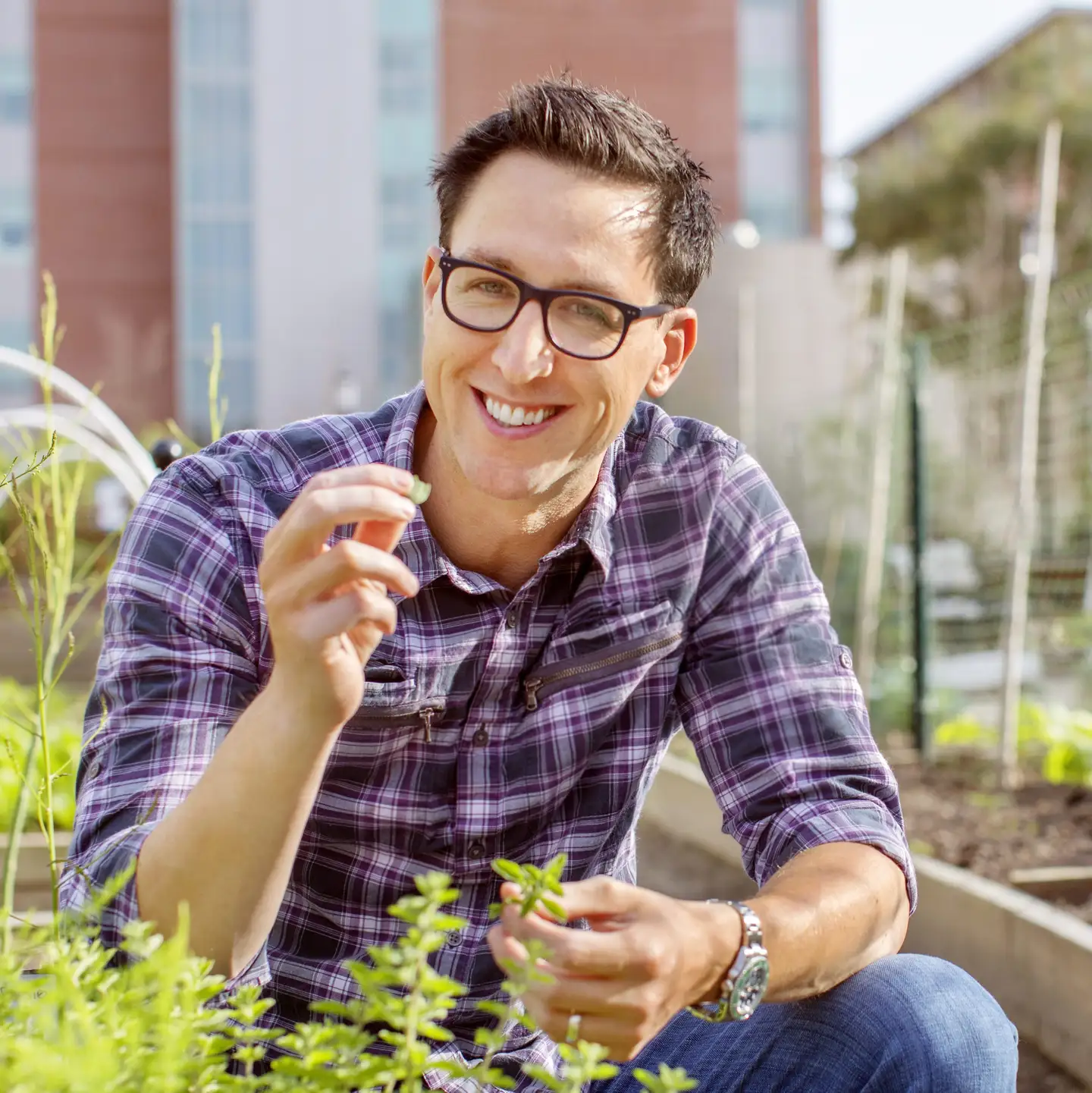
Dr. Will Bulsiewicz, aka Dr. B, is a leader and author in the field of gastroenterology and gut health. His hit book, Fiber Fueled, is a New York Times bestseller that focuses on optimizing the microbiome and restoring health through a plant-based gut health program. He has amassed over 300k followers on social media - @theguthealthmd
In this episode, Dr. B takes us through the importance of a healthy gut and how optimizing it can better express overall health. He also touches on what the microbiome is and how we can fully support it, the dangers of "leaky gut," and how dairy-free and gluten-free aren't all that they are cracked up to be.
Milk and Health - New England Journal of Medicine
Hello everyone, I'm Dr. Darsha, and I'm Dr. Altamash Raja, and welcome to Medicine Redefined. A podcast where we will explore the often overlooked but necessary components of health, what we consider to be the fundamentals. We will investigate topics and practices that can give you and your patients the best chance to optimize a healthy lifestyle. It's time to move the needle forward and put the health back in health care. Before we get into the show, here's a quick message from MR Insurance, a small business that helps physicians with their disability insurance needs. Michael L. Rellboss is a CFP professional and insurance agent committed to helping physicians nationwide with their term life and disability insurance needs. He provides an objective, transparent, and education-focused process that aims to help physicians make prudent decisions and avoid over-complicating things. He exclusively offers on-occupation disability insurance policies for residents, fellows, and attending physicians. We know he'd be happy to help you with whatever your needs are. You can find Michael at doctorpodcastnetwork.com, slash MR Insurance, or contact him at 800-817-4522. Everyone, I am super pumped to bring you this episode with none other than Dr. Will Bullsewitch also known as Dr. B. He is a thought leader and author in the field of gastroenterology and gut health. Now he's a personality on Instagram, a massing over 300,000 followers. He's the author of Fiber Field, which is a New York Times best-selling book, which focuses on incorporating more plants into your diet so that we can restore and optimize our gut. Because as you'll see in this episode, the gut can help express better overall health. In this episode, Dr. B touches on what the importance of gut health is and what the microbiota is. We often hear this term microbiome. We're touching on it a lot of times in previous episodes as well, but we'll really get down into the nitty-gritty. We'll also touch on things like leaky cut and why it's so important to avoid that. And then we'll touch on the misnomer of what dairy-free and gluten-free actually mean. And is it really cracked up to be what they are? So we had to break this down into two separate episodes so you guys will get part one here because there are just so many knowledge bombs that Dr. B is dropping. And then you'll get a little bonus on his perspective about medicine and life near the end. So enjoy the episode. All right, guys. Welcome back to another show of medicine redefined. Dr. B, what's going on, man? Hey, guys. Happy to be here. It's a pleasure to be on medicine redefined and to see what happens with you guys. It's great to hang out. Absolutely. Now the pleasure is all ours. We are, before we even get started, again, I want to thank you for your time. I know you're a busy guy, so for you to just designate a little bit of time to sit here and educate us and talk to us. I know it's going to be an exciting conversation. I know Darce here is just chomping at the bed because he maybe in a different life would have definitely gone the route of GI and so he's obsessed with gut health. But before we get into all that, I kind of want to start at the beginning. You went to medical school at Georgetown, right? It's all right. Yeah, I went to Georgetown. It's crazy to think about this because it's weird. As you start to age, I'm sure I'm a couple of years older than you guys. As you start to age, you still feel like the same person. I still think I'm the guy from college and it's crazy for me to think that I graduated med school 15 years ago and it's like, wait, what? That number doesn't make sense to me. Absolutely. I mean, time just flies. What even stemmed your inspiration to kind of going to medicine in the first place? What got you there? I was a teenager. I was a teenager. I was very much an idealistic type of person and I always wanted to do something where I could help people. Actually, I thought that when I was early in high school, I thought it was going to be a veterinarian and I hated cats, though. They terrified me. Oh, that breaks my mind. Yeah. The irony of all ironies is that now I've had cats for the last 10 years. I haven't had dog in more than 10 years. The irony is I've come full circle on cats. I love them. They love me. We get along really well. But here I am in this career in medicine because I pivoted and I moved towards, okay, well, if I can't take care of cats, like if they scare me, then let me focus on taking care of people. So I made that decision actually when I was in high school and I went into college planning to be pre-med and just kind of followed through on that. I was very focused, like super focused. I didn't join a fraternity, even though all my friends did. And just kind of like was kind of hardcore about the whole pre-med thing. I was at Vanderbilt for college. And at the time, it's interesting, you just never know where life is going to take you. I mean, I would have never predicted at that point in my life that I would be like sitting here hanging out with you guys talking about gut health. And so at that time, I actually thought that I was going to be an adolescent psychiatrist. And again, like this was like the idealist in me where I was like, I want to help these kids. Like I feel bad for these kids. I feel like times are tough. I feel like times are even tougher now. Social meetings did not exist back then. So but anyway, that's what I wanted to do. I actually worked at a camp in New Hampshire for kids with behavioral disorders. It was basically inner city kids from Boston and Hartford, Connecticut. And I did that the summer after my junior year of college. And so I went into med school thinking I was going to be a pediatrician. And or like pediatrician with an adolescent focus or something of that variety. And you know, again, like you just never know, but I got into my third year and I loved third year. It was amazing. But when I did my pizza rotation, I was like, I can't take these parents. They're either down your throat or they just don't care about their kid. And either way, I got a problem with that. So I was like, okay, fine, I can deal with adults where you can just look, if they don't want to do what I recommend, that's on you, you're an adult. So I really enjoyed my medicine rotation. But the problem for me was I also wanted to use my hands in some way. And so I was looking for something that would sort of blend medicine and surgery at the same time. And when push came to shove, you know, I thought about like urology, ENT. And when push came to shove, I didn't love the OR as much as I loved working on a team doing medicine. So that's where I decided, okay, let me do medicine. So let me have the most sort of surgical version of medicine that exists, which is GI. So I spent half my time doing procedures. And I mean, at that time, my gut health wasn't a thing at all. No one was talking about gut health. And so I went into GI, like truly, because my heart was in medicine, like internal medicine, where I could take complex problems and peel them apart and think about them and figure them out. But then, like, I could, you know, the next day go in there and use my hands and fix something. So that's ultimately how I ended up in the fields that I did. I love that. I mean, and to your point about, you know, the field of pediatrics, my wife is a pediatric resident. And I hear these stories on a daily basis, like when you shall come home and I can just see it on her face, if, you know, and now since we've been for the first time, actually, we've been living together and I can tell what kind of parent she dealt with that day, whether it was the one who was completely just, you know, disconnected with their child situation or was it the parent that was giving her a hard time and making her life miserable? So yeah, and I couldn't agree more. I really enjoyed my pediatric rotation as well. But it was so difficult to see, you know, when the patient, the child in front of you was paying for the parents' mistakes, right? For instance, like secondhand smoking or maybe childhood obesity is also kind of on the rise now. Not kind of definitely on the rise. Just on the rise. Yeah. Yeah. And a lot of it had to do the choices that the parents made and we're going to talk more about that. Absolutely. Yeah. So, you know, you kind of touched on this topic of gut health and obviously that's what we're here to talk about. That's what we're here to learn about from you. So, you know, what is this, most people have heard of the term microbiome. So maybe you could start about what that means. You could define that for us and maybe differentiate that between the microbiota, like sometimes people use them interchangeably, but as I understand it, they're not one and the same. So. Yeah. I think it's probably good to start off with those terms and just kind of define what they are. So, microbiota is referring to the actual microbes. That could include bacteria, fungi or yeast. It could include the archaea. Archaea are my favorite, by the way. I knew nothing about archaea when I was in medical school and we don't all necessarily have them, but archaea are these single cellular organisms that were somewhere between fungi and bacteria. And we believe that they're actually the first creatures that we have done this planet four billion years ago, which is 1.5 billion years before oxygen existed. That's wild. And they're extremely hardy. You'll find them like inside volcanoes and at the bottom of the ocean in a rift vent. And then you'll find them inside your colon. And actually, I was reading a study today looking at the archaea that we've inside our gut, you know, one of our gut microbiota. And what they showed is that the archaea, they're interesting because they produce gas. But they also break down TMA. TMA is a chemical produced by our gut microbes. When we consume carnitine or colon, that has been connected to coronary artery disease, chronic kidney disease, stroke. And so it's interesting because I guess, you know, we can dive in more to the microbiome, like one of the big themes in the microbiome that I find very compelling is that we as humans, we always want to like identify the enemy and shoot it down. You know, what's the enemy? Let's destroy it. And one of the big themes that you learn in looking at the gut microbes is that like they, there's positives and negatives to so many of them. It's hard to define them as categorically good or bad. And the story has a villain though, Dr. B. Well, it's like Game of Thrones, right? Like what made Game of Thrones different and better, honestly, was that the characters had depth, you know? So like what's his name, Jamie from Game of Thrones? Like that dude would have moments where he was like the greatest guy on the show. And then you have moments where he's like, someone give me a knife. I want to kill this guy, right? So and that's, that's the way our gut microbes are. Where it's like, you know, these are Kia. We could go and kill them and destroy them because they're causing gas and bloating. And that would be a mistake because they're protecting us from coronary artery disease, which is the number one killer in the United States. So anyway, to get back to the question that you gave me, the microbiota is describing the microbes. The microbiome, and some people use the word microbiome to sort of describe the microbes as well, but really a more appropriate use of the word microbiome is to describe the genetic, the genetic material that these microbes create. So it turns out, you know, that first of all, these gut microbes outnumber us. When I say that, I don't, I mean like literally we have more microbial cells than we have human cells, no matter what way you look at it. So we are more than 50% human when you include any type of human cell. I'm sorry, we are more than 50% microbial when you include any type of cell. But if you were to like get rid of the red blood cells and the platelets and just look at the cells that actually have like a nucleus and, you know, Golgi complex and endoplasmic reticulum, all that stuff, what you would find is like these microbes outnumber those cells, 10 to 1. So and that's where this idea of like only 10% human comes from, that we are like true human cells are being outnumbered 10 to 1 by these microbes. And that's nothing compared to the DNA. Our DNA, like in terms of the human DNA that we carry, 99.5% of our DNA comes from these microbes. 0.5% is human. And it's also part of what makes us unique. I mean, so don't get me wrong when I say this, like I'm not saying that it's our microbes that makes me look like I do and makes you look like you do. But our DNA, like Darsh, you and I, we have 99.99% the exact same human DNA, 99.99%. But our gut microbes may literally be 100% different. And on a planet with 8 billion human souls, there are no two humans that have the exact same gut microbe profiles on the entire planet. It's like a fingerprint, right? It's like a fingerprint. And so, but the reason why the word microbiome becomes so important is it's not just the DNA. It's what that DNA activates. It's the function. It's what these microbes are capable of doing. Because that genetic code determines the functionality of these gut microbes. And this is where, you know, they're invisible. You can't see them. We can do CAT scans. Where's the gut microbiota? Well, I don't know. But this is why we should define this as an organ. Because it serves a purpose in human health. It has a function. Its function is to process our food, to create access to nutrients, to help us in terms of our digestion, to optimize our immune system, to regulate our metabolism, to balance our hormones, to affect our mood and the way that we think, even our impulses. And, you know, even that human genetic code that we have, if you go back to when I was in med school, the early 2000s, that's when the human genome project took place. And they cracked the human genetic code for the first time. It was under Bill Clinton's presidency. They literally thought that they were going to cure cancer. Obviously, that hasn't happened. And the reason why is because we are not hard wired with predetermined health outcomes, our genetic code is more like a switchboard. It's wired. There's switches. And you can flip those switches on or off to activate. And the question is, who's sitting at the switchboard, flipping the switches? And the answer is these microbes. So when you take a step back and you zoom out, you think about human health, digestion, access to nutrients, metabolism, immune system, the entire endocrine system, hormones, mood, brain health, genetic expression. My question is, what's left? That's everything that matters. I mean, that encompasses the entirety of human health right there. And this is the reason why when people say it all starts in the gut, I actually think the right, it really does all start in the gut because you have to take care of this. And if your gut is unhealthy, then you are putting yourself at risk for disease. That's the reality. Yeah, I mean, that's both scary and exciting at the same time. I mean, obviously, it's, like you said, it's definitely an organ by itself. But again, in your world where this is what you've learned, this is what you train in fellowship, I think that you're probably having these conversations on a daily basis, whereas obviously in medical school, we, I mean, I, like you said, we're a little bit behind you, but we didn't learn about gut health at all. I mean, it was, you know, just at a superficial level, you're learning about these things. I want to go back to the archaea though, your favorite. You mentioned that not every individual has them. Do we have a sense of what percent of the population has your archaea? It depends on where you go. It depends because gut microbiota profiles are very different based upon the culture, the community. So in the United States, when they've studied the United States, it appears that like, I believe it's about 35% of people have archaea. I see. But it really depends, you know, let me give you a quick example. So I'm on the scientific advisory board of this company that I love and I'm kind of really into their science called Zoe. And the thing about Zoe, what I did is that I think this is the future of gut microbiome research because they're combining the gut microbiome with like really solid metabolic measures, like a continuous glucose monitor and a blood lipid test. And so what's interesting is that Zoe did their initial research in the UK. And then they started to apply it in the United States to American populations. And what we have discovered on the science board of Zoe is that the American microbiome is different than the UK microbiome, which is really surprising. So a quick example. There is this, it's actually technically a parasite called blastocystis. Now most people would think, oh, blastocystis parasite, like that must be bad. It's a parasite. Actually, no, the blastocystis is our friend. And it's good for us from a metabolic perspective. And in the UK, about one in three people have a blast that have the blastocystis. In the US, it's actually a lot less. It's a fraction of that. And so it's just kind of interesting, like, why would that be? What's the big difference? Like they seem like they're, is it the fluoride and the water? Like, what's the difference? So I'd answer your question, a normal gut microbiome depends on where you are looking. And our gut microbiome is adapted to the life that we weed here in the United States. And the conditions that we put it through. That's really interesting. I mean, I mean, that idea of it being almost a preventative measure for a coronary already disease, like as you mentioned, the number one killer in the world. Yeah. Now, I wonder if at some point, and maybe you have some insight to this, because you are on as an advisor to this company who's doing a lot of cool things. I wonder if, you know, just like we look at a lot of different biomarkers, like APOB and you look at somebody's lipid panel, you look at their A1C to determine risk for, you know, CAD and diabetes and all those things, if it would be premature to say that we could look at this as a preventative measure or say that you are, like, so I guess what I'm asking is, if you don't have this, do you think are, are you at a greater risk or is it just that it's truly just, hey, it's preventative that, you know, even if you have other risk factors, maybe you might be better off to have this, which one do you think it is? Well, I think at the end of the day, the looking at the gut microbiome, it is not meant for us to pick out one bug, you know, whether it's the archaea or the blastocystis or one of the other ones, it's not, things don't function in a vacuum, right? Picking out one bug and being like, oh, this is, this does this, it doesn't work that way. Context is critically important, right? You could take the exact same bug, but if you surround it just like us, I guess humans, right? And you behave different, you're the same person, but you behave differently depending on whether you're hanging out with your wife or your buddies or you're in your residency, like, in that cave where you hang out with your co-residents and you're just having fun and cutting off some steam, right? And so you're the same person, but context can affect the part of your personality that comes out. And that's the way it works with these gut bugs. So I think at the end of the day, it's not so simple, it's like, do you have archaea and therefore we're defining your risk of coronary artery disease? And I know that's not what you were implying, but just to unpack, you know, the way that we're going to go about this, ultimately at the end of the day, what we need is we need large datasets with tons of people. We need to measure outcomes because at the end of the day, that's what we're looking at. Like, do you get this? We're not get this. And along that path, granularity of detail is going to allow us to disentangle the complexities that exist. And so we're entering into, you know, I don't know how much you guys sit around and think about this, but I'm like a big time nerd. And so I think about this kind of stuff. We're entering into an interesting time in clinical research because in the past, clinical research, you basically had to accept the weaknesses of the methodology that you were applying. So you could do a large scale population study and the beauty of that was statistical power and looking at big numbers, but the problem is you lose the granularity. You lose the detail. So you make that sacrifice in the process. So like, how many times have we heard people say, like, well, you know, the survey that you use is not good enough, even though you have 100,000 people in your study. And the flip side of that is the small scale stuff, like in a lab, where you have tons of granularity, tons of control that you can measure. But it's not the same as having a big population-based study, right? So now here we are for the first time, it's really cool because these things are coming together. We're coming together like the Zoe as an example, it's not the only one that exists out there of this variety, but Zoe as an example is like large scale population data, but at the same time, having like high levels of detail of a person's microbiome, their continuous glucose monitor, what they're eating by using an app. And so it's just really exciting to imagine that this is like, we're going to start tapping into an answer in questions that in the past, we haven't been able to tap into an answer because we never have the ability to access data the way that we currently do. And part of it is honestly, we don't think about this, but it's the computers. We needed the computer power. So that's a big part of where things are going, and I think it's really exciting. Yeah, that's absolutely wild, and me and Ultima to talk about all the time is how do we make medicine more individualized, right? And that kind of touches on it, and I know we're going to talk about it a little bit more further down this conversation. But actually, I want to start off this gut health as well in terms of talking about what can go wrong, right? We look at chronic conditions globally, we're seeing a rise of type 2 diabetes, cardiovascular disease, COPD, et cetera, et cetera, et cetera, the list goes on. And a lot of it can be linked to gut health, like we said, right? First, treat the gut. What are those things that can go wrong in the microbiome? One of the terms I keep hearing, getting thrown around, is leaky gut. Can you kind of explain what that is? Yeah, leaky gut is a term that predated in many ways our ability to fully unpack and understand the science. So the term was already floating around out there, and I do give credit to the alternative health space that was sort of identifying this connection. You know, I mean, they sort of already identified that, well, gosh, when your gut is messed up, these issues, these problems start to arise. But we really had to get into the details of how this works. And leaky gut, to me, like, can you use that expression and still call yourself a scientist? Sure. It's increasing intestinal permeability. But we have to make sure that we are properly defining what we're talking about. So leaky gut, to me, is a part of a package that I would describe as dysbiosis. Disbiosis is really more of an appropriate scientific or medical term. And really what it means is there's sort of three parts to this, to dysbiosis. So let me describe this. Number one, it's the gut bugs. There's a loss of balance, a loss of harmony. Think of the gut as an ecosystem, because you should, it is an ecosystem. And just like in any ecosystem, when things get out of whack, all of a sudden you see things start to fall apart, they're not working the way they're supposed to. Less good guys, more bad guys, loss of biodiversity. These are the measures or the characteristics of a ecosystem under duress. And that's what you see in your gut. And that initiates dysbiosis. And when this happens, the lining of the gut, the epithelial layer that lines the intestines, is held together by essentially like spot welds that are the tight junctions. And those tight junctions are maintained in part by a healthy gut microbiota that is producing short-chain fatty acids that we get from fiber. So when the gut bugs are out of whack, and dysbiosis sets in, and they're not producing the chemicals that our body needs to uphold itself, these tight junctions break down. And you basically are opening things up and you're increasing the intestinal permeability, which is leaky gut. Yeah. And then what happens, sorry, the third part real quick, the third part real quick is that you actually do have leakage of intestinal contents that are not supposed to get into the bloodstream. And the classic example of this is bacterial endotoxin, which of course we refer to as lipopoly saccharide. Right? And that's produced by the gram-negative bugs that exist within our gut. That lipopoly saccharide, it already is there inside the lumen of our intestine, but it can't get into our bloodstream when the tight junctions are intact. So when you have this sequence of events damaged to the gut bugs, break down to the tight junctions, increasing intestinal permeability and leakage of lipopoly saccharide, this is essentially a setup for chronic inflammation or inflammation of some variety. Right. That's absolutely crazy to think about, right? I think when most people think about the gut, they think about this strong walled, not a super thin paper slice kind of barrier that we have from our blood and the rest of things that these foreign invaders can come out of. So how do we destroy the microbiome? What are some ways that we do that? Is it by the food that we eat or is there other lifestyle choices mainly? Well, it's a rather complex issue in some ways because part of it is that we inherit our gut from our family. So the beauty of it, by the way, is taking an optimistic outlook is that it is extremely moldable and adaptable. We have clinical research studies where people change their diet and in less than 24 hours, you can already see changes occurring in the gut bugs. And the reason why it happens so quickly is that they're on a different time scale than we are. So us humans, it takes us in theory 20 years or 30 years to procreate a new generation. These gut bugs are procrating a new generation in 20 minutes. In an hour, they have three new generations that they've kicked out. So if you think about that from an evolutionary perspective, the food that you put in your mouth is triggering a cascade of evolution among these gut bugs. That's occurring very quickly over the course of just 24 hours. And so anyway, in less than 24 hours with your diet, you can change your gut bugs. And diet is the, let's just be upfront and say like diet is the number one driver. The food choices that you make, the three pounds of food per day, the thousand pounds of food per year, 80,000 pounds of food during your lifetime. That's what's going to determine the makeup of your gut bugs. But at the same time, it's kind of interesting because our gut microbiome is where we kind of interact with the outside world. It's an expression of the entirety of our environment. So let me give you some examples. Your sleep affects your gut bugs, movement, exercise affects your gut bugs. The people that you spend time with, the people that you share a home with, they've shown that the other people that live in the house with you, you start to have a gut microbiome or similar to one another. Wow. Which makes me feel really good because my wife then, therefore, is generously making you better than I am. So having a pet, having a pet, spending time outdoors. So you know, each of these things, like if you think about the consummation of diet and lifestyle, the way you eat, the way you live your life, all of these things come together and ultimately create this balance and the problem is that, you know, yes to me, Darsh, like what's changed? Why is our gut under attack? Yeah. Think about how radically different our life is today compared to 100 years ago. Yeah. And someone didn't exist, like, kind of someone didn't exist 100 years ago. You know, we didn't have all these things that we clean our bodies with, clean our homes with. We didn't have the stuff that we're spraying on our food. There were very few processed foods 100 years ago. There were a couple, but like, that wasn't a big part of the diet. And most people, they had to cook their food and they knew their farmer and their farmer wasn't putting anything on the field. And so, you know, exercise, like, there was no TV 100 years ago, but alone, an iPhone or an iPad or a laptop. So we stuff, like some like, so we stuff like blue, like a blue light, you know, we're all sitting here, we're talking to one another and we're basically like shooting light towards the back of our eye in our retina. And that's throwing off our melatonin and you throw off your melatonin and you throw up your circadian rhythm and you throw up your circadian rhythm and that affects your gut back and bone. So I'll connect it. Yeah. So I'll connect it. And so what's the way Darsh is, sorry, he's two steps ahead of you. If you see those glasses right there, there are walking that blue light. So only 50% that's awesome. But I did want to say, so I thought about this beautiful poetry in a way, right? So as you talk about how the environment affects our gut microbiome from the actions we take from the people we live, things that are in our control and out of our control and how our gut microbiome can be this intermediate step because we now know that there's this gut brain connection, right? It's affecting things like depression, mood. And so the gut microbiome also in a way is in charge of our expression towards other people in the world that we interact with, right? And it's kind of just this full cycle. So I just thought, I just thought that was kind of cool. But I did, I didn't want to talk about food because you did mention how that's probably the most, you know, influential thing on our gut microbiome in today's world. As you know, you know, there's so many different bad diets or just different diets out there in general. And even within those diets, people are saying, hey, gluten free on this packaging or I should go dairy free. What's the word on gluten and dairy? It's a wonderful question. I know. That is a fully loaded question. All right. So I guess let me take on dairy first because it's quick, you know, I can kind of like, get that done with and discard it and then turn my attention to the gluten because that's going to be more of a struggle. That's good. So dairy, the issue with dairy is, so let me start by saying this. I think it's important for people to understand. I literally say this to my patients all the time, nutrition is about substitutions. There are always choices that you can make that are healthier. There are always choices that you can make that are less healthy unless you're talking about trans fats. That's the bottom of the barrel. Like that's as far down as we can go, but there's always going to be better. There's always going to be worse to call a food good or bad is a little bit silly because at the end of the day, it's all gray shades of gray and you can line them up and create sort of this list or pyramid of what's at the top and what's at the bottom. And when you come to dairy and you talk about the dairy and gut health, there's clearly worse than dairy. So I don't want to sit here and pretend that this is the number one driver of GI issues or gut health issues that exists. The biggest issue with dairy truly is the lactose. And lactose is a carbohydrate found in dairy that 70% of the world is lactose intolerant. And what that means is that when they consume dairy, if they consume more than their gut is capable of processing, then they will have symptoms like gas, bloating, diarrhea, things like that. All right. But that's a threshold event, that's not an allergy, right? Like an allergy, if I have a dairy allergy and you put two drops of milk on my tongue, I will react to that. If I have lactose intolerance, I could have the worse lactose intolerance on the planet. You put two drops of milk on my tongue, I'm not going to have a problem. There's some point at which you start adding this and it will cause trouble. And the interesting thing about it is that lactose, which we vilify, is actually a conditional prebiotic. It actually feeds the gut microbiome. Conditional, the reason why I use that word to describe it is that it's not always a prebiotic. It has to be certain conditions met in order for it to actually get down to the colon and feed the gut bugs. But you can train your body to be better at processing dairy. So when people consume dairy and they get gas, bloating, diarrhea, their lactose intolerance, they're not capable at that moment of consuming that amount of dairy. But if they were to actually work on it and train their gut like a muscle, you can actually enhance your ability to process the lactose and get to the point that you can consume a lot more than you think you're capable of. Now I'm not here to advocate for the consumption of dairy. Let me just say like I personally don't consume dairy. My choice, a big part of that is what I view as the health risks. And there was a great review article published in the New and the Journal of Medicine by Walter Willett. So for people who are listening to this, if you're interested or you're trying to figure out what to do with dairy, read this review article by Walter Willett who's from the Harvard School of Public Health. And he basically lays out the way that he sees it. And there's some advantages. Dairy is good for colon cancer. It protects us. But on the flip side, dramatically increased risk of prostate cancer. And we always think of dairy as protecting us from fractures, like helping our bones. You guys are in physical medicine or rehab. When they line this up and they look at populations, the people who consume the most dairy have the most fractures. Yeah. I think you can take that into Europe, right? The studies in Europe have shown that like in the northern Europe, right? Exactly. So I think it's a personal choice on whether or not you want to consume dairy. Do I think that dairy is the root cause of the gut health problems that exist? No, I think what it is is that when you have a damaged gut, when you have a damaged gut, you are less capable of processing lactose and you're going to feel it. And so this is basically exposing the fact that you have a damaged gut. It's not causing the damage. I mean, could it contribute to the damage? Yes, it can. It's quite debatable whether or not dairy is bad or good for our gut health, to be honest with you. For me, my concern with dairy is more like, I don't want prostate cancer, that's what my grandfather died from. I see. So, all right, but gluten is interesting because gluten took off as like a really big fat thing where it was a couple of books that came out. And there are some studies looking at gluten and intestinal permeability, but here's the problem with these studies. I want people to understand, to do something in a test tube is not the same as to feed me a slice of bread. It's just not. And when they've done gluten studies to say that gluten causes harm to the gut, it's always test tube studies. It's just not that you can't expect that to always translate. There's a reason why test tube studies are always verified in real humans. And when they've studied in real humans, they give them wheat. What they find is actually their gut microbiome gets healthier. Why? Because wheat is not just gluten. It contains a whole bunch of stuff, including a lot of wonderfully healthy pre-biotics that feed our gut microbiota. And so, like we don't consume gluten in isolation, we consume wheat, we consume bread. Can gluten containing products be unhealthy 100 percent? It's called processed foods, like ultra processed foods. Those are unhealthy foods. And it's not the gluten by itself that makes it healthier unhealthy, so just unhealthy foods. So there are people who have a wheat allergy. There are people who have celiac disease. Those two combined make up about two to three percent of Americans. It's not a very high number. And the rest of the people who think that they have a gluten problem, they probably don't have as much of a gluten problem as they actually do. You guys have a quick moment, can I tell you one of my favorite studies? I have to choose. Yeah. Okay, cool. So, you know, everyone says gluten, I got gluten sensitivity. We've mislabeled it to call it gluten sensitivity, it's not a gluten sensitivity. If you take a population of people that do not have celiac disease, they actually did this study. Take a population of people that you have verified that they do not have celiac disease. And what they did in this study is they gave them three weeks worth of breakfast bars. Each week was a different bar. So you would get a placebo for a week. You would get a breakfast bar that like literally contained gluten in concentration. And then the third thing was a bar that contained fruit tans. These are FOD maps, it's the fermentable part of our food. Just like lactose is a FOD map, fruit tans are FOD maps that you will find in wheat. And so they gave these people the three weeks worth of bars, they concealed it, and they had them record their symptoms. Of course, the placebo is the control, right, so we compared it to that. Here's what they found. Compared to the placebo, when they consumed the gluten containing bars, they had less symptoms. Less symptoms consuming gluten than the fricking placebo. But when they consumed the fruit tan containing bar, they got triggered. Because the entire idea of calling it a gluten sensitivity, it's not a gluten sensitivity. It's a fructane sensitivity. And that's because wheat doesn't just contain gluten, it contains fruit tans. And by the way, fruit tans are actually really good for us, they're pre-botic. But if you have a damaged gut, just like with lactose, it can make you feel it. And you have to reduce the amount that you're consuming and train your gut. Yeah, I mean, that's not surprising to me, Dr. B, this goes back to that concept of what we started the conversation with, right, we always need a bad guy, right. And so what, 50 years ago, it was just fat, right, when Ansel Kees time came around, and it was carbs or the bad guy, then it was gluten. I forget when it was over the last couple of years, it's, it's, feel like it's turning over faster and faster. Like the instant, exactly, right, right, right. I love that what you mentioned earlier, though, you said that, you know, food is all about substitutions. And this kind of reminds me one of our previous guests, you know, EC St. Kowski, she kind of spreads the same message that you do about getting more veggies in, you know, and she's got this 800 gram challenge and the premise of it is try to get 800 grams a day in fruits and veggies. And you'd be amazed by how much volume that is and you don't have a lot of room left over for the crap, right, for the processed foods. And so earlier, you said that you really don't consume any dairy at all, is that correct? That's correct. So I'm curious, what, what is your diet like? I mean, could you take us in, you know, a day in the life of Dr. B, like, what do you eat? What do you eat? What's your diet like? Yeah, no, I get that. And you know, it's, it's kind of funny because so I describe my diet as plant-based. Okay. Okay. I separate that from vegan. And to me, that's an important distinction because I don't, I don't know that most people see it exactly this way or fully think like, think about these ideas. But to me, veganism means that you are motivated by animal welfare and the environment. And so is the absence of animal products. But like, that's it. That's the way we rule, the absence of animal products. And you could eat Oreos all day and Oreos are vegan. And that's a vegan diet. And that's, that's one of the things we have to be careful about in clinical research studies is that people will look at vegan diets and be like, oh, that's, that's a, that's not that healthy of a diet. And it's like, yeah, that's because it's a vegan diet where they're avoiding animal products and not necessarily eating more plants. So anyway, I call it plant-based because when I think you're motivated by human health, that's what I'm motivated by and like you guys were doctors, right? So when I think about patients, I'm thinking about how do I get them healthier? And I think the plants are the way. So for me, this was a radical change. If you went back eight years ago, I was like a junk food junkie. Tons of tons of fast food, tons of processed food. Now, where I am, let me, let me give you some examples of some of my favorites. Breakfast, I love breakfast. Plant-based breakfast is phenomenal. You get great options because you can do smoothies. You can do smoothie bowls. If you follow me on Instagram, you've seen my smoothie bowls. I put tons of different toppings on there. I have fun with it. If you want savory, you go with avocado toast. I'll hit my avocado toast with a bunch of balsamic vinegar, garlic, and cayenne pepper. I love it. All right, put that on some sourdough. If you want sweet, you could go, I mean, again, you could do the smoothie. You could also go with peanut butter toast, put some berries on top, hit it with some cinnamon. You could go without meal. You could do your oatmeal to the traditional way, nuts, berries on top, or you go with oatmeal and do overnight oats. So quite simply oatmeal with some plant milk, throw some blueberries, and maybe some walnuts in there, maybe some chia seeds, and you're good to go. Chia pudding. If you've never tried chia pudding, it's incredible. And it's so good for you. And so, you know, like, I'm talking about food that's delicious, and it's almost unfair how healthy it is, considering how good it tastes. Lunch. I eat the same general types of lunch that anyone else does. Soups, salads, and sandwiches. The difference is the mine are plant-based. So, like, I'm not having a cold-cut sub sandwich, right? But soups, salad, and sandwiches, type of stuff. Most of the time for me, salad is leading the charge in that department. And then dinner, for us as a family, the backbone of our diet is whole grains and legumes. So you start with this concept of, like, take a whole grain and a legume that you like, and then pick out what ethnic food or, like, flavor profile from around the world that you dig, and build from there. So, like, we could go and do a Mexican bowl. We could do more of a Southeast Asian flavor profile. We could go and do a curry bowl, right? And that's the kind of stuff that we do, or we'll do, sometimes we'll do, like, a whole whole wheat pasta with tomato sauce and put, like, a whole bunch of veggies in there. Alright, so everything that I just mentioned calls for cilantro, except for one. The tomato sauce calls for basil. But, I mean, basically, that's this is the kind of stuff. So, you know, I think the intimidating part for people is, what am I going to eat? And am I going to miss my old food? And what's interesting is your taste butch change. And you start to crave these new foods that are nourishing your body, where actually you feel better, you feel lighter, you feel more energetic, and you start to feel like, I don't want to go back to what I was feeling before. So, but I think where it starts in terms of building healthy habits is just setting realistic expectations and taking one step, just one step, like, find one recipe that you dig. If you get my book, FiberFueled, I have 80 recipes in the back. I pick up literally one and try it. If you go, I'm friends with the minimalist baker, Dana, she has like hundreds of recipes and they all take 15 minutes and they're amazing. So, I mean, that's the way to go about starting. Absolutely. I mean, you know, you gotta, you gotta make it simple, like you mentioned, right? I mean, everything that you've mentioned, it doesn't seem like, I mean, once you get the ideas, the preparation process doesn't seem like it's intensive. I mean, and that's one of the complaints or the feedback I'll get from a lot of individuals when we're talking about eating and preparing vegetables. They'll say, oh, I don't have the time to do that, right? Today's world, everything is go-go-go. I mean, we're residents, where else is it go-go-go? So, you know, it's funny, actually, I was back home at my parents this past weekend and I was just kind of yelling at them. There were no vegetables, like, you know, in a very respectful, loving way. And my mom said, oh, you know, dad goes grocery shopping like once every two weeks and he just gets too much food. And I was like, well, we gotta go more frequently because you obviously can't have fresh vegetables in the fridge. And, but and then, you know, so this is all the more reason to pick up your book. So, you have all these ideas. I do one thing I didn't hear you mention, again, going this idea that Dorshan and I are residents. He doesn't drink a lot of coffee, but I might as well have an IV attached. What are your thoughts about caffeine? I mean, because obviously the coffee, I mean, it's good, it's bad, but it can be pretty acidic, right? I mean, so I haven't come across this and I haven't thought about it this until now. I mean, can that be damaging? We're toxic to the good in terms of the microbiota, like in terms of the coffee content, are there better types of caffeine for it? Anything we know about that? Yeah, actually, there's quite a bit that we know. So, let me, let me be completely upfront and deliver my disclosure statement, which is that I love coffee. So, anytime that there's a research study that says the coffee is good for us, I automatically celebrate and that's what I'm going to talk about when I go on podcasts. Perfect. So, but, you know, to break this down, I mean, somewhere to the gluten issue, you know, it's so easy to look at coffee and be like, oh, that's caffeine. But it's not, right? It's coffee, and coffee contains caffeine, and it contains all this other stuff too. And what's interesting is that coffee contains polyphenols. Polyphenols are antioxidant compounds. They're essentially anti-inflammatory. They come from plants, which of course, coffee comes from a plant. And these polyphenols that you'll find in coffee actually are pre-botic and beneficial to the gut microbiota. So, we believe in general that coffee, like generally speaking, not on an individual basis, because obviously we're all unique, but generally speaking, we actually think coffee, black coffee is good for us. And perhaps what's even better is tea, particularly green tea, like matcha. Matcha has extremely high levels of polyphenols. And those polyphenols are so good for our gut microbiome and their anti-inflammatory and wonderful. All right. So, I think coffee and tea are completely in play. That being said, the caveat, ultimately, is that if you have acid reflux, you may find that it makes it worse. If you have urinal bowel syndrome, it may give you diarrhea, or it may make your urinal bowel syndrome worse, so you may need to back off of it. And some people have a genetic condition where actually they get diarrhea from coffee. So, just be aware of that. Man, Dr. B, you're listing off all these foods. And just let you guys know, I'm slowly getting on the coffee bandwagon, all right? So, you know, I'm getting, I'm slowly getting a one cup of tea here and there. But that should be your listing off these foods. I'm plant-based myself, you know, and I love the smoothies in the morning. And, you know, if I were a patient of yours, man, I don't know if I'd be able to sit around for five minutes, you list all these foods, I'd be getting out the door and gonna, gonna go make something. But I do, I do want to talk about your practice. When you look back at when you chose to go GI, are you surprised by how you currently practice now from what you envisioned back when you first chose to do GI? A hundred percent, but I think at the end of the day, at the end of the day, the choices that you make along this path, this is a journey that we're all on, right? And we're each at our own like position in terms of where we are in the journey. You know, you guys are right now wrapping up, like, Darshan, you're in your intern year, Altamash, you're wrapping up your residency, you're getting ready to move on to your fellowship. And, you know, we each are kind of like going down this path. And what you need to do, I think, this is my advice to people who are early in this process, is remember why you chose to do this in the first place. And don't ever let go of that, because the system can make you so cynical and people are going to beat you up. I get beat up all the time. Like, people don't care what my reputation is, they want to smash me sometimes. And so, but you got to remember why you're doing this, because there's something beautiful there that's motivated by humanity and caring and compassion and love. And that's really what's important here. If it was about the money, you should have been a banker, and I don't know what you're doing, you should probably quit right now and go do that. Terrible. So, so I think that that's an important part of it, and I think the other thing is be a lifelong learner and be prepared to adapt. So, you know, I finished, I finished my fellowship, and I went into practice, and that's when I started exploring these ideas, was after I finished my education. You really just started there. Okay. Yeah. So, taking everything we just kind of talked about, how do you incorporate this into your patient's lifestyles? What are the things you tell them? What are the things you focus on? Well, I think, you know, so the important thing, it can sound very overwhelming to other healthcare providers when I talk about it like this, and they think that I'm like spending an hour with every patient doing nutritional counseling. And that's not true. I think that the way that I see it is I am there to provide the high-level guidance to my individual patient. I don't treat exclusively with diet and nutrition I don't avoid medications when they're appropriate and needed. And in many of my patients, diet and nutrition doesn't become a part of the plan until the second or third visit. So, for me, my process is the same process as every other doctor. What am I treating? Let me figure that out first. Once I know what I'm treating, then I'm going to get laser focused in terms of building out a plan. And I think the difference for me, relative to where I was during my training, is that now my plan always includes a conversation about diet and lifestyle. And I tailor it to the individual. You have to be able to look and read the body language of that individual. You have to be able to tell where they are. This is part of the reason why in my book, I always set progress over perfection. Because I have tons of patients who are like eating a trashy diet. And I'm not going to sit there and tell them you need to be 100% plant-based. They would never do that. So, if I can take their trashy diet, which by the way is very similar to the way that I used to eat, and I can move the needle and get them from 10% plant-based to the 25% plant-based, I've done something really good for that person. So, I try to set realistic expectations. I try to celebrate progress of any variety, no matter how small it is. And the other thing is, I think of this as a team-based approach. So, for every person who's in health care out there, regardless of whether you're a doctor or you're not a doctor, if you're in health care, I would encourage you to think about how you build your team. And for me, I have a registered dietitian in town. She's not employed by me. But I have a great relationship with her. She does an amazing job with my patients. And so, I basically include her very early in the process. So, I will set the direction. I will point the compass. And then, I'll hand off to my teammate. And my teammate will basically reinforce everything that I started. That's the way I approached that. I love that doctor. I mean, it has to be a team-based approach. Otherwise, it's not going to be successful. I mean, it would be so foolish for anybody to think that they can do it. I mean, they just, we just don't have the time, you know, the resources. And also, getting another person's perspective is so helpful because sometimes there's things that you can miss. And just having your teammate have your back is super helpful. How much time do you spend doing procedures? What percentage of your practice are you? I'm about 50. I'm about 50% of my time. Okay. And do you do any inpatient time? Are you doing any rounding or consults at this time or no? So, I take call. We are a small practice. This is crazy. And it's going to sound insane when I describe this. I'm on call Q3. Okay. But it's a very light call. Okay. And so I cover two hospitals. The hospitals are small. And I see patients like, for example, I had a consult yesterday. I was on call yesterday at a consult for GI bleeder. And so I saw the consult yesterday. I did the procedure today. So I spend a little bit of time in the hospital. But it's not in the way that you guys are in the hospital as residents, where it's not like full time in the hospital for the time. Gotcha. Okay. I mean, that definitely helps. I mean, you initially say Q3 call. I just think about what we were talking offline about the ICU people. But this sounds definitely a little bit better. Well, you know what? I mean, it's a great point because I know that we have a lot of listeners who are going through the process of coming up in medicine. All right. And I should share this real quick. So because I think it's important for people to understand, when I came out, you have to decide what you want. And you have to also understand that money does not grow on trees. And practices don't have some magic formula to make more money. They don't. All right. If doctors are making more money, it's because they're working harder. Yeah. And you have to decide where your threshold is. Because when you come out, it's very easy to be attracted by big numbers. And get sucked into a scenario that you don't like. So I came out of my fellowship. And I took a job in a practice, which was a high earning GI practice. And the call was Q8. Okay. So that sounds super attractive. Like, dang, you're going to make money. And you're going to call Q8. Okay. So, but let's break this down. My Q8 call, when I was on call, I could not sleep in the bed with my wife. Because it was not a question, it was not a question whether or not I was going to be up in the middle of the night. And it was not a question whether or not I was going to the hospital. The question was, what time are you going to the hospital? And how many times will you be going into the hospital in the middle of the night? All right. So you get to the point, even though it's Q8, where if you hate being on call so much, that's unhealthy. And my Q3 call, I take call all the time, but my call is light. So I don't fear it at all. Okay. And then the, the, the, the other thing that I want to point out is, I think it's really important. And I think you guys appreciate this being in physical medicine rehab. And not all doctors appreciate this. You deserve to have a life. You deserve to be more than just a doctor. Medicine will consume you if you allow it to. If you don't draw the line in the sand, you're going to get chewed up by it. And this is the reason why burnout is like absurdly high among young attendings, like I had friends that are again burned out. You know, and we're only a couple of years out of our training. And so you have to be prepared to make a decision of how much time do you need for yourself and you should protect that. And so when I came out of fellowship and I saw this big opportunity to make a ton of money, what guess what that was? That was working 90 hours a week. Six days a week. You know, I had a daughter who was a newborn at that time. And I'd, I'd go like literally all a week and not see her. And you start to hate yourself when that's the case. And now the practice that I'm in, I, I took a more than six figure pay cup to be in this practice. But I work four days a week. And it gives me flexibility with my time. It gives me more time with my family. And frankly, it is what has allowed me to do all the things that you see me doing, like Instagram and write books, because I created time for myself. And those things, even though they may have the appearance on the outside of being a business, they were never meant to be a business. This is just the passion project I did it for fun. Was I right or was I right? I wasn't lying when I said Dr. B was going to come in here with a wealth of information and just drop knowledge bombs all over the place. It was just such an awesome conversation to have with him. And you know, I really love at the end how he opened up about his practice and kind of the transition that he made to having a better lifestyle. And I think that's just such an important topic that needs to be opened up a little bit more because it's just so taboo. It seems like in medicine for doctors to speak on those things like money and lifestyle. So I'm really glad he did that. But this was part one. So there's more to come next Monday on part two. So stay tuned and we'll actually delve even further into the science of gut health. But before we end, don't forget to reach out to MR Insurance Consultants where their goal is to assist physicians in obtaining the most comprehensive coverage available to fit their unique situation. Reach out for both excellent and quality service at doctorpodcastnetwork.com forward slash MR Insurance. Quickly for that disclaimer, everything in this podcast is for educational purposes only. It does not constitute the practice of medicine and we are not providing medical advice. No physician patient relationship is formed with anything discussed in this podcast does not represent the views of our employers. We recommend that you seek the guidance of your personal physician regarding any specific health related issues. And as always, we are coming at you every Monday with new episodes. So next Monday will be part two of this conversation with Dr. Will Boswisch, otherwise known as Dr. B. And as always, rate, review, subscribe and share this with anyone that you think will benefit from it. Until next time.