

 Apple Podcasts
 Spotify
 Castro
 RSS Feed
 206. FDA Approval on Peptides, Creating a Second Brain with AI, Red Light Therapy, and Building Capacity

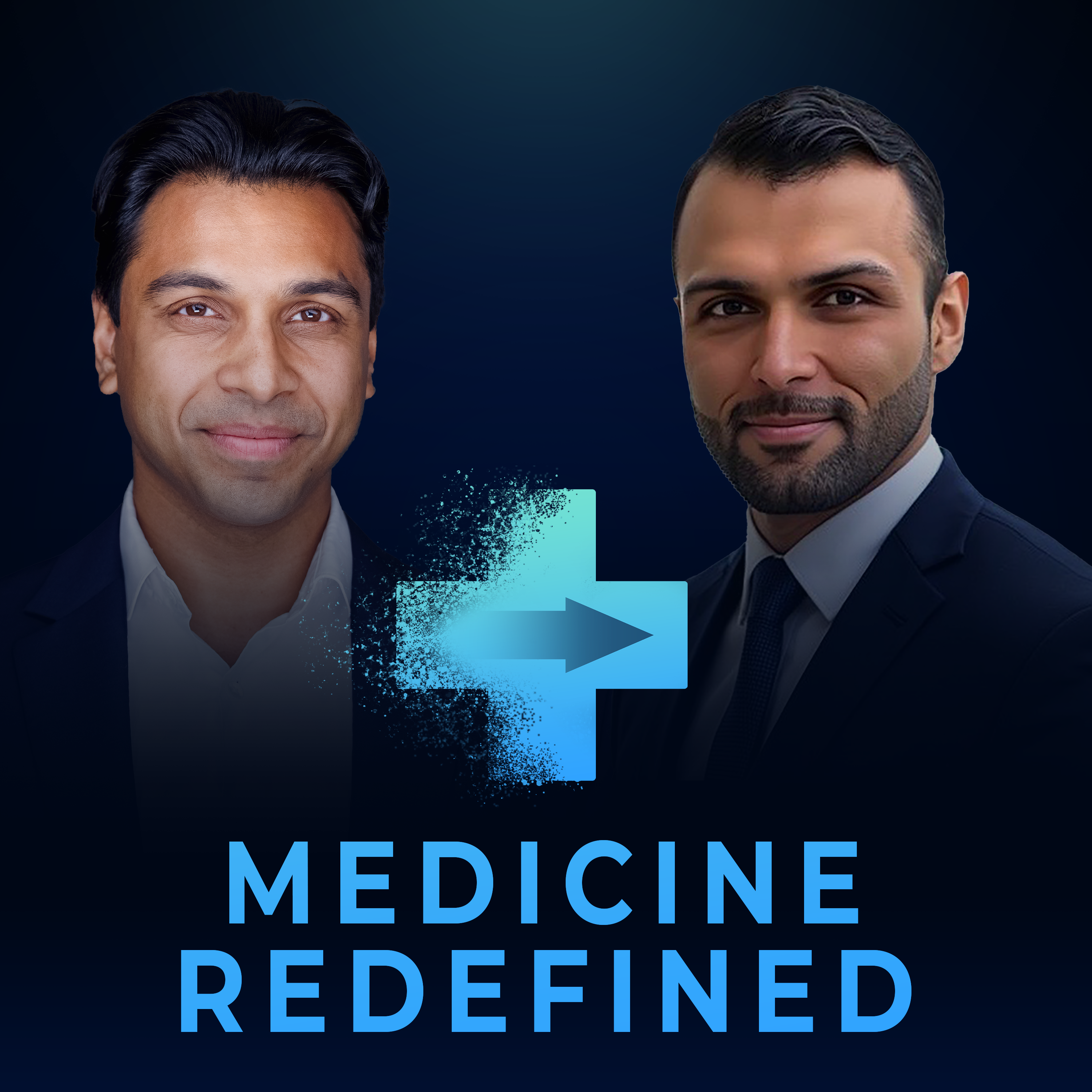
Dr. Darsh Shah and Dr. Altamash Raja catch up on hybrid athlete training, peptides, AI, red light therapy, health tech, and the balance between optimization and resilience.
From HYROX prep and the rise of competitions like the Lifetime Games to recent peptide committee votes, CMS reimbursement cuts, and AI tools like Claude and ChatGPT, the conversation explores how new trends are changing fitness, medicine, and daily decision-making for both patients and doctors. They also reflect on building a “second brain” with AI, using wearables without letting data run your life, and why building capacity matters more than chasing a perfect balance.
TOPICS COVERED
- High Rocks prep, hybrid athlete training, and the rise of functional fitness competitions
- Lifetime Games and the evolution of volume-based fitness challenges
- Peptide committee vote, FDA approval process, and what it means for clinical practice
- AI updates: Claude Opus 5, ChatGPT, token maxing, and avoiding LLM dependency
- Building mental models with Naval Ravikant, Morgan Housel, and James Clear
- Red light therapy, photobiomodulation, and joint health
- CMS same-day procedure cuts and the business of medicine
- Luna Band wearable, AI coaching, and health data integration
- Stephen Bartlett, optimization culture, and the danger of letting tools own you
- Building capacity, resilience, and why balance is overrated
RESOURCES & LINKS MENTIONED
- High Rocks (https://en.wikipedia.org/wiki/Hyrox)
- Lifetime Games (https://www.lifetime.life/events/lt-games.html)
- BPC-157 & TB-500 (https://en.wikipedia.org/wiki/BPC-157)
- Claude AI (https://claude.ai)
- ChatGPT (https://openai.com/chatgpt)
- Naval Ravikant (https://nav.al)
- Morgan Housel (https://www.morganhousel.com)
- James Clear (https://jamesclear.com)
- David Senra / Founders Podcast (https://www.founderspodcast.com)
- Luna Band (https://lunaband.com)
- Photobiomodulation / Red Light Therapy (https://en.wikipedia.org/wiki/Photobiomodulation)
- CMS Reimbursement Updates (https://www.cms.gov)
- Managing Oneself by Peter Drucker (https://www.amazon.com/Managing-Oneself-Harvard-Business-Classics/dp/142212312X)
FOLLOW US
The Show
- Website: medicineredefined.com (https://medicineredefined.com)
- Instagram / X: @medredefined (https://instagram.com/medredefined)
Dr. Altamash Raja
- Instagram: @draltraja (https://instagram.com/draltraja)
- LinkedIn: Altamash Raja (https://www.linkedin.com/in/altamash-raja-do-rmsk-cscs-0b1a8039/)
- Refining Health & Performance (https://refininghealthrx.com)
Dr. Darsh Shah
- Instagram: @doctor.darsh (https://www.instagram.com/doctor.darsh/)
- LinkedIn: doctordarsh (https://www.linkedin.com/in/doctordarsh/)
Ready to stop guessing and start performing? Dr. Raja is now seeing patients through his telemedicine practice — limited founding member spots available at refininghealthrx.com (https://refininghealthrx.com).
Welcome to Medicine Redefined. I'm Dr. Ultima Sharajah. And I'm Dr. Darsha. Let's put the health back in healthcare. If you're a high performer who wants a clear plan for longevity, performance, and staying active with fewer setbacks, I'm now seeing patients through my telemedicine practice refining health and performance. I'm opening a limited number of founding member spots at refininghealthrx.com. All right, let's jump in. So High Rocks. Talk more about High Rocks. That's super high intensity. It's the new Spartan races. Is that what that is? Yeah. So I think, I don't know how long ago it started, maybe eight years ago in Germany. So it's big in Europe. But for those who don't know, it's a hybrid athlete competition. I'm not competing. I'm just doing it to stay in shape and do something that's a little bit out of my comfort zone. But yeah, so it's every other station. Ones like cardio and there are stations that are more functional, what they call quote unquote functional strength training. It's a total of eight kilometers. So you're running five miles. And then. Some of the strength trainings are like sled pushes, sled pulls, farmer's carries. We'll see burpee, broad jumps, ski erg. So there's like eight different stations. You kind of just go through that. But I know most people get it done in about like an hour 30. So we'll try to aim for that. But yeah, that's in three, almost exactly three months. How was the, is it time or was, is there a length of the course? Yeah, it's timed. It's time. So they're all the same. It's time. And then there's like penalties and stuff too. If you do certain actions that go against whatever the rules are. Yeah. For training for it, do you become part of a high rocks gym? Kind of like a CrossFit box type situation? No, you don't need to. So like yesterday I did like a hybrid athlete workout. So like four rounds, like 500 meters, 12 burpees, do walking lunges, ski erg, and just like do that four times trying to, you know, keep pace, RP of like seven to eight. So, That's kind of like, you know, the hybrid athlete training. But then of course you want to get like your technique right on sled pushes, on the wall balls, getting, make sure you get enough depth and learning how to take the ball down. So like those small things can really make or break from an injury standpoint. And even just from like a transition standpoint from going from one station to the next from stamina that can really make or break you. Yeah, for sure. It's so funny, the branding pieces, tell me how hybrid athlete training is different than functional training 15 years ago. It's just the same thing keeps coming back and forth and it's just called something a little bit different. It's funny. I have a friend who's always like, why do they call it hybrid athlete? Why is it not just athlete? And it's different. To me, it's different, right? Because I think the hybrid portion adds muscular endurance plus strength. plus stamina, right? So you're hitting all three of those in the spectrum. And there's athletes out there like football, for example. Sure, you need aerobic capacity, but you're not adding as much aerobic capacity as someone who's playing tennis. And by the first, if someone's playing tennis, it's going to be not going to have as much muscle or strength compared to somebody who's playing basketball, for example. It is its own sport in a way. At least High Rocks is becoming one because they're everywhere. Like any country you name, it's happening. And now people want to go travel. Like I'm even thinking, man, on my next trip, do I go somewhere where like there's a High Rocks, compete for it and then enjoy the country? I guess my question is, how is it different than CrossFit? It's similar. I think the functional training is slightly different. They're not doing pull-ups. They're not doing deadlifts. You're not doing any type of heavy lifting, per se. The cardio portion is still there, but the most strength portion, I think, of high-robs is probably the push and the pull of a sled, and everything else is just muscular endurance. Sure. Yeah, but it is more calisthenics-based. In a way. Big three movers, whereas CrossFit, those are part of the staple. Now, are you doing big lifting too or no? No, I've done it here and there, but yeah, I'm not really doing that. But it's not part of the High Rocks. Right, it's not. Whereas, dude, this is nuts now. Lifetime Games. So Lifetime, the gym, has come out with their own games now. Are you kidding me? Called the LT Games. But dude, if you should just Google, like, you should just Google the stations, man. It is, like, insane. Insane. So as a guy, they're expecting you to do deadlifts, 225 for 45 reps. Like that's just one station. There are 17 stations. You're doing like a clean and jerk. Like as fast as you can. It's timed. So it's like High Rocks where there's alternating stations, but the amount of volume that they expect you to do is absurd. I was like, how are people even doing this? Like the first LT games was done in Minneapolis and the winner was a guy who's like the world record person for High Rocks, Dylan Scott. And he got done like 36 minutes. How are you doing this? These are freak athlete. Put on it now. It's amazing. Yeah. It's pretty cool that you do that. You know what this all tells me? That this is going to be good for a long time. 100%. Yeah. No, but how, like, it's all volume, like, LT games are volume-based. And I just don't get it. Okay, you don't have to do 225. You can do 185. More is always better. It's true. 185 pounds for 60 reps. I'm like, who in the world is doing this after a thousand meter run? Yeah. I mean, this is the first I'm hearing of it. Lifetime is pretty big. They're expensive everywhere you go. I'm interested to see how well it takes off and how popular it's going to become. Yeah, I guess I'm looking towards this hybrid situation. Yeah, Lifetime games are only for Lifetime members, I think. Oh. As a myth. Oh, okay, okay, that's interesting. It's tough. I'm not sure all the best athletes have a lot of money because each gym is like $250 or something ridiculous. Yeah, it's about that. It's going to be one of those things how you watch a lot of the World Cup, right? Yep. There is so much being talked about the U.S. system and whether or not we need to reevaluate how... Just going through the phases of PB soccer and escalating through the ranks, is the US ever going to be able to compete? And it's like, no, there's a little bit of a gatekeeping because travel soccer, you have to be able to afford that. You have to be a certain socioeconomic status to be able to qualify for a lot of these things. I forget, there was a previous athlete talking about how He takes his son out in the travel leagues, thinks he's Pele, but then he goes to the inner city and these people are just running circles around him. And maybe some of that could be said about this, right? Again, I'm really jumping and using that model to apply to this, but I think it's going to be a little bit hard if you can only compete with people who are part of a gym that's... $200 a month on the low end, which is what it is in New Jersey. I don't know what that looks like in Tampa. Yeah. Although Tampa has the most expensive lifetime in the nation. Is it? How much? So me and Mira combined pay like four, but we got in early. Like we got off the wait list on the new one that came up. That's expensive. I hear it's an experience. Yeah, it's a great gym. I can play tennis. The way I put it is if people are going to pay for berries and they're going to pay for orange theory and they're going to pay for a country like tennis courts, you get all that, a sauna, you get everything under one price at one location. To me, that's worth it. And it's indoor courts that you have. No, outdoor. Outdoor courts here. But they're clay. But the beauty of it, too, is there's lifetime everywhere, right? So when me and Mira go back to Boston or Philly, we're going to the lifetime clubs over there. So you get access to all the lifetimes depending on the tier of lifetime that you sign up. I've actually never played on a clay court. How does it feel different? The ball, it's a lot slower. So the whole game is slower. It's softer on your knees. You slide more. The footwork is more important. But the whole game just slows down. Maybe that's good for me because I'm not very good. Yeah. It's a great way to practice, yeah. Have you watched the Ruffin documentary yet? Oh, dude, incredible. Absolutely incredible. I have to watch it. But I did learn. I didn't know he had Mueller-Weiss syndrome. Did you know? Yeah, yeah. Did you know that throughout? I knew he had a lot of injuries and accumulated, but that's actually quite rare. Yeah, it didn't really come out until his French Open win against Dominic Thiem. That's when people saw him on crutches coming out of the limo and people were like, dude, you just won a final. What the hell happened? And he's like walking on crutches and his foot, he's not putting any weight on his foot because he numbed it the whole tournament. And that's when it started coming out that, oh, this guy had Neal and Weiss. He just never really talked about it. But yeah. All the more reasons why I love them. Not that I needed more reasons to love Rappan Liddell, but there's another one. Dude, you'll love it, man. They did like Michael Jordan level production to that, like The Last Dance. It's very similar. That's cool, man. So you're getting a lot of tennis, and now you're going to be a higher rock. When is that competition? October 22nd. They just opened up a day. Yeah, it's great, dude. It's so popular down here. There's four days of it. Crazy. We'll be rooting for you. The whole community will be. What happens? You should live stream it. Just run. I don't think my forearms will even handle it. I mean, people do it. People do that all the time. I see that all the time. Yeah, you should do it. So what else? We're going to hop around. This is going to be another random show. It's been too long. We've got to catch up. We haven't chatted a lot, so we're going to hop around. I have a couple of things on the docket in no particular order. Maybe peptide update. What do you think? Some people are really excited. Others are like, well, we'll pump your brakes. Yeah. How are you feeling about it? It's funny. I saw this all of a sudden on social media, of course. Everyone posting FDA breakthrough. The committee has approved. And funny, the day before that happened, I was talking to one of my friends who's a tennis player. And we were at a social club and there was a concert medicine group doing a talk on peptides. And he was like, hey, man, what do you think about this? And I was like... Listen, like there's a reason why the FDA hasn't approved it. What's probably done for China? We don't exactly know what's even in those vials that are coming over. And then I explained even during COVID, the BA, our very own BA that we're getting masks from China were fake. Some of the N95s that actually weren't even working. So I was like, if that's the case during even COVID, how do we know? Is there a black market? Whatever there might be. The data doesn't really show anything. And he was like, yeah, my wife went down the rabbit hole and like same kind of thing. Can't really find anything out there. And the next day you see this. And I was like, oh. All right. But what I found interesting was you sent me who's on the committee. And I know there's a lot of talk about the people on the committee also have a financial interest. A lot of them practice medicine and they do peptides. And so, of course, why wouldn't they go ahead and approve for I think there's four compounds, right? BBC 157, TB 500, and then two others that I can't remember. You're muted. Yeah. Sorry, I said shout out to Asari Christian, previous two time guest on the committee. We did not know that. And of course, all of these people did vote yes. And it's so interesting because it's their bias. And some of these, at least I can, I know that Asari is using this clinically. He's talked about that openly and he's talked elsewhere as well. What I found was interesting that none of the prior FDA committee members voted yes. And all the newer ones, some of them appointed as recently as June, a month prior to the voting. which was interesting, some of the politicians as well. I think what I'll say is, first of all, people are not aware. This doesn't, it's, we don't need to get super excited because this doesn't mean that the FDA has approved it. This is just one step out of many in that direction for this to happen. It's still a 12 to 18 month process for this actually to happen. If you are in the camp of, yay, peptides, it is exciting because at least they voted that. They can still go back and look at it like, no, actually veto or override this. I think at least that's my understanding of it. But at least that's what the committee has said. But after this, there's a bunch of other steps that they have to go through for this to actually start being something that compounding pharmacies can do, quote unquote, legally. They've been doing this, though. Ultimately, even if it does get FDA approved, it's still going to be what compounding pharmacies can now compound illegally. They've been doing that for decades. They actually never really stopped doing it. They just... attached another molecule to it and just called it something different, like pentadecapeptide, which is basically BBC 157. And they do this, they have these workarounds where they add like a vitamin B12 at the end of it, and all of a sudden it becomes a different compound, and so it's the workaround. And so I think those people who are prescribing, and to be fair and full disclosure, I've prescribed it, we were doing it. I would say that maybe... I don't honestly know why people are excited because those who were getting it for research purposes only were not getting any of the legit stuff. I shouldn't say that. They don't know what they were getting. They were getting it from even more gray market. They weren't getting it from compounding. I think physicians maybe... I guess maybe I should ask you, I haven't had this question, it's like, if physicians are prescribing it before, what's the reason to be excited about? Does this change anything in our clinical practice? I don't think so. I was reading Healthcare Huddle, right? That newsletter. I forget the guy who writes it, but he had a pretty good piece on this a couple of days ago. And his main concern or what he talks about is now there's more of a, there's a pressure for physicians to now prescribe it. So it's coming from the consumer side of things saying, Hey, this is now quote unquote proved. This is the joint that I'm feeling pain in and I want BBC one to be seven or whatever else. And then it's up to the physician to be like, Do you give it? Do you not give it? The pressure, do you lose the patient? How do you keep them satisfied? That was really the main concern from that end. But I guess the excitement part, yeah, I don't know. It's interesting because when you look at who the main population is, it's really middle-aged women, I think. It's not your athlete. It's not really as much as what we consider the gym bros and things. I know that for social media probably tends to promote it and that's where you see it. But in real life, it's a lot of these concierge medicine practices that are just... prescribing it to your everyday person. Yeah, listen, I'll tell you what, man, I spent a lot of time in these rabbit holes, of course, for the purposes of providing better patient care, but also from a personal standpoint. Like, update for you, you know, that scope didn't really help a lot. I actually do have full thickness cartilage tear in my hip. So I have arthritis in my hip now. And with that, still dealing with the shoulder, got a labial tear on the other shoulder. I, if there's something out there that's going to help preserve the joint or cartilage or help with the pain, man, I am all about it. In fact, you will find me doing it. But I just, every single time I try to convince myself to go and look at the literature, I am so underwhelmed about this. There is absolutely no meaningful research, I should say, that this is where we should be spending our energy and time. And so it's so silly to me, but a lot of things that people do don't make a lot of sense, I suppose. Either way, I guess we'll see. Probably time will tell where we end up. I guess maybe the... Disclaimer worth mentioning. If you are convinced that this is going to be your saving grace and you're going to do that, please find a physician. Please get it from the appropriate avenue. There are enough physicians out there. I guess depending on what's born. Definitely in Tampa, definitely in New Jersey, in the New York City. If you're in a big city area, you're going to be able to find folks who are knowledgeable and will get you at least better quality products. You don't want to be getting it from just the website. I recently had a conversation with somebody who I know who said that they got for $80. and was telling me about some side effects they had. And I was like, and he was saying, oh man, you gotta be careful with retatratide now. And I was like, is it the retatratide or the liquid that you got, which we think is retatratide? And his response to me was, and I'm not gonna name him of course, but his response of, no, it came with a slip and it was real legit. And I was like, I don't think that's kind of the barometer for what it is and is not legit. And so you just gotta be careful. And so I think that one of the things that I'm glad that we do and will continue to do, I think, is have the conversations with folks such as Asari, other people who think that this is plausible and entertain that thought. I think we've got to be, call a spade a spade. And right now it's so preliminary, it's barely non-existent. or it's pretty much non-existent. And so you just got to be careful. If you have all the money in the world, like, yeah, it's somewhat low risk if you're getting it from the right sources. But if you're getting super excited about it, I don't know. You're a pretty boring life, I think. Fair enough. Do you expect a research to increase for like the pharmaceutical end, especially when you have like acetalglutide and GLP-1? Well, for those, yeah, sure. Yeah, for those, but not for these. No, and I think Huberman was recently on Tim Ferriss' show where they talked about this a little bit. And I'm 100% in agreement with that. I just, there is an incentive to do this. Just like there's less incentive to research PRP, there's less incentive, right? These randomized controlled trials, these large-scale studies, they require so much energy and time and money that... Aside from large pharmaceutical companies or just private equity, the funding is non-existent. And for autologous products, that funding is just not going to be there. PRP has been around for decades, but still compared to some of the other molecules that are out there, pharmacological molecules, the evidence is... And we just don't have enough. We have quality studies. We have poor quality studies, maybe even more so than good quality studies. But it's an autologous product. So it's really hard to capitalize on that. What they do end up capitalizing on and the market is for the different type of centrifuge. And it's not nearly as much because when you buy a centrifuge, you buy one and you use that for five years. So that market is not there. So that's really all that they're trying to capitalize on. Oh, do it this way, do it this way, and this system is going to produce better things. Whereas drugs, man, it's the best market there is. I don't anticipate something that you can harvest from the body, like gastric juices, to do that. I don't know. That being said, though, I think I remember listening to Peter Ottia a long time ago. I know, I shouldn't be using that name. I was actually going to bring him up if you weren't, so... Okay, okay, fine. I do remember him talking about a long time ago is we had Darren Kandow back on here. We talked about how creatine, right? Creatine, like you have, again, not as much to gain. Yes, there's a market out there, but it's pretty cheap, all things considering. And you have hundreds of thousands of studies on that. I'm barely being hyperbolic there. So I think that I'm not super optimistic that we're going to get a lot of strong evidence for that. Yeah, for sure. Cool. What else you got? Nothing in regards to that. If you want to keep it to medical right now, I know you wrote here about CMS proposing same-day procedure cuts. What's that about? Oh, it's actually very upsetting. It's not going to affect your workflow as much unless you go into outpatient practice. But CMS is always trying to figure out how they can cut the doctor's legs out underneath them, especially in outpatient practice. And I guess I should give a little bit of a history. We talked about how the business of medicine drives the practice of medicine. It's one of my favorite things to say, and it's true. And so one of the things that happens is maybe 30 years ago, people started recognizing that procedures are what bring a lot of... at least what generates a lot of revenue. And so a lot of people started shifting into procedure-heavy fields. And from an interventional musculoskeletal standpoint, that meant injections, epidural, facet injections, all that kind of stuff, ultrasound-guided procedures. And I think I recently talked about this in social media as well, where they are not reimbursing for ultrasound-guided procedures, saying that ultrasound-guided is experimental. And we could, if people haven't looked at that, I've posted that a couple of times. But by the same token, there is a new CMS 2027 proposition where they are... proposing cutting the reimbursement for same-day procedures. So right now, the way that it works out, a patient, is you see somebody, right? So you might come in, I might do a consult, you come in for shoulder pain, I decide that your shoulder pain needs an injection. Maybe together we decide that you need an injection. Depending on your insurance, if I don't need a prior authorization, I can actually administer that injection the same day. From an efficiency standpoint, that's a no brainer. You're a busy guy, right? And I'm pretty booked out. So if you come in today and it's pretty straightforward, we do the injection, you go about your business, you'll come back maybe three months later. Hopefully we'll have done other things, but that's beside the point. But if we say no, we can't do that for either lack of prior authorization or number two, because the reimbursements are not going to be there for me to do the consult as well as inject the same day. You might have to wait two months to see me again, which is so stupid because the only reason we're not doing it is because of insurance dictating. So it's a waste of your time. It's a waste of my time. It's a waste of resources. It's just it's a silly thing. And so what they're proposing is. And I got to get the rule right on this is like that first injection, I think is going to be okay. But the second one there, a lot of times they're not going to determine necessary. They're not going to pay for. So there's like this commenting period and I'll link it in the show notes for people where you can go and you can comment on that. I don't know how many interventional folks listen to this. Hopefully a lot. If not, please do send it to somebody. because that's going to make it really difficult. I have so many patients, man, who complain about not being able to see their orthopedic surgeon or be able to see a specialist or a neurologist for four, five, six months in a row. And sometimes when they see me, I do a good job trying to get them in relatively quickly after we've decided that we're going to do the injection, because now it's straightforward. I can squeeze them in here, squeeze them in there. But sometimes it's still like a three to four week lack. And if you're in pain, my dude, like you're playing tennis and that's really important. Let's say you hurt yourself. God forbid, it's not going to knock on wood here. But let's say you got that high rocks competition end of October and you tweak something early October. A strategic total injection is going to help you perform. It's going to be super important for you. But if you see me beginning of October and I can't get you back until the end of October, pretty pissed off that you trained three and four months, right? Nadal would not be able to win that French Open. That was the dynamic that he had to deal with. Yeah, it's just, it's like another nail in the coffin for not accepting insurances. More and more physicians are actually stopping. are starting to not accept Medicare, which is crazy, right? Medicare is supposed to be universal access, but because their reimbursements are so bad, physicians are just opting out of Medicare. Dude, I'm seeing on the inpatient side though too, like the amount that they're looking to get a nine times 232 billing, dude, just the justification to bill appropriately for moderate complexity is like impossible. It's like, I'm spending, I'm primary attending, I'm spending so much time I don't know what else you need. Like, I don't, there's comorbid lists of this long, but you need me to write down everything. Like you need me to speak into Dragon, tell you exactly every little thing. It's insane. And it's going to be a cat mouse game. Tell people what 99213 is, just so they don't know. So yeah, there's different billing codes, right? You can do low complexity, moderate complexity, high complexity, right? High complexity, patient, very critical. You're looking at IV medications, potentially a send out to the hospital. Legit, you've really, it's high risk. Moderate is like, very rare. Moderate's like your typical day-to-day. Like you're seeing patients, they're going through therapy, they might have pain, they have low hemoglobin, they're on blood pressure medications. Like you're actively managing those things. And even if you're not necessarily changing it, you're still looking at vital signs, looking at labs, doing all those different types of things. Then you have low complexity, which I was trained, you never really bill if you're talking to the patient. Like that should always be like, hey, patient's kind of sleeping. You said, hi, they're doing okay. There's really nothing at all that you're doing. So which as a primary team member, like inpatient rehab, they have so many things, they're never going to be low complexity. Exactly. If you were low complexity, you would not be admitted to the inpatient rehab unit. Exactly. For sure. So now basically Medicare is coming back, looking at your notes and things that are saying, nope, you overbilled. None of these are moderate. These are all low complexity. I think they're crazy. I just, I talked all like the other attendees. I don't know what else to write in there. I don't know how else to paint a picture for this. But yeah, it's the cat and mouse game. They're obviously using a lot more AI now to scrub and go back and forth. We're seeing even with insurance appeals, like it's not a it's not a physician looking through the appeal process. It's a it's an AI that they are using to scrub through and see whether they can deny or approve a patent. EMR, you guys using Cerner? We use Cerner for Encompass, yeah. Yeah. I think Epic has built in this AI helper that can help you code appropriately and make sure you're checking off the boxes to be able to build. I just, again, I've talked about how that's the least fair part of my job. I try to gamify the process, like how can I do this? It's a game I don't want to have to play. It's not the reason I went into medicine. I'm pretty sure it's not the reason you went into medicine. The other thing I think is worth mentioning, just so people understand... The three codes or three levels of complexity applies to more inpatient. It doesn't really apply to outpatient. On the outpatient setting, you typically have five levels of complexity. I did have a patient once where, because I do my own billing for the inpatient side. And I think on the invoice, it'll say... 35 minutes or something like that. Because that equates to moderate complexity, right? Correct. Yeah. And people, I think, need to understand before they start arguing with their practitioners, oh, the doctor didn't spend 35 minutes with me. That's not what that means, right? And so we're not going to make this into a billing and coding talk here. But you should look into this before you start arguing for this and wasting your time and your insurance time. It's 35 minutes spent on the entirety of the encounter. And there are certain things that they look for that you are spending doing. Or there are the different things that you had talked about in terms of all the assessment and plan that you're doing. But I wonder... Because Encompass is private, right? Oh, they're a publicly traded company. So, yeah, they're public. Ooh. When did that happen? Must be some time now, I think. Before I joined, yeah. They've been doing everything Epic has been doing. So, like, we now have AI for H&Ps, as you saw, and things like that. Did I see that? Yeah, I'm guessing they're going to start doing the same thing, where the coding, they have a built-in software that will try to help you with the justification. Sure. I think they have to. But it's going to be so clunky in the beginning. You know this. Yeah. Yeah. It's just, as it's so funny. And I want to talk to you about this because I was texting you the other day. It's so exciting how good these LLMs are getting for the variety of things that we have to do. But at the same time, in areas where I have domain level expertise, like real heavy, they're so bad that it makes me angry. It makes me angry. So tell me, actually, I feel like we can't do a progress now without an AI update. Where are you at right now? We've had so much progress. We've had Fable come out, we've had 5.6, we've had Opus 5 now, that's where we're at as of late. And tell me what's up with you, what's changed? I don't know if anything has changed per se, I just think I'm using it a lot more. It's definitely infiltrated pretty much all aspects of everything I'm doing. So Claude I really enjoyed, right? They're so anthropic, they were kind of leading the pack. I was using ChatGPT a lot, but Claude and Claude Code specifically had a really good way of just synthesizing information. So I took actually the code from ChatGPT, said, hey, give me the code for everything from our chats, copy and paste that into Claude, create a second brain for myself. So I was telling you this, how when it comes to building out my practice and just building out my life in Tampa, There's a lot of moving pieces, right? Different people I'm networking with, different emails I'm sending, different dates that they're happening. And I'm going to have to recall that a month, two, three down the road, just so I can have more leverage. And I know exactly what I'm talking about when those introductions reoccur. So I will go into Claude and daily or every week say, hey, capture this. This is what happened on this date. This is who I met. This is what we talked about. And it stores it into its file. And I'm a very game theory heavy person. It really goes into all the different kind of based off everything Chia Chaviti knows about me. I'm a Slytherin essentially, right? If it's a Harry Potter house and I know my personality and knows everyone's, right? When you use it that much. But now the quad has that information. And so it can really tailor exactly what I need to know and what moves I should make depending on whatever I need to recall. So it pretty much acts as my second brain. I can kind of just dump all the information in there and then retrieve it as I need to. So that's really been, like I said, the biggest change. The rest of what I'm doing is high rocks training. ChatGPT is kind of giving me just like coaching stuff. So I use ChatGPT for my workouts, financial stuff, an independent position, just understanding how the money's moving, where it is, taxes, things like that. Yeah, those are really the two big things. But other than that, I just, yeah, I used a lot for just kind of recommendations and optimize, I guess. I assume you're on the max plan. For? Claude. No, no, no, I'm not. I just use the free. No, I just pay for the basic, whatever. So I have the basic. I pay for, what's the next version after that? After the free one? $20 a month. Yeah, is that max? Yeah. No. Oh, okay. Max is going to say no. So I want the 20 a month plan. How do you possibly get away with that? I had to upgrade to the $200 a month this weekend. Really? So yesterday was the first time I actually, it like said, hey, you needed to get more tokens. Because I was trying to build out like templates for consulting and like dot phrases and stuff. So that was the first time it was like, hey, you need to do more or come back tomorrow. And I was like, I'll just come back tomorrow. Yeah, so I was like, I know you got super excited when Naval released a bunch of his episodes out. I want to like him so bad because I know you speak highly of him. But I'll tell you what my beef on the wall is before I come out. But I wanted to apply. I was like, this guy's clearly... Obviously, he's an amazing and a very clear thinker, and he has a lot of great advice. I was like, yeah, I'm going to token max, like he says. And what happened with the token maxing? Over the weekend, all of a sudden, I had to... So I was strictly on the $100 a month. So the max has two levels. There's a 5x usage at the $100 and 20x usage. And so I'm there. And then I was running out of tokens because I'm using Fable for everything. Definitely overusing the models and over tuning them as well. And I was like, okay, well, the next level up is an extra hundred bucks. So I'm just going to buy 90 bucks worth of tokens and see what happens. Well, I use them in 24 hours. And so then I had to upgrade anyway the next day, because I think if you run Claude Code on Fable 5, it's going to destroy your token situation. So I got to figure a better system out. For those not listening, I think that Naval's talked about this a couple of episodes where he's trying to use the best model. He doesn't talk about the effort, but he does use Claude a lot. And he makes a really good point. He said that the asymmetric risk that you have of being wrong, even an extra 2%, if you're doing high stakes things, which I know you are, I certainly am, it's not worth it, right? And so if one model is correct... 92% of the time and the next best model is only correct 90% of the time. Well, maybe over one decision, that doesn't matter. But if you ask it 100 questions and it's wrong 10 times, well, that's a compounding error that you have. It's going to be more than 100 for it to compound really over time. And so I was like, okay, well, yeah, that makes sense, right? I can't really afford to do that. I don't know if it makes sense for him. I have to pay $300 a month, though. And so I got to figure a better system. I do hop back and forth between the two, but I couldn't agree more. I think that when you build systems into it, it's so incredible. And you pointed to the computer. I've gotten more comfortable using CloudCode and Codex as well. I do find that Codex, the Codex coding is... better. It's faster. It's more direct. It seems to be cleaner. I think most people agree it's definitely more powerful. And so I think what a lot of people at this point will say, and I'm trying to do this, is that you plan and create a blueprint with Cloud Code and then you shift over to Codex and let Codex run with it, where you have like less checkpoints. which most of the things that I'm trying to automate, I don't really care about the checkpoints. I'm like, yeah, just give me the final product. And this is what I want. This is what I'm looking for. And what you've created doesn't work. Here's what I don't like about it. Go fix it and make it better. That's pretty impressive. That's pretty impressive. Like some of the least favorite parts of the things that I have to do, including some social media stuff. It's helped me in terms of uploading and fixing stuff that I don't enjoy the aspect of it. Believe it or not, I've been able to not have Instagram on my phone and still do a good job. Right. So that's, what's cool about. No, for sure. Grok 4.5. Apparently it's supposed to be amazing now too. So yeah, but expensive. I don't know why Elon makes it so expensive considering he's a trillionaire. It's kind of stingy. Don't you? I don't, I actually don't know. Yeah, it's like $300 for Grok Heavy or something. Yeah, it's like the most expensive out of all of them. Yeah. It seems like the race is turning into just the two, though. And maybe he's taking his foot off the gas pedal for now because he was focusing on SpaceX for a little while. Sure. Yeah, I don't know. I don't know if it's going to be like AI is going to be built into the Optimus robots or he's got a plan that. You said it's in Tesla, right? It's in the car. Grok is in Tesla, yeah. Yeah. I don't know what version or how that works, yeah. I imagine it will be. Speaking of recording conversations and storing those notes, the way that you were describing that you're using it for reference points later on, Not Claude, Plaud. Have you heard of that one? P-L-A-U-D. I think it's like this, it's a device. Yeah, Google it really quickly where you can, it's a note taker. It's an AI voice recording note taker that I heard Stephen Barley talk about this first time. Some people will have it on a lanyard around their neck. Other people will have it near their phone. Whereas listening to their entire conversations throughout the entire day. And at the end of the day, it's summarizing a brief, right? And that might be something worth looking into for you. I can't do that because I'm having a lot of PHI-protected conversations. But maybe for those meetings and stuff that you're talking about where people don't mind. You also got to be careful when you're recording conversations that you're in a state where... it's either a mutual party consent versus only single party consent so you gotta i think that's the thing because like people are having backlash with the meta ray-ban glasses because now they're going to start audio recording as well and so a lot of people are like i don't know if it's the same thing it's like the privacy yeah but yeah the meta piece is interesting because you're recording video well i guess people you can walk around record on somebody on the camera like who is how different is it no yeah exactly yeah it's very scary it's hard to kind of walk around in community and do anything it's Like I wouldn't want to be with somebody who has this device, I feel. Like if I'm next to them, I would like, I would not say much. If I knew somebody had it. If you knew about it, you'd be fine. I don't know. I don't know if I would. Could be like, you're taking my conversation and then, because in my mind, I'm like, what's the motive, right? What are you? What if they were just upfront about it? Hey, listen, I actually am going to, if it's a meeting that you're having, they're like, hey, I mean, when we jump onto a Zoom meeting, they're recorded a lot of times. Yeah, I guess it depends on who it is. Like, the purpose of it. Yeah, yeah. For sure. I should tell you, we're recording this conversation. Oh, dude, I'm out. Just so you know. Did you not know? I had no idea. I thought we'd just come on, dude. Have we been recording every week or whatever it is? Yeah, yeah. Can you believe it? For six years. Six years. Yeah. Crazy world. Sometimes I do miss 2004 when it was a little bit simpler and we didn't have to worry about every little thing that you say. Yeah. But I guess I'll be less of old man get off my lawn type situation here. what else oh let me tell you about what i've been getting to photobiomodulation have you ever talked about this and i don't think i feel like we've talked about red light therapy but we have an episode on it too much yeah we do we do a long time ago yeah have you ever seen this the kinyon device no for the camera here people to see red light therapy right photobiomodulation is the medical term for it's not just red light when a kid has jaundice they go in that's photobiomodulation But red light specifically, I know people were like, oh, a purported has so many benefits. It's good for your skin, your system, and anxiety, and blah, blah, blah, and this. And I was purely interested in for musculoskeletal health and joint-related pain and tendon and, I suppose, inflammation in that sense. And so getting into that, I mentioned hips have been bothering me a little bit more, shoulders have been bothering me a little bit more. What can I look into? So I was like, let's just try it. It might be low-hanging fruit. And again, it's context-specific, application-specific. But I just wanted something to try at home. So this device is actually... TBD if it's still good. What I like about it is that circumferentially, I can wrap it around my shoulder. I can put it around my hip. And it might help solve the penetration problem because for deeper joints, you're going to need penetration. For superficial structures, not that big of a deal. Because you don't have to worry about that if you have a biceps tendon or if you have inner facial issues, you're using it for wound healing, right? Like you have to penetrate maybe a centimeter, maybe two at most. But for a joint, you got to try to penetrate six or seven centimeters. And I guess for my American friends, that's going to be like four to five inches. So the one thing is like the different types of wavelengths really matter. The shorter wavelengths are not going to get the deeper penetration. The deeper ones are. But yeah, I've been playing with this for about three to four days. I'm going to... try to make a note of it without manipulating any other variables for the next month or two to see how it feels like today i was hurting a little bit more after doing upper body workout so i threw up my shoulder afterwards it's cool it's like how long 15 what's up 15 minutes yeah i mean it has this one has three specific modes we can do 5 10 15 i figure 15 minutes is pretty quick Yeah, we'll see. We'll see. Stay tuned on that. I'll report back to you to see how it works. I've been speaking of red light. I still have the iris store. I need to get back to it. But for hair loss, there is some data to show that it can go, man, strap it up there. You just strap it on my head. Yeah, but I want people to listen to this, right? Because red light's everywhere. And there's companies now that are really well-branded, really well-marketed. They'll talk about red light as like a showerhead. So there's red light and then water. And I'm like, the light's getting scattered. Like penetration. How is that penetrating anything? So at this point, too, there's just so much out there that, sure, you can make a price point really high. And people are going to think, well, if it costs $500, it must be good. But again... I don't think it's medical grade and I don't think it's actually doing much. But things like this where all the skin, it's better. Right. Yeah. And see, this is where I get excited about the fact that we have these LLMs available to us for so cheap. Because now when people see this, they can... point this to chat GPT or Claw, use Opus, whatever, and say, hey, listen, I'm interested in doing this. Let's just say it's a showerhead. And ask it the right questions. It's like, does this make sense? Here's what my goals are. What do you think? Does it actually make sense? And I think in that purpose, it does a pretty darn good job to call bullshit. And this was interesting. I heard Stephen Barley talk about this once in terms of where he asked his friend, And him asked the same exact question of their LLM. And to him, he told it was Messi was the best player. And his friend had told him Cristiano Ronaldo was the best player. So that's the part that is it being sycophantic for you and it's going to give you some answers. I haven't found that. And maybe it's the guardrails that I've put that into there. I guess one person could argue is like, how do you know? How do you know that it's lying to you, right? A third party has to observe it. But I do a pretty good job asking it to ask it again. And I'll take the same answer over to a different LLM and have it, check it, give me the version two of this. And I'll come back and be like, give me the version two of this. And in some sense, it's like... just going back and forth and sucks up a lot of time. But it also does, I guess, foolproof me in a way where I'm not being gullible with the LLM. Anyways, what I was trying to say is hopefully people will do that type of stuff and be like, does this actually make sense? Because like I said, you don't know what you don't know. And when it comes to health related topics, I think what you and I are lucky is because we've developed that foundation. And when it spits out some nonsense, we're like, this is so stupid. That doesn't make any sense. We can see that. I fear that people a lot of times can't. And so patients come in and they'll ask me a question and they'll say, I've been doing my research. And I asked them, I'm like, Hey, who are you using? Are you using chat GPT or using Google? Cause people are not using Google. And they'll just pause. They'll look at me like sheepishly, almost like they're ashamed. I was like, Whoa, it's cool. Let's use it. Let's use the tools properly, but then let's also understand their limitations and let's talk about Like how it makes sense and how it doesn't make sense. So hopefully it'll help filter that out. I don't know. What do you think about that? Do you think that'll help or? Oh, 100%. The whole reason I said the light scatters is to track you. You told me that. That's good. Yeah. Like, I literally put it in ChattachieBT and that's exactly what it said. It's like, no, this thing is stupid. It's not going to work because light scatters and look at physics and blah, blah, blah. I'm like, that makes sense. And so I know a lot of people think, oh, my God, this stuff is going to make me dumber. I think it's the opposite. Like, I think ChattachieBT and all these LLMs will actually help you think. in a different way, a little more outside the box when you have those obscure questions. And the next time I have a medical device that I'm like, hmm, I can at least take that first step to say, this is what I think. Let me now check it against Chachamete. Again, you're not trying to look for bias and say, hey, this is what I think. Do you agree? Please agree with me. But asking a question and getting to that next level of deeper thinking. I love doing this, so I'm going to come back with a counter-argument to my counter-argument. I think, well, one thing, I would add a little clause to what you said. I think that if you ask it the right questions, which the presumption is you know how to ask the right questions. Right. Right. And so that's one. But the number two thing that I'll say is... I remember Dr. Arn talking about this. It's like we have to be able to tease out like what's scientific versus what sounds science-y, right? So chat GPT and these things, kind of like the example like you just used, like a lot of times they'll throw something like, yeah, that sounds pretty science-y. That must be right. Yeah. You know, like, and so it does a really good job. I guess articulating and walking through some process. And if you don't know the basics of it and it sounds sciencey enough, you'll believe it. I mean, this has been the humans have been doing this to other humans for a very, very long time. This is why the supplement industry is so good. It's like you throw a word to be like cortisol inflammation. Ooh, those are bad, right? Let me buy that supplement to suppress my cortisol or suppress inflammation. It's like, all right, come on. It's gotta be a little bit deeper than this. And so I do, I do wonder, um, um, But some med students asked me today about how am I future-proofing, I guess, AI. And I told them I'm diving deep into it. I'm becoming familiar with the tools. And it's if you understand the workings of them and you simultaneously develop and have a process to develop that education, which... I think I'm not in medical school. We should talk to Haritha about this in terms of what her current education model looks like. What are they actually giving to her? And how are they teaching in the AI world? In some sense, you and I grew up learning without these tools. And so we had another way to learn. And now we're applying these tools to the... It's stacking on top of our knowledge base. But if you're only growing up in this, you don't know how to... You don't know how to fight against that. Does that make sense? I don't, but do you think you have to fight against it? I don't know. But what I'm saying, if I only know that way, if I only know through conversation with AI, I don't know where AI is wrong. The only reason I'm telling you in these things, I know where AI is wrong is because, so the coaching thing, right? I'll give you that tangible example. I have a very strong background in strength and conditioning. And I have the luxury of learning, having learned from the world-class strength and conditioning coaches and having somewhere, I would say, world-class strength and conditioning coaches who I can text about stuff and even pick their brains about now where I will run it by like my performance coach, right? And coaching will come in up with a macro cycle or a micro cycle with a macro cycle. And the program design is so shitty sometimes. It is so bad. And I'm like, I feel like a strength and conditioning coach two years in would do a better job. Like, how are you so bad? Sometimes I even find myself yelling at it. Like, well, how are you so bad? And of course, I'm gonna be apologetic, but I would only know that because of the experiences that I've had. circa 20 2009 to 2014, 15. And so that's what I mean. It's like, otherwise I wouldn't know. Yeah, fair enough. Unless I'm really putting in guardrails and going outside of these tools to pick the brains of world-class experts and then test it against this. You see what I'm saying? No, very true. Yeah, and I think that is the danger right now, right? Because you can ask it anything, like anything in the world. So any topic is not off-limit. Whereas in the past, you had to know what to ask in order to go down that field. Like, again, trying to get a hybrid workout yesterday, I had a prompt at like five different times. I was like, this just doesn't freaking make sense. Why would you program? Oh, you're right. I apologize. I don't know why I thought like this. Yeah, so I get it. It's just- And like, patients probably have asked you a question and you're like- That's outside my area of expertise. Have you ever used that phrase? Yeah. I use it all the time. For sure. Has ChatGPT ever, will it ever say, ooh, sorry, that's outside my area of expertise? They'll never say that, right? And so, like you said, it's trained on all the world's knowledge at the same time. So it thinks it's an expert in everything. And again, we'll... hopefully people are not saying, oh, these guys are bashing on the ad. I want to be very clear. I just told you I spent $250 on it last week. So I am big, very bullish on it. But at the same time, we just have to understand the limitations of the tools that we're playing with. I think, yeah, this kind of brings me to my next point here that I also wrote about, like Naval, Housel, and Clear, right? I think about this all the time because... I bring these people up. So for the audience, you have Nabal Rubicud, Morgan Housel, James Clear. At best point, I think they're all philosophers. James Clear got famous for writing Atomic Habits. Beautiful newsletter called 321, Most Wisdom, and the Density. Yeah, one of the best. Absolutely. Morgan Housel, same thing, but wrote a book, Psychology of Money, The Art of Money, and then has a very, very good podcast. And then Nabal, like on his own over there is a little nebulous, but he does tweet storms. He now breaks up his podcast and there's a book that he didn't write, but that's about him called The Almanac of Naval Ravikant. All three of these people are like the most amazing clear thinkers that I have come across. And the wisdom... I'm sorry? I'm sorry. Pun intended. James Clear. Yes, the clear thinkers, those three. So if anyone were to start from zero and try to learn how to develop mental models, become more of a clear thinker, understand how history repeats itself, understand and how to define your own way of what happiness, joy, sadness, envy, jealousy, all these human emotions are and how they interplay with the world. These are like the three people that I would just go and consume their media and. Because there's no bias, per se, in what they talk about. It's very, like... just pure thinking and pure mental models and you can actually shape it into your own life and so i think if you have that foundation you can then go into ai a lot more a lot better and now you know how to prompt now you know how to think about how to make it relate you know how to put the guardrails up and your experience with ai i think will become a lot better because now you know what to take what not to take and then how the interplay of ai is affecting your life with the world so it's almost like a form of metacognition once you develop that foundation Yeah, that's really well said. I would tell people, because I think that you and I probably get off on the concepts of metacognition and other people probably don't. So it can be overwhelming out of the three, probably if you want to, you have to look at it like you're eating your vegetables. It's not going to be, if you don't enjoy that type of talk, it's going to be really overwhelming and it's going to be boring. I would say a... Maybe not for you, but Naval is the hardest to digest because he is, you use the word nebulous. And I think that's a good way to describe him. He's also clearly brilliant. Whereas I think that James Clear is probably the most tactical of the three. So that could be helpful for people as an intro. And I think Morgan Housel is probably a second or maybe I think I would start with one of those two. But I was actually looking at this. Are you familiar with David Sendra from Founders Podcast? Yeah. Yeah. I've listened to him on a couple. I just listened to him on Tim Ferriss. I listened to him on a different one. First of all. The guy had, it's hard for me to believe the guy's not taking drugs. He's so much enthusiasm and so much obsession. And I mean this as a compliment. It's so impressive to listen to him talk about the podcasting. And what were you going to say? Sorry. Obsessed. That was the word I was going to use. Obsessed is the word, right? Yeah. Really impressive. So he has two podcasts out now. I think I'm going to add him to my podcast stack because I do want to, I don't love reading autobiographies and history as much. I think you've read a couple. But that's what he did on the Founders Podcast. So I think you can extract so many lessons. What I love about what he talks about and gives credit so much, he externalizes so much credit, despite him clearly being an amazing person, because he's absorbed this knowledge, is he's constantly talking about all these other people who are great thinkers and they're brilliant. How much praise he gives to Charlie Munger and Warren Buffett and Daniel Inc. And like all these people. Yeah. Basically, for those not familiar, if you're not in the business world, this guy basically reads an entire autobiography or biography on a famous person and then will end up interviewing them. And some of the world's most brilliant minds listen to his podcast. And of course, because they listen to it, they find a lot of value and they will come in and they will offer this value. And so now he started a new podcast, I think called the David Center Podcast, where he was already having three and a half, four hour conversations with these people on just like after dinner. you know, million and billion dollar founders. And what he talks about is like, A lot of folks will have asked them a question, hey, who, if you had one person to coach you, or if you were to pick two or three people who were the clearest thinkers, he will talk about, okay, Munger for this, or Patrick, whatever the guy's name is from Uber, I forget his last name for this one. But Daniel Inc, I think from Spotify, these are the lessons that you can extract. So I think when you talked about those three people to introduce to your daily consumption diet, and it doesn't have to be those three, although I can't think of anybody I'd replace from that group. Just get that caveat in terms of, I recognize I've used the word like very noxiously in this episode. So excuse me. I have to, I will, here's my excuse. I've had a brain injury about two months ago. And one of the things that I've, I kid you not about this. I know you know this because I told you offline is that the things that I've recognized, of course, the vision, oculomotor stuff, the emotional, But the ability to articulate, I think, I don't know if I shared this with you. For the first time in my life, I was having a conversation with a patient and I couldn't find the words and the patient had to give me words. That's never happened to me. So that's when I knew something was wrong with my brain. And so it's timely because McCarthy's episode is published a couple of weeks ago. And here I am. I digress. To come back, you need to find a couple of people. who you can extract these mental models from because it's not intuitive is what I'm learning and I've learned for a long time. And I know you have too, is these framework type thinking, the systems thinking approach that you have that I like to say that I have, it's not intuitive at all. Yeah, no said, yeah, I think that caveat's important, but yeah, I don't know. I'm just, I find myself going back to those three on pretty often whenever I get a chance, just to get some wisdom. Yeah. All right. What else we got here? You got the Luna band. Tell me about this. Yeah, dude. I've seen this. Do you remember I sent this to you? You did actually. Two, three months ago. Remember? And I was like, oh, here's a band that's like, woo. Except it's the software encompasses all of like artificial intelligence. So yeah, it will now interact. So it's pretty much a large language model, essentially, I think is what they're going for. So it'll have different plugins connect to your different things, Apple Watch, 8Sleep, maybe things like that. And then it will give you a day-to-day recommendation of... what you should be doing. Again, maybe over-optimization, but it's funny because I told you at that time, I was like, I don't think I'm going to get this. I don't need to optimize, things like that. But I did buy it. I'm going to try it out. Oh, no. So how much was that? It's $150. One time, no subscription. No subscription? Interesting. Okay. One time, bye. And I was like... I finally found myself delineating between over-optimization and trying to do the right thing. So I'll ask your activity, hey, this is what you should do. I'm okay with not completing it. I'm okay with skipping work. I'm okay with... getting a bad recovery score and not letting that affect me. But I'm just interested in the data. And as I zoom out, I was like, okay, let me zoom out. And I want the trends to get better. So even if I do 80% of that, I'm gonna get the returns that I want, right? So I'm like, let me get the coaching. I don't know, I think you heard the Tim Ferriss episode with his random show with Kevin Rose. And I think he talked about how he knows five people that are really on top of their health. They're all doing the same thing. They're using Chatsipity or Claude, putting in all their health stuff and finding correlations and finding things in there that are like, I didn't realize that or I could really use this for my next session. So I figured if LunaBand is trying to already do that, if I'm already using Chatsipity to do those things... Why not just do it with a band that will then just track everything else? And I feel pretty confident now where I'm not, I don't get lost in kind of the data as much, but I am interested given that there's no subscription. It's tech, it's AI. I'll learn from it. Yeah, I figured why not. I did hear that. And I'm willing to bet that none of those five people are healthcare practitioners. Correct. I don't think he mentioned it. Although I think I bet you one of those people is Chris Hutchins, because Chris Hutchins did a whole podcast on this, where he walked through that step by step and how he was able to get these tidbits. I did also do this, by the way. I made a folder, I pointed a cloud code to it and I said, hey, create a comprehensive report for me. It didn't give me anything I didn't already know. And again, this comes back to, I had that knowledge that I can put that whole entire puzzle. I was able to solve the puzzle myself a long time ago, and now it's just all in one folder. And so I guess it's nice to have a little pat on the back, and maybe in the future, if I miss something, it'll keep doing it. But again, to your point, for those types of people, it's a little bit more useful. I'm curious, though, what was unique about the Luna band that made you dial into the coaching and disconnect from the over-optimization as opposed to Whoop or... Eight sleep combined together. I've used whoop. So I think the Luna band takes the ease. You know, I don't have to do the work. It already does it for you, given that it extracts all the data. You might have to do a little bit, but I actually don't have to go in export data from eight sleep, export data from Wooper, and they go in and then find a combined folder where I have to put everything. So from that standpoint, As much as we know as health practitioners, I knew it was going to hallucinate. I knew it was going to give me some wrong things. Whereas I found it will be a lot easier for me if there's already a centralized platform doing this. And there's a whole like if you actually go on the Luna website, the guy swapped. I think he's the founder. He'll put updates out there. He talks about the weaknesses, talk about the strengths, like the company itself looks like they're just trying to. like quote unquote do right by help rather than try to sell. They're trying to be like, hey, these are the weaknesses. We have the beta testers. We're just trying to optimize this LLM as much as possible. And we're gonna do it through this technology. And I just really liked that approach because they're not really hiding anything. There's no subscription, 150, whatever, I'll try it. So to me, I was just like, I don't know, let's just give it a go. I love it. Yeah, how long? No, it hasn't come in yet. So I put the deposit in. Yeah, so I don't know when they're shipping the first drop, hopefully next month or so. Okay. Yeah. Keep us updated. I'm really interested to see. And you said it's automatically integrating into ChatGPT or Cod? I don't think it, I don't know. I think it might be, I don't know which large language model it uses, but I think it has its own. I don't know what the backbone they're using is, but it seems like, yeah, they're just doing everything. Sleep, steps, diet, nutrition, everything into one. Yeah. I'll be really curious. It looks good too. It looked cool. Yeah. It kind of looks like a boob. Yeah. I wonder if Whoop's going to sue them. Because Whoop tried to sue another company, I think. Oh, did they? Like platform. Yeah. I saw this on Twitter. A different company had their software. The app looked very similar to the Whoop app. And I think maybe, oh, this is what it was. They used the word strain and Whoop sued them over the word strain because it was maybe the first time. It was the norm scale. Yeah. God forbid. I think physics should probably sue Whoop on that. Right. Yeah. I love it, man. What else you got? Oh, I'm going to talk about this building capacity. I'm sure you saw this clip about how Stephen Barlet got roasted about how he drank wine for a day. I remember him talking about it. I remember him mentioning something about it, but I didn't see the clip about people roasting him. So everyone's just like roasting in the sense that he talks about how he had like three glasses of wine on a night. And then he said it ruined his next three days because he got poor sleep. Sleep was disrupted. And then the sleep led to not working out. And then the not working out led him to be like tired. And everyone's like a domino. Right. And everyone's like, dude. like just work out like what do you what do you mean like yeah like i'm sure your recovery score was low but you can work out like there's nothing stopping you from yeah doing that you know what i mean and we get and again talk to you speaking about optimization I think a lot of people are moving into this world where they're trying to just seek balance, right? Like they're just trying to pinpoint exactly on the spectrum where they need to be in the middle. And by doing that, you're not really evolving. Like I really think you need to build capacity on both ends. That's what makes you and that's how you evolve. It's like you have to get strained. Oops, I said the word. Sorry, whoop. You have to get stressed. You have to... be able to be human and wake up hungover maybe one day, but then say, you know what? F it. I'm going to wake up. I'm still going to go on that five mile run. Sure. It might not be the best, but at least I can prove to myself that I can do these things. It's just like we talk about living in a comfort crisis, but then people are pushing themselves in weird ways for optimization. Yeah. I don't know. It's almost like a paradox. I don't know if you feel that way too. I think I did recently read somewhere about, it was one of the newsletters that I get where a lot of people are trying to step out of that model and not let the tools control them. This is the classic example where you own the tool versus the tools own you. I think we talked about, Jade Wu talked about this when she was on last. And I'm also thinking when you talk about this, can you imagine what Jocko would say about it? Right. About you had three glasses of wine and therefore you missed sleep. Yeah, like your three days were ruined? What? Yeah, yeah, yeah. I couldn't agree more, man. You have to touch the extremes. You have to touch the extremes because you have to know what you're capable of, which is Andy Galpin, I think I might have heard him talk about it, although I don't think it's his idea. It's like once or twice a week, you need to go get that heart rate up, touch the max heart rate that you can, see what it feels like. But then you need to have a low dose or low day, right? And that's when we talk about HRV, which is one of the best indicators of your resilience and how flexible your nervous system is. That's what it has to be like. Origin nervous system is not a good nervous system. You have to be able to go up and down. And then guess what? Some days you're going to have down days, but you still got to show up and perform. That's what resilience is. Right. I do wonder. I haven't seen the initial post. I do. Because it doesn't strike me. who would say that without a purpose behind it. So I wonder if there's more there. I'm a little, I'm always pausing. What's he actually trying to say from? He's also, it's tough. Cause when I listened to Stephen Bartlett and I love, he's one of my favorite podcasts because he, you think he's a good interviewer. He makes people become vulnerable, almost all the people, which is amazing. I think to be able to do that, he does play the game a lot. Sure. Which I know you and I, we look at these people from modeling and, Maggie Summers, I was reading a post that she posted on LinkedIn. I don't know if you know who that is. She has the podcast Hot, Smart, Rich or something. And she posted that he is set to, Diary of a CEO is set to be the number one podcaster which I wrote pretty soon. Wow. I don't know if that was just a claim she was making or if there's actually data behind where she's coming up with that. I would buy it. Recently, there was a list of the top 10 creators in 2026, and Stephen Bartlett is the only British guy on there. Every other person is from the U.S. So the guy is amazing. And he... admits to the fact that he's playing the social media game when he's titling his podcast episodes and they're A-B testing. In fact, the one I was looking at today was like, the whole world lying to you about vitamin D. And it's like, I'm not going to listen to this dumb shit. Even though this is good, but just because it turned me off, I don't know, maybe I'll listen to it. You listen to it, tell me if it's good. I haven't listened to an episode of it in like three months. I stopped listening. So I wonder if he was playing the game. I wonder if he was playing the game a little bit. To me, and that's why I stopped listening to him. Because I knew that and I was like, I just, I want, this is why I go back to Nibale Howtham clear. It's like they're tried and true, right? They've done things in their life that they talk about, but they themselves are vulnerable. I don't find Stephen Barlett being vulnerable in that situation, right? If anything, he's being like, I agree with you, man. This is why we have to get rid of this. And this is where the new trend is. So he's looking at trends and he says that, right? Playing the game, looking at trends. What pops up on the algorithm? What are the things I need to say? So maybe you might be right. Yeah, he could be just... playing the game and saying kind of the rage bait thing so that people then repost it or like dude what the hell are you talking about? I'm willing to wager he's going to be more. He's 33 right now. I tell you I'm willing to bet that as he gets a little bit older he's going to be more vulnerable. I don't know if you've heard him talk about fertility. And he has talked about multiple people at the time. And he's had multiple guests where they've discussed how difficult it gets as you get older biologically to have a child. And he said, I'm trying. It's hard. I've heard him say that multiple times. It's hard. It's hard. It's hard, which suggests that they've been trying for a long time. And he's talked about, I don't know, at this point, got to be coming up on a year where they've tried that. And it hasn't worked. Now it's not explicitly gone out and talked about his fertility journey. Like Michelle Obama did on the podcast. But those little tidbits that he adds here and there, or if he's been on a different podcast where he talks about how he struggles from disconnecting and his talks about his spouse. I also find that as you get older, you're a bit more forthcoming in your struggles, right behind the mask. Right. So I wonder if that's going to change. I'd be curious. Probably. Where he's going to be five, seven years from. I wonder, right? Because if he's still trying to get to the top of the social media game again, what's the monster he creates? Is that just going to be his identity? And is that all he knows is the social media game? But again, you can win by being vulnerable. Like you can win by just being yourself and not needing to. That's a new concept though. Yeah. Because growing up, Yeah, certainly for me, I think if you're an immigrant to this country or if your first generation is certainly coming in from Asia, it's not that. It's just putting, you have to perform, perform, perform. And the only thing that matters is your performance. We also don't know, and I know we're trying to psychoanalyze this. Stephen Bartlett, we love you. If you want to ever come on, we'd love to talk to you. So you can answer these questions for us, big fans. But your history and how you grew up, like those things might dictate it too. I think though, this idea of... hey, vulnerability is actually sexy. Being your authentic self is okay. You don't have to look like you have your shit together. It's a trap that high performers in particular, myself included, you fall into. So this idea of, hey, it's okay, show your true self, it's okay, admit when you are a fallible human being, I mean, the younger generation is promoting that. This is a concept they're understanding. I think though, again, you're what, 33 now? 34. 34. And Yeah, even us millennials and maybe certainly before us, you know, that's not an idea that they were okay with. This is not something that was promoted. The Monster You Create, highly recommend piece. We should link that in here for people to read. One of my favorite things, you read some good stuff. That's a good one, though. I think it was, again, because it resonated so deeply with me. It's this monster I've created for 37 years and I'm trying to... That was my hope. Uncreate that. My hope was high performers read that and they think to themselves, day-to-day work, what are they doing? Yeah. Not an easy thing to unravel that, right? When you've tied it so tight. Definitely. So maybe in a couple of years, you should write the remedy to that. That would be interesting. I'd have to think about that. Yeah. yeah there's a remedy to that yeah good point but wait man i said this last quote i put on here it kind of ties into what we were just talking about so it says to fall asleep you must pretend to be asleep what do you take away from that it reminds me of not to quote topping here but it reminds something martin rooney said a long time ago and he was talking about how do you act like a coach who is on fire who has all this animosity who has all this energy is like the way you want to become and you'll become the way you act. I remember him saying that. And basically what he was trying to say is act like you're on fire. Act like you're energized when you're working with these young kids and coaches. And all of a sudden, you're going to become like this person who is... just pouring out energy to the world and you're going to be this inspirational coach. That's what it says to me. Act like you're successful and you'll become successful. Is that kind of where you're going at? No, 100%. I think so. It's funny because there's so many quotes that are like that. But for some reason, I saw this on social media and the guy was like, hey, there's like a Japanese or Chinese proverb that says, to fall asleep, you must first pretend to be asleep. Because we do this every day. I was like, damn. That's so true. You can't just go to sleep. You first have to act like you're asleep. And then it's like... Dude, and it's crazy because I like when I started Tampa, right, there's a book called Managing One's Self by Peter Drucker. People don't know. Highly recommended short read, like 60 pages. But it essentially teaches you your strengths in like the corporate world. Are you a leader? Are you a better number two? Do you work better in big groups, small groups, all those things? And out of that, I came across that, OK, I'm a better number two. I really don't like to lead as much. But it has been such a drastic change now that I'm an attending where I am the leader, essentially, not only just of the hospital, but everything that I'm building. And I look back and I'm like, man, like younger Darsh would have never have thought that I would be in this position. I'm like, well, how did I get here? And it's exactly that. It's like. I just pretended I was this person because I think my blood was, I enjoy these things and I'm passionate about it. And so let me just act like I'm that person. Let me act like I'm the CEO. Let me act like I'm this medical director or whatever it might be to then go out and do these things. And then it's funny how the dominoes fall once you do act like that. right and it's funny how those things all come to place you start getting those interactions you start meeting those people that can make things happen you start leveraging your network all these different things i'm like wow like this is how people do it you know what i mean like this is how elon or whoever all these people they this to me this is what elon says through years we're gonna have robots doing surgery right like to him he's pretending to be asleep so that one day it can't happen because what's the alternative right he says no it's not gonna happen so i know this whole concept to me is just so interesting lately being your 30s and building something Yeah, because I think people, a lot of times, they're waiting for their opportunity, right? Eminem talked about this, right? His one shot is like, when I get my opportunity, I'm going to perform. But you have to perform so you can get more opportunities. Get the one shot. Exactly. Yeah. Yeah. Amazing. The agency, right? It's just going out and doing the thing. I love it, man. I love it. Good place to wrap it up. Dr. Darsh. All right, man. Dr. Hall. Until next time, buddy. That was a good one. All right, man. See you. Thanks for listening to another episode of Medicine Redefined. If you enjoyed this episode, please be sure to check out some of the additional resources in the show notes. Please also check out our social media platforms where you can find more content like this. You can follow us on Instagram, Twitter, and TikTok at MedRedefined. We also want to thank our team for the production of this podcast, specifically Ethan Ju on video, Harita Yehpuri on social media, Zanab Lugmani on research, and Saira Khan for newsletter. Oh, and if you want to get similar bite-sized information delivered to your inbox every Sunday, please be sure to sign up for our newsletter. Also, if you enjoy the show, please be sure to subscribe, review, and share with anyone who you think will gain value from this as well. Now, time for the ever-so-important disclaimers. This podcast is intended for general public use and is for educational purposes only. It does not constitute the practice of medicine, nor should be construed as medical advice. No physician-patient relationship is formed, and anything discussed in this podcast does not represent the views of our employers. We recommend that you seek the guidance of your personal physician regarding any specific health-related issues.