

 Apple Podcasts
 Spotify
 Castro
 RSS Feed
 Metabolic Flexibility Explained: Why Ketones May Be an Overlooked Health Marker | Dorian Greenow

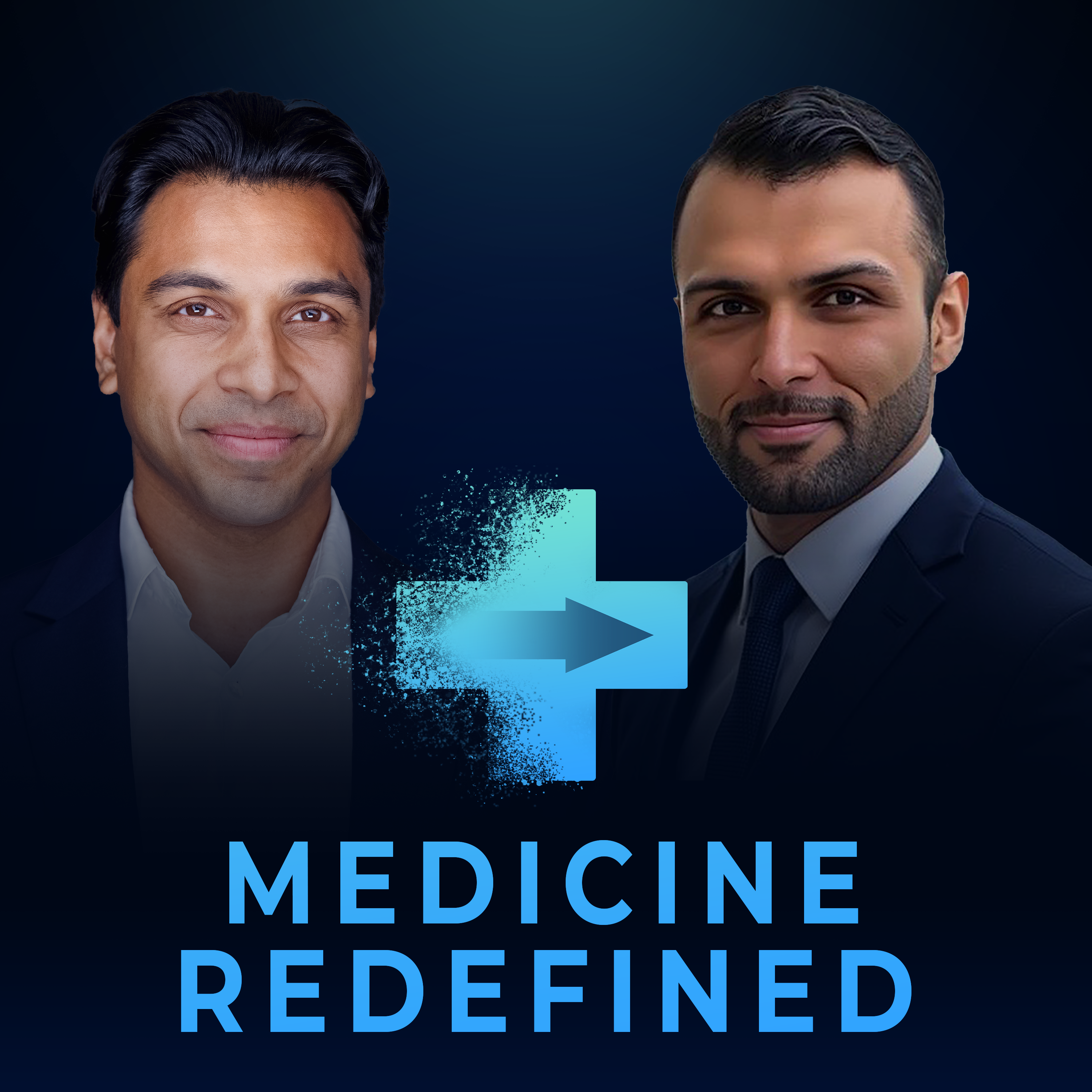
Dr. Darsh Shah and Dr. Altamash Raja sit down with Dorian Greenow, founder of Keto-Mojo, for a wide-ranging conversation on ketosis, metabolic flexibility, chronic disease, and what it means to make health measurable.
Dorian shares how his own experience with weight gain, depression, and discovering nutritional ketosis shaped the creation of Keto-Mojo. From the history of ketogenic diets to the difference between nutritional and therapeutic ketosis, the conversation explores food addiction, ketone testing, metabolic psychiatry, cancer research, exogenous ketones, and why the future of healthcare may depend on outcomes — not sick care.
TOPICS COVERED
- Why keto is more than a fad diet or marketing term
- Dorian’s personal journey with weight loss, depression, and nutritional ketosis
- How Keto-Mojo began by making ketone testing more affordable
- The difference between nutritional ketosis and therapeutic ketosis
- How ketones work as both fuel and signaling molecules
- Emerging research on ketogenic diets for bipolar disorder, schizophrenia, and glioblastoma
- Protein, muscle loss, aging, and how to think about keto beyond weight loss
- How ultra-processed foods, sugary drinks, and food policy shape metabolic health
- Why healthcare should focus on outcomes instead of sick care
RESOURCES MENTIONED
Dorian Greenow / Keto-Mojo
Website: https://keto-mojo.com/
Dorian Greenow: https://keto-mojo.com/our-team/dorian-greenow-president-founder/
MyMojoHealth
Website: https://keto-mojo.com/mymojohealth/
The Art and Science of Low Carbohydrate Living by Stephen Phinney and Jeff Volek
Book: https://www.amazon.com/Art-Science-Low-Carbohydrate-Living/dp/0983490708
Volek et al., “Metabolic characteristics of keto-adapted ultra-endurance runners,” Metabolism (2016)
Study: https://pubmed.ncbi.nlm.nih.gov/26892521/
Campbell et al., “A pilot study of a ketogenic diet in bipolar disorder,” BJPsych Open (2025)
Study: https://www.cambridge.org/core/journals/bjpsych-open/article/pilot-study-of-a-ketogenic-diet-in-bipolar-disorder-clinical-metabolic-and-magnetic-resonance-spectroscopy-findings/7AF8E2ECB765A65B03C97F770BB90BC7
Baszucki Group Metabolic Psychiatry Initiative
Website: https://baszuckigroup.com/our-work/metabolic-mental-health/metabolic-psychiatry-initiative/
Metabolic Mind
Website: https://www.metabolicmind.org/
Brain Energy by Dr. Chris Palmer
Book: https://brainenergy.com/
Amaral et al., “A phase 1 safety and feasibility trial of a ketogenic diet plus standard of care for glioblastoma,” Scientific Reports (2025)
Study: https://www.nature.com/articles/s41598-025-06675-6
Glucose ketone index / GKI Calculator
Keto-Mojo: https://keto-mojo.com/glucose-ketone-index-gki/
FOLLOW US
The Show
- Website: medicineredefined.com (https://medicineredefined.com)
- Instagram / X: @medredefined (https://instagram.com/medredefined)
Dr. Altamash Raja
- Instagram: @draltraja (https://instagram.com/draltraja)
- LinkedIn: Altamash Raja (https://www.linkedin.com/in/altamash-raja-do-rmsk-cscs (https://www.linkedin.com/in/altamash-raja-do-rmsk-cscs-0b1a8039/))
- Refining Health & Performance (https://refininghealthrx.com)
Dr. Darsh Shah
- Instagram: @doctor.darsh (https://www.instagram.com/doctor.darsh/)
- LinkedIn: doctordarsh (https://www.linkedin.com/in/doctordarsh/)
Ready to stop guessing and start performing? Dr. Raja is now seeing patients through his telemedicine practice — limited founding member spots available at refininghealthrx.com (https://refininghealthrx.com).
Welcome to Medicine Redefined. I'm Dr. Ultima Sharajah. And I'm Dr. Darsha. Let's put the health back in healthcare. Today we're joined by Dorian Greenough, co-founder and CEO of KetoMojo, a company whose blood glucose and ketone monitoring technology is now used in more than 38 countries and in dozens of clinical research studies. After struggling with obesity and depression himself, Dorian lost nearly 50 pounds, came off antidepressant, and turned that personal transformation into a mission to make metabolic health measurable and accessible. But this conversation goes far beyond a discussion of the ketogenic diet. We explore what ketosis actually is from a biochemical standpoint, the growing evidence behind its role in conditions like type 2 diabetes, cancer, and metabolic psychiatry, why metabolic flexibility may be one of the most overlooked aspects of human health, and whether many of our current nutrition recommendations are asking the wrong questions altogether. We also discuss fasting, protein intake, exogenous ketones, continuous data tracking, and the broader question of whether our healthcare system is designed to create health or simply treat disease. Whether you're skeptical of keto or already convinced, this conversation challenges many of the assumptions we've been taught about metabolism, nutrition, and longevity. Let's get right into it. If you're a high performer who wants a clear plan for longevity, performance, and staying active with fewer setbacks, I'm now seeing patients through my telemedicine practice who are finding health and performance. I'm opening a limited number of founding member spots at refininghealthrx.com. All right, let's jump in. Welcome back, everyone. We got Dorian. Is it Greenow? Am I saying that correctly? Yep. All right. Dorian Greenow. Yeah. Welcome to Medicine Redefined. Excited to have you here to talk about the ketogenic state and your involvement in, I don't know if I should call it a movement because I know it's been around for some time, but I definitely can say it's been a hot topic. We've definitely seen it getting brought up on different podcasts, Tim Ferriss, for example, Diary of the CEO. So there's been a lot of buzz about this. So we're definitely excited to have you on here. educate us, educate the audience on keto and everything about it. But let's start from the beginning, if you're okay with that. I want to know the origin story. What got you interested in keto? What is your background? Tell us a little bit about that. Well, let's start of an origin story and kind of like you said, it's a movement. But if it's a movement, it's absolutely been going on for over 100 years. In fact, the first action written account in a paper by Dr. Rolo, a Scottish physician, in 1797. People saying it's a fad diet, people saying it's a movement. I would kind of like say, maybe it's actually a little bit about our natural state of what we should be in. Kind of like when we look into that bit. But my actual own personal journey started over 10 years ago. And back then, I was 47 pounds heavier than you see me right now. I was on antidepressants. The jobs that I was in kept on getting shorter and shorter and shorter, and I was spiraling through. I probably wasn't making great decisions. And I think I was living a little bit in the fog of carbs. And I can say that sort of like in hindsight. And then a friend of mine mentioned to me about a well-formulated ketogenic diet. And I've seen my wife do every single diet that exists under the sun. And I've seen every single one fail. All diets work for a time, but they don't become a lifestyle that is sustainable. I mean, so when you look at all the different DASH diet, Ornish diet, vegetarian, carnivore, and all of these other things, all of those dietary patterns are better than the standard American diet. So all of them can make incredible claims. But then the question actually comes down to the fundamentals and to the actual science on it. And that's what I looked into back 10 years ago in that respect. And I was looking at the works of like Dr. Stephen Finney and Dr. Jeff Wallach in their incredible book, The Art and Science of Low Carbohydrate Living. And sort of like when you look at the clear underpinnings of what nutritional ketosis is, kind of made sense. And at that time, I was trying to make an effort. I was paleo. Everyone goes, paleo, that is great. But paleo is not a metabolic state. Paleo is a marketing term. Carnivore is a marketing term. vegetarian is a marketing term, ornish is a marketing term. There's only one metabolic state that can actually be measured for a dietary lifestyle pattern, and that's ketones. So I went on a well-formulated ketogenic diet. I was testing with the Abbott meter back in those days about Each strip was almost $4 to $5. And gently, my weight was coming off one to two pounds per week. I was only doing yoga at that particular moment in time. And I came off all antidepressants within one month and the steady weight loss that came over and then I I got into that under, when you get into the wonderland, it's always good when they talk about it, when you get under that 200 pound mark and you're like really super excited and it continues to drive off. And it was at that moment, that sort of like that realization moment that joie de vivre came back, that I felt like I was in my 20s. And for a 45 year old, that was kind of like a cool thing. I was like, why didn't I know about this when I was a young lad? Why didn't I even know this? So that was sort of like the genesis story of me on my personal journey. And my wife is a cancer thriver. She's also had autoimmune conditions. And she too, at the same time, we did it together. I think when families and partners do things together, the chances of success are so much greater. And both of us achieved incredible results. And that was the genesis to start Keto-Mojo because I was looking at the Abbott strips and four or five bucks a test. When you start adding it up during the day, that gets pretty expensive. But then if you've given up the lattes and you've given up some of these other expensive high carbohydrates, it's a lot cheaper than the doctor's visit in that respect. And so that's how we started Keto-Mojo back in 2017 and when launched back then. we were able to change the price by 75% overnight. And this is how the rise of keto mojo has begun. And we now find ourselves in 38 countries, which is pretty cool. Yeah, that is pretty cool. You used an important word, right? You talked about consistency and sustainability. I think that's something that we've talked about time and time again. Here's what I'm curious about, because when I think about the ketogenic diet, particularly living in America, where the hyperpalatable foods are just anywhere that you look left and right, is not something that strikes me as something that's going to be sustainable long-term, particularly when you're fighting your environment. What made you think that that was going to be the answer with respect to just, hey, lifestyle change long-term, this is something that I can stick to and be successful? I would definitely say for the first month to two months, that eight, maybe even to the third, that eight to 12 week period, your body's going to go through a transformation. But the mindset that we have is sort of like a slightly different one. It's that if you look at food addiction, that's real. If you look at tobacco addiction, that's real. Now we know one cigarette's not going to kill us, but the cumulative effects could have a considerable amount. We look at the cumulative effects of carbohydrates and we can see that on a population scale, diabetes, hypertension, cardiovascular risk, and all of those things. But what happens on a physiological basis is you get this satiety. You don't get these hunger pangs that you think you can get. And I see a lot of marketing in keto foods because they think people are going to want to snack. They think that people are going to need this crutch. And maybe to begin with, we can look at some of these keto bars and keto things in that respect. It's sort of like methadone for the heroin addict. But after a while, when you're kind of like, realize that good quality food and satiety come on into play and that it is actually a very elegant and enriching and delicious lifestyle pattern. So if I said to you that, you know, we're going to start the meal today with a wonderful ceviche and then we're going to probably move into a fennel salad that will go on there. Maybe some boccadronis, which is done with a little egg and a squeeze of lemon juice. Now we're going to move into a little bit of a flank steak with a chimichurri sauce with the wild mushrooms behind that. They're just done in a light amount of butter. And then we'll probably finish with a lovely dessert of strawberries and cream. Do you feel deprived in any way, shape or form by what I've just described? Now, I was wondering if you're trying to get us to salivate on camera here. Well, I have to say, putting all cards on the table, I'm on my ninth day of a farce right now. Okay, that makes a lot of sense. I got a little bit of stuff on mine. But yes, ultra-proset-3s and hyperpads, in the initial stage, it's like that. But then what happens is if your partner's working with you together or your family's working in together, your degree of success goes up. Then I think it's tests don't guess because then you can use the data to guide you. You can actually see that you are in nutritional ketosis. Then the utilization of non-scale victories. How does my face look in the mirror by taking a selfie? Have I gone another notch? on my belt to that, have I gone down a dress size? These kind of things start to come into play to guide you. And then when you see success, and that first success is just getting into nutritional ketosis, and that happens very early days, you then find this motivation to do it. And then coming back to this ultra-processed food and this hyper-palatability, if you know you now have the choice, once you know you have that choice, you are the captain of the ship, you are the master of your soul. And that then gives you the reason, like, Yes, when I was a young lad, I used to smoke from about the age of 13 to the age of 26. I gave up smoking. I know one cigarette's not going to kill me, but the cumulative effects will. So I have made that choice in my life to give up those aspects to it. And nothing is as good as healthy feels, is it? Well, let's get into the biochemistry of keto. We definitely have kind of talked about it in a big picture sense, it seems like, at least as far as in a diet sense and that consistency and what it may be taking. We can definitely go into some of those details with foods later. But if we had to describe what keto is from a biochemical standpoint, how would you do that? Keto lives on the spectrum. I think that's very important. And so quite often when you talk to a doctor, their version of what they think keto is different to perhaps what you will see with somebody who's a low-carb coach. And then what we're going to see for somebody who's doing keto for cancer or keto for a metabolic psychiatry, they're going to be very, very different. But if we are going to look at the base foundations, nutritionals, ketosis, as put forward by Dr. Swaller, starts at 0.5 millimole and above. So by measuring your blood, the beta-hydroxybutyrate that is within the blood, and if you look at the, there are actually several different types of ketones. You've got beta-hydroxybutyrate, you've got acetoacetate, and you have acetone. The BHB is extremely stable in the blood, represents about 70% of the energy that's within the body. The acetoacetate is about 28% of the energy that's within the body and is easily shunted into beta-hydroxybutyrate, cetoacetate is quite unstable and moves around in the Krebs cycle. And then you have that rough 2%, which is acetone. Some people look at acetone, which is, could be potentially measured on the breath as the by-product that is in there. Most people have low levels of ketones, 0.1s and 0.2s, but it is that threshold of 0.5 that is nutritional ketosis. And to kind of like put this in sort of like evolutionary perspectives, babies are actually born in nutritional ketosis. There was a famous study by the University of Japan and they followed, I think it was about 400 or 800 women, somewhere in that, remember, I'd have to pull it up to be exactly sure. And they followed them in the second and third trimesters. These ladies were having a standard Japanese diet. And let's be very clear, everyone thinks Japanese diet is a huge amount of rice, but it actually is not in modern times. It's almost less than a cup of wine. It's a high amount of protein that's actually coming in Japanese diets these days. Rice is sort of almost peasant food, if you will, in that respect. And they found that in the third trimester, the ladies were in a light ketotic state. We're talking 0.4 to 0.5. And then they measured the baby at birth and that baby was at a light ketotic state, the same as the mother, 0.4 to 0.5. But the placenta was at 2.95. So 2.95 is huge. It's orders of magnitude higher than what the baby is here. And that's what the placenta is. And so basically that child has been intrusively being fed ketones. during its fetal development. And we all know that brain development is one of the most important things in bone development within the child. And actually breastfeeding for that first year or two years becomes vitally important. But a mother's milk is ketotic to that baby. And if we also then consider why have babies that have this wonderful layer of fat that is on them? Well, you've gone from fully intravenous for nine months to then episodic. So how do you kind of like switch quickly, have this metabolic flexibility to move between one thing to the other? And that's what we're given as this evolutionary trick that goes. allowed us to have superiority. And in fact, there was a study done by Cahill that showed that infants could move into nutritional deposis in under two hours. And we lose that metabolic flexibility as we age, because as we age in a modern society, we are basically eating carbs. We short circuit that. If we look back in our historical nature, it's perfectly natural to be in nutritional ketosis. It is kind of like being with us for years. It's only strange in these modern times where people think it's different. If we are modern human beings trapped in 300,000-year-old bodies, Our bodies were designed for a different era. And if you look in nature, carbohydrates are really rare. Look behind me. I've got an oak tree. I've got a bay laurel that is over there. I've got a California oak scrub that is in there. If I asked you to go into that California oak scrub and say, find me a carbohydrate, what would you choose? It would be very difficult, wouldn't it? Because carbohydrates are rare in nature. But I tell you, I bet you could probably find a wild turkey, or you could find an elk, or you could find a deer, or you could find a rabbit, or anything else like that. And so if we kind of like look, if the amount of energy it takes to create carbohydrates from clearing the land, plowing the land, sowing the seed, irrigating the product, protecting that product, harvesting the product, grinding it down, storing that product, and then finally making something from it. That is a huge amount of effort. Now what happened- Are you not including plants here though? Like vegetables and plants and fruit? Yeah, but most of the time it was a bug brand. If you go back 450 years, the potato wasn't in the European Union, was it? I mean, that came over from Peru. If we take a look at the expansion of corn, that was only in the Pueblo region. If we look at the tomatoes, the tomatoes actually came from Brazil. So all these wonderful Italian Mediterranean cuisines didn't actually exist at that particular time. And historically, if you go back to the breadbasket of Mesopotamia, this is where everything came from. Mesopotamia used to have massive cedar forests, and there were hippos and tigers and these mountain lions. And these are apex predators. For an apex predator to survive, there has to be a huge amount of animals that they need to survive on. What happens is we cut down those trees. What we were left was we had eaten all of the animals. And so we were left with subsistence farming. But we got really good at it. And this is what humans are really good with. Humans are great at perfecting things and finding things like that. And they ended up having a shelf-stable product that allowed armies to march and we could conquer ground. Nothing there said that this was the optimal food for a human being. And so this is the question, I think, that is the thing as we look forward now with all the knowledge that we have of the past and in the now and to the future, is what is the optimal food for a human being? And I think it's great in the current dietary guidelines. that for the first time in history, they have stated specifically that low-carbohydrate diets are a viable dietary pattern for the treatment of chronic diseases, which I think is incredible. That's a huge opening that has never existed before. And through that, we can then make the decision is, is it actually for human beings? There's nothing wrong with it. I mean, that's the kind of the cool thing. If you think about it, whether or not you are low-ish carb or keto, that's still much better than the standard American diet. And if you are keto, is there anything wrong with actually doing it? That becomes then the lifestyle choice once you know the reasons for it. And so I want to loop back if I can a little bit, was initially on the question of what nutritional ketosis is. And so that's from 0.5 to about 1.5. That's where most people who are just low-carb keto people, that's where they would sit, perhaps for type 2 diabetes reversal or just because they want to. Therapeutics start sort of like at 1.5 above. And then we've got real targeted use for maybe a cancer treatment or perhaps metabolic psychiatry or where it existed for the last 30 years was in drug-resistant epilepsy. And once you try to get these ketones in these higher thresholds, these threes, these fours, this is where it becomes really, really hard. It's not easy to do that kind of keto. The amount of fat that needs to be pushed on in is significant, or the amount of caloric restriction that needs to come on is significant. And this is where the preconception that ketogenic diets are difficult is the mist that was born out of that. Yes, that is hard. And I do agree that that needs doctor supervision or an expert's help that is in there. But general low carbohydrate, like that wonderful meal that I do, that's a pretty easy thing too. Is there any benefit in going higher on that spectrum? I mean, obviously trying to avoid ketoacidosis, but besides maybe taking longer to go back out of ketosis, is there any other benefit? For most people, I would say don't go chasing ketones, chase results. I think that's the important thing. And then also when trying to answer that question, it's important to ask what is the person's why? Why is that person doing it? If it's weight loss, general health, perhaps type 2 diabetes reversal, higher is definitely not better. Just being in nutritional ketosis is certainly that is good. emerging evidence that we're seeing in cancer treatments, especially coming out from Professor Seyfried at Boston College and Dr. Thomas Durai, then ketones really start to matter and glucose starts to matter. And Professor Seyfried was the first one that put forth in his studies and worked there research that he'd done of the GKI, which is the glucose ketone index. That's your measurement of glucose in minimoles divided by your measurement. in ketones and minerals, and that gives you your GKI. So what we see is that ketones are not only just a fuel, they are also a cyclical molecule. They can upregulate your epigenetics. There's a full, systemically, there's a massive reduction in inflammation. Now, are ketones doing that? Could be, we'll look at some other studies, but is it the absence of carbohydrates that is now reducing that down piece that comes on in? because you no longer have this hyperenteremia. So certainly in cancer treatments, we've seen these higher ketones actually matter. Then in emerging evidence that we have in metabolic psychiatry for bipolar, this was done by Dr. Ian Campbell at the University of Edinburgh. He was utilizing the GKI in that particular study. We actually asked him to do it. He didn't, he'd only asked us for ketones for that first study. And we're like, well, just put some glucose in there and let's look at the GKI, see if there's something that is in there. And the glucose strips are not that expensive. And what he found that there was a correlation that those that had a lower GKI, which is higher ketones and stable blood glucose, were the ones that had got into full remission within that particular study. That was amazing. Only 19 people. There's a feasibility study. They're moving on to do this in 300 people. They've got funding from the Buzuki Foundation, which is absolutely fantastic to see this. And just I think there's going to be an explosion in metabolic psychiatry. To all of your listeners out there, I think this is the area to look at right now. never before in the history of psychiatry has so much money gone in to study the mechanistic method and on that. Over $45 million is what's in their foundation. And they're funding 12 to 14 different trials, over a thousand lives that will be covered on it. And they're looking not only at the application and use, but also the mechanistic method that is behind it. And I think this is where we will see it. And You have to be very careful a little bit when we talk about keto. I mean, I end up sometimes feeling I'm like some sort of snake oil sales. It'll do this. Oh, it does that. You kind of like have to kind of like pare it back and say, okay, what is the good evidence? And then you also have to look at what is the root cause of why this is working? And really it's insulin resistance. And this is sort of like, if you look at the insulin resistance, a lot of these things would dissipate. And people thought about, well, how can keto be an effect for psychology and bipolar and schizophrenia? And I kind of like would go to every single parent out there and say, okay, you're at the kids party and you serve them cake and candy. What happens next? And every parent is going to tell you, oh, the room goes up. No. And then there's the crash. We can see that in our children. Why can we not see it as ourselves and adults? Why can we not think that this hyperinsulemia is causing this underground peace like that? And in the absence of that, we see something that's quite significant and something quite changing it. And I think this is as we move forward and we get better evidence base, we'll see these things change a little bit. Excuse me, quick slip of some tea. I'm still fasted by the way. So day nine, still fasted. I'm not doing a tradition. Well, I started traditionally, but I do have a touch of heavy cream in my team. So on that one, high caloric restriction. And I've worked for the keto police that is out there. That's right. 10 years in, I do my own thing. We'll wait for people in the comments to see if this actually violates your fast or not. Okay. Well, and no. No, I love that. Thank you for sharing that, Dorian. We recently had Dr. Matthew Bernstein come on and talk about this at length and point to some of the literature that you've already alluded to, as well as talk about some of the mechanistic explanations of how it's helping. He's been advocating and other colleagues of his in metabolic psychiatry of taking a biology-based approach to psychiatry, which is something that we've been divorced from for a very long time. And he said a lot of what you said here in terms of insulin resistance. I'm interested in, you a lot of chronic diseases, right? For being on a lower carbohydrate, not necessarily a true therapeutic ketogenic diet. That number is 1.5 millimoles and above. That's what you said, right? 0.5. 0.5 as well. So between 0.5 to 1.5 is just light nutritional ketosis. 1.5, roughly 2, 3 is we start getting into the therapy realm, like low therapeutic to high therapeutic. Yeah. Gotcha. When you said like it gets really challenging, you know, one of the concerns that I always have is I think much like zone two right now, protein is also having a small amount, which we're fans of here. And we've talked about this at length. And I have to acknowledge my biases. I think that coming from a fitness and strength and conditioning background, I've always been in the camp of taking one grams per pound of body weight. When you look at the International Society of Sports Nutrition and a lot of those international societies that are working with athletes primarily, they'll say anywhere from 1.6 to 2 grams per kilograms, which puts you roughly in that ballpark if you're on the upper end about one grams per pound. I think a better number is to target lean body mass and look at it according to that. If you're really heavy, then maybe you'll look at target lean body mass. And I think if you are looking at that upper range, you are certainly going to go through gluconeogenesis and you can get yourself out of a ketogenic state. And I'm interested in how to balance that with... the idea that protein is a building block. It's foundational when we're talking about sarcopenia, when we're talking about graceful aging and making sure that muscle and strength are preserved. And again, I acknowledge my biases. We're both physiatrists, Darsh and I, and we care for people in their 60s and 70s. We see the hip fracture that comes in. Maybe they don't go home. Maybe they have to go to a nursing home. Darsh, you can speak on this a lot. And the reality is we are also an epidemic of muscle loss, as Dr. Gabrielle appliances, right? So how do you kind of reconcile those two camps right there? So protein is a goal. I'm going to steal from Louis Vilsenor right now of keto gains. And I really liked it when he liked that. Protein is a goal. Fats is a lever and carbs are an absolute. And like I said, keto, low carb is a spectrum depending on that person's individual and that why of carbs. I'm sort of like the middle ground cap. I'm adequate fat, moderate protein, above ground vegetable, short of chappy. I like to be an omnivore. I love the flavors and textures and all of those kind of like aspects that kind of come on in. So we have to be very careful of generalized rules that kind of like come into play. I have met carnivores who have been surprised once they tested them. And they said, wow, I've only getting 0.3, 0.4 or 0.5 on my ketones. I'm not getting high ketones because they have, like you have just mentioned there, that we do get an insulin response from protein and we can get a glucose response from it. But it's very individual to that person. Can you have a carnivore keto diet? Yes. Ursula, I've got a last name in a moment. in Hungary of paleomedicina. But I think a lot of people in carnivore aren't doing enough adequate fat. And so when I talk about adequate fat, a true ketogenic diet is high fat. But if your body has a lot of fat on it, pushing too much fat is actually a detriment. So when I say adequate fat, it's that enough fats to give you that satiety when it's bound with protein as well. So you've got that chlorellin, that feeling of satiety, and still being able to metabolize your bodily fat for energy. Yeah. I'm not saying calories in, calories out, but I'm also saying that a little bit of deficit helps there until you get to that maintenance. Then the amount of fat you have in maintenance is going to be very different to the fat that you have when you're first starting. That's if you're in the fat and the weight loss. And so when it comes to protein and the consumption level, myself, obviously I have a testing company. I would say, what is the data telling you here? Are you getting the ketone levels that you want for what you are trying to achieve? If it's somebody that's like me, I'm over 55 now, I'm trying to maintain my health wealth as much as I possibly can. So for me, it's just, am I in nutritional ketosis? That's great. I'm in an extended fast right now. That's my January reset. There's no alcohol that's coming on in at this particular moment in time. I'm doing a full reset and I only intended to do five days. I was like, I was feeling really good. I had this one dialed on really well. And I was like, well, let's go to seven days. And Gemma had been on a working trip. That's why I decided to do a fast like before the wife goes away. I was like, great. I don't have to do any cooking, cleaning or washing up. That's easy for me, isn't it? And then as he came back, he was like, well, do you want to join me? So I was like, yeah, we carried on. And then as everything was going great, I was like, well, let's continue it on. So I think when you look at that, use data to guide you as to what's right instead of one science fits all. This personalization of medicine is true. There was an Israeli study that was done and everybody has a different response to carbohydrates right? If you look at any type 1 diabetic, any type 1 diabetic will tell you that they can have perfect glucose at 1 unit, 10 units, or 100 units of insulin. So when you look at a CGM and you see, oh, I've got 83, I've got great blood glucose, it's not telling you how much your pancreas is actually compensating to get you that 83. It's only when you give your pancreas that break and you go into nutritional ketosis, can you truly begin to see what your insulin resistance looks like. What is that waking blood glucose? Does that stay elevated longer than you would expect? That then becomes the moment, I think. Now, obviously, I'm biased. I've been here for 10 years. I've got a ketogenic foundation. I run a ketogenic company in that respect. So I think it's important to acknowledge my bias and even my cultural bias that comes into play there. But I think the true magic, in my mind, happens in nutritional ketosis. But I know we're not going to get the population there. Just getting them off ultra-processed food, what a super win that would be. getting that disaster stuff that's in our children's school away, removing the vending machines. And sadly, there was absolutely no mention of sugary drinks within the dietary guidelines, where people are mainlining these Reds balls and these monsters and these things like that. And we wonder when people, the military, have such higher rates of diabetes. That's three to four times the general population because of what they've been mainly. And that goes to prove that even with a drill sergeant and all the fitness stuff that they're doing, you can't outrun a bad diet in that respect. I mean, how many elite athletes have we saw her diet at an early age when they're supposed to be fit, they're working out, they're doing everything at an elite level. But the cubes affects those carbohydrates and the inflammation that's going on. within their bodies starts to take its toll. An athlete wants to win. It doesn't mean that that athlete is actually healthy. Just they'll do everything to win. If I answer your question, I might have veered off a little bit down a rabbit hole. I apologize. I was going to ask about metabolic flexibility. I mean, I know you started bringing up a little bit about exercise workouts. And I think a lot of people talk about metabolic flexibility in that context. So I thought this could be a good opportunity to kind of educate the listeners on exactly what metabolic flexibility is. You mentioned it a couple of times, especially as when we're babies and we grow older, but maybe what the benefits of those are and how can we improve that ourselves, whether it's using dietary advantages or whether it's through work it out or something in combination. So the foundation of the evidence of that was put forth by Dr. C. Gelfinney and Dr. Jeff Follick in their FASTA study that they did in elite athletes, where they showcased that fat adaption takes about 12 weeks. So they took elite athletes and with the elite athletes, and they put them on a low carbohydrate diet and their performance went down. Now, if you had done that study for one month, you'll go like, oh, keto sucks. No, we did this for a month. It doesn't work. Their performance went down and then they actually see it turned the corner and then the performance started to go up and then they got better than where they were. This is as their bodies went through a fat adaption stage. This is where the mitochondria changes and needs to be changed to that. And then we can get that increase in ATP that's in the body. And that's where they had greater endurance that came into play. And so first of all, you've got to go through that fat adaption period that is in the body as you're changing things on the cellular level. Their metabolic flexibility is like if you consume something that might make your ketones drop or fall out of nutritional ketosis, how quick then does it take for you to get back into that? How does that work for if you're not an elite athlete, you're just like a regular old 55-year-old man like me. I do enough physical workout just because I know I'm supposed to do it, but I don't do it because I enjoy it. I know elite athletes enjoy it, but what about them, just the normal people out of that? Well, we are recently, last year we were in Paris, and of course there's all of the pain au chocolat stuff. croissant and stuff is going to kind of like come on in across your face. And it doesn't matter how much you try to explain in your best schoolboy French to that waiter that you don't need the bread. And even if the first waiter gets it, the second waiter will walk down and go, oh my gosh, shock, horror, I've got to bring this person bread and we'll drop it down even without saying it. And so then you're faced with this moment as I adapt. And we have, my wife and I have a scene between us. It depends on who's going to be the first to break. And then one will try a bite. And then we ask ourselves, is it worth it? And if it's been beautifully made with care and love and you think, I'm going to enjoy that flavor, okay, I'll try it. And it might be that we'll share a croissant. Is it working? We've got to face it there. If the next day, am I in ketosis or I'm not in ketosis? Invariably, I'm so metabolically flexible. That half a croissant, that little piece of potato that's in the beef bourguignon, it's not going to do anything to me. because I have a higher carbohydrate tolerance and metabolically flexible in that respect. And if I do see that I've dropped on out, perhaps I had a wine from South America that has a lot of residual sugar on it and didn't realize it because there was no truth in labeling. Then I know in the morning, right? You know what? I'm not in ketosis. I prefer the way that ketosis feels. I'm just going to fast a little longer and then I might have a meal a little bit later and then within two, three hours. exactly where I would want to be. And personally myself, I wanted to say, when I came off those antidepressants, I target myself in normal nutritional ketosis between 1.1 and 1.7 really more, because that's where I realized I had that joie de vivre. And that's where my mental health tops everything else in my personal life. I don't want to become the person that I was before. So I target my ketone levels and I make some decisions by pushing my fat a little bit more to hit that level in that respect. So that metabolic flexibility does take time to do that, but then it gives you more freedom to not sweat it, to say, okay, that's in that. Now we mentioned earlier on when I was talking about bocorones, those sardines, There is a little tapas place that we go to here in Napa and we'll order one of those and it comes on one slice of sourdough bread and we'll cut that in half and we'll have the bocorones and then with that it's freshly done and it's crispy and it's lovely. I'm still in the neurological ketosis. So the keto police will come on down and start blowing their whistle if they went past my table going, that's not keto! And I'm going like, my data says otherwise, my body says otherwise. And so I think that gives you a little bit of freedom about learning your body and learning yourself. Do I need to test every day? I don't. I know I've pretty much eaten every piece of food locally that I can have here and I know what does and does not kick it out. So the need to test diminishes. And so I think this is one of the cool beauties, like to begin to test a lot to begin with. But if the coaches, the doctors, the clinicians and others have done their job, the need to test diminishes over time until eventually you don't need us. You've gone on to live a beautiful, healthy life that we did for a millennia beforehand. And we knew how to do intrinsically because that's what we were just eating back in those days. That was the way that was. I'm just curious, where would you be nine days into a fast? You said 1.1 to 1.7. Typically, where are you today if you checked it? So this morning I woke up, my blood glucose was at 75 with ketones at 5.9. If I look over these nine days, my data is I've averaged 83 milligrams per deciliter as my blood glucose. And my mean rate of ketones about 4.9, but that's climbing up because we have to take into the first ramp up as you get into the fast cycle. So normally I'm about 5.9 at the last three days, running to about 6.5, 6.6-ish. Because your ketones are those in the morning and then they rise up during the day and they reach their peak just before your evening meal. And they follow a circadian rhythm and then they drop off overnight. 7.2 is about my highest. This backside of my SARS, I'm... not purist in it. There's a touch of little fats that is in there because I just like my tea with cream. It's just the way I do it. So there's a small amount there. And then Gemma and I, we do like to sit down for dinner. Let's do dinner in a verticook. Quotes here. We'll have a bowl of bone broth at that particular moment in time. So we sit down, we're slowly spooning that in there. We're utilizing the psychological aspect of being together at a table on the extended fast. But the first three days was pure because I was going for the autophagy that was looking for The rest of it is not so much. It's just like, hey, Dorian, you're doing a big reset. And also just a personal challenge to myself. I'm in a new world for us being on the nine-day fast. Before it was five days. So this, I'm just sort of interested. But I think the marker will be, it's not like I've set myself a target date or a target wait. It's just like, how do you feel? And do you want to continue with that? Or do you say like, I mean, I've got a full refrigerator and pantry. I can stop anytime I like. I think there was a phrase in, an Aboriginal Indigenous phrase, We, in our world, are very happy that we never get to experience the great hunger. And I hope that nobody I know or everyone would ever get to experience what that is truly like. But the little hunger is what we can deal with. It's just learning what it's actually truly like. And I feel great today. So that's kind of where I roll on this extended fast. Yeah, it's funny. And I imagine a lot of this, Darsh, you could speak on about the comfort crisis and just being comfortable all the time. I've been off. I had surgery not too long ago. So I've been at home all day and not distracted and just watching TV or just hanging out or just working on something. So I have food two steps away from the kitchen. So I'm constantly just snacking. And even this morning, I think I woke up at like 5.30 and I was like, man, I'm a little hungry. I'm having trouble sleeping again. It's so interesting that you just program yourself after a matter of weeks to constantly need that. I'm curious how you said you feel fantastic between 1.1 to 1.7. Do you tend to feel worse when you're getting up that high where you are around six? A little bit of hypomania. My staff hate me when I've been fasting because I've got like 10 ideas a minute. Do you know what I mean? And I'm like popping stuff out and I'm like, I'm going to do this and I'm going to do that. And I'm like, oh, somebody gives this guy a KitKat. Exactly. Yeah. It's definitely one of those cases of like, oh my gosh. And if you look at metabolic psychiatry, this is a really important point. And this is where Dr. Christopher Palmer says that in metabolic psychiatry, you really need to have somebody take you through this. hypermania for me or hypermania for somebody else might be that they're just going to vacuum their their living room or go make a new bench in the yard or something like that or or build something or irritate their team with huge amounts of slack messages but hypermania in somebody who might have bipolar or affective disorder that could be really serious and so this is where you know when you look at fasting, or if you take a look at a well-formulated ketogenic diet as it exists on the spectrum, we cannot use one size fits all on these labelings that is coming on in there. And so anybody that's listening who might have those diseases, it's like definitely do it with somebody who understands how to do it. And Dr. Crystal Palmer, I remember him saying, it's going to get worse before it gets better. If your brain has been the brain energy model, if that's being deprived of that energy, and as Dr. Ian Campbell said, it was like the lights switched on for him, like boom, you suddenly you're in this illumination, like the grid's going on. It's funny you're dealing with this new thing within the brain that you have not been used to for multiple years. Combine that with potential medications that you've got on. You're going to be on a roller coaster. And it is really important to do that. And especially not even to deprescribe yourself because deprescription for mental health can take a year to two years. It takes a long time to titrate off somebody's very powerful drugs. That's in fact. Yeah. So hypermania, that's how it exists on that one there. And what's worse is being able to fill the extra time that it's all saved off from not having to do the shopping, the washing up or the cooking. So now you try to find more things to do, which irritates your team even more. I don't think a KitKat would touch you, Dorian. You're a thinker too metabolically flexible. But speaking of KitKats, let's talk about hunger signaling and essentially how keto gets you in that state. You mentioned ghrelin, that you have its counterpart leptin. Do you mind touching on a little bit about the hormones that are in play and exactly how keto helps with hunger energy levels, the mental benefits even maybe? Yeah. So I think let's start off a little bit about what happens when you do eat that KitKat. So you've eaten the KitKat, the blood glucose levels have gone up just as the basics that comes on in them. High glucose levels, that means diabetes. So your pancreas has to kind of like secrete insulin to manage it. If you've got a good pancreas, it's going to easily secrete insulin to manage that glucose levels to bring it down into that euglycemic range. Euglycemia, you meaning normal, that 83 milligrams per deciliter that's done now. So you've got it up, your insulin drops it down like that. And then because you've got this extra insulin, because you're chasing the bolus, you get this crash at the bottom. You then get a signal, I've got to eat again. And that's the carbohydrate roller coaster that goes along. That's the standard American diet method of eating. Now, when you are in nutritional ketosis, you get very stable blood glucose. It flatlights. It's 83. So you're not getting these crashes that are coming in there or the effects of hyperinsulin that comes on it. Now, a well-formulated ketogenic diet is naturally, it has GLPs with it. We look in society where people are going like, oh, I'm taking GLPs. And you're like, well, I actually naturally get that from it in that respect. You also have that satiety, protein and fats together. That's the gorilla that kind of comes in there. I look at that. How many times, are you both carnivores here? I'm a vegetarian, yeah. You're a vegetarian. I'll smash you a vegetarian as well? I was going to make that joke. What's it, a seafood diet? It's like, let's see what I'm on. You see something, you eat it. Escutarian, okay. No, no, no. I was joking. I'm not a pescetarian. I meant like whatever I see, I eat. Okay. So the reason why I asked that is how many times have you might have had a steak, especially in America, the steak is always way too big, that you have this steak and you get sort of like halfway through it and you're like, I'm done. And you kind of like want to, you push that sort of like away from table, you're like, you have that feeling of satiety that you cannot eat anymore because that's what the feedback that is happening within your body. But do you get that with chocolate cake? No, you can have got, I'm done. And then the chocolate cake could have gone past and you go, I'll have one bite. And now you're going to pile drive the entire amount of chocolate cake was out whilst you're sending the steak back in the box. You've got a separate stomach for that. With the cake stomach, yeah. But that's kind of like the thing that sort of acts that carbohydrates can hijack the brain and light up that dopamine center that's in there. And I think that's the challenge that you get from those. So mechanistically, you know, you get this feedback loop. The same thing actually happens a little bit with alcohol, if you consider it. You can drink water and most people drink water to the point where they're like, well, I'm not thirsty anymore. I don't need any more water. But that doesn't quite often happen to some people with alcohol. And for somebody who was in the wine industry for a very long time, and I'm an advocate to having a little glass of wine with a meal and enjoying life and lifestyle, because if it's not a lifestyle, what is it for you? How can you keep up with that? But there are some people who that's not going to work for. And they have to choose what is their style of low-carb keto lifestyle that fits with them, that they can manage for years instead of doing a diet that always fails. And I think it was a lifestyle that got you. It was many years that got you to a position. And it's going to be many years that's going to get you out of the position. My hopes is that I have a very long life and just have one bad day. That would be pretty good. Can you speak a little bit more about the GLP? How do you get that? Is it activation of your endogenous GLP-1 production or... Yeah, it's endogenous glucagon that is produced within the body whilst you're in nutritional ketosis that kind of like happens with that when you're eating a low-carb keto medium. So you've already got that. They're just mimicking what's happening in that so that you don't have that, oh, I want to eat more sort of like thing. You get it naturally and endogenously within that part. And you kind of like look at how through diabetes, a lot of these drugs have come on out like SGL2 inhibitors. And then SGL2 inhibitor blocks glucose absorption. When doctors are prescribing from utilizing SGL2 inhibitors when doing a well-formulated ketogenic diet, their worry right there is that with that glucose inhibited, they're going to have ketoacidosis, which is very serious. So that's why when you're measuring if you're on diabetes, you have to be very, very careful with those. And the same thing is with GLPs. You need an off-ramp from that. Do we want to be injecting ourselves for the rest of its life? Do we want to be taking an oral medication for that? We should be. It's just like, if it's stopping the glucose from going in there with an SDR2, or it's giving you that feeling of satiety, why not just have the food that's going to do that naturally for you? But everybody thinks it's the cheap fix. And that cheap fix is what bothers me the most, because it's not a cheap fix. It's because why America has the most expensive healthcare costs in the world and the lowest results. We're great if you get hit by a bus. I mean, measure of healthcare for America is incredible as you get hit by a bus, but their general healthcare, their sick care, it's awful and it's super expensive. I was going to say, that's what you're speaking on right there is that's because we want to, in this case, literally have our cake and eat it too, right? As you want to just inject and like, hey, I'm going to be able to consume less, but you're still going to consume poor quality nutrition. That's actually one of the reasons why a lot of people are so vocal about the muscle loss that's coming from this. It's not necessarily directly related to the actual medication. It's a lot of times misuse of medication. It's inappropriate. In my mind, I would say it's an abuse if a patient is prescribed that medication, specifically the one that we're talking about. I don't want to go too deep into this rabbit hole here, but they're not doing resistance training and they're not on a good nutritional program. Because that's got to be the foundation. And to think that you're going to be able to eat the way that you ate before and just eat less and come out better in the end is actually probably going to come out worse because we're going to just rob any more. The evidence is beginning to mount that it is coming out worse. And I think there'll be more to come out. But I also think when you look at this mashup, this sausage, if you will. And there's a huge amount of political sausage that's going on all of this. And between all the different factions, between those who are entrenched carnivores, for those who are ideological vegetarians, through to all that, that is a Republican policy, that is a Democrat policy. No. The Democrats are woke, they're going to be, because they're going to fill you with soy and we're going to have black grown meat versus now we're going to do carnivores and raw milk and vaccinations. When you take all of this in its entirety and you think about the average consumer that is out there in either side of the spectrum, How do they make head or tails of all of this? And so the part that's where Keaton Mojo and our team like to sit in is like, is it evidence-based? This is what we see in the evidence. Does that evidence sort of like that? Are we willing to change our mind if evidence comes on in to that side? Then yeah, I think that's the best bit. And the more that we talk about evidence... feelings or politic. And then we look at the clinical trial work, and that's why Kilimodo is happy to be in over 97 different clinical trials. We're saying, look at these evidence. And if we see these differences happening, one of my most favorite one was done with Cedars-Sinai Hospital with LJ Amara and Dr. Jethro Hugh for glioblastoma, a very advanced form of cancer, very aggressive. The overall survivability rate is about 14.7 months. And my good friend and chef that I worked with for many years at Pine Ridge Winery, Eric Metzko, he passed away from glioblastoma. But early on, I'd heard anecdotal evidence about ketogenic diets and glioblastoma. And I kind of went to him and said, hey, Eric. And he went to his oncologist and asked his oncologist about that. And he said, oh, it's a diet of last resort. If you've got glioblastoma and you've got a 14.7 month survivability rate, that is last resort already. But there wasn't enough evidence. So we roll on and we worked with CEDARS on this clinical trial last week, passed away. And last year, late part of last year, they published their evidence that was based on it, utilizing just a well-formulated case, ketogenic diet, and a standard of care. The overall survivability went from 14.7 months to 30.2. What is twice as much life worth? And out of that 19, 20 people I think was in the cohort, two were still alive. A 10% chance of survival, which is greater than twice as much than the 5% we see. If that was a pill, it would be a billion dollar pill right now. And every single oncologist would know about that. But every single oncologist doesn't know about it. It's because they choose not to look at any of the data that might have keto or diet in the title that is on that. And this is the challenge that we have to build in the entrenchment into the medical community. is how do we get to the younger clinicians, researchers, the next generation of doctors, so that they can be curious. I always talk about the ABCs. A, acknowledge bias. B, be curious. And C, conscientious research. Wasn't every clinician and doctor once so curious, would want you to get in and know absolutely everything? And how did we lose that in later life when we got entrenched into the system, into the guild or the society of, and that's where we had to sit and we lost that moment of being? That might be different. And I kind of like think to myself to have that, if Eric was still here, to have his crab stuff from around mushrooms again, perfectly keto, perfectly pescatarian on that one. That would be so cool. That would be very cool. Sorry for your loss, man. I'm sorry for Eric and that part, but it kind of like spurred us on to make changes. And then there'll be the others that will benefit from it. And so out of that comes something that's a little bit better on that one. Dorian, one thing that gets mentioned oftentimes when people start keto is the keto flu. Now, I guess that can happen in the first two days, three days. I'm not even sure exactly you can enlighten us on that. But beyond that, is there anybody, any type of population that keto is not suitable for, maybe based off the way they feel, or maybe even based off the metrics, if we're going off that? Certainly. I think there's a pancreatic cancer that can have a massively adverse effect for somebody that goes on a low-carb ketogenic diet and very rare occurrence in that respect. So for sure, there's definitely that. But that's a tiny fraction of the population. And there can be a good and a bad with that if somebody's having this adverse effect. It's a great way to help get quickly diagnosed that they've got a problem that is there that didn't exist before if it hadn't been detected. Yeah. I think if you take a look at people who are doing carnivore keto, there are some genetic slips that some people might not be predisposed to having super high amounts of protein that's in there. So maybe moderate or lower or using escotarian kind of like proteins to kind of come into play in that respect. People who are on STL2 inhibitors, as I said, definitely need to get off of those, but only under physician supervision to be able to get to the next stage that we have. But keto flu is just really an electrolyte in diet, potassium, magnesium, and salt. And in fact, I think in the early days of Virta, when they were first doing their clinical trial work, Dr. Finney just put like a bullion stock in there and just like have a little bit of bullion, stick it in there. You get the salt, you've got the potassium, you've got everything you need. It doesn't need to kind of like overthink it, but it's really an electrolyte imbalance that as that fat cell is collapsing down, that loss of water weight's coming out from it. Electrolytes are being lost and you just really need to replenish that. So on the front end, electrolytes are worth a lot of money. But then I find that once you get into maintenance, the amount of salt that is required, you're generally now re-salting your food a little bit more better than where you were before. Because we were all told to fear the salt for what carbohydrates were doing. A lot of carbohydrates have a lot of salt into them anyway. So you were compounding within your meal in that respect. So that kind of comes in. So keto flu just is really an electrolyte imbalance. That's a real easy fix. I think on general, the amount of population that cannot do it is extremely a small number of the population in that way, in our knowledge, from what we actually see and hear in the adverse effects that kind of come into play. Now, if you're a pilot, I think this is a very interesting area. Like you're a pilot, you're in a sedentary job. Generally you're moving from one food desert to another two desert. Cause if you look at air for airline food and like that, they're really pretty bad in that respect. and you've got something that is mission critical, but now you're gaining massive amounts of weight and you've got a pre-diabetes diagnosis. Well, here you get faced with a challenge that you still need to keep working. You need to lower weight, but if you don't lower that weight, you could actually lose your muscle. This could be serious. And even in airline pilots, I met with a flight surgeon that fighter pilots, they were gaining weight and they were having difficulty in losing that weight as much as they were running and with that because of the insulin resistance that they had. And they were sometimes taking their vacations and having liposuction done. so they can fit in their slides, so they wouldn't lose their license to fly. So this is kind of like serious. So when I look at, say, keto flu, emission critical, I might even say that exogenous ketones could be a crutch to be used at this early stage. And, you know, some people say, well, you know, exogenous ketones is not, but it could be utilized as a crutch. You can make sure you've got that mental clarity. You've got that sensitivity. that you want to go in on like that and that you don't get into that because most ketones, salts, especially the bound with potassium and salt anyway. So you're getting almost everything that you might need. So you don't get that keto flu. So I think there's a place for exogenous ketones. And I think as more science comes out of them, it'll move through. But not many people, I don't think, not that I know. I think there are rare cases. Have you ever utilized exogenous ketones for yourself personally? No. Oh yeah. I mean, it's so great. Every exogenous keto company just sends me stuff. Do you know, like what do you think about this? Try that. I get to try all sorts of different ones. Some I'm under NDAs either that we haven't seen or come on out yet. They want to see, well, does our device actually detect them because there's different types of B-hydroxybutyrate between the D and the L that kind of like goes on in that respect. I still think there's a tussle in the literature between the value of ketone esters and the liver and the challenges that might or might not have versus ketone salts that kind of comes on into play. Again, I think that's going to be another case of where the application and use of an ester versus the salt that could be utilized that is in there. I generally find that you're going to get maybe about a one millimole rise rate. with most salts lasting maybe for maybe two to three hours if you're lucky, and then it kind of like drops off. I think they have their plates. But I also, being the frugal English chap with a Scottish mother, that kind of like comes on into play. If you are already in nutritional ketosis and you take one dose of MCT or C8, C10 blend, that might cost you 37 cents. You can get more of a minimal rise endogenously within your body than you can have from a ketone salt in a packet that might cost you four or five bucks. So there is your question. Do you use it just as a salt? Do you use it as a crutch? Is there another reason? Is this to be for a parent who might have Alzheimer's or Parkinson's to make their quality of life a little bit better? There's a different use case that kind of like that. So I don't say yay or nay to all of those. We'll say for somebody who has been on a ketogenic diet for 10 years, one thing you will learn that when it comes to alcohol, you're an absolute lightweight person. and the energy imbalance that you get in the morning, ketone salts are a wonderful pick-me-up if you have a minor hangover. Not that I'm advocating for anybody in the health world to have minor hangovers in any way, shape, or form, but should you find yourself that you got over-served the night before, that does work a little bit. It could just be the electrolytes. Not medical advice, not health advice here. You know, I'm thinking about the person, though, who perhaps is still consuming large amounts of carbohydrates and they decide to take some exogenous ketones. That would sound like a recipe for disaster, right? I think possibly that is. I think this is sort of like people having carbohydrates and fat together as a recipe for disaster. Having high amounts of saturated fat is not a problem, but when they are in combination together, as we see more ubiquity on cost of ketones, exogenous ketones coming into the market, there could be those kinds of pieces. Now, will an athlete strategically use those two tools? Yes, they will. And we know they will. We know that elite cyclists purposely, if you look at the bottles that they utilize, they're color-coded, the color codes are changed every single day. But if they've got a hill climb climbing up, they might pound the glucose because they know they're going to work across their metabolic threshold because they want to get up that hill and they're going to need to have that glucose in and they know what their ingestation time is because they've got telemetry data that's coming off their CGMs and CKMs on the early date, just like a Formula One car has got all of that data. So they know exactly when they're going to hit that before the hill climb comes on in. They're going to crest the hill and they're going to pound back the ketone salts or esters on the downhill slide because they want to put the endurance in that. So they're going to dual fuel on those areas. And I think, did you see the latest paper by Dr. Kutnick? et al on dr kutnik dr noakes dominic diagostino i think with some of the lead orders also dr volick was on him and it's all about carbo loading it's a boof mind-blowing paper on carbo loading that's done a meta-analysis they've been working on this for the last five years and it's kind of like put the nail in the coffin and remember that professor noakes was the guy who wrote the law running he was the guy who wrote the book on carbo loading and now they kind of like looked at the data And the amounts of carbs that you need to be able to work above a certain threshold is like maybe one third of a rice cake. It's a tiny amount. So this whole carb loading is not going to give you what you think you're going to get. It's a really cool paper. It's literally coming out in the last week. It's a long paper. I'm still driving my way through it. And I don't even ask whichever one to tell you what the title on it is. I gave it to the authors. I love it. Thank you. Now we got to check that out. All right. So let's maybe take a sample study and we'll use me because I had told Darsh at the end of the year that I actually really wanted to play around with this. And I had looked a lot into exogenous ketones. Again, full disclaimer, I really do love my carbohydrates. And the problem is I live with a four year old, right? So it makes it much more challenging. I don't think like your wife was amenable to getting on this fast with you. I don't think my four-year-old is going to be down to do a ketogenic diet, but I am still interested. In fact, my last purchase of the year was to pick up a glucose ketone meter from your company. And so consistently, though, with the days that I checked it, even in fasting state, I was probably like around 0.3. So I never was in a nutritional ketogenic state. But I think I would like to and kind of get a sense of particularly later in the day, if I can skip my caffeine dose. and just have more clarity, because a lot of times we'll do these recordings in the evening, and you just be a little bit sharper. How would you advise somebody like me to, who's never had any experience with it, but it has good insight and good awareness and different dietary patterns and eating and that kind of stuff, has a good sense of macronutrient profiles, etc. How would you advise somebody like me to start experimenting with this? I think you have to make a commitment to say, I'm going to give a certain period of time to this, because we talked about how long it takes to get fat adapted. And that you're not going to metabolically make your body change in a week, two weeks, or three weeks. Until you're going to say, you know what, I'm going to set aside a time that I wish to do that. Also to try and maybe, you know, what we did, we've cleared out our pantry so we didn't have anything there. Are you going to do all that? Maybe you're not. But then to decide, say, hey, this is what I'm going to try. Yeah. We know we're going to reduce the carbs down to a significant level so that ketogenesis can occur. And then obviously testing, you can see those physiological changes that can kind of come into play. And then over that period of time to see what is right for you, what is your carbohydrate edge. I think about a little bit on your four-year-old son that you just mentioned that. I have no children. So let me just say, I don't come from an area of experience here. When you sometimes look at children's menu, like mac and cheese, if I gave you that pasta on its own without the cheese sauce, it'd be pretty bland, wouldn't it? So it's the source that is giving it the flavor. And it is the carbohydrate that is just the vector to carry that flavor. So if you could change that piece within that diet to something else that can carry that flavor, then you're still going to feel like, hey, I've got something that is pretty cool here. I could use a cheese fondue, for instance. Well, instead of having the bread, you know, have a bit of sausage. Well, if you're not having that, how about a bit of broccoli or cauliflower or something like that can come on in to carry that flavor that comes on through the ring. And so one of the things that you start to learn is like, what do they swap out? You think about what you might have during the week. I think, what is the carb load there? And what would I adjust or change? Like I miss the crunch of cereal in the morning. So what do I have more? And I don't do breakfast per se. I do it more like a brunchy, lunchy time. And I'll have a high Greek yogurt, as high fats as I possibly can, with a sprinkling of dried pecans in there. There's my crunch, maybe a tiny, small amount of berries that might be blueberries or raspberries or something like that that I'm going to have. So this is taken away from the cereal that I have on that respect. What am I going to do for maybe a snack in the afternoon? Classic cheese roll up works really good with a little bit of pastrami or a little bit of brisket or something like that. I'm looking for a protein that is, and I'm trying to think, Doresh, of a vegetarian alternative. You might be do that as a zucchini roll up that you could do of a similar kind of way, or just use the lettuce and not have the meat. Maybe you have a little bit of tofu that is in there onto it with a Bragg's Amino. I think that might even kind of like work for our vegetarians that is out there. We actually have on our website over 220 different recipes, and you can sort them by vegetarian as well. So anybody who's interested in vegetarian keto, in fact, I meet the chief operating officer at VIRTA. He's vegetarian as well. So we're also always enjoying when we go out to dinner, when we meet up, it's like, okay, how do we find the coolest vegetarian keto things that we can? We're totally inclusive of everybody. Yeah. But then coming back to what you're saying, I first look for the swap out in there. I understand it's going to be a journey and you're going to have to work, find what's worked for you, for your activity level and like that. I do like nuts as a little snack, macadamias and almonds, but I'm also aware of carb creep. Most people think nuts are great, but they've made a generalization. Cashews are one of the highest amounts of carbohydrates. It's 37 grams off the top of my head. And so you've got to look out for cashews and pecans. What are the other ones? They're going to come to me in a moment. I haven't eaten them in ages. Very Turkish people love them, as well as Persian people. What are they called? They come in a hard shell that you break open like that. Pistachio? Pistachios, thank you. That was the one I was like, I had to do the shell. Pistachios. I love pistachios. But then I finally realized you can get carb creep. And then the worst thing of carb creep comes in when you start trying to make keto desserts with a lot of almond flour and those kind of like things and that people don't realize that here you're beginning more processing. I loved it on the new dietary guidelines. It was... eat real food. And I've been a jerk for many years, just eat real food. If it's got like more than four ingredients, then hey, we're going into the realm of weird in that respect. So kind of like keep it as clean as you possibly can. And then if you kind of like, if you've removed a lot of things out of there, and you've kind of like got into your groove a little bit, you can sort of find out what you can bring back in and say like, I'm trying to work out what your carbohydrate edge might be. Then you've personalized the food for yourself in that respect. I'm also big for maybe the first month, maybe not, even if you can do even less, is tracking your macros. And the reason why I say this, and people are gonna go like, tracking your macros? No, you're the data guy. But I'm also like, I don't think people actually know sometimes what a carbohydrate is. I don't think they really read the labels and understand how much they're consuming. So tracking the macros is just learning a little bit of where the carbs are kind of into. Do I want to be tracking my food? Do I want to be pricking my finger all the time? Do I want to be doing all of that stuff? No. And my normal life, I don't do any of it anymore. Yeah. But when you're first learning, you kind of want to understand the basics that kind of come into play. The challenge will be when you go outside. The challenge will be when you're at that supermarket or at that pharmacy and there's going to be candy at eye level with a kid up for the four-year-old trying to like, hey, I want to have this dad. Can I have that? or going out to Super Bowl parties or things like that. But then you kind of like learn to, what am I going to see at the Super Bowl party? There's going to be guac and chips, yeah? Great. Well, the chip is a disposable spoon. People look at me, they must think I'm disgusting. So am I having all of this guacamole or have a chip like that? And then I put the chip down on the plate till I've got, oh, I think I've had 13 spoons of that. And then I'm... looking surreptitiously for a trash can in which to put all those chips in. So you kind of like learn to find the easy swap outs at any party and realize that it's very easy to find protein in America. You just got to separate the carbohydrates, put the garbage in the garbage where it should belong. I love that. Can I ask a quick follow-up here, Ultimash? Because I think it might relate to both of us here. So it seems like off the cuff, you're the kind of guy who goes based off feel, right? I mean, especially with nutritional ketosis. And you talked about that early on. Ultimash and I and Ultimash, I think this is us at least. I know I am. But we're like heavy data people, right? Like... Metrics matter when it comes to my workouts, making sure I hit a certain number of reps with a certain number of weight, using an eight sleeve, using HRV, things like that. And I think a lot of high performers tend to gravitate towards hitting certain numbers. How do you navigate between trying to chase a certain number on the Keto Mojo, for example, versus truly just going based off how you feel and not letting that number fatigue overwhelm you? So feel is me, but that's part of the spectrum. And remember, I use data to guide me. And from that data, I've learned exactly what works for me. If you go to our MyMojo Health website, we fully interlink with Apple Health Kits, Samsung Health Kits, Aura, Wivings, you name it. If you want to get any database, you can go down through the entire Reddit hole, HRV. I actually connect into the Dminder app so I can track my vitamin D. Especially, I'm an Anglo-Saxon with a Franklin skin type of two. You hear some of the carnivores will go out there. Oh, I don't burn at all when I go into the sunlight. Oh yeah, you're a dark swarthy type. Look at me when I go out there, I'm gonna turn into a lobster in short order in under 15 minutes. So, but what I do is I use my Dminder app to tell it knows where I am in the world. It knows what the UV index is in there. It knows what my skin type is like. I tell it what the sky is like, whether or not it's dapple clouds or whatever. And then it gives me a dose meter. It tells me exactly how much time I should be in the sun. And I can also tell it what clothing I'm wearing. So that it's figured it out. So I can get my vitamin D at the right perfect dose. Dose is so important. Too much of anything can be a detractor. And so, yeah, if you want to track all of the HRV and all of that, I've got my aura ring on, you know, sleep score and all of that. We can do that. But I've been doing this for 10 years. And so I'm in a different world to the person that started. And I think sometimes people can get data overload, and they need to be able to make sense of the data streams. You guys, you're biohackers, you want to get into it. You kind of want to know all the little rabbit holes that you can go down to as you look to see what is just kind of like right for you. full data nerdy as they can. And then for those who kind of like just want the helping hand to guide them along the way, and how do you layer that piece out without getting analysis paralysis that goes on within it? It's not an easy thing to do, and we're still working on it and defining it. I mean, my coding team is about 14 people right now. that we're constantly evolving it to try and get the most perfect metabolic health platform that can exist in the world. I think we're in eight or 10 languages as it stands right now to make change in that respect. But yeah, for me, I'm certainly more data if you want to use it. But I also kind of like think eventually you find your pathway, you learn your body, you learn your way. And we are creatures of habit when we go out. And I'm not trying to be the ultra human that is out there. I'm like, I'm a bit of a middle path. Let me find the easy way. Chat, you know what I mean? You know, like, I know I have to do just enough work to get to the right point, but there's a little bit lazy in me. Even though like, you know, I want to come to you, the company I'm going to insert you, there's a lazy part of me that says, is that enough? Am I going to get the 90% here? Okay, that's good. I know I'm never going to be the elite athlete. You know, one of the things I learned from yoga, I was doing Ashtanga yoga for many years. And then it suddenly dawns upon you that you're always going to be beaten by an eight-year-old girl. She's going to be far more flexible. She's going to be far more graceful. And once you kind of like get over yourself and let that shit go, it becomes a lot easier. And so I sort of like take that sort of like mantra if I will go through. It's like, good enough in that respect. Maybe not as A-type as some people. Yeah. Just coming back, because I really am going to do this. I'm not sure exactly when I'm going to start this, but this is something, this is my 2026 project for sure. Earlier you had talked about just adding a little extra salt that you're not getting. Any other electrolytes one should be looking into supplementing-wise? I mean, I'm not going to recommend any company. I don't have shares in their company, but I do like Keto Chow's electrolyte drops. It's sodium, magnesium, potassium, minerals from the Great Lake. It's really simple. I can do like 10 drops and I put 10 drops in my tea when fasting as well. If I plunk on in there, I can have a little travel size that goes on in there. So it's very compact. It's easy. I've tried some of the stuff like salty, elementy, and there's other brands that as we see as everybody's jumping on the salt bandwagon. The challenge that I have with a lot of those is they have stevia or they have some other sweetener. And when you've been 10 years keto, your palate has changed. I embrace the acidic. I embrace the bitter a little bit more and sugar or anything with a form of sweetener is really quite powerful now. I'm so surprised when I taste even the strawberry, Now, why on earth did we use to sprinkle sugar on strawberries and cream? Like mind is blown once... A carbon and chocolate. Exactly. And you look at that going, do you realize that once your palate has changed, how sweet, and that's actually been adapted over time, just like bananas have been changed over time and apples have changed over time and pushing up their sweetness as we've cross-breeded over the years. It does change. So really when I'm fasting, it's that. And then generally when I'm out at a restaurant, it's a good crack of salt that is on there. Always taste your food first because most people under salt it. Salt it to what is your taste that goes on into there. Mushrooms has more potassium that you can really get into it unlike that. There's plenty of other methods that you can get. I think there's a loss of minerals in our vegetables through the way that farming is being done in society. I'm very much a proponent of holistic regenerative agriculture. When I look at, if you think, just like let's take type 2 diabetes, and if I had this perfect world and we've got everybody low-carb and keto the cost of type 2 diabetes is $382 billion. I think a few years ago, I think it might be $417 billion. We know that we could halve, over half the population we could cure for type 2 diabetes. So what if we had $250 to $200 billion going into holistic regenerative agriculture? What a difference would that make in the world? And that's just one disease state where we have really good evidence that kind of like comes into play in that respect. I think that could make a massive difference. So good quality foods as you can afford. And I think this is a really important piece because some people get caught up with certain types of it needs to be grass-fed. I mean, if you look at the work of Dr. Peter Ballestet and stuff like that, I'm saying if you just decided to go to In-N-Out, and get yourself a double-double animal style flying Dutchman, I think it's what they're called. I can't remember all the secret words you have to use at In-N-Out Burger that makes yourself a hipster cool Californian, but I think there's this other menu as you know how to do it, which is basically patties and cheese and patties and cheese and like that. People would say, well, that's not good beef. It's far better than having a slice of pizza from Domino's or something like that. So I would be for whatever is your pocketbook in that respect. I think that's really important that we consider. And Professor Noakes of the Noakes Foundation, they actually did a study in South Africa because they do realize that there is this economic gap. And Banting, as it's known in South Africa, they actually showed how you could do it extremely cheaply and extremely easy. and can do it on a community basis at low cost. This assumption that it's an elitist thing, I think actually needs kind of like change. You can always find a way that is through it. And what I really liked that they did with Banting, they were doing it therapeutically for type 2 diabetes, is they got a community involvement. So they got a group, a pod, if you will, of people who are trying to reverse their diabetes that was within their family unit. And they got them all together and everybody would do a batch cooking of a particular dish that they had trained everybody from. And then they would all come together and do a dish swap so that they had everything. So you had variety to do it. So the parents had time to do less time on the cooking. Easier that was done in it. And they built friendship and community through the same way of doing it. I think there's a different approach that we need to come. But if we can reverse diabetes and use some of those funds and we can change the farm bill, And this is a really important piece. We're subsidizing corn, soy, and wheat and cheap carbohydrates, which have flooded our society because of that. And we've created this massive healthcare cost paradigm. Like if we can switch there, we can have cheap, easy, good quality nutrient dense food for the children and the next generation. We can change the educational process that is needed to be done for the next generation. We can have a healthier next generation, which lowers our costs of care that we would need. And it would make an absolute paradigm change for America and for society. And it doesn't matter what your politic is, what side of the aisle of that, don't we want a healthier, younger generation that lives longer? And so that person can live longer, contribute to society and give back to their society in a better way. Isn't that what we're here for? Yeah, absolutely. Fair enough. All makes sense to me. And honestly, I think you kind of answered our last question here, which we'll still ask at the very end. But let's land this plane at least with talking about our last topic, and that is Keto Mojo itself. Tell us a little bit about the company. Tell us a little bit about how the test strips work, when people first get it, how should they be using it? How frequently should they be testing it? As I said, originally the genesis of it was ketone testing was very expensive back in 2015. And so our goal was how do we lower the cost to make it affordable? In fact, the first business town was a test three times a day, what less than the cost of a latte. So if you think about that, you're going to give up your latte, if you will, and leave it at three bucks. And so, you know, currently we're about 80 cents for a ketone strip. A simple little meter like this. You will, I think I've got a test strip right here lurking on my desk. Take a simple little test strip like that. You will place it in the meter like so. It beeps at you on that one that's there. Let's do a test live. Let's see what my Google code level is. This is a live demonstration. So this checks glucose and ketones, correct? Yes. A little bit of like a bead about the size of a matchstick head. I don't know if you can just get that on camera. That is there. And then I will just gently sip it off the top. And then within about 10 seconds, I will get my blood glucose level, 69. As you can tell, I'm definitely fasted at this particular moment in time. I wasn't ready to do a live demonstration, so I'm going to quickly get this out of there. You're doing great so far. Yeah. out of the strip whilst we're talking at the same time. That's the magic number we're really waiting for. So yeah, you can definitely see that's a fasted one at 69. I put the blue strip in, which is the ketone, and I put that onto that piece that is there. And we'll count that down a little bit. Three, two, one. What have we got? 4.6 on the ketones, looking really, really good on that part that is there. And then we have, this is my... my morning measurement, you can see I was at about 0.7 on my GKI, 75 on the glucose and a 5.9. I sync it with my phone and then the data will kind of like come on over, it'll pull the readings in and then comes on in onto that bit. And I even got a little, I'm running out of strips, I need to find somebody to get some new strips. And there's my glucose and my GKI looking at 0.8. And so, you know, that then can then goes all to the cloud and I have an online platform that can give them even more information on the dashboard. If I want to track my macros or other things and timing range and the rest of it, I can have it that way. So testing, when to test. That was a great one. So there are two schools, depending on the first, we can think about why you're doing it. So I'm going to do the general test for somebody who might be looking at it for weight loss or for enhanced performance or something like that. It's going to be different to somebody who's cancer or mental health. So normally to learn your body that one in the morning, it will give you your lowest ketones of the day and also perhaps potentially your highest glucose of the day. Because there's a dawn phenomenon that comes into play through the cortisol spike that comes on in. And Dr. Annette Bosworth loves that one. Then sometimes I will do a test before a meal, and then I'll do a test after a meal. I've got a great Indian restaurant that I love to go to. It's Nepalese in its style. We tried many different styles that we've had there. They've learned that with keto, they know us. There's no rice, there's no naan. They're going to bring out the broccoli and spinach instead. I'll do the tikka masala. It's in the butter sauce that's going to go on there. We're going to obviously have a little bit of lamb, that's being tandoori-ed, and a few other dishes. But we've gone through... And we know which ones might have deduced thickener or not within it. So I'll do one after a meal, about 45 minutes. And ideally in a meal, I don't want to have anything more than a 30 milligrams per deciliter rise. If I'm getting a higher spike, if I know my baseline is 83 and after a meal and I'm at 110, that's okay. But if I'm at 130 or 140, there were some carbohydrates that were hiding in that. I will not use that. And then I do measurement just before my evening meal, in the evening. Now, that might sound like a lot of tests. That's what I do when I'm first starting first learning, when I start to work out. Now, if I know that particular dish of that Greek yogurt in the morning is not going to be a problem. I need to test for that again. No, I've already got that. Yeah, I've learned the path. Then it goes to, I shift to the Dr. Isabella Cooper's preferred testing method, which is just before the evening meal, because that's when your ketones are at your zenith. And it also would tell you if anything at breakfast or lunch was a funky monkey that was in that bit during the day. Then once I got the path, if I test, I'm always in ketosis. Do I need to test? Then the measurement of testing starts to diminish down over that time. And if I've done my job properly, you don't need me anymore. You just know the way. If you think about it, when you're going to work for the first time in a new city, you're going to need a GPS to guide you and a map. But once you've gone to work every day, you know the routes, you know the way. You don't need the GPS. You don't need the map. And that's what the beauty of testing is. Now, occasionally when I come back to it and I want to do a reset, yeah, I'm being super curious in an N equals one experiment right now and doing it multiple times a day because now I'm tracking the circadian rhythm and I happen to know a guy who didn't get me cheap strips. So it's kind of like interesting in that respect. So those would be kind of like the main learning methodologies of doing it. If you're on a budget, then just the once a day before the evening meal, I would do on that one there. And if you're on a severe budget and you're like, oh, I don't want a test, then I would go like paper, pencil, macros is going to be really important. You could follow the Dr. Eric Westman method of his infamous page four. And that was just like, keep your carbs under 20 grams. That's highly more restrictive. And I live in the camp that I want to enjoy the beautiful foods and tastes and textures and flavors that is out there. So I use data to guide me in that respect. And obviously, if you want to get it in the United States, we're on Amazon and we're also on our own site. Much better order from me is we don't have to get Bezos the money. It takes a huge amount that's out of there, lower profit. We have two shipping centers, one in Savannah, Georgia, and one in Utah. So we can get most people within three or four days product. Yeah, I'm on the website right now. And I see that my question for you is going to be, if I'm a practitioner, I'm your doctor, I can go create an account. I can actually look at all the readings and that GKI score that 0.8 that you had. And it looks like you guys integrate with EHR as well. Epic, Athena. Yeah, I mean, everything's done to the highest standard, smart over fire, HL7 codec, and all the things that is necessary. Yes, we can get to Epic, Serbo, Athena, Elation. We're always looking to connect into mores if there's a different practice, EHR system that somebody out there is using, let us know. We're happy to try and get the data in there. Usually the challenge we face for practitioners is getting their EHR systems attention and making sure that they've got an endpoint and be able to take that data. But through our own MyModule House platform for practitioners, you can see all of your patient data in real time. And by the way, it's free. And you can also communicate in a HIPAA-compliant chat room that we add on in that is in with it. So we do good people in that respect. We can come on, bring in other data sets that's on it. We've just added in surveys so that we can do psychology surveys that's through it, like the GLAD7 and others. We have a whole list to bring in other things. My hope is eventually in the future, we'll bring in core Quest Diagnostics. So you can order your labs directly through the system and see all of the data as it comes on in over time. It's pretty cool, actually. We have nearly 600 clinics that are using it right now. And over when I last looked, there were 60,000 monthly users. So... It's great seeing 60,000 lives get changed. I think what's quite funny is I can actually see data on a population scale. And so we can track there. We can look at the data on the population scale over the course of the year. And then when Halloween comes on in, there's this massive glucose spike. And then Thanksgiving comes on in, there's this massive glucose spike. And then Christmas, massive glucose spike. And then in the new year, you see all the glucose go down and all the ketones go up. It's new year, new year. It's so funny. That is funny. Well, this is fantastic, man. Thank you. This has been highly educational and it's been a lot of fun. I really appreciate it. Like I said, I think you're doing a lot of great work and there's a lot of interest to that. I certainly have been familiar with literature with respect to cancer and GBM you mentioned and really all types of gliomas and its role in that. And I think it's grabbed our interest a lot when we've talked to Dr. Matt Bernstein about metabolic psychiatry and its efficacy in that and how, I guess, surprising and amazing it's been at the same time and all the work that you guys are doing. So I guess the question here is, you said 2018 is where we started, right? So we're coming up on eight years now. Is that correct? Yeah. So you guys have 38 countries in eight years. So you guys are just skyrocketing. That's amazing. What's next for you guys? You're clearly somebody who's very, very passionate about this, and you're doing a lot of great work. So what's next for you? What's next for Keto Mojo? Our holy grail would be able to introduce a non-invasive method of testing for ketones, and that would be available globally. That's really hard, but that's what we would like to ultimately get to. And I think that if you can change dietary patterns on a global scale, you can fundamentally affect the farming paradigm that exists within the world. And that for every kilogram of protein that is produced, you can sequester through holistic regenerative agriculture 3.5 kilogram of carbon production. And so it's not the cow, it's the how. I think that if we could bring that about, we could have a market forcing function for the benefit of the good of not only the humans that live on this earth, but for the animals and for the environment in itself. And I think that's where I would like us to be able to go. But we do this under the lens of We choose, Gemma and I choose not to have any outside VC capital in any way, shape or form. Because when you get these outside VC capital, they just want 65 points of margin and the next strategy under five. And sometimes we can do things that are based upon the good rather than the profit. And that to us is far more important. And Gemma and I would like you to be able to continue to be able to help companies. the Ketogenic Foundation, which is a 501c3 nonprofit, to be able to do that. So as we look to the future of the next 5-10 years, I think those are the goals that we would like to achieve. Amazing. Dorian, I'm super glad I ran into you at Hack Your Health, and you educated me there, and you're educating us now. So thank you a lot. Also, I feel like I'm at a Michelin restaurant. I mean, your description of food is impeccable. So... Thanks for taking us to an 11 course tasting menu as well. Let's go ahead into this last question. If you could answer it in one sentence, let's say, because I know you did answer it a lot. How do we put the health back into healthcare? How do we put the health back into the healthcare? I think it has to be about outcomes and not about pharmacological and payment based upon the thing that you actually do or give. Currently, the American system is sick care, not healthcare. I would remove all pharmacological ads that exist in on that one so that the conversation comes to ethics and to marketing and have it as evidence based that is upon that is like there and let clear evidence that kind of comes on in there. But right now, compensation in America is based for sick care. It's not for outcomes. And I think that's a really an important piece. I think that would make a fundamental shift in it. Doctors and physicians are not compensated to make sure that their patients are healthy. And this is why I'm very happy to say, like, my goal in life is to put myself out of a job. That's what it should be in life. We should show people the right way. But yeah, and I think let's get rid of the sick care and get into the true health care that will come on in. And it's changing. And I want to be the reason why we see it's changing. And I think Swiss Re, the world's largest reinsurance company, Dr. John Skin, who's the chief medical officer there, they've already clearly shown that metabolic health is really important because of one reason for Swiss Re. And this is an insurance company. They insure all the other insurance companies and they've been going for 150 years. Completely conservative. You couldn't get more of a conservative company than them. But they're realizing that Americans are dying earlier. And you know what? They want them to live as long as possible, pay as premiums as long as possible, so they can pay out less. There, at the highest end, is a market forcing function. And now they're trying to educate other insurance companies. And so we need these policy changes to kind of like come on into play. that the policy is about outcomes. And if we look at the greatest of changes that have come in health, have always come from policy. Like the lowering of the rates of cancer because of smoking was policy. The lowering of the cholera rates was because we decided to have policy and we were going to build sewers into our systems. The lowering of smallpox and through we're going to do a vaccination campaign was because of policy. And so I think we have to do a layered effect to come on into the society. But you don't have to wait till the policy comes along. Anybody can make the decision any day at any moment. At Alphamash, you can say, you said you think you're going to do it. You can make that difference. You can make that change tomorrow and say, I'm going to do it. I'm going to give it a go. Just give it a go. I will give it a go. I'll report back to you. I love it. Awesome. Thanks, Dorian. Appreciate your time. Thank you so much. You're welcome. Thank you. Oh, and if you want to get similar bite-sized information delivered to your inbox every Sunday, please be sure to sign up for our newsletter. Also, if you enjoy the show, please be sure to subscribe, review, and share with anyone who you think will gain value from this as well. Now, time for the ever-so-important disclaimer. This podcast is intended for general public use and is for educational purposes only. It does not constitute the practice of medicine, nor should be construed as medical advice. No physician-patient relationship is formed, and anything discussed in this podcast does not represent the views of our employers. We recommend that you seek the guidance of your personal physician regarding any specific health-related issues.