

 Apple Podcasts
 Spotify
 Castro
 RSS Feed
 14. Gerard Malanga, MD: "Regenerative Medicine" 101

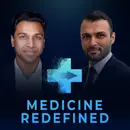
Gerard Malanga, MD is triple board-certified in sports medicine, pain medicine, and physical medicine and rehabilitation. He completed his undergraduate degree in Biology at Villanova and medical training at New Jersey Medical school. He went on to complete a PM&R residency at Rutgers University followed by a sports medicine fellowship at the Mayo Clinic. Dr. Malanga has authored several textbooks and countless articles. He is considered a thought leader in the field of sports medicine, musculoskeletal medicine, and orthobiologics, serving as the past president of the Interventional Orthopedics Foundation.
In this show we discuss:
- Terminology and why "regenerative medicine" may be misleading
- When orthobiologics may be appropriate in the treatment paradigm
- The different types of treatments (prolotherapy, PRP, "stem cells")
- What evidence-based medicine actually means
- DataBiologics and the future of this field
Jeremy Magalon, Ph.D. highlighting that not all PRP is created equal:
Characterization and comparison of 5 platelet-rich plasma preparations in a single-donor model (PMID 24725317)
Technical and biological review of authorized medical devices for platelet-rich plasma preparation in the field of regenerative medicine (PMID 33155867)
Dr. Malanga's practices: New Jersey Regenerative Institute (https://www.njregenerativeinstitute.com/) and New Jersey Sports Medicine
Dr. Malanga's podcast: Malanga Talks (https://podcasts.apple.com/us/podcast/malanga-talks/id1540893635)
Larry Keller for disability and life insurance
Hello everyone, I'm Dr. Darsha Shah, and I'm Dr. Altamash Raja, and welcome to Medicine Redefined, a podcast where we will explore the often overlooked but necessary components of health, what we consider to be the fundamentals. We will investigate topics and practices that can give you and your patients the best chance to optimize a healthy lifestyle. It's time to move the needle forward and put the health back in healthcare. Before we begin into the show, here's a quick message from Physician Financial Services, a business widely recognized in the Physician community for disability insurance. Lawrence B. Keller, CFP, has been in the insurance and financial services industry since 1990, unlike medicine, which has a standardized path that physicians must take to gain the education, training, and experience requirements necessary to obtain board certification, the insurance and financial services industry does not. While he might not be a doctor's first phone call regarding their insurance needs, he is often their last. Find Larry at Drpodcastnetwork.com slash Larry Keller, or at the link in the description of this show. Alright guys, it is my distinct pleasure to bring you our guest today, Dr. Jerry Malanga. Dr. Malanga is a triple board certified physician in sports medicine, pain medicine, and physical medicine and rehabilitation. He did his medical training at New Jersey Medical School and stuck around for his primary training in PM&R. Following this, he pursued a sports medicine fellowship at the Mayo Clinic. Since then, Dr. Malanga has been at the forefront of helping reshape musculoskeletal and sports medicine and is considered a pioneer in the field of orthobiologics, which has conventionally been referred to as regenerative medicine, but as you will learn in this episode may not be the best term. Dr. Malanga has been an academic and a thought leader throughout his career, serving as past president for the Interventional Orthopedics Foundation. He has authored several books and close to a hundred publications. He is also one of my most influential mentors and helped me gain insight on what it means to be a great doctor. In this show, we talk about several things, some of which include defining the terminology, elaborating on the term regenerative medicine and discussing why our words matter. The somewhat loose algorithm of when orthobiologics are appropriate or better yet the indication and contraindications, the different types of treatments such as dextrose, which is also known as prolethoropy, the wildly popular platelet-rich plasma or PRP and the relatively new cellular treatments. We also touch on the dark side of orthobiologics and how a few bad apples can ruin it for the batch, as well as the term evidence-based medicine and its implications. Lastly, we touch on his system of collecting data and consider future directions in this field. There is so much to unpack in this show and it reminds me of how every conversation with Dr. Malanga is an eye-opener for me and this one that I'm about to share with you was no exception to that. So with that further delay, please enjoy our conversation with Dr. Jerry Malanga. All right, welcome back everyone to another episode of Medicine Redefined. Ultimation Eye are honored to have none other than Dr. Jerry Malanga here, sitting with his Dr. Malanga. How are you today? I'm great. Thanks for having me. Awesome. So I'd love to just get right into it. So I've heard about who you are in the last five years now as I'm on my PM and Art Journey, but for the listeners out there, can you tell us who you are and what motivated you to kind of be where you are right now? Okay. I'll try to be brief on it because telling somebody who you are, I was born here and I did this and stuff like that. So as a young boy, we'll go back. I really enjoyed sport. I enjoyed participating in sports. I was not athletically gifted, but I really tried hard to participate in all different types of things, baseball, basketball, tennis, whatever I could do. Back then, it was playing the backyard with your buddies and joining some leagues and teams and things like that. I also, either was fortunate or unfortunate, to suffer from a variety of orthopedic conditions, ranging from being born with a club foot, to having ostrich slaughters, to having stress fractures and things like that. And so as I went into medicine and then went through medical school, I tried to pick out a specialty. I had no idea about this field of physical medicine rehabilitation to late into my third year of residency when someone said, oh, there's this field called physical medicine rehabilitation and it gave me a brochure and I said, wow, this is really super interesting. I was not really interested in being a surgeon. I really did enjoy being in the OR and I felt like this was a specialty where you could be involved and take care of athletes and try to keep them from getting surgery, I suppose. So I did my residency and then I was fortunate enough to do a fellowship at Mayo Clinic at Sports Medicine, which was fantastic and I learned about sports, sports injury, orthopedic sides of things, then went into practice stressing non-operative treatments of orthopedic conditions. At that time, our training was pretty limited in getting things that was published in the orthopedic literature, maybe in physical therapy literature. And so it was a bit biased toward certain things, like using non-stural anti-flammatory medicines, corticosteroid injections, and that was pre-ultra-sound guidance or ultrasound diagnosis. So we were reliant on X-rays and then some MRI. Early on, I became very interested in how to perform a good physical examination through residency and fellowship as well and started understanding that physical examination was really not well respected and poorly performed and poorly understood and that drove me to pursue it, publish on it, publish a couple of textbooks on it that I've gotten great feedback from students and residents and fellows, etc. And then over this past decade, this whole area of, quote unquote, regenerative medicine or perhaps orthobiologics is the better term, PRP came out with this intriguing knowledge and then various types of cells that could induce a healing response. And so this area now over the past five to ten years has blossomed with some really good basic science, which with a premise and a hope and a future of great benefit, but also it's got this dark side of people misusing the science, people taking advantage of patients, people making unscrupulous claims. And so now we have a beautiful baby and a really terrible bath water kind of tub and we really need to kind of move forward on that. And also we need to use those innovative treatments in conjunction with all the great basic things that we learn in PM&R or osteopathic medicine and even holistic medicine such as sleep, diet, exercise and we can't just become myopic and say a stem cell, a PRP injection is going to solve all of these problems. And so my goal is to try to push the science of this innovative area and blend. I once gave a presentation, maybe it was the past or legacy award lecture or something, but it was called blending the best of the past with the future, right? And so everything that's old is not necessarily great. You listen to old timers and say, oh yeah, we used to do these great things. But everything that's new is also not in the best interest of the patient. And so trying to find the best blend of the two is what I'm hoping to try to achieve in my research and my education and even in these podcasts. I love that Dr. Malanga. You know, it's funny. We always, in medicine, we talk about how medicine has to be your calling, right? And you can't do it for the wrong reasons. And for me, particularly I share a very similar journey in terms of injuries and what I've experienced, sports medicine, I knew was always my calling. It wasn't until my first year of PM&R and I consider myself lucky that I learned early on about it, that the non-searchical approach really appealed to me again because I didn't think necessarily surgery was always the best approach. But then I was fortunate enough to work with you as a third year medical student and all the things that you're talking about, the quote unquote holistic approach, I saw a physician practicing this way and that inspired me even more to go beyond. And so I consider myself very fortunate. You know, just speaking on the topic of orthobylogics and that's kind of what we're going to dive deeper into today and you alluded to that, you said that we recognize it at orthobylogics but a lot of the general population or even individuals will call it regenerative medicine. Now I think it's really important for us to kind of lay the semantics out in front and you've talked about this at conferences and why regenerative medicine isn't a good term. So I'd love to hear, you know, talk a little bit more about that now and then also when it comes to the cellular treatments, people talk about them being stem cells and we've kind of gotten away from that, particularly with Dr. Kaplan, who's recoying the term if you will. So could you talk about why those terms aren't good and then how should we be referring to them and why is that important? Yeah, really great question and some of it has to do with the misuse of terms. I have my own podcast as you guys know called Malanga Talks and one of my future podcasts will be on the topic of why words matter and it's very important. The words that we use in everyday life but in medicine in particular and the misuse of terms and words in medicine is really scary to me and so the term regenerative treatment or regenerative medicine isn't necessarily in and of itself a bad term. It's what happens with that wording that becomes a problem. So if we think about our day-to-day being, the human body, the human body regenerates all the time. We know that our GI tract will regenerate in three to seven days. We know if you burn your skin, that tissue will regenerate in less than a week. We know that the mucosal cells in our mouth can regenerate within 48 to 72 hours. We know that actually the entire musculoskeletal system of our body is basically reformed every 260 days. We know that our red cells renew, our white cells renew so this term regenerative is basically intrinsic to being a human being and so that's the good part but when you promise somebody that you're going to do something and regenerate their tissue then what you're offering is a false promise, right? So I use the term orthobiologics as a term that I think embraces the variety of things that can help stimulate healing using people's own tissues. So there is this area of biologics in medicine that has sort of been captured by the pharma world, right? And so when you talk about biologics it's taking all these different tissue factors and then manufacture them in a bottle or a pill and then a patient will take that and that will be helpful for a variety of rheumatologic disorders. And so the term biologic is a little limited orthobiologic we say because we're treating orthopedic conditions but for me the term orthobiologic is taking people's own tissues, doing something pretty simple to that and then creating something that can have a healing effect on a patient. The term stem cell is really misused, poorly used and in fact has been denounced as a term we should use by the founder of, you know, or the initial, the godfather of mesenchymal stem cells, Arnold Kaplan, right, he said stop using that term. So if you want to call something as stem cell you go to a lab and you take tissues and you look at surface markers you identify the tissues and you say yes, that is a stem cell. Whether that's necessary for most of the things that we're doing clinically, probably not. But if you're not going to do that then don't call what you're doing a stem cell treatment. Now there are tissues and things that are used that are clearly have no stem cells based upon somebody looking at it in a lab. So if you take amniotic fluid or amniotic tissue when it's put into a vial and a bottle, it has no stem cells. So somebody trying to tell you that I'm giving you stem cells is fraudulent, it's false advertising. There's legalities related to that. Biblical stem cell treatments, you sure when you go to the bedside and you harvest umbilical cord and you harvest the cells, there are true stem cells that have been cultured out and exist. But by the time it gets pulled, frozen, put in a bottle and sits on somebody's shelf, there are no live stem cells. So if you're going to say to somebody I'm giving you stem cells, I guess if you could say that dead stem cells are giving somebody stem cells, you're only skirting around the truth a little bit. And then there's bone marrow treatments and adipose treatments which when you break them down and if you look at it in the lab, you can play it out stem cells but you're not sure what you're delivering when you're giving that to a patient. So the more proper term is providing a cellular procedure. I think that is on the mark with proper wording, compliant with what the FDA would ask us to do. And there's value with what's in those cellular components and it may not just be the mesenchymal stem cells or the medicinal signaling cells that have impact because we know in bone marrow there's a variety of things in bone marrow, a variety of cellular and noncellular things, various proteins, interleukin 1 receptor antagonist protein that have profound effect on modulating inflammation and helping with tissue healing. Wow, Dr. Lang of that was a beautiful explanation honestly. It answered a lot of my follow up questions that I was going to ask and you could give a really nice definition of ortho-biologics, why we shouldn't use the word stem cells. And then I would love to go down each and every kind of injection that we can do in each type of procedure but before we do that can we get into the type of injuries that we're looking at when we use ortho-biologics, you know, what are their specific joints that we use? Is it more knee? Is it shoulder? Yeah, so I guess this falls back to the initial part of our discussion meaning that we should do a lot of really good things short of doing anything that we would call an ortho-biologic. So and we know that most acute injuries will heal with good practical principles of stimulating a healing response. Now what we classically have done sometimes interferes with tissue healing. So we prescribe non-stural anti-inflammatory medications. That is not going to be very helpful for tissue healing and that has been demonstrated in multiple animal and human models, right? We know that corticosteroid injections in particular for tendon issues is not going to be very helpful and in fact can be pretty harmful. So we shouldn't be doing that either. And in fact, even the use of a simple thing such as cold or cryotherapy, recent evidence would suggest or would question the quote unquote dogma of icing aggressively for many tissue injuries and really intelligent exercise physiologist and holistic healers have now said maybe we should be a little careful even with things like icing or overly aggressive icing. There are other things that have been traditionally done in orthopedics such as immobilization, casting. We just recently did a podcast on high ankle sprains and talking about and regular ankle sprains and talking about the traditional method in the past of placing people in casts. And now we place them in a cast boot so we don't have to use plaster or casting materials. But immobilization is not very good for most soft tissues, it's a harmful thing. So we should immobilize fractures clearly and then ligaments sometimes and tendons very rarely. So we need to be careful in that immobilization period should be as whatever it takes as minimal as possible. So orthobiologics, the place for orthobiologics is when somebody gets stuck in their healing response, they had an injury, it's not getting better, they've tried all the proper things. Unfortunately, maybe some of them have been injected with a corticosteroid which maybe blunted the response and now they're left with a condition that just isn't getting better. That can range from chronic tendon problems, chronic ligament problems and then chronic joint problems which gets into the world of either a congeral injury, isolated or more involvement of particular cartilage that we call osteoarthritis. That we now recognize as an inflammatory process related to maybe systemic inflammation in the body that we need to be aware of, a loss of good strength of the supporting muscular components in particular the quadricep and the glutes. And so there are a variety of non-orthobiologic treatments that can stimulate a chronic condition to get better. It actually involves converting that chronic condition to something that appears to be more of an acute condition and that's an Eastern medicine approach. So in Eastern medicine they talk about the human body as having an energy flow that we are vibrational and that when there's a chronic area that's not healing, whether it's a stomach problem or an elbow or a shoulder, it's because the key or the flow of energy has been blocked. And so in Eastern medicine various things are done to open up that channel of healing and but also looking at the person holistically and systemically. In our vetic medicine it's also looking at various things that can induce a more homeostasis healing environment looking at whether you're burning too hot or too cold or various other things that I have a very immature understanding but a great appreciation for. And then in Western medicine we do a variety of things to stimulate healing, right? You can do cross friction massage, you can do eccentric training, you can do a variety of things that are that wake up the body and try to get it to stimulate to heal. In short of orthobiologics you can do things like needling techniques and so we have the 10x device and we just have a needling technique and then there was that once negatively looked upon maybe the more positively looked upon alternative method of prolotherapy of inducing a response in an area by using dextrose who would have thought that sugar would be good for you, right? I did a little blog or something on, I thought sugar wasn't good for you related to prolotherapy in that method. And then we have these other wonderful things that we have in our bodies that we can concentrate and specifically inject that include platelets, most commonly for chronic tendinopathy, really great evidence for lateral prokondylosis for greater choconteric insertional tendinopathy is pretty good but you know some back and forth if you look at the current mainstream literature on Achilles' patelletoninopathy and a little bit of a mixed bag for rotator cuff. And then again if you need a higher stimulus then you grab cells either bone marrow and concentrate those or adipose tissue using compliant methods, FDA compliant methods, FDA compliant devices that are not more than minimal manipulation, meaning you're not changing the characters and then guiding them into an area as an adipose is nice because it can act as a soft tissue filler. So if you have a soft tissue defect like a meniscal tear, like a tendon tear defect, like a rotator cuff tear, tremendous for that, it acts as a tissue filler and then has these bioactive cell components that can help with tissue healing, modulation of inflammation of the area and induce healing response. Well, so there's a wide variety then, right? We're talking about ligaments, so sprain, strains, also joint conditions and then just looking at different joints as well on the body and kind of all over holistic approach. I love that but I just want to take a step back in terms of when you talk about acute risk chronic injury. Is there a certain time frame, like a certain cutoff that we're saying, okay, now it's chronic or what do we exactly look at and how would patients know whether their injuries turn into a chronic injury? Yeah, that's a great question. It's not like everyone has a stopwatch and once your stopwatch hits six weeks, two hours and 13 minutes now, it's gone from acute to chronic, right? And we used to have these kind of silly definitions of like three months, more than three months, chronic, before that, it was like six months and some of that had to do with low back pain and some of the literature regarding the lack of likelihood that you're going to get better if you had three months and then six months of back pain and that most people get better in six, eight weeks after a back pain episode. Then a more thoughtful definition was any condition that was failed to improve beyond than what was felt to be the natural timeframe of recovery from an injury, right? So if we look at most soft tissue injuries three to four weeks, six to eight weeks, I mean, they get better, right? Even fractures in a young person, it's amazing how quickly a young person can recover, but usually six to eight weeks fractures will recover. So you could say, in general, if you wanted to use a ballpark, that's something that lingers and then there's a bell-shaped curve, right? So for some people, it's four weeks, for some people, it's ten weeks. If you say that anything that has a greater duration than the time frame of expected recovery would move, start moving into chronic, I think that's fair. If you want to give that like another month, if you say most things get better in two months, then that three months, make some sense. But I got to tell you, if you're in the middle of a season, right, and you're an NFL football player, and you tell that guy, well, we're going to wait till you know, it's still cute, and we're not going to use anything that's more felt to be chronic. I mean, the time frame is really shrink down if you talk about different sports and different levels of those sports. So for an NFL athlete, if something is more than a week or two, that's a chronic thing. Got it. Learning something the other day. I love that. Okay. And then I just want to ask you about the ice. So, you know, a lot of people think ice is good because it's part of that rice model, right? The rest ice compression elevate. So why wouldn't it might not be as advantageous as we thought? And then when is it advantageous use? Are there certain types of injuries where we should be thinking ice? Yeah. So I think, you know, it's gotten to be a little bit of an intellectual debate on the ice thing, but I think those that have questioned the dogma, I really like that. And if you look up the definition of dogma, dogma at one point was felt like, well, this is what the really smart people say. So that's dogma. And if you look up the definition of dogma, it's a firmly held belief without evidence, right? So that's almost like faith, right? Like, I believe in certain saints and I believe in certain gods and that shouldn't be scientific, right? But when I look at what goes on in medicine, which I always thought should be science-based, there's a ton of dogma in medicine, which then makes medicine more like a religion than a scientific study, right? And I look at some of the things even in the COVID type environment where people make statements that are not really scientific. They're almost religious or opinion or belief-based. And so we really should try to avoid that, I think, if at all possible. So, oh, ice. So ice became like, yeah, okay, of course, you're going to ice, right? It makes sense. And there's a basic science to support it, right? And I would, when I would lecture on acute injuries in sports and I would lecture on the price principle and I would explain, you know, protection, relative rest, ice, compression, elevation, I would talk about what the science is for all those different things. And so ice can be very helpful to cause viso constriction and limit the amount of edema that forms and help with pain and decrease nerve conduction velocity. But sometimes, you know, in a sport performance world, if you ice too much, it can actually limit sport performance. So if you ice down muscles too much, they become less pliable, less elastic. You can decrease the capability of a muscle if you ice too much. And we know that the bleeding and the viso dilutation that occurs following an injury is releasing all the different factors, which includes platelets, right? And fibroblasts and other tissue healing things that are very important for the area to heal. So if you blunt that response too much, then you could be blunting a healing response that might get in your way later on. So it's trying to find this blend of short-term game versus, you know, minimizing long-term loss, right? You don't want to do anything that works well right now, but a few weeks from now or a few months from now or a few years from now, it's going to cause a problem. So I do still think it's reasonable for 40 to 72 hours, following an injury to use some level of icing to control pain, to control the excessive inflammatory response, and to limit the amount of edema and restriction, which will restrict joint motion. Dr. Merling, I love that you made that comment about, you know, us not being too dogmatic about approach. I mean, for instance, I remember when I was in high school, the model was ISIS-knights, he does not. And so it was like just throw ice on everything. And it's encouraging because now, you know, we went from rice to meat, right? Movement exercise, energy is a treatment, and now I think the official recommendations or the term is peace and love, for it has all those things, but load, they even have optimism in there. And like vascularization is kind of what you're talking about, the bleeding, you know, the response and exercise. So I really love that we're evolving in that regard. Unfortunately, orthobiologics is a little bit more of, you know, quote-unquote, getting people to buy in. And for those who can't see, of course, I'm quoting. And I think part of the reason is because, and you've talked about this so many times, there's no consensus on agreement, right? It is very, very important to have a clear understanding of what we're treating. You mentioned, you kind of alluded to the art and the nuances, hey, is this individual in season? Because that, the management's going to be drastically different of what you're going to do, what biologic you might use, which treatment algorithm you might go down. And the other thing worth noting on the point of dogma is, I've told Darsha's before offline, because I've had the opportunities to rotate with you and work with you several times, is often people come to see you for a consultation for orthobiologic. And I've seen you many times telling an individual that this is not actually the best treatment for you. And you actually have an old treatment sheet algorithm, particularly for osteoarthritis, but I'm sure you have it for other ones as well. Where orthobiologics is all the way at the bottom of the sheet. So you've got to hit and check off and make sure everything else is dialed in, your nutrition's dialed in, weight loss is dialed in. Otherwise, people are just wasting their money. So that's also really important to understand. But I want to jump back to PRP really quickly. Because not all PRPs created equal. We know this. You've actually been at the forefront of publishing this classification system, the PLRA classification system. I'd love to hear more about that. And then if you could kind of maybe explain why all PRPs not created individuals, because I'll tell you even just over the last couple of weeks, I just finished my sports rotation. And people have told me, oh, I've had PRP and I didn't work. And when I ask them, well, do you know specifically what you had done, right? Is it Lucas at Rich poor? So I'd love to hear your thoughts on that. And maybe we can try to explain to people why not all PRPs the same PRP? Yeah, well, that's a, that's like a whole hour lecture almost. But I appreciate you opening that can of worms. So again, if we're trying to be scientific in medicine and we're trying to be precise, right? We want to try to, and that's the buzz word is precision medicine, personalized medicine. Then we need to tailor our treatments for the specific needs of the patient. So PRP came out a couple of decades ago, right? And so what is PRP? Platelet Rich Plasma. And so somebody by the name of Kevi came up with a definition of that, which is pretty meager, right? It's a platelet count or a platelet preparation that's higher than your baseline level of platelets. So let's say, and that's a little bit of a variation, right? Because some people have 100,000 platelets per deciliter, and other people have 400,000. And so higher than your baseline is the most fundamental crudest method of determining what is PRP. I will tell you that there are some quote unquote PRP systems that deliver less than baseline platelet concentrations. So that is implausible. So when you read the article and you read what was delivered, and so that's become an evolving problem as well. It's that the original articles came out, said, I gave PRP, which man, I spun the blood down, I got rid of the red cells, I got rid of the plasma, I got this area, that's called a Buffy code. In that Buffy code sits white cells and platelets, and then they will say that it was concentrated by a factor of 6x or 3x, 3 times the baseline. It tells me nothing, right? Because you want to know what are the number of platelets that are delivered per deciliter and how much total value injected to figure out how many billion number of platelets that are delivered. So if you're truly interested in the science of PRP and platelets and appropriate PRP systems, you should look up someone by the name of Jeremy Magalone from France, who recently published a review of 30 different PRP systems and explained how much do you get out of that. And then we use, so then we got a little bit, we try to sound so scientific and sharp, so we said, oh well, certain things need leukocyte rich and other things need leukocyte poor. So we have these terminology that sounds like we're really drilling things down. And maybe it's a little bit better. So what is a leukocyte rich versus leukocyte poor? Well, the leukocyte rich has a higher concentration of your white cells, percentage wise, then you do a baseline and a leukocyte poor has tried to eliminate most of those white cells. Again, maybe better, but the term leukocyte is a pretty broad term, right? Because of leukocytes, there are a variety of leukocytes. And if you're in orthopedics, you're like, yeah, who cares? That's for the hematologist to worry about, why do I care if it's a monocyte or a lymphocyte or a neutrophil macrophage kind of thing? But it's important, right? Because especially for joints, we know, and probably for other areas, neutrophils in particular are containing lysosomes. And so we actually just had that discussion on one of my Malangat talk things to break it down because you have to know what is, and if you ever tried to look at these cells under a microscope, the difference between a monocyte and a macrophage slash neutrophil is really pretty subtle. I mean, you're really cutting, but the difference is physiologically and on a cellular level is a big difference. So actually, monocytes can have some positive effects on tissue healing, monocytes, and their conversion from an M1 to an M2 is felt to be very important for a modulation of tissue healing and facilitating healing from a pro-inflammatory type of cellular component to an antice cellular component. So I've probably written three or four letters to the editor where I've read an article that talked about PRP is either being effective or ineffective, where the authors and some of these studies look really great. Some of them are randomized controlled studies that on the surface look like the most highest level of science you could get, but the authors fail to describe their PRP content. And one of the studies talked to, used a system that when you look at the prior research on it is a system that basically can barely get you above a baseline level of platelets. And there has been already some basic science work to talk about what is appropriate levels of platelets for joints, for tendons. And in fact, you can actually go overboard. So if you go over two million platelets per desoliter, it actually has been shown for tendon problems to have a negative effect, a negative effect of healing. And I'll, Tomashe will know that I'm Mr. I love analogies, right? I'm going to write a book or somebody going to write the Malanga analogy book. But one of the analogies I've used is that if you look at PRP as being a fertilizer that helps to fertilize and so within a fertilizer you're trying to get your green lawn to get better and you're trying to suppress the crab grass and the other stuff. So if you think about PRP in a joint trying to support healthy, articular cartilage and suppress all those inflammatory mediators. But if I take my son and we just start throwing fertilizer all over the lawn, we're not going to get a green lawn. We're going to get a brown burnt out lawn. Because if we throw too much of that fertilizer on there, it's not going to be a good thing. If you don't have enough, it might work a little bit, but you're not going to achieve that nice green lawn that you're trying to achieve in the elimination of the weeds. That's my little analogy at least for a joint. And for tendons, again, what PRP has is a super concentration of platelets that release various growth factors that have been found to be very helpful in the modulation of inflammation and neurogenic pain. Modulation of various cytokines with a downregulation of inflammatory, degratory type of cytokines and an upregulation of cytokines that can help nurture a joint or nurture a tendon. So hopefully that answers. It absolutely does. Yeah, thank you so much. Yeah, to your point about in Jeremy Magalone, I think I was actually at the, he presented at the last IOF in person conference that we had. And when his presentation I saw this actually blew my mind that that had. And you know, and that's it kind of stresses the importance of why we need to be, as you said, very precise with their words. And particularly for individuals who are publishing this in the in the literature and today's day and age of information, right? Where on social media, people are publishing, we have Twitter, you have Instagram, people are so popular, you have publications coming out on a daily basis, just mountains and mountains of literature. The average person who is not trained in medical education is not a scientist or not a clinician, they can't sift through this, right? And it's it's incumbent upon us as scientists and clinicians to make sure that we try to simplify this process and not make it more convoluted for them. And you know, just add to that confusion because I always go back to rule number one as a physician. It's do no harm. And this is kind of where you started. We were talking about the potential harmful effects of corticosteroid, but also for these anesthetics, right? We're using lidocaine, we're using marcane. You've been talking about that for years now. You know, so it's really important for us to when we know these individuals who are in chronic pain particularly and or who have these chronic injuries and we have to maybe treat them, you know, at a repetitive scale type thing is if you're going to obey that rule number one and do no harm, and that's what you're going for. Do at least at least the least amount of harms possible. Then the burden of proof is on us to try to find an alternative solution. And if orthobiologics is the right answer or it's not the right answer, we need to do extra research. And this is kind of we're going to ask you a little bit more about data biologics towards the end that you're at, you know, making this effort for, but I think that you kind of explain now. You've touched on prolethoropy. You've explained platelet-rich plasma in detail. Thank you for that. You've talked about the cellular treatments, both bone marrow and adipose tissue. For the clinician, maybe not the avid researcher who's busy and clinic and maybe if a patient comes and asks some, hey doc, like, you know, we've tried this, this, this and nothing's working all the conservative treatments. I've read about this. What are your thoughts? What do you think would be a good treatment for me? How would that clinician go about approaching which orthobiologic might be appropriate for a patient? What are your, you've kind of explained it by just a general thought. Yeah. So here's my general thought is that what concerns me in medicine is that too many of us are lazy and we want just the simple answer, right? We want the price or the meat. We just want somebody. We want the algorithm in medicine and many healthcare systems, large orthopedic groups. It's just run people through an algorithm, not sift it and be precise, not spend some time. So that, you know, to be, to provide personalized medicine, you have to take a pretty detailed history, right? William Osler, I talked about the importance of the history and how the history can actually reveal the disease or the diagnosis if you spend enough time trying to get a really good history. Then doing a physical examination where you actually put your hands on a patient which is therapeutic in and of itself, I can't tell you guys know the number of patients that come in that have been seen by several physicians and you'll just do your simple exam and they'll say, wow, nobody examined me like that, actually nobody even touched me when they examined me. And that's how people like chiropractors really take off because you can criticize chiropractors all you want, but they actually lay their hands on human beings and they try to do something therapeutic. And then you get imaging to supplement, not to push your diagnosis to supplement it. And so we've replaced history and examination with lots of imaging studies when we know that imaging studies hardly ever correlate with or often don't correlate with many of the complaints that someone will come through the door with and the number of positive imaging studies in the asymptomatic population, including if you look at imaging studies from young athletes at the NFL combined, if you look at their imaging studies, you would scratch your head because that very next day, that person is running a 4, 4, 40 or dash and you look at MRI or their ankle and you go, wow, that shouldn't even be possible at all. So you can't get hung up on the imaging study. So at the end of the day, your question is what should the average clinician do and where is the algorithm? What is the path? And I think there is a little bit of an algorithm. But what I would share with you is that if you really want to do this, then you're going to have to do some work. You're going to have to do some study. You're going to have to spend some time to understand this. Otherwise, just be honest. One of the things that is mystifying again when I listen to people talk on TV about various things, including the current COVID world, is that no one is willing to say, you know what? I really don't know. Be really honest. I really don't know. But I do know that there's this doctor here who really has spent a lot of time trying to sift this out. So I want you to go see that person. So either you're going to make the effort and study and understand things versus the current world of certain, especially orthopedic surgeons, saying that stuff doesn't work, that stuff is full of hype, who also really don't know the literature. And other people will say, yeah, this works for everything. This will grow your hair, you'll get better erections, and all your joints will be pain free, right? That can't be there. Either we have to be precise, be patient centered. You know, I spent four years at Mayo Clinic. When you graduate from your fellowship or residency at Mayo Clinic, they give you a picture of Will and Charles Mayo with a sign underneath. Do what's in the best interest of the patient. And you all know what the definition of doctor is, right? Definition of doctor is teacher. But you're not going to teach unless you know stuff. And you're not going to be able to teach if you don't spend time teaching, right? It takes time getting a history exam and spending time explaining stuff to patients. I love that. And that's our hope here is that, you know, some we can help educate and maybe dispel some of the myths, if you will, and try to get good information out there. Two things stick out to me there, Dr. Malango, when you're talking about being precise and making sure we get a good history, good physical exam, you might not remember this, but I want to say this was, you know, I had happened to tag along with you at one of the border view courses when you were teaching. And you said, there's only two X's that matter. RX or DX and RX. And that's kind of what you're saying here is, you know, you want to make sure you have a really good diagnosis before you can try to figure out what treatment is going to work for the patient. And I always remember that. And I've heard another brilliant person say that as well. And, you know, I think about that, especially when it comes to these types of treatments. And, you know, if a treatment didn't work, and you use the, you know, you use the improper treatment for the appropriate pathology, or if you didn't have the right diagnosis and the treatment didn't work, then how could you say that the treatment didn't work, right? So that's something that's really important. And the other thing I'll say is to your point about, I've often, I shouldn't say often, but sometimes I've been in clinic working with somebody during my training where the patient might ask about this, you know, this orthobiologic PRP and that stuff. And the person I'm working with, you know, precepting with might say, oh, there's no evidence for that. And in my mind, having the opportunity to have worked with you and been invested in this space, my mind, I'm like, well, you know, there actually is. But of course, you don't want to be disrespectful in that regard and you kind of hold your tongue. So what is you being, you've been in academics your whole life? That term, evidence-based medicine. What does that mean to you exactly? I mean, there's this whole triad that Darshan and I talk about now, which actually is well published. But how do you explain evidence-based medicine to your patients and your colleagues? Yeah, that, you know, that's a word that is a phrase that's thrown around maybe improperly. It's sort of held as a suit of armor for the academician, let's say, and they will either say to those of us that are providing innovative treatments, there's no evidence for that or to patients. So if the person responded, there's no evidence of that that I know of and I haven't really done the research to learn it, that would be honest. But if they say there's no evidence, they're, and they put a period at the end of it, there's an assumption, especially by patients, that that person has actually looked at that area of medicine, has studied the literature on it and has then concluded based on perhaps other thought leaders that there is no evidence or their, the evidence is mixed or lacking. If you look at, when I look at the orthopedic world and I look at what happens, the lack of evidence for what occurs in orthopedic treatments and when I listen to residents tell me what they're taught, I would say 80% of what is being done and what is being taught lacks evidence and in fact flies in the face of the current evidence and in fact not only flies in the face of current evidence, it is the opposite of the current evidence. So if people are getting critical steroid injections for chronic tendonopathies, then whoever is doing that is not only not evidence base, but is actually flying in the face of and ignoring the evidence of the harmful effects of that treatment. So as residents, you guys are sort of up against it and it maybe is one of the reasons that drove me to do these malanga podcast talks because I mean, Altamesh would know that I like to talk and I like to be interactive and I like to be instructive at the same time and I always enjoy my interactions but each one of them was going to be one off. So I would be saying statements each time every young, exciting, thoughtful resident or student like Altamesh and I'd have to keep doing that over and over again. But this platform now introduced to me by a medical student and my curfew and they help carry it out is a way I'm hoping to help residents because like you say, what are you going to say to your attending? Hey, look, I just went to a conference and they presented the literature on PRP for chronic lateral pocondylosis or they presented the literature on neostear arthritis, mild to moderate compared to saline, corticosteroids and it's pretty compelling and even the journal arthroscopy and multiple meta-analysis has noted the evidence for PRP. It's really hard for you all to do that unless your attending is one that's not overly egocentered and said, you know, look, if you've got an idea, I try to do that, I try to have conversations and I say, I don't know everything so I'm eager to learn more, right? So but, you know, I've looked at the literature, current, classic, what's going on in orthopedics and I've looked at a lot of literature and in fact we will be publishing a white paper on the safety and efficacy of orthobiologics for orthopedic conditions through IOF that I just, it took me a year with many other folks involved, with over 400 references. So, Dr. Nguyen, thank you so much for your wisdom. You know, I think this is the beauty of medicine is that there's an art and a science to it, right? And the science being an EBM, but like, what does that even mean? What are we filtering through? You talk about how an athlete can run a 4-4, but you look at their ankle and you think, how is that even possible? So, I just want to thank you, you know, you talk about, there's a book actually out there called Attending by Ronald Epstein, who talks about being more in the present moment, getting that good history and physical exam, because the more time you spend upfront with that patient, the better off that patient's going to be in the long run, right? And if we're talking about holistic patient-centered care, talking about the mind, body, and spirit, I think that's what it really encompasses. And for your podcast, you know, I just want to let people out there who, who I really recommend listening to it, because it's not only about the science of, you know, PM&R, but you also touch on the art of it, right, about how clinicians want a quick fix. And you talk about this in your last episode with a greater trick into your pain syndrome, that you bring up this analogy where there's a hungry child at night, right? And as a parent, we can say, they're the doctor of that child, you know, you have two options. You can do the quick fix, which would be like, you know, Captain Crunch at night with a lot of sugar and just unhealthy, or, you know, you can sit that child down, talk to them, figure out truly what's going on. And so, if you give that Captain Crunch, sure, you might quiet that baby for a little bit, but the next night, what's going to happen, it's going to cry again. And so, you know, I think that's where that art of medicine really comes in in terms of understanding patients, and not strictly just going by an algorithm, but also just understanding, talking to that patient. So, thank you so much for that. I was just really speaking my language, so how to bring that up. Yeah. And the other part of that is that you know, as a parent, that giving sugary cereals is not in the best interest of your child. You know, it's not healthy. And occasionally, you'll do that because you're in a really rough spot, right? You're in the airport. The kid's breaking down. You got to do something. But you're not going to keep doing that over and over again, right? You're going to figure out the path that's more holistic and helpful and healthy for that child, and for us in medicine for your patient. Yeah, absolutely. Absolutely, Dr. So, to that note, you know, what I'll ask you is there might be a lot of clinicians who aren't as well versed in this literature. And maybe they'll say to the patient that, hey, listen, you know, I'm not familiar with this evidence, but they don't know who to send that patient to, right? Of course, if you're in that central northern New Jersey area, or actually even you've had patients come from all over the East Coast to see you, maybe even further than that. Actually, I know for them that they know about your work. And there's a lot of great people doing this work all over the country, all over the world. But it's still pretty challenging for some physicians aren't it is involved in, you know, an SSM and IOF and Toby and those types of things. How can clinicians know who to refer to for this type of stuff? Maybe even for a consultation and in today's world, actually, now where telemedicine is something that's probably going to change the way we practice medicine, it actually might make individuals who might be in a different state more out, you know, more available for that. So what are your thoughts about how clinicians can seek out providers who might be more versed such as yourself in this? Well, I first want to say that it's not anything that anyone couldn't do if they were interested. If I can do it, anybody can do it, right? So I think you have to decide and put some effort in it and there's lots of different resources. Now, the past president of IOF, among the board of IOF, I'm very involved, I think it's a really thoughtful organization that is actually dedicated to standard guidelines and education, both educating in these concepts as well as hands-on courses where you want to learn how to inject a variety of different things and you want to learn some of the science. And AMSSM is currently evolving in this space. AMSSM has been way behind in this but now has an entire task force dedicated to it with some really excellent thought leaders and educators that include Shane Shapiro, Mayo, Jacksonville, Ken Moutner, a variety of other folks that they will eventually create content for its members. The American Academy PM&R through the leadership of Stu Weinstein is really now dedicated and has formed a task force in our academy to create educational content so that people can become aware of and provide these treatments or at least be aware of and speak intelligently on these treatments. I think if you don't want to do it, you want to try to find a local person that you might want to refer to, perhaps you can have your patient go onto the IOF website and look at members there and maybe we need to create other resources for patients that perhaps myself and some colleagues will be working on. Yeah, perfect. I was actually just about to ask you what resources patients can use and just real quick for the audience AMSSM stands for American Medical Society for Sports Medicine. But yeah, on the flip side, how do patients filter through the noise? How do they approach their doctors about whether PRP, adipose tissue, bone marrow, if this is right for them? I know. I'm not sure if you heard the podcast Bad Batch by Wondry. It was yeah, so you know, I've heard it. I think a lot of people might actually be freaked out now by these types of procedures, you know, especially with the worst that's still being thrown out. So how do you, what do you, what do you recommend patients do? Well, it's really tricky. You know, Mark Twain once said, believe half of what you see and none of what you hear and I've added a corollary and believe the opposite of what you get off the internet, right? So the internet and the web is filled with bands, so many things and how do you get to the top of the thing? Let's say you're going to look for PRP for tendon problems. It's if you advertise. So many of the advertisers are somewhat unscrupulous folks that know that's the game to get people in the door to sell or to push their products, right? And man, that shouldn't be what how people learn about things. I think there are some credible organizations. I mean, the FDA has a website, the FDA will just talk about all the things that shouldn't be done or couldn't be done in not really a useful resource. IOF I think has some content, but perhaps you'd have more that's patient focused, patient centered type of things. I think people again shouldn't look for the quick easy answer and need to do their homework and need to sift through some of this and see where the science sits and not go for the banner ad or the first thing that pops up on a Google search. Yeah, absolutely. And then are these treatments insurance, are they covered by insurance or the cash based? None of them are covered by insurance, which is a mixed thing. So for the anti-regenerative medicine world, they say, yeah, these are just people that are trying to rip off the general public and, you know, they're, you know, seed or not covered. There's no merit to them. In my mind, when you deliver something or somebody's paying for it, you should be offering a service that is at the highest level. In fact, all of the medicine should have been done that way, right? But we sort of can hide behind the fact that an insurance company will pay for something so we can do all these different procedures and so what? Because the patient isn't paying for it. But currently now more patients are paying for more and more things between their deductibles and copays. They are shelling out more and more money for various things. And so they're starting to understand that there's no free lunch. So for me, you know, I have, there's no way I'm going to be offering treatments and performing unsatisfactory treatments when somebody's laying out money and then I'm going to see them and follow up. And if they have to see patient after patient who paid cash for something that didn't work, that's, you know, on a simplistic side, just totally embarrassing, right? I mean, that's not, that's not really good for the ego if you're thinking egocentric. If you're thinking other centric, it's also not so good, right? Here's a person who with good intention laid out $500, $1,000. I mean, some folks are paying $10,000 for their treatments. And you provided no benefit or very little benefit. That's not, that's not good karma. That's for sure. For us, it starts with the initial understanding of what the expectation is going to be for these various treatments. And that's going to be based upon what the literature has shown. So when I do an injection for chronic lateral pocondylosis, I tell them that this has an 85% 90% chance of one injection taking care of your problem. And in fact, if it doesn't, I offer additional treatments for free. Or I have to relook at my initial diagnosis. I must have missed something because it's such a predictable thing. I don't think there's any other treatment out there that where a physician would give you that degree of certainty of your outcome. Other things we're very honest. So for people with significant neocere arthritis, if we offer them a bone marrow adipose procedure, we have collected our own data. So we know our data. We can talk about that later. And we know what the medical literature has shown. And assuming we're doing procedures similar to what the paper presented, then we can describe. But most of those we will describe as in the 50 to 55% improvement in pain and function. We are never saying things like 90% improvement, guaranteed, going to grow new cartilage. We never say any of that. We want to really have the patient be as fully informed based upon the current medical literature and based upon data that we have collected and seen in our own hands. And then we let the patients make the decision because they're going to be getting out the credit card or paying the amount money for the procedure. It always goes back to why you're doing it. To your point about offering the patient recurrent treatments if they haven't gotten better and you're just trying to figure out, hey, let me take a step backwards and see, did I approach this incorrectly? What was diagnosed that I missed something? Again, it's about why are you doing it? And if you're one of the quote unquote bad players or on the dark side of orthobiologics, then maybe that's just a way to charge. And I'm not saying that I know anybody and people, but unfortunately, there are some people who aren't in it for the right reasons. But speaking of you mentioned anti-subclassification of some medicine, regenerative medicine, for me, one of the thing was I was very much, this was a naive mindset that I had was very much anti-surgery. And that's why I wanted to go into a non-surgical specialty of musculoskeletal medicine and say, hey, we can rehab everything and we can do my facial release and we can do all this stuff. And I know better now, fortunately, I still have tons more to learn. But could you talk a little bit about when just maybe some examples of often surgery maybe is the better approach? When somebody comes to you and they talk to you and they want to avoid surgery at all costs. And I've seen you do this where like, you know what, it's in your best interest to get surgery now, whether it's because of, you know, it doesn't have to be a highly specialized, specialized approach like in season or at a season athlete, but just a general individual. And then my second part of that question is, how can we work with surgeons? Or the pediatric surgeons in this field of orthobiologics to help our patients, maybe biologic augmentation of surgical procedures? What are your thoughts on that? Yeah, well, I appreciate that concept. First, I would say that in everyday life and in medicine, we shouldn't be anti anything, right? Being anti-something doesn't really help. We have to be positive. We have to be positive and forthcoming and honest about things that we can do. And we have to be like Clint Eastwood said in a movie, we have to know our limitations. What we're able to do and what we're unable to do. And we have to have a knowledge base of our other specialist and specialties. Because if you have no idea what those surgical interventions involve and how the literature would support certain surgical procedures as being extraordinarily helpful, you need to know that as much as you need to know what the potential outcomes are for non-operative treatments. I would say that as a non-operative specialist, I have more reservations in recommending surgery than a surgeon because I come in with a non-surgical bias and the surgeon, you know, to be honest, comes in with a surgical bias, right? So we have to understand our biases to begin with. And we have to express that to the patient because patients may also have a bias. There are certain patients that just say, look, I just want something done. I don't want to deal with it. I want somebody to then surgery might be the answer. In terms of orthobiologics versus surgical treatments, orthopedic surgery is built to take care of things that are biomechanical problems. It's a fabulous field. If your bone is sticking in a 90-degree angle when it should be straight, there ain't no regenerative orthobiologic treatment to take care of that problem, right? So if your problem, though, is a matter of dysfunction related to pain and inflammation and a painful dysfunction, then I think orthopedic surgeons and surgery tries to address that, but has gotten down a rabbit hole that often is not great. And that ranges from disc problems, right, spine surgery, and other pain and inflammatory processes. Pain and inflammation now are related to chronic degenerative conditions that are now recognized as being related to chronic underlying inflammation. And what mainstream medicine is slowly understanding is the majority of chronic degenerative conditions ranging from Alzheimer's to coronary artery disease to diabetes is actually related to this chronic inflammatory states that many of us are existing with related to our diet, what we're eating, related to our levels of obesity, related to stress, related to EMF and other environmental factors. And so to be holistic, we need to have people look at that and get good rest and try to decompress and or meditate and try to be on what is well described as a low inflammatory diet, which can be extraordinarily helpful in reducing weight and looking at the microbiome of the gut and its role. I mean, these are things that are not really part of a PMNR residency, orthopedic residency, etc. But can have extraordinarily great impacts on not only a bad knee, but on other areas as well. And then, you know, there are conditions where blending treatments may have profound benefit. I mean, Dr. Hurnigou from France has shown that doing a rotator cuff repair and combining it with bone marrow concentrate can reduce the retail rate from, you know, sometimes retail rates are as high as 70% in elderly populations. But let's say about 30% to less than 10%, 8%, an extraordinarily great benefit. And there are conjugal surgeries and other surgeries that clearly and there's evolving evidence that show the combination. There's a great study looking at high tibial osteotomy combined with cellular treatments showing profound improvements added benefit from that combination of treatment. So high tibial osteotomy treating an orthopedic knee problem that is a combination of pain, inflammation and access problem. That combination together is a thoughtful approach and not and or. We have to try to figure out. So it's like Venn diagrams, right? So you have the Venn diagram or the circle for surgery, you have the circle for nonoperative treatments, indoor biologics. And then you have where those things can overlap and when those things should be one or the other. But again, it requires us that treat patients to have a really good understanding of not only what we do, but what our colleagues do as well. Absolutely. And this is one of the reasons actually, you know, having some say in how we curate our didactics and our curriculum here, we recently just started rotating with orthopedic surgery. I actually realized in our program that we weren't spending any time with orthopedic surgeons. And I thought it was so important for us to understand surgical indications, but also we often see individuals who've had surgical procedures before. And you know, it's so important to understand what type of approach they've had and what might have, you know, what complications they could have, but also the limitations they might have in the future. So I really, really appreciate that. And of course, the point that you made about taking care of your foundations, right? The low hanging fruit and the keystone habits, Darshani, you know, when we talk about our five pillars of good health and medicine, some of this we're borrowing from or stealing, hopefully this is mine from Peter T.A. is we talk about sleep, exercise, nutrition, distress or stress tolerance, like mindfulness, meditation, that type of stuff. And then exogenous substances are molecules and that's where pharmaceuticals come in. We kind of put orthobiologic to all the orthobiologists is somewhat of a hybrid of that. And that's where we put that just to make it simple. And again, going back to making sure those sleep exercises, this is one of the reasons we spent so much time on this podcast thus far talking about nutrition because if you don't have that right and all these inflammatory conditions, the chronic muscle cell to pain, failure to heal in the appropriate time frame from tenderness, ligamentus injuries, it's going to be much harder. And you can throw all the cellular treatments and PRP to it if you're not going to take care of those things, the low hanging fruit if you will, no pun intended. And but on that note though, let's talk a little bit about rehab. You know, you spend a lot of time over the past couple of years, at least at conferences and stuff, you're on the panel for the chair for MSSM for regenerative medicine. I think that in residency and in fellowship and training, we're learning about orthobiologics, these novel treatments, we tend to sometimes forget that physical therapy is still the staple of rehab, right? And in fact, a lot of I just read a paper with Dr. Bowers and Dr. Mountner of a great overview biologics paper and I really liked towards the end they talked about rehab strategies after biologics and of course, we're still trying to figure that out. So, you know, what are your thoughts about like, because we can do a great biologic, you can have everything, but if a patient doesn't do good quality rehab afterwards, then it's really hard to say that whether the treatment worked. I mean, so it's a big picture approach, right? Would love to hear your thoughts on that. Well, you know, the rehab is where you bring home the bacon. That's the finished line. Everything else creates the platform for really good rehab. In fact, that was a line out of a orthopedic knowledge book, a study book written by a really great orthopedic surgeon who's a soldier, a shoulder specialist, Sean O'Driskel, just an incredible mind originally from Canada. But basically, he writes in that intro that surgery creates the platform for good rehabilitation to occur. And he talks about things like, you know, shoulder dislocations and reestablishing the anatomy, elbow issues and reestablishing the anatomy. And then once that anatomy is set in good position, then you need to rehab. And there's been lots of articles actually, not enough quite frankly, but there've been several articles that are talking the importance of rehab after orthobiologic treatments. And it totally makes sense, right? It's this concept that you all have probably talked about of mechanical transduction, where the signal comes in from the loading of the tissues to reset and re-signal to the cells to lay down more collagen tissue, to hypertrophy muscle, to get bone to be stronger, right? Those are signals that are related to rehabilitation. What I would say is that, again, I'm vastly disappointed by what residents get taught regarding rehabilitation, regarding exercise, regarding physical therapy. You have to know the nuances, right? You can't say strengthen the lower extremities on your rehab prescription. You have to try, now you might have great therapists that totally understand what they need to do, and you don't need to write any detail. But you should be aware of the details because many patients go to pretty poor physical therapy. The term physical therapy is a big black box, with physical therapists that range from, I don't know, they should be, I don't know, just lay person's knowledge of what they do to people that are just incredible thought leaders and understand at various nuances. You have a process like a patella femoral joint problem, and you don't address the multiple areas along the kinetic chain, and you just focus on the patella. You're not going to provide comprehensive treatment, and as a PMR or a physician that's interested in the rehab, if you don't know the nuances of the foot and ankle, and its effect on the patella femoral joint, the pelvis and the hip ab doctors, and its effect on the patella femoral joint, the positioning of the femur and its effect on patella femoral joint, the soft tissues around the patella femoral joint, the IT band, the importance of VMO, but not just VMO, but the firing patterns of the VMO to the lateralis, and the little subtleties that can take you from success to failure. You're going to be reliant on somebody else, and you're not going to have any understanding of what's happening, and your patient is going to come back and say, yeah, physical therapy didn't work. When somebody says to me, physical therapy didn't work, I say, what did they do? I make them describe what they did. I have them show me if they can do a squat, and sometimes they have no idea how to do a squat, or when I watch them do a squat, not that I am Mr. squat master, I'm like, wow, that is exactly the wrong thing to do. That will exactly load that joint, and you can't tell a person don't do squats, because that obviously will express your ignorance in how the human body works and daily activities. If we're living in a water world, and you don't need to do weight bearing, but if you're doing weight bearing, you better know how to do a really good squat. Somebody better be able to look at that, look at the entire kinetic chain, look where you're not firing, and re-teach you how to do a squat. If we don't know that as the clinicians, how can we guide our patients to the right type of quote-unquote rehab? Dr. Melinda, that warms my heart to hear about you asking patients to squat, and then showing them how to squat properly, it's going to be, you know, that, because with my back going on. And I'll say, you know, at that point, I had the opportunity to shadow a couple of amazing physical therapists up in the Boston region, pretty recently actually champion Beijing performance. They are what I consider to be high-end performance-based physical therapy, and they have an amazing model. And, you know, we just talked about how again, we'll just take knee osteoarthritis as an example, kind of what you mentioned is often individuals maybe don't want to do cortisol, especially maybe a younger individual, right? And maybe that knee replacement is somewhere down the future, but we want to kick that can further down the road for obvious reasons. And, you know, they'll go to physical therapy, and they'll come back and, you know, I'll ask them just like you mentioned is, what did you do? And they'll tell me, you know, we spent some time doing straight leg raises, but most of the session was spent with heat or ice or, you know, stand up there. And it's just like, what are we even doing? And a quote from a famous chronic conditioning coach, Eric Cressy always resonates with me is, you know, patients will come back, and we say they fail therapy, and therefore we're going to go to the algorithm, if you will, next month might be either visco supplementation or cortisol, or whatever it might be, maybe PRP, but really rehab failed that person, right? As they didn't, we didn't do a good job. So it's and it's not all treatments are recruited to go not PRP, it's great. I'm not all rehabs created. Well, so super, super important for us to understand. And this is one of the reasons I went into PMNR because we don't write evalent treat on our prescription, right? You have to be very specific what you want to do. Of course, you want to give the physical therapist, you know, you want to be respectful and courteous because they know what they're doing too, but this is why it's so important to establish that relationship. I know we're coming up on time here, and I'd be remiss not to ask you about data biologics. This is something so awesome that you're doing. So could you talk a little bit about what that is and, you know, what was the inspiration for you to develop this platform for people to record data? Yeah, so I've been interested in data and outcomes for a couple of decades actually, way back in the late 90s, the orthopedic community had something called the modems program that they were offering to clinicians to collect data, and we were the only non-surgical group to join that, and it it fell apart. I mean, it couldn't sustain it, but something in me was always driven by trying to find out what how our outcomes were. I want to know how we were doing, right? And so we've been collecting data for over a decade in various forms, and then a few years back, we, myself, Jay Boe and my partner, another great thought leader, Chris Rogers at San Diego, California region, got together and said, well, why don't we create an electronic platform, patient-centered app-based, a patient can get on it on their phone and things like that. So we created this company called Data Biologics. We rolled out this product in 2019. We engaged clinicians, and then we said, well, if it works for us, maybe our colleagues would want it, and others around would want it. And so we've learned a lot, we've had to do a lot of research and what are, you know, what is data, how to collect data, what forms do patients are tolerant of doing, what are the classic supported outcome measures, patient reported outcome measures and things like that. And so it's been around for about two years now. We have about 60 clinicians, over 3,500 patients are in right now. We've rededicated resources to redo the entire platform to make it better, easier, simpler. We've, we've knowing our colleagues and hearing about what goes on. People are interested in outcomes, but they really don't want to spend any money doing it. They don't want to have, they don't have any time, they don't have any staff time, so we've tried to create something that I used a mnemonic sub simple user friendly practical. And we have now another dozen clinics that are going to be signing up, and we're probably going to sign up another 100 clinics by the end of the year. And so when you start collecting this amount of data using the variety of orthobiologic treatments, then you can truly make some determination of what quote unquote works or what doesn't work. And then you can sub stratify. So what works in a 40 to 50 year old female with moderate knee arthritis, right? What works for complete rotator cuff tears versus rotator cuff tenon apathy? And not only what works, what are the exact numbers, right? It's not, it's not black, white, on, off. It's what works, meaning, all right, you have this procedure, you get this percentage of improvement in your pain and your function. You 80% of patients get greater than an MCID, right? At least something that is, that you can express to the patient, that is the reality of their expected outcome. And then over time, this will be something that will be patient centered, where patients can start looking and finding these things. And that's our hope in the future is to make this something so that going back to your question from before, what can a patient look for or what should kind of clinician seek out? They can seek out somebody who's in this data biologics network collecting data. Because at the very least that person has shown an interest in the desire to look at what's happening. So they must be pretty thoughtful to want to do that. And maybe over time create an entire network of physicians that are dedicated to certain standards, certain weight methods of assessing and treating patients, and certain algorithms that have been established based upon the data that's collected, with a desire to continue to collect data to refine what gets done. And then we really get to the point of precision medicine, you know, things that are done with a rationale for doing them, things that have true outcome measures that have been reported. So at this time, is it primarily and 100 percent patient reported outcomes? Do you have any thoughts of like adding maybe either imaging afterwards ultrasound guidance or whatever might be looking at diagnostic standards or anything of that nature in there that you're looking at as well to adding it? Well, you know, again, you can start adding things, but what I've seen at the front end and at the back end. But collecting data for data itself can be just a quagmire that gets you and then you don't know what to do with all of that data. So on the front end, we're going to start collecting data such as pass medical history and medications. We will collect basic stuff such as sacks and age and BMI and things like that. On the back end, we're going to collect certain parameters, but I would caution against looking at imaging studies because imaging studies do not correlate, have not correlated with how patients do with biologics. When I first did PRP, I would get a repeat ultrasound and everyone, I would do a repeat ultrasound and everyone that I injected. And you know what I found that it didn't make a difference, but there were sometimes where somebody got 90% improvement and I scanned their tendon and it barely looked different than before. And then I would sit there with a patient and they would say, so it's a lot better, right Doc? It's and I had to be honest and I'd say, well, you know, it might be a little touch better. I mean, I would try to hedge it a little bit, but I couldn't say it was a lot better. And so that only created like doubt for the patient and doubt for me that, oh, maybe it didn't work when it didn't take a hill of beings just like that NFL athlete at the combine. So our overreliance on imaging, I think it's flawed. I think we're going to continue to study it in some of our research to see what happens, to see the potential for changes to occur. And that has been demonstrated. So the reason why people say, oh, you can regenerate cartilage is that in fact, people that have been treated with adipose or bone marrow and you do repeat MRIs or in fact, if you do repeat arthroscopy, there is improvement in the articular cartilage. Now that's probably related to facilitating the endogenous cells that are there to replicate and improve, a signaling effect on the cells that are there. But quite frankly, it really doesn't make a difference what the imaging. And so I tell patients, our goal, my goal for them, and I think their goal for themselves are the two F's, how you feel and how you function. The pictures, if we were doing plastic surgery, that would make a big difference, right? But we're not doing plastic surgery. So I really don't care what your x-ray looks like. I really don't care what your MRI looks like. I want to know and I think you want to know how you feel and how you function. I love that. Yeah, so with all of this being said, everything we've talked about almost in the last hour and a half, what's the direction of orthobiologics looking like? Are there any new types of treatments, any new type of cells that we're looking at? Where's this headed? Well, I think we're headed to some really useful treatments that are going to be readily available at the bedside that need to be sifted out. I think we will need to clean up the mess and find the places for certain treatments. They may have some value, but have been overinflated and overly advertised, such as umbilical cells, such as amniotic fluid and matrices and things like that. I think there are some things in those things that can be of benefit, but need to be teased out. And then there's this wild west of a world of things called exosomes, which are these extracellular vesicles that are released by cells and released by stem cells that again have been hyped up and over marketed and commercialized before the science is there. I have concerns because many of the exosome products are pooled products from other human beings that could contain things that may not be desirable if they're injected in another person. So you guys are both really athletic and healthy guys. And someone would say, let me grab their exosomes from their bone marrow and injected in malanga, but you guys might have some sequence that in me may not be the best thing. So there's a company that's doing something intriguing where they're actually taking or obtaining exosomes from the patient's own platelet poor plasma. So it's an autologous exosome product that in my mind seems really intriguing and needs to be tested out. At the end of the day, anybody that has something new, if they sign up for a database and collect the data and show data not only for their product, but data compared to other things and data across various things, show safety of that product and show efficacy, then that data will speak for itself. You won't need a Dr. Malanga to talk about it. Yeah. So it seems like there's definitely a lot that we can look forward to. I'm going to be selfish here and ask you for some advice. So for me, who's someone that's very interested in learning about these, me going into my first year of physical medicine rehab this upcoming July, how can I get involved in terms of learning about this field? Well, you should definitely join IOF because it's free for students and residents. I would suggest that you learn the basics of rehabilitation and anatomy and biomechanics as much as you can, as best as you can become a really good physical medicine and rehabilitation specialist. Learn the core values of our specialty. Learn about spinal cord injury. Learn about head injury because it'll have applications in other areas that will be important. Don't say, well, I'll just go through the motions on those rotations because I'm interested in sports and orthopedics. No, dive in full. Learn it really well. Learn how they coexist. You know, if and it's a little tragic that a spinal cord injury doctors don't know MSK as much as they they should and our MSK docs don't know spinal cord as well as much as they sit because, you know, I'm doing a research project on spinal cord injured patients who are wheelchair dependent and have rotator cuff pathology. The rotator cuff, the shoulders of those patients, their incidence is off the charts. It's much higher than a general population and when they can't exercise because they're using their arms like we use our legs, then they get obese, they get diabetes, they get hypertension, they get coronary artery disease, and they die at an earlier age than they probably should. So these ramifications have multiple, you might say, oh, it's just a shoulder big deal. No, that downstream ramification of that shoulder problem in a spinal cord patient and they really are not surgical candidates, right? Because you can't immobilize a spinal cord injured patient and expect them to transfer, expect them to wield their chair and do everyday activities unless you want to take them out of commission for a couple of months. So those are prime candidates and our early work has shown amazing benefits in terms of using, in this case, adipose tissue to assist with reducing pain and improving function. Their MRIs, we've followed them, there's some improvement but it's not the holy grail. The holy grail is getting them to be active and exercising, doing their ADLs and hopefully continuing to exercise. I couldn't agree more, Dr. Malanga. I mean, that's what makes our specialty so beautiful, our primary specialty. You know, it goes back to the two things that you mentioned, two Fs. It's a feel and function, right? And ultimately, we were talking about its quality of life and and that's all patients care about. Patients don't care that they have a white blood cell count of 30 if they feel amazing. I mean, that's a little extreme. But you know, they don't care about the numbers. They don't care about the MRI show is if they feel great, you know, they don't care about what the ultrasound shows. So I couldn't agree more and it's so important for us to understand the basics so we can be even better down the road understanding this stuff, particularly about anatomy and biomechanics and that's going to make you better and understanding everything that you mentioned over the last 90 minutes or so. And you know, if residents will ask, I know Darcia's already doing this is I would tell them, I would point them to your podcast. Like you've already mentioned, I've already learned in the early stages of your podcast so much from this. You know, things that I've forgotten, even just you would recently went over, not recently, but earlier on talked about doing a proper knee exam, you know, from top to bottom with your fellow and I think you had one of the medical students as well. And that was so good. There was things that I've forgotten about and it's good refresher and things that I'm still learning and I love that. So I would definitely, we're going to link to that here and so people can use that and their bites as information. So that's really awesome. Yeah. One last question I want to ask you is, you know, one of our things that we mentioned earlier is we're focusing on, you know, this is a a disease care model and Darcia and I are much more interested in, you know, people being healthy and healthier than where they are and trying to optimize their health. So, you know, for us, we're looking to add the health back to healthcare. And so the question for you is, how do you think we can do that and what does that mean to you? Well, I appreciate you guys are approaching that and I had a student who visited with a local person and they told me some of the stories of the interactions with patients and I basically said, I don't see anything that looks like health in those interactions and I actually don't see anything that looks like caring. So I don't know, we use this term healthcare and it's get thrown around by insurance companies and by politicians. I don't think they know what they're talking about, right? We're talking about a, for most of this is a disease management money expenditure type of economic model. It has nothing to do. Most of the things they see really is not really healthy and is not really caring. So I think, you know, the right approach is what you're looking at and if I was running the country, I would first overhaul our entire farming, you know, food sources, all that stuff. I would make such healthy food so inexpensive, right? If you ever go to a supermarket and you walk down the aisles and you look at number one, it's overwhelming to me how much food that we have available. It's almost like, God, do we ever appreciate like your capability of going into a store and being able to get all this stuff? And then you walk down like the aisles and they're so colorful and attractive. They're so inexpensive and they taste so good. How are we going to get people to not eat that stuff? It's so good, but it's so bad, right? It's like crack cocaine. So if we could find ways to let people know, like, there's some really great stuff that tastes really good and it's so good for you. And we've made it so inexpensive for you to get, so easy for you to get. Wow, we would, you know, then you start the train from the beginning to go in the right direction. Once you have that train or that boat pointing in the right direction and then you're going to try to steer it back when somebody is 40 or 50 and there are 30 pounds overweight and their microbiome is a disaster and they're not sleeping and they're stressed and you're going to say, all right, now we're going to treat you with a medicine for your lipids and we're going to treat you for medicine for your hypertension and then we're going to treat you for your reflux and wow, what a disaster that is, right? So I mean, so if you spent all this money up front, you could see the cost savings that could be sitting there at the end. I think actually like companies that like Amazon who, you know, who also owns whole foods and who also ensure about a half a million of their own employees, they're going to force the issue. They're going to force this to be, they're going to force medicine to be something else just like they forced, you know, consumer, you know, buying of products, you know, you don't have a Sears anymore because Sears just had stuff all over. I didn't care if it was attractive. They didn't care if there was customer service. They didn't care what the cost was. They didn't care if you had an idea, wanted to know whether this was rated highly or not. And so their history and I think a lot of current healthcare will become history if we push and what does Amazon rely on and what do consumers rely on the most? They rely on data, right? You see that the stars are. They see what you buy. It's all data transactional and they can, they can get you something that's precise to who you are, right? What your likes and dislikes are. That's where we should be moving. Well, Valkyrie, it's absolutely nothing that I could say that's going to, you know, come after that. That's beautifully said. And all I'll say is I've never spent any time with you and not learned a great deal of information and just been humbled by there's so much more to learn. And you always continue to inspire me. So I just want to thank you for being a mentor. And of course, this conversation today has been no exception to that learning. And you know, just thank you for being a mentor for me for my medical school, through my residency. And I know you're going to continue to be a mentor for me. So I just want to thank you for coming on today and for everything you've done. Thank you. Well, yeah, I want to thank both of you and all like the students and residents and fellows that I've had the pleasure and honor to be with. It is truly an honor to be able to do these things. And you help me to be a better person and a better physician. And I learn as much from you as you all are from me. So it is so exciting to me to see somebody like AltaMotion and others who I've seen as a student and as a resident and then post-resident and then going on to do great things. I mean, that gives me great hope when I get down on the current system. There are people like you and there are lots of folks like you that are just eager to have this information. And so if I can just pass on my little bit and you all pass it on, I think we'll make some changes. Things will get better. Absolutely. Thank you so much. Yeah, no, thank you so much for your time, Dr. Malenga. It's AltaMotion once told me about our paths crossing. I hope ours do as well again in the near future. So I'm just I'm super excited. You guys know you're always welcome to come here and I hope our paths cross often. Thanks. Thank you. Yeah, okay. Thanks guys. Such a great show with Dr. Malenga. Before we end, don't forget to reach out to Larry Killer, a physician financial services for your disability insurance needs. He's been around for a while in many physician communities helping them with the coverage they need. Find Larry at Drpodcastnetwork.com slash Larry Killer. Now for that important disclaimer, please remember that everything in this podcast is for educational purposes only. It does not constitute the practice of medicine, nor should it be considered as medical advice. No physician patient relationship is formed and anything discussed in this podcast does not represent the views of our employers. But if you enjoy the show, please be sure to subscribe, review and share with anyone who you think will gain value from this as well. And until next time, thank you for listening.