

 Apple Podcasts
 Spotify
 Castro
 RSS Feed
 125. Getting Fit Through Cancer, Exercise Oncology & Caretaker Roles | Kathryn Schmitz, PhD, MPH
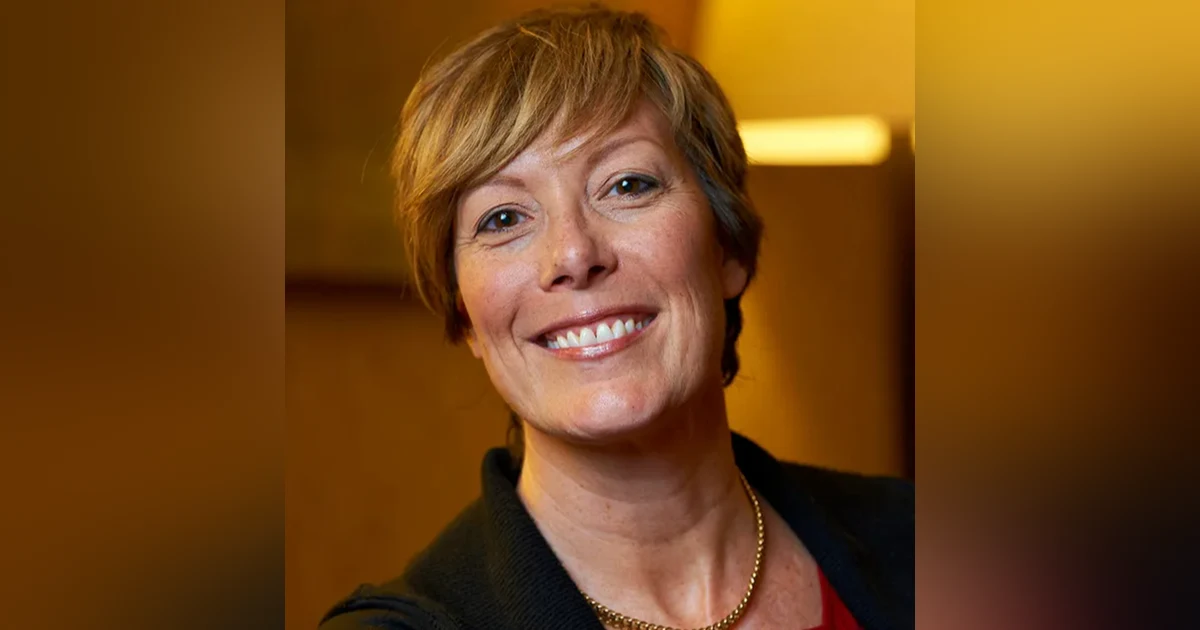

Dr. Kathryn Schmitz is a distinguished figure in the field of exercise oncology, renowned for her tireless efforts to improve the lives of cancer survivors through the integration of physical activity into their treatment and recovery. Dr. Schmitz's academic journey led her to earn a Ph.D. in Kinesiology and Exercise Science from the University of Minnesota.
Dr. Schmitz's groundbreaking research has not only solidified the role of exercise in cancer recovery but has also influenced international guidelines on cancer survivorship care. She currently leads the Moving Through Cancer Program at UPMC Hillman Cancer Center and is a professor in the division of Hematology and Oncology at the University of Pittsburgh School of Medicine.
Her research at this tine includes studying technology-based supportive care treatments that include physical activity to improve outcomes among people with advanced cancer.
She is a past president of the American College of Sports Medicine (ACSM) and was the moving force behind two ACSM development processes for exercise and cancer guidelines for patients.
Her remarkable contributions have made her a beacon of hope and a trailblazer in redefining cancer care through the transformative power of physical activity. Dr. Kathryn Schmitz's work continues to have a profound impact on the world of health and wellness, offering support and hope to those affected by cancer.
Kathryn Schmitz:
Resources mentioned in the show:
Moving Through Cancer Initiative
Research Papers - Kathryn Schmitz
American College of Sports Medicine Exercise and Cancer Guidelines
Hello everyone, I'm Dr. Darsha, and I'm Dr. Altamash Raja, and welcome to Medicine Redefined. A podcast where we will explore the often overlooked but necessary components of health, what we consider to be the fundamentals. We will investigate topics and practices that can give you and your patients the best chance to optimize a healthy lifestyle. It's time to move the needle forward and put the health back in healthcare. Hi everyone, our guest today is very special. Somebody that I've known for quite a amount of time now actually after my undergraduate years. Her name is Dr. Catherine Schmitz and she is a renowned figure in the world of exercise oncology. Now, I first came to know Dr. Schmitz when she offered me an intern job and intern position in her research lab at the University of Pennsylvania. After my undergraduate years, I was struggling to get into medical school and I wasn't sure what route to take and so I entertained the possibility of learning exercise physiology. And through her, I was able to learn more than just that, and I got to delve into the world of breast cancer survivors and different treatments and how exercise can have a profound impact on their survivorship. So Dr. Schmitz's academic journey, she earned a PhD in kinesiology and exercise science from the University of Minnesota. But after you, Penn, she came over to Hershey, which is where I am doing my PMNR residency. And so I've been plugged into her lab as I'm completing my residency training right now. So as fate has it, I've been following her. But unfortunately, or fortunately for her, she has now even moved over to Western Pennsylvania over to the University of Pittsburgh School of Medicine. She currently leads the moving through cancer program at UPMC Hillman Cancer Center and she is the professor in the division of hematology and oncology at UPMC. Her research at this time includes studying technology-based supportive care treatments that include physical activity to improve outcomes among people with advanced cancer. She has been the past president of the American College of Sports Medicine and she was the moving force behind two ACSM development processes for exercise and cancer guideline for patients. Given all that, Dr. Catherine Schmitz has done tremendous work, amazing remarkable contributions to the field of exercise oncology. And as you guys may know, October is breast cancer awareness month. So we thought it was super fitting to start this month's episode with Dr. Catherine Schmitz as our renowned guest. And breast cancer is something that almost a lot of people have just been touched by including me. Breast cancer is very close to my heart and so I'm just very excited to get this episode out into the hands of you all so that you can share it with those that you know, not even just with breast cancer, but any type of cancer and how exercise can profoundly impact their survivorship. All right. Here's Catherine Schmitz. All right. Dr. Catherine Schmitz, welcome to the Medicine Read-A-Fine podcast. Thank you so much for having me, great to talk to you. Likewise, and it's truly an honor to have you on here. So for the listeners, they probably don't know, but I've known you now since 2014, probably, right? So I was in my gap years of medical or gap years before medical school and I had a tough time getting to medical school and I was trying to figure out what I wanted to do in my life. And exercise physiology was always a passion of mine and you graciously, I remember the phone call and you allowed me to work in your lab, right, under a Katie surgeon. And that really introduced me into the world of cancer rehab and exercise oncology. And so I had a great time really learning through your guidance. And then when I mashed for residency to Penn State, I kind of just followed you there. And then I was part of the WISE Project again. So it's kind of just all coming full circle. So honestly, it's great to have you here through all of that. Yeah, that was really quite the breathing ground that project that was part of a center grant called Transdisciplinary Research on Energonics and Cancer. And there were so many bright young minds that came into the lab and worked on WISE or Survivor, which was the project you worked on, who have gone on to be, you know, professors in a variety of different academic institutions and, you know, and to great success. And I just, I think there was something really magical happening when you came into the lab. So it was great to have you there. The other backstory is that, you know, when you do that kind of trial, you never have enough funding. And so the whole trial rests on the back of interns who choose to come into the lab who are bright and eager and interested. And we could never have gotten the study done without you and about four other interns. There was no way we were going to get that study done without your help. So thank you. No, absolutely. So a lot of this talk is going to be about exercise oncology and cancer in general and kind of how exercise can really guide caregivers, as well as the individual who have been diagnosed with cancer. And I was recently listening to a podcast, Pedro Tia, may know, and he had just had my cancer episode come out and talks about how almost everyone in the world has been touched by cancer. Right? Rather, they have been personally diagnosed or whether they know somebody else who has been diagnosed. And with that comes a lot of emotion, whether it's grief, despair, death, but also sometimes joy and grit, right, especially when people can get to the other side and, and, and build that strength. I know you have a personal experience being a caregiver, you know, I read your book and your wife Sarah was diagnosed with cancer. Take me through a little bit about that journey for you and the emotions that you felt, especially as somebody who works in the field, but then also just had somebody close to you be diagnosed a bit. Yeah. So I, I'll tell you first, I'll tell you the, the end of the story first. And that is that Sarah's cancer journey changed my work forever. I changed how I approach exercise oncology research forever because before Sarah's diagnosis, I looked at it as, you know, another disease to be studied and, you know, I was applying physiology principles and saying, this is what cancer patients should be doing. And then, you know, and I, and I was well published and, and, you know, had published guidelines for exercise and cancer and, and then Sarah was diagnosed and, and I got to experience firsthand that, that sort of deer in headlights moment of, oh, what, you know, and her initial diagnosis was, we had a misunderstanding. My mother had had a skin cancer that was a squamous cell carcinoma on her nose. And Sarah's cancer was a squamous cell carcinoma in her nose. And I made the assumption that it was something fairly benign that they were going to, you know, scrape her nose and, you know, it would all be well. And so the moment that was the big like deer in headlights moment for us was when they held a multidisciplinary conference that included the radiation oncologist, the medical oncologist, the surgeon, the nurse navigator, you know, supportive care. I mean, I'm not sure it was in her room, but there were a lot of people in that room. And, you know, they start talking and they're speaking really seriously and, and, you know, and Sarah and I are both like, I don't get it. This seal, it felt like overkill for what we thought was a simple skin cancer. And it was, it was when the penny dropped, if you will, when we realized, whoa, this is not what my mother had, this is, this is something very different. And, and, you know, we went into, you know, what I, what I like to call the deer in headlights phase, which, you know, we, we just kind of were like, oh, okay, when's the next appointment? What am I doing? Tell me what to do? I mean, it's interesting how very quickly that, you know, my, my general sense in interacting with the healthcare world is that I want to be partner with the clinicians that I'm talking to. And, but when it is a serious cancer diagnosis, it is remarkable how quickly you just become a child, you just become, you know, just, what do you need me to do? Tell me where to be. I trust you, my life is in your hands, you know, and, and that's kind of what we went into for, you know, all the way through her first surgery, which was a major surgery. She had a complete reinectomy, they removed her entire nose, they did a forehead flap in order to create a new nose. And, and that was the introduction that we had to, the difference between the lived experience of cancer and what the clinicians were telling us would be the experience of cancer. And nobody did anything wrong, but boy, how do you, did we have a very different experience than what we heard them say would happen? You know, we thought she'd be in the hospital for a night or two, she was there five nights. We thought the wound care would be simple, it was extremely complex. So that was just the beginning of the whole journey of complexity and sort of peeling the onion. It was finally actually well into the journey when Sarah had started combined chemotherapy and radiation, which is just deadly. I mean, chemotherapy is hard. Radiation is hard, combine them, and that's just so hard. And you know, it was several weeks into her doing that when she said, kind of just so tired. And I remember that's when it clicked in, you know, for me that I went, wait a minute, I know something about this. I can help, I can do something for you, you know, and I felt really like, what is wrong with me that I didn't think of this weeks ago, why didn't, you know, but it really is, you know, when you are faced with a life-threatening diagnosis like that, your ability to process and use your expertise is just called into question. So yeah, so I got her onto a program of walking. She was supposed to do 30 minutes of walking every day because that's the recommendation. And you know, I don't know if you bleep things out, but I became that bitch that made me walk every day. But she managed to get through chemo and radiation without any dose delays or dose reductions, which is extremely important for her long-term survival and only about 30% of head and neck cancer patients managed to do that. So I think that the fact that she exercised as much as she did during her, you know, combined chemo, radiation therapy, is one of the reasons why Sarah is still, you know, male evidence of disease seven years later. So that's awesome. It was quite the journey, I guess I mean. Yeah, it sounds like Dr. Schmitz, at what stage of your career were you in at the time? I mean, so you've got a background in kinesiology and economics and epidemiology, were you doing cancer research at this time or this was kind of the inception, you were. Yeah, yeah. So it was like, you know, in sort of the extra complicated category, Sarah was still living in Philadelphia. I had just left the University of Pennsylvania and taken a position as Penn State. And so I was living and working 90 minutes away from Sarah at the time that she was going through her cancer. And so I spent a lot of quality time on the Pennsylvania term type and going back and forth, making sure that she was, you know, that she was okay. But I was, I was very senior, I mean, I was very much in the middle of doing cancer research and had been doing cancer research at that point for 15 years. What was it about the field specifically that enticed you to dive deep in, do some more research? I mentioned that that changed your life entirely. I mean, there's always a spark, right? If that, if the spark of your loved one wasn't it, what was it before that? Yeah. So the initial spark to come into cancer actually came from a single paper. And so when I was a postdoc, you know, I did my PhD training under a cardiologist, Art Leon, and at the University of Minnesota. And my dissertation was about exercise and heart disease and metabolic disease, obesity prevention, and that was the direction I was headed. I was really interested in metabolic disease and obesity prevention for the most part. And what I noted as a postdoc was that I was kind of staring down the face of a field, you know, a career that would be very incremental, that the big huge leaps forward showing us that exercise was useful for diabetes or for heart disease had already, you know, those papers were already written, that evidence space was already in place, not that there isn't more work to be done in that area, but I was, you know, invited by a faculty mentor to consider looking at exercising cancer. And I knew absolutely nothing about cancer. And, you know, I, you know, as a postdoc, you have a little time on your hands, and so I spent a number of weeks one summer reading the literature in exercising cancer, and there was a single paper written by Ann McTernan, that was literally called a call to action, and it was written to people with exactly my kind of training. And it said, hey, you there working on exercise and cardiometabolic disease, we need you over here in cancer, please consider working in this area, your skills will be relevant here. So I actually, you know, just before the internet was much of a thing, so I called her up, and I said, I'm taking up your call to action, and she met me at a scientific conference and handed me a couple of example grants and said, here's some examples, go write some grants, and I never looked back. So I saw the opportunity with exercising cancer in 2000 to be on the ground floor of a brand new field. Yeah, absolutely, and it's, you mentioned a call to action, right, and cancer is so prevalent in our world, but yet it seems like it isn't talked about enough. I mean, to be honest, throughout our three years of our podcast coming up, this might be the first or second time we're actually delving deep into cancer and oncology. Yeah, so even just finding people to talk about it, right, it's not necessarily the sexiest topic, and maybe it's because, you know, throughout the last 20, 30 years, where have the treatments really been, right, like as much as other fields are, you kind of see this rapid progression of treatment and things. So given that our audience is pretty new to understanding cancer, can you just talk about a little bit about this current state of cancer, where we are really, and what type of research you've been doing throughout your career to that really highlights that. Sure, sure. So the first is to level set, just so that people understand, because, you know, I think that there is, there are a variety of different myths and ideas that people have about cancer. One is that it is completely genetic and inevitable, and there's nothing you can do about it. That's inaccurate. That's a myth. The other is that it's a rare disease, and that it, you know, it only happens very occasionally. That's also a myth. The other thing is that cancer is something that you can't avoid, you know, that it's just simply going to happen to the people it's going to happen to. That's kind of a corollary to the genetic argument, but it's just a little more corollary to a little more, you know, sort of plain speak, if you will, and that's, that's also false. And so, so the first thing to say is that cancer is the second leading cause of death in the United States. About 610,000 people die of cancer every year. 1.7 million people per year are diagnosed with cancer. There are over 18 million people in the United States who have had a diagnosis of cancer. It is expected that by the year 2040, there will be 25 million people living in the United States who have had a diagnosis of cancer. So it's about four to five percent of the U.S. population that has experienced cancer. In terms of how frequently it occurs, the most common statistics that I think are useful are one in two men and one in three women will be diagnosed with cancer sometime in their lifetime. So it is a relatively frequent occurrence. Those people won't all die of their disease. Survival of cancer is outstanding for many of the common cancers. Not lung cancer. People don't survive lung cancer for a long time, typically, but breast and prostate cancer. And those are the two most common diagnoses. Survival is over 90 percent, particularly for early stage disease. So that's just kind of level setting. The other thing is that there are a number of easily found resources that I think your listeners might be interested to go take a look at in order to understand the things that they can do in order to reduce their risk of cancer in a substantive way. Again, a lot of people believe it's just genetic or it's just, you know, it's just my family or it's just, you know, inevitable in some way, or that it's all the environment. And in fact, about half of cancer diagnosis could be avoided if people held a healthy weight, exercised on a regular basis and ate a healthy diet, and stopped smoking. So those are four, you know, health behaviors well within the control of your listeners that have a substantive effect on their cancer risk. The fifth one that gets talked about very little and actually holds great sway in cancer risk is alcohol. So we know that alcohol consumption is associated with increased risk for cancer diagnosis. So there are between depending on the source you look at, between seven and ten modifiable risk factors that you can work towards shifting in order to reduce your risk of cancer incidents, cancer recurrence or death from cancer. Those are easily found if you can go to the website for the American Institute for Cancer Research or the American Cancer Society. Both websites are very easily navigable and would summarize all of the evidence base for these modifiable risk factors for cancer. You mentioned a greater than 90% survival rate for breast and prostate. Why is that? Why are we so good in that regard? Is it screening, earlier screening, early intervention? What is it about that where in some of the other tests, we don't have quite the diagnostics and the interventions to have a more success or a higher success rate? Yeah, it's a combination of several things. One is we have excellent screening tests and so improved screening definitely is one of the reasons for the higher survival rate. We also have had terrific improvements in treatment success and so that's another reason. The third is because they are one of the reasons why those two things exist is because those two cancers are so common that a lot of the research that has been done in cancer has been done on breast and prostate cancer. Think about it. If you study something a lot, you're going to get better at it. You're going to learn a lot more about it. If you, on the other hand, you have a very rare cancer like my wife's cancer. She had a famous cell carcinoma, a head neck cancer. There's hardly any research on that because it occurs so much less frequently and so we know so much less. It kind of all goes together. If a lot of people are being diagnosed with a disease, there's going to be more pressure to understand that issue better and we make more forward progress as a result. Gotcha. I want to start shifting into your area of expertise. You mentioned earlier on, you identified the role of exercise that I call to action. I think it was, you mentioned, and returning the paper, so we'll definitely look for that one. The one that put you on the path to be able to do all the amazing things you're doing now. But offline, we were talking about, well, I was talking about my values, right? I think Darshan and I recently had a conversation. We were just talking about evaluating research and the flaws of research and I think ultimately what we came to is both of us love exercise. So any time a paper comes out or somebody puts an article out, it says exercise is good for fill in the blank, right? We are just likely to jump on it because I mean, that's something that we love to do. So at the risk of going down that path the way, I'd like to kind of get from you your take on their different types of cancer. You highlighted a couple of them with respect to exercise in the state of the evidence. Where is the evidence the strongest or their specific types of cancer like solid tumors, liquid tumors, etc. Some of the ones that you mentioned, is it every cancer? What do we know with respect to the totality of the evidence? Okay. All right. This is a fun one. Okay. So the preponderance of the evidence in exercise oncology is in breast cancer. So about 80% of the studies that have been done on exercise oncology have been done with patients who have had a diagnosis of breast cancer. That said, in the 20% on the other cancers, it's very confirmatory. So and there is absolutely no reason to believe that what we find in breast cancer and in the more common cancers, where we do have the evidence that it would be different for the other cancers. One of the things that is frustrating in working in cancer is that the truth is that what exercise is actually really good at has more to do with the treatments than it does to do with the cancer. And so exercise does an outstanding job of helping people to withstand cytotoxic chemotherapy. And cytotoxic chemotherapy is used for most solid tumors. And so there is no reason to believe that what we see in breast cancer with benefits when people are going through cytotoxic chemotherapy would be any different because it's the same treatment on the same human body. Right? What we're actually doing with exercise during cancer treatment, after cancer treatment with recovery from cancer treatment, again, has way more to do with the treatments and the toxicity of the treatments than to do with the cancer itself. You know, the cancer is usually gone by the time we're intervening. There's a surgery and then there's adjuvant treatments, right? And the adjuvant treatments, though, you have surgery, the cancer is gone. Now, there might be a few cells left somewhere in the body, right? And then you have cytotoxic chemotherapy. Exercise is not affecting the cancer. Exercise is affecting the person's ability to withstand cytotoxic chemotherapy, same thing with radiation therapy, okay? So it has way more to do with the treatments. Unfortunately, the way that cancer research is envisioned by researchers and by clinicians is by disease type. And so it's a frustration for people who work and exercise oncology because we would like to just talk about what does exercise do for people undergoing cytotoxic chemotherapy? What does exercise do for somebody undergoing radiation therapy? That's not the way that the clinical world organizes things, right? Does that make sense? So what do we know? What we know is that exercise has positive effects on physical function during an after-cancer treatment. We know that exercise has a potent effect on cancer-related fatigue, which is the number one complaint that people have as they're going through their cancer treatment and for many people long after their cancer treatment is over. We know that exercise has a substantive effect on quality of life, on ability to withstand any anxiety and depression that occurs as people go through their treatments. And we know that exercise is safe and likely effective for women with and at risk for breast cancer-related lymphedema. We also know that exercise has a potent effect on sleep health and we believe that exercise has an effect on bone health as well. So those things have been really reviewed and reviewed and reviewed. There are many systematic reviews on this. There are a variety of different disease types that have been included in these reviews. There are five plus randomized control trials for each of those topics that would conclude that there is a significant effect of exercise on these outcomes. But there are a laundry list of outcomes that we don't have enough evidence for. And some of them are extremely important clinically. One of them is cardiotoxicity. So we know that cytotoxic chemotherapies and other treatments used for cancer can be very toxic to the heart. We know that radiation, if it is to the center of the chest, can be quite damaging to the heart. So we don't actually have conclusive evidence. We have some pain or poignant, there are some evidence, but we are not ready to plant our flag to say that we have an effect on preventing or treating cardiotoxicity. Another one that is extremely important, that is the subject of work that I have ongoing right now. And in fact, a lot of people have ongoing right now is chemotoxicity or chemotherapy tolerance. This is huge. This would be an enormous, enormous reason why cancer centers should be doing exercises standard of care. If we believe that exercise could help patients to withstand chemotherapy and to receive a higher dose of chemotherapy without toxicities, then exercise would easily become standard of care. But we don't actually have the evidence. There are two studies that have been done that have shown an effect of exercise, interestingly, resistance exercise in particular, surprisingly, in breast cancer, one from the Netherlands, one from Canada, both of them showed that in relatively young women who have breast cancer, that doing resistance training and doing supervised training program during cancer treatment resulted in improved relative dose intensity, which is a very precise measure of chemotherapy tolerance. And that is great, but we need to replicate that and do that in other disease groups as well. So I have been part of a team that has been looking into this for colon cancer. I'm not at liberty to give you the results because we haven't published them yet. I have an ongoing trial that is looking at this issue in older breast cancer patients, I'll try 65. In fact, the National Cancer Institute has funded a very large initiative called a NICDO that is intended to test exercise and nutrition interventions for cancer treatment outcomes. There are four groups, I happen to lead one of them that focuses on older breast cancer patients, but there's another group that focuses on rectal cancer, one on colon cancer, and one on ovarian cancer. And all of us are doing exercise and nutrition interventions in order to see whether or not we can improve chemotherapy tolerance. So there are areas where there are big questions, and there have been studies I've just recently published a study that says, we may not have an effect on chemotherapy tolerance. There are questions, but you've raised an outstanding point and that is that there is a publication bias, everybody believes that exercise is good for you. And so it's very difficult to get a paper published that says, actually, you shouldn't be doing exercise at this particular time, or actually, it doesn't actually make a difference. It's very difficult to publish negative papers. So I think that that is a key issue, particularly in a setting of a disease where there's so much about hope and there's so much about that grit that you talked about and people have this kind of, there's a world view around cancer that is very friendly to this idea of cast, but if you would just pick up those weights, if you would just believe, pluck your hands somehow, it was just something you could do that it would make a difference. And I think that there's a real danger in that. And I think we have to guard against it. And I think we need to be really rigorous in our science. And I think we need to publish the papers that say, you know, maybe exercise isn't really going to help with this particular thing. Yeah, thank you for that. I think, you know, just kind of, in a nutshell, earlier you were talking about how it just makes the individual more resilient. So they can withstand everything that's going to come after the cancer has been removed, right, chemo radiation. And again, all of us have been touched in some sense with our family members. So we've seen that on that. And we're just so incredibly hopeless. And you want to do everything you can. I'm wondering though, you mentioned a couple of modifiable risk factors, right? So you're, you're weight, you're, you're just movement exercise and, and you're, your diet quality alcohol things of that nature. Do we know that, you know, once individuals do get cancers, their pre cancer level of fitness, does that have any effect in terms of outcomes? So set another way, like once everybody gets, it was at, you know, if somebody gets cancer, if they are more physically fit, are they more likely to be successful in terms of being cancer-free? Yep. So there is a, an epidemiologist and clinical trialist in Alberta, Canada, but the name of Christine Friedman, right. And she does these massive systematic reviews. And she, she updates them every few years. And she has actually looked very specifically at whether pre exercise, pre diagnosis exercise has an effect on survival. Or post diagnosis exercise has an effect on survival. And the answer is yes. So, so it does look like exercise across the entire lifespan. Extremely difficult work to do, most of it, epidemiologic observational. But it does appear that pre exercise levels of physical activity and fitness make a difference in the outcomes for survival and, you know, and the length of survival. And that doesn't mean, however, that it doesn't make a difference, like, you know, oh well, it wasn't, you know, if you weren't exercising before, there is still value to exercising and to start to exercise after a diagnosis of cancer. That still remains true. And that evidence has come out from a variety of different sources, including the Women's Health Initiative, which is one of the largest, you know, studies of women in the United States. Yeah, I think that's a great segue for us, right. For PM and R physicians, cancer rehab is a field that's been on the come up. We're seeing a lot more fellowships open up. And especially because of our role when it comes to exercise physical therapy with that cancer diagnosis, but before treatment, right? And we termed that prehab. Do you mind just taking us through a little bit about the definition? So prehab and then exercise during treatment and then post treatment. And what patients should really be focusing on in each of those phases? Sure. So prehabillitation, the field of prehabillitation was really kind of founded by a particular group of GIL in Canada. And, you know, the trials that are most cited, and I think are the most rigorous, include an exercise component, a nutrition component, and a stress management component. And what we do see in trial after trial after trial is that patients who are willing to undertake an exercise program and to eat a particularly healthy diet and deal with their stress are less likely to be in the hospital for as long they recover from their surgeries more quickly. And, you know, this is not just true in cancer, right? So there are Eras programs, as you all are, I'm sure, aware early recovery after surgery programs, you know, for a variety of different indications. And so it's not rocket science then to say, oh, this would work for cancer patients as well. And so what we recommend is that people push as hard as they are capable of pushing prior to when they have that surgery. And surgery is often the first thing that happens with cancer because they're not going to be able to push as hard when they're in recovery from surgery or while they're going through any adjuvant treatments they may have to undergo. And so that is the time to be as, you know, as rigorous as vigorous with exercises you can be because you really can make a substantive difference in your fitness levels and in a number of blood parameters that will actually shift the likelihood of being in the hospital for longer just by being more physically active for a couple of weeks prior to going in for surgery. So there's the pre-have. And, you know, I lay out a plan, a three-week pre-have plan in my book. And it's intentionally rigorous, you know, it's intentionally, okay, this is not, you know, taking a walk, this is work, you know. And then there's recovery from surgery. And obviously there needs to be some rest in recovery from surgery. But there is misunderstanding, I think, on the part of medications that recovery from surgery means lying still. And that is actually not a good idea. In fact, they should be up and, you know, wandering hallways with their IV pole as soon as they possibly can. That that will be good for gut health, that will be good for avoiding infections. It will be good for avoiding pneumonia. You know, we'll get them out of the hospital sooner. You know, and it will mean that they will lose less physical function as a result of the surgery, which is a common problem in surgeries. And then once they're done with the acute phase of recovery, then there's a matter of, you know, now regaining whatever you lost as a result of the surgery. The complication here, of course, is that this is usually just about when the adjuvant treatments would start. And so if you're going into adjuvant treatments, then you go into a phase of cyclic exercise, dosing, meaning that, you know, generally speaking, cytotoxic chemotherapies, or immune therapies would be offered on a cyclic basis. So you would have your chemotherapy day one, and then you would have it again on day 14 or day 15 or day 21. Sometimes day 8, you know, sometimes they're a week apart. And the symptoms are usually worse within several days after when the chemotherapy is delivered. And so if you have a 21-day cycle, then you have the, you know, you have your your dose of chemotherapy, and then you're okay for a few days, and then you're really not okay. You have what we call bad days. And then you can, you know, come back to your exercise and get back to your exercise. The amount of exercise that is recommended during that adjuvant care is less than what is recommended when we're recovering from adjuvant care or in the rehabilitation phase because in acknowledgement of the fact that there are bad days and acknowledgement of the fact that the goal is to be maintaining function. The goal is quality of life and helping with anxiety and depression. It's not about recovery from surgery. It's about trying to get through the treatment, right? Trying to support you through the treatment. So the amount of exercise recommended is three times a week of 30 minutes each time of aerobic activity and twice we lose strength training. Once you're done with the adjuvant treatment, then we're in the survivorship phase and we're trying to increase capacity. Now that we're done with the bad days, now that we're done with and we're recovering from the cytotoxic treatments or from radiation treatment. And at that point, then we put the pedal to the metal and we try to get back to 150 to 300 minutes a week of aerobic activity and twice we lose strength training because now what you're training for is your life. Now you're training in order to be in the best possible condition. So can I guarantee that exercise is going to prevent a recurrence from referring? No. I would tell you that there is extraordinarily strong evidence in the epidemiologic literature that exercise reduces recurrence of breast cancer, prostate cancer, and colon cancer on the order of about 30%, which is pretty big. That's a pretty big effect. So it feels to me like, yeah, I certainly would want to be taking advantage of that if I was a survivor myself. So we try to get into the best shape as possible. The other reason for that is that if you do unfortunately end up with a recurrence, you are in outstanding condition to withstand the second round of treatment if you have adhered to the guidelines for exercise for five years. So with respect to the exercise prescription during that acute phase or doing the cyclic phase when they're actively on chemo or radiation, you said three times a week, 30 minutes of aerobic exercise, two times a week of 30 minutes of strength training. Is that, did I hear that correctly or? Actually, the strength training we don't give it time. We ask that you do, you know, five to eight exercises and hopefully do them once or twice. So, um, I'm really content movements. Right. Yes. Yes. Exactly. Exactly. So I think, I mean, I've done a wonderful job highlighting the importance of it. You know, I think probably there are still some people out there who either have cancer or maybe some of the older folks, I know people in my parents' generation, maybe even some of my colleagues who will have this idea that, you know, we have a finite amount of resources in the body, right? And when you're going through these phases, I think the, the conventional thought is that, hey, listen, I need to save my energy so my body can fight the cancer, right? Rather than invest that energy and burn it and use it for exercise. And this is something I hear time and time again. I hear from patients. I hear from family members. Can you spend a couple of minutes talking about how it doesn't quite work that can actually exercise helps energize you and provides more of that resilience and robustness? Yeah. It's very frustrating because, you know, I do have sort of this sort of thought that when people hear me talk about this, they must say, what part of I'm tired do you not understand? You know, so, and I do understand and it really is the point. And so, so the advice that I like to give is very folksy and that is, okay, so I want you to sit and be as sedentary as you want to be for a period of time or a day, okay? And I want you to, you know, notice how you feel. And then I want you to the next day or next period of time, I want you to get up and just move around for 10 minutes. Just get up and move around. And at the end of that, getting up and moving around, I want you to tell me if you feel better or you feel worse, you feel the same. And what we find over and over and over again is that people feel better once they've done something. The human body is meant to be in motion. We are meant to be in motion until the second before we die. We are meant to be in motion when we're in the ICU. We need to move those bodies. You know, we are meant to be in motion and the motion is natural for the body and even when we are going through something difficult now, that's it. I am currently experiencing cancer again. A very, very dear friend is going to breast cancer and just finish your chemotherapy. And I can tell you that there were during her chemotherapy, there were about five days per each three weeks cycle when there was just no getting up. So I understand that there are bad days, that there are days when you know, getting off the couch is simply not an option. The problem is when we make the assumption that getting off the couch is simply not an option for the entirety of six month days of treatment. And I will guarantee that you're going to feel a whole lot worse at the end of that treatment. If you do nothing, then if you at least start doing some walking, at least doing a little bit of walking. And enough to just get the blood pumping enough to just shift the, how things are circulating in the body. So let's talk about motivation. I know you touch on this in your book as well. With loved ones, you can especially be tough, right? They have this conversation of, well, you should understand, like you know me and like you mentioned, you got calls some names, right? When you're trying to motivate your life. But what did you do with Sarah? How did you end up getting her motivated? Because by the end, I know in the book, she talks about how it was a great thing for her to be exercising, right? And it became a passion for her boxing and things. So what were the tactics that you used to really change the mindset? Yeah, it's not just with Sarah. This is something that I use pretty universally. And that is when, whenever I'm asking for is too much, I make it smaller. And if that's still too much, I make it smaller. And if we get to, I'm going to ask you to stand up and march in place for a minute, then that's what I'm doing. And when they're successful with doing that three times a day, then we ask them to do it 10 times a day. And then they're moving 10 minutes a day. So I think there's two answers, though, to your question, how do you motivate? And I think that breeding success, success breeds success. So finding the small unit that they will do. But then there's another thing. And I think I talked about this in the book. The good news is that your body doesn't actually care if you're motivated. It actually benefits from the exercise, whether or not you're motivated to do it. And motivation is kind of overrated. People who exercise are not necessarily more motivated to exercise. They just simply make the choice to do it. So I think I'm not motivated and I kind of want to say and I don't like the color orange. You know, it doesn't make any difference. Right. How about when it comes to weightlifting versus cardio, right? You mentioned doing both and both obviously have their benefits, right? Cardio from the heart perspective, especially with chemo toxicity and then weightlifting, you know, with complications like lymphedema, which can really, you know, help reduce that. Weightlifting is really a new concept for a lot of patients. How do you recommend from an exercise prescription standpoint that people get started with that? Yeah, this is tough because access becomes a real issue here. There's a real disparity with regard to the ability of a cancer patient to survive or to be able to find somebody with a PM&R specialty and oncology. Somebody with an exercise oncology certificate and some kind or another, you know, outside of urban places, you know, we actually have mapped exercise oncology in the United States and we know that if you are minority, racial minority, if you are lower socioeconomic status, if you are more rural, then you are less likely to have access to this kind of expertise. So in terms of access, the challenge is that in order for people to do weight training and to really understand how to do weight training, they need to be shown how, particularly individuals who are older, which is most of cancer patients, right? And, you know, particularly older women, the pre-tidal nine gals, you know, who are over 60 and, you know, didn't grow up with the same access to exercise and the same societal expectations about exercise, we need to teach them how to do this. And so, so the, you know, the low hanging fruit to get people moving is walking, right? So, you know, so if I am, you know, in a very low resource situation and somebody asks me, what should I be doing? And I have two seconds to tell them what to do, I tell them law. But if I know that what they need is weight training, you know, there are online programs, there are programs that offer online virtual training. I personally think that there is a real opportunity with regard to, there are, you know, large companies like Medbridge that have home exercise program options that, you know, physical therapists could be training people how to do these programs and then asking them to do it at home. So, that's, that's among the answers that I think are possible. But I think, I do think that getting people to do weight training is an extra, extra brutal. You mentioned a certification in on college exercise oncology, where can people go find people, you know, are there resources ACSM website, where can people find folks with that certification so that they know that these people are going to be like experience with their specific complications, their unique just background experience where they're coming from. Right. So, two answers. One is that the, the moving through cancer initiative that I started through the American College of Sports Medicine has a website. If you Google moving through cancer, ACSM, you'll find it very quickly. And there is a directory of exercise oncology programs across the United States. There's over 2000 programs in the directory. They've all been vetted so that we know that somebody who is, is teaching people within that program has some specialty training, whether it be from the YMCA or from ACSM or from other sources to work with people living with and beyond cancer. The second answer is that the American College of Sports Medicine had a cancer exercise trainer certification that they started back in 2008. And, you know, when we built that, you know, it was a very different time. It was very different era. And we've now decided to update that. And we've invited the international leading experts in training people to work with, people living with beyond cancer for, for exercise. Her name is Anna Campbell. She has a program called CAN rehab. And she's been doing this program internationally all over the place. And we connected her with ACSM and the American, American Cancer Society. And so the entirety of the ACSM credentialing for exercise oncology has been completely revamped. And we'll be rolled out very soon so that anybody who is a physician, nurse, physical therapist, exercise physiologist, fitness trainer can take the CAN rehab course and become credentialed by ACSM in order to work with exercise with people living with and beyond cancer. It's fantastic news. All right. Well, I think it would be good to transition now talking about exercise with the support team, right, especially with oncologists. In the beginning of this episode, you talked about how, you know, through your loved ones diagnosis, it was almost an aha moment. You know, this is the work you do. And it was like, wait, why haven't I really thought about this? And likewise, that, you know, for me at least with my loved ones, it was kind of the same thing. It was just something that I knew about, studied the research on, but still never really had the opportunity to talk about it because it never came natural. I know what's the same as it is in our health care system, right? When you go to an oncology appointment, and when you talk about what's coming next or even post-diagnosis or post-treatment, how can one talk about exercise with their oncologists when there's so many other things to talk about as well? Right. So I'm delighted to say that this moving through cancer ACSM website has a triage tool baked into it called exceeds. And if you do the triage questionnaire, it then can print out the results or send you the results via email so that you can take it to your doctor to start a conversation so that your doctor can know how you answered the questions on the triage survey. And so that they know whether it's appropriate to send the patient to rehabilitation or to send them to a group exercise program or for them to exercise on their own. So the triage tool is intended to help with those exact conversations. I think there are examples around the country of cancer centers that are doing a good job of making this connection, but they are extremely few and far between. At Hillman Cancer Center at Pitt, we have a program that starts with this triage tool with every patient that's receiving confusion therapy. And once the person is done with the triage tool, we then help guide them towards appropriate exercise programming, sometimes in the community, sometimes one-on-one with a physical therapist, sometimes being sent to a cancer rehabilitation program. And we're finding that patients really, really like the triage tool. We find that if we do the triage tool, then patients know why they're being sent, whether they're being sent. If I walk up to somebody and say, hey, I think you should exercise, it would be really good for your symptoms. I don't even know what symptoms they have, right? If I walk up to them instead and I say, hey, take this survey, we might be able to help you with some things. They take the survey and I come back and I say, based on your answers and what you said about your symptoms, I think that you might really benefit from this kind of exercise program that would help you with these things that you said you had a problem with. You see the difference? So I think that we need to do a much better job with that triage and referral piece. And I think that there are very few cases that are doing that particularly well. Fantastic. Yeah, I'm kind of going through some of this stuff right now and I love that they actually have a prescription pad for clinicians to be able to use that and prescribe exercise. I mean, this reminds me something Dr. Beth Freides was talking about just the whole, you know, the fit to be a prescription and how that simplifies it for providers to be able to do that and some really amazing resources for patients and handouts and whatnot. So we're going to be sure to link this in the show notes for sure. Well, Dr. Smith, I've actually also been thinking about, I mean, you're such an enthusiast for exercise. I'm actually curious what's your exercise regimen like? So I actually need your services right now. I have arthritis in my left foot, secondary to a bunion and I need a steroid injection in my foot. So I have been a runner, but right now that is just not in the cards. So I own a peloton bite and I'm on my peloton about five times a week. I'm pretty, pretty religious about it and then I have weights and so I do weights twice a week on my own. So that's, you know, I'm, I'm just in busy, you know, so I don't get out to do exercise out in the community, but I'm pretty religious about getting my exercise in. It's, it's my sandy. Well, I love that. And I think the big takeaway for listeners is, I mean, despite having an injury right in your toe, you're finding other ways to move around that injury, right? I think often people have something they're like, well, you know, I can't do X, Y, and Z, and they keep focusing on what they can't do. And then, you know, even we've talked about this with Dan Pope and multiple people in the past, it's like, okay, if you have a cast on your left leg, well, what about your right leg? You can continue to do that, right? You know this from exercise science, I mean, you know, motor learning 101, the crossover effect, right? You're going to heal faster if you train the opposite. So, so, yeah, I mean, when, when we get offline, I can, I mean, pretty far from you right now, but I can definitely make some recommendations at UPMC, a couple people who'll be able to take care of you there. Well, that would be fantastic. For sure. I, you know, I realized today, Darcia was talking about, you know, we, we actually have spent some, some time recently talking about artificial intelligence with Joe Bakty and also talking about genomics. You know, one thing that's been really exciting, a lot of different people talking about genomics based medicine and screening and even earlier screening with the power of AI. Do you have any thoughts in that? I know it's a bit outside of the scope of this discussion, but sure with your pulse on cancer and everything related and how long you've been in the field. Do you have any thoughts on that and how it can help revolutionize what we do in terms of exercise and prevention in the future and intervene earlier? Yep. So, so a couple of things I actually did in AI project that was funded by American Institute for Cancer Research called Nurse Amy and so I think that AI actually is, you know, we were talking earlier about the access issues for exercise oncology and I think that technology could be one of the ways that we address those access issues. But there's also the access issue for people who are not comfortable with technology and so they're not, you know, used to keyboards or touch screens. And I think that conversational agents chat bots can be quite helpful with those populations. So something like, you know, Amazon Alexa or you know, the variety of different, you know, smart speakers and whatnot that could be used. And, you know, there is actually a, you know, a nascent scientific literature to show that you can develop a therapeutic alliance with an AI with a chatbot. For a variety, they've been used a lot for mental health. But we actually found that metastatic breast cancer patients really liked working with the Amazon Alexa Echo Show, which is the version that has the screen. And that really allowed us to track their symptoms and offer them exercise interventions and nutrition counseling and, you know, soothing music and meditation and a variety of things in response to the symptoms that they themselves reported. I think personally that AI is a great possibility for the fact that, you know, the specialty that you two have, I, you know, there are not nearly enough of you. And there are not nearly enough of cancer rehabilitation, physical therapists or exercise oncology professionals. They're just aren't. So how do we address that? And to me, I think getting back to the triage and referral, if we could invent an AI-based tool that would allow people to answer questions that would triage them so that we know, aha, this person really can do it on their own and then offer them a virtual exercise program. And they're fine. And that's going to be some portion of people. And then there's going to be some people who have some relatively straightforward problems that you probably could still help virtually. And then it triages the people to say, aha, these are the people that really need to go see a PM and R doc with specialty oncology. So it's, you know, it's, it's, you know, it would be a way of organizing and sorting and shifting patients, give everybody the AI, give everybody the access to the AI, give everybody the basic program that tells them that they should be moving, eating well, drinking less, stopping smoking, all of those things, right? And then when you find somebody who like has a seven out of 10 on, you know, some symptom that you know would really be helped with a steroid injection or whatever, then, then aha, you know, we'd like, you know, the AI would then say, it would be great if you would please call, you know, Dr. Smith and then, you know, go see Dr. Smith on the corner of, you know, Broadway and whatever, you know. Yeah, it never ceases to amazing, like just where the future is heading and probably how much closer we are to making this all in reality, just especially with deep learning and how quickly AI can, you know, learn and how it's going to affect our lives. So definitely a lot of bright spots to look for when it comes to medicine and medicine 3.0. Well, Dr. Smith, where, what are you currently researching right now and what else are you excited for in the development of exercise cancer rehab? Okay, so, oh, good, good question. So I am currently extremely well funded. So I have a trial called PA Moves, which is a primary prevention trial in rural Pennsylvania. So we are recruiting 800 primary care patients who are overweight or obese and are diabetic and we are randomizing them to receive a physical activity intervention versus not. We're simply trying to improve physical activity levels in rural primary care patients given the fact that we know that rural individuals are more likely to develop cancer. Rural patients are less likely to be physically active and physical activity is associated with reduced about 10 to 20% reduction of cancer risk for many common cancers. So that's PA Moves. That's happening. We are, you know, in the slow and arguing, our just process of recruiting for that. We've recruited about 50 patients so far. And I have a new version. I mentioned the AI project I did. I've translated that into a tablet-based intervention now for rural advanced cancer patients. So Nurse Amy is a study that we're doing in rural Pennsylvania for the most part. And we've recruited 109 of our 344 patients. They're receiving a tablet-based supportive care program or supportive care materials in writing. And we're looking at whether or not we can improve symptoms and quality of life in these advanced cancer patients. So obviously the tablet includes a lot of advice about walking and a lot of advice about exercise. So it was a sneaky way for me to get exercise in the enhance of these advanced cancer patients. And then I mentioned as well the trial that we're doing with older breast cancer patients called Thrive 65. And this is with colleagues from Dana Farber and Case Western Reserve. And we're recruiting 270 older breast cancer patients and randomizing them into a weight training and protein supplementation intervention versus supportive care. And we're looking at whether or not we can improve chemotherapy tolerance and chemo toxicities. So that one is ongoing and the recruitment for that one is quite this log. And then I have an ongoing quality improvement project that I mentioned earlier that is a triageum referral project. And we have met close to 500 patients at this point. And we're learning a lot about the process of if we do the triageum referral process and refer people to exercise. Do they go? And do they like this process? Is it a process that they find acceptable? And it's exceedingly popular and we are expanding the program to additional locations within the Health and Cancer Center in September. So I also leave an international initiative called Moving Through Cancer through the American College of Sports Medicine. And the agenda for Moving Through Cancer is nothing short of making exercise standard of care in oncology by 2029. And our agenda items towards that goal include policy work. We're in the process of writing an application for a national coverage determination from CMS through Medicare. And so we have policy reviews that we do and member policy conversations for interested in stakeholder awareness. We've developed a booklet to try to make it easier for clinicians such as yourself to hand something to a patient to say this is why you should be exercising. We are developing workforce. Some of that work has to do with the CAN rehab work. I've already talked about before. We're in the middle of writing a textbook called Essentials of Exercise Oncology that will come out in 2024. We're interested in developing programs. And that work at this point really centers around mapping the programming that currently exists and recognizing the disparities in the programming that exists. And I think there's real interest in doing research together as a team as well. And the research that's under development right now is a Medicare pilot in order to show that exercise does change healthcare utilization. And that one's very, very exciting. I'm super excited about that. So I have a few things cooking. Just a few. I know your book's called Moving Through Cancer, but Dr. Smith, you really don't stop moving. I've got a lot going on. I love it. Yeah, why don't you tell our listeners which social medias are active on and where they can go and find the work you do as well as just some of the things that you post? Sure, absolutely. So are we calling it Twitter anymore or X? I don't know if that's good to be. So I'm there and I'm there a lot and I am fit after cancer on Twitter. And I am fit this after cancer on Instagram. And so you'll find me in both of those places. But I am regularly in front of the media. And so if you Google for my name, you'll find places where I've been quoted. I was just quoted in Washington Post in San Francisco Crabble. And, you know, so I talked to media here. Fair amount. So I'm not hiding. I'm pretty pretty easy to find. And, you know, you can find a variety of different emails to find me by Google. Awesome. Well, Dr. Smith, I want to thank you so much for being generous with your time and educating us and more and more importantly doing the work that you do. I mean, I think this is absolutely incredible what you've been doing for the last 10, 20 years and what you're probably going to continue to do for the next decade or two or however long you plan on doing this for. I mean, this is clearly very, very important. And, you know, of course, again, I want to highlight my bias and the importance of exercise. But as you pointed out, like the evidence speaks for itself, right? And yeah, cancer sucks in every in which way. And yeah, there is some aspect of the hope and the belief and the things that we talk about and exercise is usually a positive, right? Or from the hormones and all the other things that we talk about. One of the things that we do in physiatry is that I think the two buzzwords that we use in physiatry is function and quality of life, right? Quality life is more than one word. And in every facet of almost every facet of quality life exercise helps improve that. And there are very few things that, you know, cancer doesn't affect international manner. So if you could come back that and if for you to do all the work that you're doing to produce good evidence and the initiatives that you're doing, we want to thank you so much. Our last question that we'd like to ask our listeners is, you know, about adding the health back to health care. I'd like to challenge you to come up with an answer that actually doesn't have to do with exercise and oncology just because we've, and I'm curious what else you'll come up with regarding adding the health back to health care. Mental health. I would say that if there is a way for us to allow the health care professional to have appropriate training and readiness to meet people where they are in terms of their mental health. And I think, I think, you know, mental health is helped by exercise. But I think that we have a crisis in this country with mental health and, you know, in particular in our youth. And, you know, I think that if we can find ways that are non-pharmacologic to start to address mental health in health care and that every encounter that the mental health and the and mental and emotional well-being of the patient is as important as their physical well-being. I think that that would revolutionize health care. Love it. Thank you Dr. Schmitt. Absolutely. Thank you Dr. Schmitt. Thank you for the opportunity. This was so fun. Thank you. You got it. All right. Thank you and keep moving everyone. I want to thank you all so much for taking the time to listen to this episode. You know, cancer is something that 99.9% of people who are living can relate to either personally by being diagnosed or knowing someone who's been diagnosed. And it's a terrifying feeling knowing a loved one can be suffering from this. And by the lifestyle interventions that we so often talk about on this show, I'm really hoping that you can share this episode with those that, you know, can really just use it as a helping hand. I mean, the tips and tricks that Dr. Schmitt talks about when it comes to motivating loved ones, motivating patients. I think are very unique, but also can really make a big impact as the medical field is trying to figure out a way to cure this terrible disease. We can still use things to our advantage like exercise and better sleep and better diet. And so again, I beg you all to please share this to somebody that you know who has been affected by cancer or who is currently battling in their current state. As always, our disclaimer, everything in this podcast is for educational purposes only does not constitute the practice of medicine and we are not providing medical advice. No physician patient relationship is formed and anything discussed in this podcast does not represent the views of our employers. We recommend that you seek the guidance of your personal physician regarding any specific health-related issues. And as always, thank you to our team Ethan Jew and Herita Yapuri for the production of this podcast. For all the listeners out there, if you have any questions, if you have any topics, if you have reviews, if you want to let us know anything, you can email us at medredefine at gmail.com or visit our website at www.medicineredefine.com. Leave a review, let us know what you think. We will be more than happy to entertain your requests. All right, have a great week.