

 Apple Podcasts
 Spotify
 Castro
 RSS Feed
 99. Living With a Lifetime of Unresolved Stress | Christopher Lee Maher
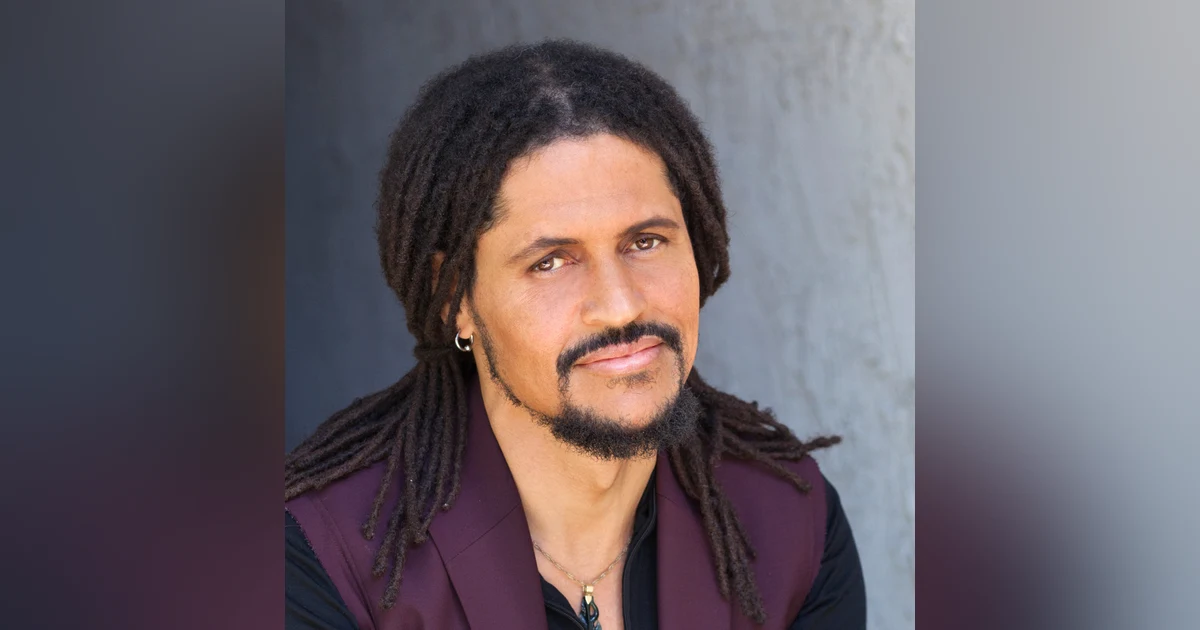

Christopher Lee Maher is a former Navy SEAL who endured intense physical, mental, and emotional stress as a child. By combining a “seal mindset” with modern stress management strategies, Christopher taught himself to free his body and mind from pain by developing mental and physical tools for eliminating unresolved stress. Christopher studied Traditional Chinese Medical Practices at the Pacific College of Oriental Medicine and at Yo San University before continuing his studies at The Universal Healing Tao System. He is a student of Grand Master Mantak Chia at the Universal Tao Master School in Chiang Mai, Thailand, and is currently pursuing his Master’s and Doctorate degrees in Traditional Chinese Medicine.
Hello everyone, I'm Dr. Darsha, and I'm Dr. Altamash Raja, and welcome to Medicine Redefined. A podcast where we will explore the often overlooked but necessary components of health, what we consider to be the fundamentals. We will investigate topics and practices that can give you and your patients the best chance to optimize a healthy lifestyle. It's time to move the needle forward and put the health back in healthcare. Our guest today is a former Navy SEAL who endured intense physical, mental, and emotional stress as a child. His name is Christopher Mahar, and he has combined a SEAL mindset with modern stress management strategies. Christopher has taught himself to free his body and mind from pain by developing mental and physical tools for eliminating unresolved stress. Christopher studied traditional Chinese medical practices at the Pacific College of Oriental Medicine and at Yosun University before continuing his studies at the Universal Healing Tows System. He is a student of Grandmaster Mantak Chaya at the Universal Tau Master School in Chang Mai, Thailand, and he is currently pursuing his master's and doctorate degrees in traditional Chinese medicine. But you're going to hear in this episode is a timeline. It's a story and it's a journey of Christopher's. You're going to hear a lot of traumatic things in the beginning, but it seems like Christopher really has developed a beautiful approach to his life. And so with that, I do want to put a disclaimer. Be advised that this episode is going to contain discussions and themes that can be emotionally and psychologically triggering to some listeners. We're going to be talking about things like trauma, abuse, mental health struggles, and other sensitive subjects. So it is important that you prioritize your mental and emotional well-being during this episode. If you feel triggered or overwhelmed, please consider taking a break or seeking support from a mental health professional. Enjoy the episode. Alrighty, Christopher, thank you so much for coming on to Medicine Redefined. I'm super, super excited to kind of delve into all the topics that you talk about from mental health to stress management and resolution. This is really going to be a delight for me. So thank you so much for coming on to the show. Well, look, man, I'm excited to be here. You know, this is a eye, of course, because this is what I do all day. Like anyone, I think what I'm doing is very important. And if people get solid information, they can be in the know. But if you're not in the know, how can you make a good health heart felt? How can you take heart felt action to your own behalf without good solid data, right? Yes. So I'm excited to co-create something impactful today. Absolutely. Well, let's start out with your background and your journey. How did, you know, take us through your childhood, you know, how you grew up, where you were. Oh, my childhood, yeah, the childhood I was born in Philadelphia, Pennsylvania. And it was the end of the 60s, right? And I think in our country, there was a very tumultuous time, right? These had been assassinated in the 60s, Malcolm X, Medgar Evers, Martin Luther King. You know, there was a lot of distrust, right, from the layperson, from the common man. And then I was left with a babysitter who made some poor decisions. And one of those decisions was to teach me not to play with matches by putting my hands on a gas stove. So she turned on a gas stove and then she burnt my hands, right, and left me scarred and ended out of hospitals from three and a half until I was ten and a half getting reconstructive surgeries so that I could use my hands in a normal way. And so my experience of stress and trauma was very intense because I was so young. Like it's one thing to get burned when you're 35, 40, 45 years old because your nervous system has already dulled itself out a bit. But when you're three and a half years old, your nervous system is as fragile as a butterfly's wings. I don't think she understood at the time that that was going to have physical, negative physical reflections, but we're also going to have a negative mental and emotional and energetic impact that I wasn't aware of, certainly my mom wasn't aware of and her mom, my grandmother, you know, because at the time this has been the sixties, we didn't understand trauma. If you just said, oh, to a person, I think I'm traumatized, they would look at you like I have no clue what you mean, are you angry, are you confused, there were only some very basic root emotions that humans were allowed to visit and speak about publicly at the time. And so I grew up in a household with a mother who was mentally ill and why else would you leave your child with a stranger? And she took her life because of some trauma that she experienced when she was 13 and she couldn't cope mentally or emotionally with the circumstances that she had been through and she had a father who died of cirrhosis of the liver. And so you can see all you need to do is dig back one or two or three or four generations and I promise you all the signs and symptoms that one of your grandparents or great grandparents or great grandparents or parents was struggling from mental illness will be extremely evident. Once you start to learn about the negative impacts of stress, tension, trauma, and trauma, trauma is what I call stress plus time, right? That eventually expresses itself as trauma, right? And it has this very deep, unrelenting impact on the person psychologically, emotionally, energetically, physically and physiologically, right? And when I say physically, I mean structurally, like muscles, bones, tendons, ligaments. And so I then got pushed into the foster care system after she took her life. And when I was introduced to my foster parents, I knocked on the door and went into the house and there was a kid sitting in a cross-legged position facing the wall, ramming his forehead into the wall every 10 to 15 seconds. Okay? So imagine I'm walking in here, I just, my mother took her life, she's mentally ill and now I'm walking into this space where this six, seven-year-old kid is smashing his head into the wall. And you're how old at this time? Seven years old and three months. No, seven years and four months old. And so imagine the ride that I started to become aware of that I was on, right? Who can I trust? Who's here to support me? The irony here is that the people who were taking care of me, kidding Charlie Evans, they were very respectful, very kind, very generous, very understanding, very spacious. The opposite to my mom, who had been through an intense amount of trauma, who was very controlling, her behavior was very borderline, tinkerbell to Godzilla in 2.2 seconds. And then right back to tinkerbell is if Godzilla never existed, right? So she had no honest self-reflection about her impact. And so, you know, I had all the signs and symptoms, I was a nail-biter, I was a bed wetter, I was, I was a stammerer, it was very difficult for me to speak. And so I was a child who was raised really to express the symptomology, very intensely and very consistently. Because there's no, because it was so consistent, there was no way for me to pretend that it wasn't happening, because I went to a boarding school, 15 other students in my student home, maybe a couple of them were stuttering, right? Maybe a couple other ones were wet in the bed, maybe a couple other ones were wet in the nails, I was doing all three, right? And at any time I was had a mistake, I was doing everything that I could hide, I could do to hide the mistake, because I wanted to do everything that I could to avoid punishment, rejection, humiliation, violence, discomfort, and pain, and the feeling, the overwhelming feeling of death. And so that's where I started. Wow, wow, that's a heavy lad. You know, I imagine I'm only seven years old by this time, right? I've had my legs broken at two days old in order to recast me. My mother was having an emotional mental breakdown, so she abandoned me in a hospital, and so here I'm alone, right? And I'm being reminded again, and again and again through these situations that, hey, you're alone, you better figure it out. And so my winning strategy became, hey, let me go with the flow, okay? Adapt to the circumstance, and then at some point, you grow up, you get in a position where now you can call your own shots. I started to upset a lot of people, because I was no longer willing to participate in over-adapting. And I was a struggle for people, it was a struggle for my friends, it was a struggle for my family, it was a struggle for my teachers, it was a struggle while I was in the military, because there were just certain things that I was willing to do, because it's the military, you have to go along with some of those things, and there were certain things that I was going to be doing when I was on my own, because I needed to have some sense of being myself. And even though when you're in rebellion, honestly, you're never being yourself, because what you're doing is in response to something that you feel like is in control of you, which now has you acting out in a way that's out of control. And so I was a risk taker, and so sealed teens in the sealed training, you know, it made sense for me. And I always thought, imagine I'm 22 years old, I'm still thinking my mom had a long life, because she committed suicide when she was 29. And guess what? In common for women to commit suicide, right, out of every 100, out of every million people who commit suicide every year, 876,000 are men, right, it's very rare, like women are like emotional samurai warriors, right, they're so strong emotionally, they're less strong than men physically, right? We produce different hormones, but emotionally they're very strong, so if you imagine everything that my mother went through, how deep and difficult it was for her just to ring the bell and leave life, it's not easy to do that to a woman, okay, women are strong, they've been taking, you know, an ass kicking by society for, you know, 20, 30,000 years, right? So they're used to being in, dismissed, they're used to not getting recognition for their true value, they're used to being boxed into these limited ways of expressing in society. And I, you know, retrospectively, I get it, historically, I get it, right? And now, here I am, a young man, and I'm driving towards what was my Olympic dream, which was to make the Olympic trials, and guess what? I mean, if I look back now with honesty, it was a fantasy, because I didn't have a body that could hold up any longer through all the stress and tension and distortion that I was putting it under, and I was putting some heavy loads, right, because I got a lot of my esteem from training, from being disciplined, from working hard, from being consistent, right? For showing up, even when you're tired, right? You wake up in the morning, your eyes are heavy, you might, you know, they might be a little swollen, but yet, once my feet go on the ground, I'm charging straight ahead, okay? And when you grow up in your institutionalized, and I don't mean like a formal institution, like a psychiatric ward, I just mean going to a boarding school that has very strict rules and regulations that they have to apply to everyone so that there's some semblance of order, and so they can give you feedback, which I felt in a certain way was non-constructive, because I can't get my esteem from adhering to the rules, if the rules and the regulation go against my ethics, right? And so when you're in a boarding school and you're in a military, you're giving away a piece of yourself, right? And you're giving away the most essential piece of yourself, which is to explore, right? Because when you're afraid to explore, because you might end up being punished, and you would go to boarding school, guess what, when your parent, when your house parents give you 30 and 30, and what that means, 30 days of an extra hour of work while all the other kids are out playing and running around, you know, the other kids are talking trash, you don't get to play with us today, you got to go wash more windows or mow more lawn, you know, there's a place where that actually is non-constructive, meaning that it actually inhibits the young child's ability to explore their environment so that they can learn through trial and error, trial and error is not meant to come with punishment, it's meant to come with an opportunity to make it personal, meaning ask a basic question, what did I learn from that experience? If all I learned from that experience was to avoid more punishment, I'm getting further away from myself and I'm becoming less, I'm becoming more risk averse, right? And, you know, when I first went into boarding school, I was easy to volunteer for things, but by the time I got into like ninth grade, I was actually risk averse, there were certain things that I wanted to do that I wouldn't attempt to do or try, because I was worried about what somebody else might think of me. Yet, if you go with my history initially, I was never like that. And, you know, I like in that or I hold that strategy of a merit system responsible, because what I needed was affection, right? If you're giving me affection, I'm going to show up big time, because what could be more, what could be more of a powerful catalyzer than affectionate conversation, affectionate touch, loving words of inspiration, a safe place to go to when you're feeling sad or hopeless, when you're feeling depressed or angry, when you're feeling self-righteous or fearful, you know, those are the things that children need. And when you got two house parents, and these two house parents are responsible for providing love for, you know, 14 to 16 children, there's not enough to go around, right? And so then you're in experience, then you're in experiences that are beyond your capacity to grasp, because you don't have the emotional intelligence to process them effectively. And that in of itself starts to create this radical shutting down of your own ability to investigate who you are. And so I had some very unique experiences that were provided to me that are outside of where most humans were reared, were raised, were conditioned through. And so that unique conditioning led me into maybe some confusion around what's esteem, what is identity, and I think I fell into wanting to be recognized for who I was. And that recognition for who I am, it has to come from the inside, it can't come from the outside. And so my achievement was being driven by that. And that ended up, in the end, it never, in the end, it limited my ability to know myself. And so then I started showing up with pain in my body. The body keeps a score, and there's that book. I haven't read it yet, but yeah, but the concept of emotional and all this trauma kind of exactly what you're describing is, the physical illness, the emotional, the mental, you know, and how trauma can actually affect in a somatic way. Oh, for sure, like look at anyone who's got arthritis, right? Look at anybody who deals with debilitating headaches, pain at any joint, insomnia, dyslexia, I mean, the list the list goes on and on and on. Addiction to the daily drugs, nicotine, caffeine, alcohol, recreational drugs, pharmaceutical drugs, marijuana, food coloring, preservatives, right? Like all of these match a very specific frequency. Like if you put those in a lab and you measured the frequency of those substances, they would come out from like dark gray to black, right? But then if you measured things like honesty and open-mindedness and generosity and authentic care, authentic self-expression, well sought out humor, heartfelt action, healing, forgiveness, change, transformation, self-empowerment, all these would measure within an intense amount of life, right? And the challenge is for me that I've discovered is when you have that much of shadow running inside of you, it impacts your decision-making. And it reinforces those decisions, reinforces the circumstances that you came from. So now you get stuck on this feedback loop system that only helps you to continue to recreate the same circumstances that your parents went through and your grandparents and your great-grandparents. I can't tell you how many times I've heard someone say, I don't remember the day when I woke up and I realized I was my mom. And humans, you know, me included, have been disillusioned to what freedom really is, you know, and my work is all about freedom. And freedom, to me, is one's ability to be at choice, regardless of the circumstances relative to your own personal set of ethics, morals, values and principles, and the integrity with which you are able to maintain those levels of integrity, ethics through your morals and your principles. And those can only be discovered through authentic investigation minus or devoid of punishment, rejection, humiliation, and violent outcome. Right? And, you know, we look at places in the world today and we see humans that are without choice, right? And it's easy, you know, I live in the U.S. and there have been, you know, freedoms that have, especially in the last three years, or really since, really since the Bushes took office, but I won't get political. You know, rights that we've been used to have been infringed upon. And so I think the wake up call that's happening for a lot of us is that, oh, well, guess what? If my real power to change the world around me doesn't come from me focusing on the outer world, the real impact and the ability and the ability for me to change the planet around me is to simply become a better person. Because that amplifies through every relationship that I have, right? Every word that I speak, every behavior that I express, every thought that I have, every emotion that I engage in, if I live on on those high vibrations, right? Every person I come into contact, I donate that energy, that level of consciousness, that level of insight, that wisdom, those deep levels of understanding to them so that they then have at least the inspiration to take a risk to do things that would help them the integrator state of choice to their own benefit through heartfelt action. Christopher, I am interested in kind of your teenage years. You said seven knocked on the door, it's another child banging their head on the wall. Was there a time that you can pinpoint where you started to look back and say, wow, I went through a lot of trauma, this is how I'm going to cope, or where you at least started to unpack a little bit of what you were going through. When did the unpacking start for me? The unpacking for me was immediate, and I'm going to tell you why, because when you have a burn on your hand, and the whole inside of my hand here has been burned, and the front side, see this hand is really small, see how small this digit is, see how this thumb is turned in the wrong direction, all of those scars, I had to be looking at this every day. So I was constantly asking myself question, why did this happen to me? I remember laying in bed at night and thinking that God was playing a trick on me. My mom was still alive somewhere in the world, and I remember having those thoughts at 13, 14 years old, and then laying in bed in the pilot tears, feeling like I was left alone. So the feelings that I was experiencing at that time would have been severe loneliness. Even though I was in boarding school, there were 15 other students in my student home. I had two house parents, I had two kids, so I'm constantly surrounded by 19 people. Yet I have this overwhelming feeling of emotional loneliness. So I got into self-soothing by distracting myself with watching sports and watching TV and comedy and cartoons and playing video games, and because no one was ever asking me how I felt. They were asking me what I did, but they were never asking me how I felt, so I never felt like my feelings at value. And I was surrounded by adults, right? And yet no one ever put their hand on my shoulder to say, hey, how are you feeling today? So I never put into my scope of experience that feelings had value. I never once sat at a dinner table where even with my mother's immediate family and have a conversation about feelings. Never heard anyone go, hey, how are you feeling today? My grandmother's name is Gertrude, so they always call it Gertrude. How are you feeling today? No one ever has. There was no checking in. So as I moved into my teenage years, how was I supposed to know that I needed to check in with my feelings? You know, when I was that age, I'm thinking maybe everyone's having the same experience that I'm having or the opposite. No one's having the experience of what I'm having either way either of those mindsets are too extreme, right? And the boarding school that I went to, no one was ever talking about the circumstance that they came from because I think everyone was dealing with some level of childhood change that they didn't have a normal circumstance that everybody else had. And because there was no investigation, why would I be investigating, right? Children mimic adult behavioral patterns and thought patterns. And, you know, I'm from Pennsylvania, Pennsylvania is a very stoic state. That's where I am right now. And, you mentioned Hershey, right? Is that the boarding? Yeah. Yeah, Milton Hershey. That's where I'm in Hershey right now. Do my residency out here. Look at that. You're in Hershey. I'm in Hershey right now. And I'm from Philly. Look at that. You're in Hershey right now. Yep. Yeah. See, that's why it was only meant to be me and you on the call today. Yep. Yep. Yeah. So I know right where I know right where you're at. I know the housing that they provide for the students in residency. Yeah, yeah. Yeah. Yeah. Yeah. Yeah. Yeah. Yeah. It's crazy. So yeah. Go ahead. Yeah. So so in a certain way, the space where I was at when I was a teenager was neutral in a sense that I didn't have parents looking over my shoulder requiring me to be them, right? But in a certain way, it was too spacious. Like I was left up to too much responsibility to decide what my identity was going to be without any actual guidance around what's a healthy identity. Because no one was talking about these things. And it was like, you know, in your boarding school, it's like, hey, look, if you're doing it right, there's no dumb merit. And if you're doing it, if you're doing it right, there's no dumb merit. And if you're doing it right, there is a merit. So now it's the carrot versus the stick. And you know, that kind of raising, right, that kind of structure, it has value to a point. And then there's a point where that actually doesn't have any value. That hearing to rules that I became very good at them, if you get your sense of self from that, you then project onto yourself that you're a rule. Right. And no, you're not a rule. Your name is Jake, or your name is Susie. And Susie, how do you feel about this circumstance? Jake, how does that? How do you interpret this situation? Let me listen from that position, because now is the teacher, I can learn to become the student. And I learned the most valuable thing. I learn what you care about. I learn about how how this makes you feel. And from that position as a teacher, as an administrator, as a guide, as a counselor, I then have the ability to meet you where you're at. But if you don't know where you're at, because I don't have the ability to guide you there, through a very simple, intimate investigation, and how you're feeling, or what you're perceiving, a missing out on the greatest opportunity, which is to connect to you emotionally. And so the mental illness that we see in the world today is driven in part by that lack of intimate investigation from parents, from students, from teachers, from coaches, from administrators, in the institutions that we send our children to, and in the family, dynamics, and environments that we raise them. Totally. And there's this definition that I've come up with is there's inner self-esteem, and there's outer self-esteem. And inner self-esteem is everything that you do to the benefit of someone else. Okay, inner self-esteem is everything that you do to build and honor your own sense of ethics, morals, values, and principle that involves heartfelt action. Like that, okay? And heartfelt action to you may be one of your friends invites you like, look man, my cousin, he sells marijuana, he got us a dime bag, let's go down the river tonight and get high, fuck the teachers, we don't need to listen to them. And heartfelt action to your own benefit might be, you know what? I got a really important test for me this weekend, butch that sounds like a great idea from one side. But for what I want to do, and where I want to go to school, and the profession that I might like to get into later on, actually going down to the river, it sounds like a really bad idea. So you guys have fun, let me know all about it. Take some videos with your iPhone. Okay, and so it's important to be able to take heartfelt action to your own benefit, yet without knowing who it is you truly are, how will you begin to do that? Like, look, if you look at the average human being, they're doing, they're basically mimicking their parents unconscious and subconscious stress patterns. They're mimicking their parents unconscious of subconscious stress patterns, right? Which means their parents enter deficiencies in securities, limiting beliefs and fears. That is less than a life. A life is when you're no longer required to be your parents in order to get affection and love, right? Your parents are focused on creating enough space, a safe environment for you to explore who you are in relationship to money, who you are in relationship to religion, who you are in relationship to education, who you are in relationship to communication, who you are in relationship to open-mindedness, who you are in relationship to humor. And when you provide a space like that, instead of having mental illness, you know what you have? You have mental wellness. The reason why you've mental wellness is because you've built unique neuro pathways relative to your own instead of ethics, morals, values and principles. So now these neuro pathways are highly charged from light rather than shadow. And then you produce a life that makes sense because it's in relationship to your own instead of ethics that you investigate it at a personal, interpersonal, romantic and professional level. In terms of being an individual, in terms of being part of a family, in terms of being part of a community, in terms of being part of a culture. And now you've got this being that's on a high-flying kite and they're able to manifest at will what is it they want to experience because they understand the value of being true to themselves. Like that, like that a lot. Christopher, I am I'm curious about your time in the Navy seals because you you know you talk about rules a little bit and is it something that you felt like you craved structure and that's kind of what pushed you into going, you know, to become a Navy seal. But then you also mentioned how you needed affection and I could only imagine Navy seals would kind of be the opposite of that, right? Especially with the amount of training and routine. Can you just take me through kind of what it was that you ended that? And then also how did your mindset change, at least from that inner self-esteem versus outer self-esteem standpoint after going through it all? Yeah, you know, having for me as I was in school and because I was under socialized, when I went to college, let me refrain, I was socialized in a unique way relative to living in a boarding school. That isn't how other children are socialized, right? And so when I went to college, I was now starting to build my social life, right? And I was more interested in going to social events than I wasn't going to class. And an administrator at the school called me into their office and said, look, you know, you were drunk, you got so drunk, you had to be hospitalized, okay? Your heart went into ventricular fibrillation and stopped, okay? eight to nine times on your right to the hospital. It looks to me like you don't really want to be here or better yet, I looked over your entrance exam and you're falling way short of your potential. So maybe this isn't the right place for you to be challenged. I don't think we challenge you enough here. And first, I was pissed off, right? Well, you know, all the bravado who you to tell me what I'm here to do with my life, you don't know me and blah, blah, blah, blah, blah, but obviously the guy's close to six feet. He's seen a lot of students, right? There's a few thousand students to go to school every year and I'm not the first person he's having this conversation with. And but, you know, at 19, I don't know that because I haven't been anywhere besides boarding school, I haven't seen anything. So I left, I followed his suggestion, I realized in the right home, he was right. And so I thought, okay, I'm going to open a business. So I opened up a sandwich shop called the Hogi King in the cold regions and it was just a few blocks away from a a place where let's say an industrial park, right? Guys got an hour for lunch. They want a sandwich and a coke or sandwich in iced tea or a couple of slides of pizza, pound that down, get back to work. Okay? And I was running that for about six months and at some point I realized, is this going to be my life? This isn't like, whoa. And I was the type of kid where I was in school. When other kids were paying attention, I was always looking out to window daydreaming about the life that I wanted, right? Because I was in a school where I didn't want to be. And so I did everything to spend my time fantasizing and daydreaming about the things that I wanted to experience. And so I decided to give my hat, I didn't even sell my half of the business. I gave my business partner my half. I said, look, you run with this. I'm done. And fortunate for me, a buddy of mine that I went to boarding school with, his mom showed up on my doorstep on my birthday and she said, hey, listen, I've heard really good things about you. Would you like to come live with me and my family? And I was like, what's happening? Who shows up on your door and knocks on it and says, hey, I'm like, I'm 20. You want to come live with your family? And she was coming from a good place. So I said, yeah, okay, let's make it happen. Grab some clothes, hopped in the car, be living in a farm house in Pennsylvania, outside of Kutztown University. And she invited me right into her family. What she had structure, right? So, okay, you guys got to get up, you got to do this today, make sure you're doing this. And she sort of, she gave me structure, but enough space for me to think that it was my decision. Yeah. Okay, well, you know, you might want to think about doing this today. This might be good. Empowering you. Let me think about that. Versus like, yeah, no, you need to do this, right? And I know after being in boarding school, what I needed was that stopgap, right? It's like, I liken it to, and I remember when I was like seven or eight years old, when we came up to me and she was like, little boy, you're so cute. You're going to have a beautiful wife one day. And I, and immediately I was like, listen, I'm like a road that has a lot of potholes in it. And I need to fill up these potholes first. So I'm not going to get married till I'm in my 40s. Because I already knew at that very young age that there were things that I needed to grow through. So I get into the house. I go down into the basement and there's a bi-annual sealed team magazine. I pick it up and on the cover are like eight boat crews of guys running down a beach or boat crew of seven guys running down the beach with telephone poles on their shoulders. And as soon as I saw that image, I was like, that is for me. Like, I wanted to get challenged. I knew I was going to get challenged energetically because you could see their faces are grimacing. Some of them look like hopeless. Some of them, some of them, you can tell they, some of them don't want to be there. They're considering quitting. And I wanted it. And I wanted it that. And so, you know, I sat down and I wrote down a list. This, this sheet, like a bucket list of all the things that I knew I would get to experience if I went to seal training. And I never really knew what, what, what it was about. I didn't know what they were doing. I didn't really know what they did for work, right? But I knew that if I had that right of passage, it was going to give me the inner confidence to do some things that I know that I needed to do. And I didn't know the timing of it, how any of it was going to happen. I just knew in my gut that is where I needed to go. And when I got there, what got me there was the affection of this woman inviting me into her family. When I got there, I was fortunate enough to meet a young lady who treated me like gold. And that helped me, you know, those four or four and a half years helped me work through a lot of emotional stuff that I needed to work through in terms of trust with a woman because it was a woman who burned my hand, right? It was my mom that forced the, the doctors to break my legs amid thigh and recast me. It was, it was my challenge was with women and she was loving and she was caring and she was generous emotionally. She was generous with her time. And she got me into a place where I could feel confident enough to say F you to the system. And I needed to have that because I was still going along with the journey of rather than going against the grain, I was choosing an institution that would help mold me, build me into learning how to produce, learning how to provide, learning how to be protective, building my protective instincts. And yet it was love that I needed most. And in that dynamic, while I was beginning in the SEAL teams and while I was in SEAL training, I was able to get those tools. I was able to have those experiences and fill up a few of those potholes that were empty. And, you know, life started to shift, life started to change. Now, functionally on the outside, I still seem the same. I was gregarious, I was fun, I was funny, I was hardworking, I was arrogant, I was still all those things that I was before, that I was coming from a different place. Now I understood that I could move into the world and make whatever I wanted to happen happen. And, you know, the SEAL teams was, it was good for me at the time. In certain ways, in other ways, it was terrible. Like, you know, you put that much stress in your body. And they're not telling you, like, hey, look, what we're doing to you is going to have never ending discomfort and pain in your body. And you're all, your nervous system is always going to be in a state of red alert or high alert, hypervigilance. They don't tell you that when you're showing up. Because the truth is, I don't think they even knew that that was happening, right? They had no idea that, and they still don't, that everyone's nervous system has a relative state of absorption in terms of how much punishment and stress that it can take before it moves into hypervigilance. And we well surpass that in SEAL training, right? Because everything that you're doing in training, if you make a mistake, like, if I'm working with C4, explosive, and instructor says, do this, and I say screw you, and I twist the wire the wrong direction, right? I could kill everyone in sight, right? By making a poor, a very bad decision. So everything that we're doing every day, you're at risk of what? You're at risk of dying. And so it's different. Now look, if you're a blue collar worker, and yes, you work on a tall building, and you're not tethered in, yeah, you could fall and die, right? And that's a dangerous job. But everything that we do is dangerous, because it also could mean your 15 other comrades that are in your platoon, they could die too from your bad decision, right? And so there's a certain level of perfection, and no forget, like to SEAL teams, there's no forgiveness. Like, if you make a mistake, you're labeled, right? You make another mistake, nobody wants to work with you. You make a third major mistake, you're at as a SEAL team. And so you're always under that microscope, right? That that pressure, right? You got to get it right. And to be honest with you, you want to get it right, because that's the kind of guys that are attracted to the SEAL teams, right? And you know, that my inner critic was very strong at the time. Okay? I'm more spacious now. I understand that everything has purpose, right? That mistakes have value, that failures the greatest part of success. But when I was 19, I didn't know that. When I was 20, I didn't know that. When I was 21, I didn't know that. All I knew is like, you either got it right or you got it wrong. If you got it wrong, the SEAL teams, you're piece of shit, right? That's how they think about you out of guys if I can bag a shit, right? He had two safety violations on this training up. And so you're avoiding that label, right? And then the SEAL teams, when guys shun you, they shun you. They don't pay attention to you. They don't look at you or they drag you behind, you know, the berm and they beat your ass. Remind you like you better get your shit together. Yeah. Because I don't want to die because your absent mind didn't it, right? Right? And so you got to be locked in all day long. And you know, when you're locked in that all day long like that, you know, you're looking for something to manage your stress. And you know, we're already overusing exercise, right? As a means of managing stress. So now you're now now exercise has turned into a negative stress management. Right? Overdoing it. Yeah. Right. You're just you've been you've been overdone. Like you only know overdoing it. That's why for me, I have to be very cautious. Like I can't go to a gym and start squatting heavy weight because the next day I'm thinking like I bet I can lift another 50. Right? And then the next thing you're going to mean, like I want to keep driving this thing forward. So I've had to figure out how to create forms of exercise that allow me to keep that state of that hypervigilance under control to keep it passive. And I've done that, right? So I created a system off of someone that I learned I created something called BesterSize. Where I use isometric, isometric, and concentric contractions to not only strengthen, but to also remove and reduce your daily accumulated stress and some of your lifetime accumulated stress loads. And yet, if I went out right now and I ran like, I don't know, eight or nine or 10 miles the next day when I woke up, I would be like juiced, like ready to go. And I found that for me, the most important feeling and emotion that I enjoy is peacefulness and emotional groundedness. So I don't like being in state of hypervigilance. But that was a state that I was in for a long time. And right now they would call that post-traumatic stress disorder. But me, from my childhood, I was already in PTSD. And it put me in the boarding school, Milton Hershey School, that only amplified my PTSD because now I had to be on Red Alert from the other 15 students who were, you know, expressing themselves in ways that were non-productive. And then now I get out into the world and now I volunteer for the same dynamic, right, except the intensity is a hundred times higher. And the expectations are a thousand times greater. And my body got to a point where it started to shut down. So I started losing my hearing at 29, okay? That part into, you know, machine gun fire, right? That had something to do with that. And then I started to lose my vision at 31. And when I started losing my vision, it was rapid. It was very quick. And then I started to have all that deep tense and joy pain, which culminated into me being in a place where I needed a hip replacement. And when you get to that place and you've been alone wolf your whole life, there's no way to reach out for help because I was the one who learned itself soothe myself. And when self-soothing is your strategy, it makes it difficult for you to invite people in to your experience because you have reasons not to trust others because of your childhood trauma, right? And so safer space is for me to process this on my own. And in reality, it takes too long, right? And so then instead of being honest about how this person is making you feel, you're dishonest, right? You put on the good face, you make everybody else feel comfortable, you don't upset the apple card, but guess what, there's a cost. And the cost is your own sense of self, you're giving too much away, you're either over adapting or you're over adjusting. And I was over adapting and over adjusting to the point where my physiological system systemically and structurally, I was shutting down. Right. And so finally, I was in a car accident and I think, you know, the universes in my experience retrospectively, I realized that the universe is always conspiring to my benefit. And so what I needed was I was in a very intense car accident. And then the pain dropped down into the center of my hip and I could never get away from it. Like I could never, ever get away from it. And then eventually I bent the knee, I bent the knee, I reached out to a friend who had been in the seal teams and he said, look, I think I have some answers for you. And he showed me a path, right? Got me, introduced me to juicing, introduced me to yoga, introduced me to some modalities that he thought would be of benefit to me, like raw thing. You know, and starting to understand structural integration, it gave me a path that I could at least investigate and would allow me to have the power in my own hands and not have to rely on other people. And so I, it was good for me as a lone wolf because I could be self-sufficient. But now I can be, so I basically turned seal training and heel training and I devoted myself for seven years straight day and night, night and day focused like you would be in the seal teams if you were in Afghanistan on, on an operation. For me, it, it, it's different than life and death in the sense of like you're going to die or, or, or you're going to live. It's more living or dying. Either I'm going to be living at full potential and full throttle, or I'm going to be fooling myself, living in fantasy and living this low-based life. And so, what I wanted is I wanted a comfortable mind. I come, sorry, I wanted a comfortable body. I wanted a quiet mind. I wanted grounded emotions. And I wanted abundant amounts of energy. And guess what? At the end of those seven years, I had all of that plus more. And then I started traveling around the world investigating, what are these other systems out here that might be of use to me? Because I always believe that, you know, there's, there's the saying there's a 10 or a hundred or a thousand ways to get a cat, right? I like cats, so I don't really want to use that. So what I will say is that the path of one is not the way of another. And I had to figure out what, what my path was. Right. And I use pain and loss as my opportunity to wake up. I was not the person in grade school or high school that was thinking about devoting my life to helping other people live their best life. I was thinking about using life as an opportunity to get recognition and attention that I had value because I was missing the most important element in my child rearing years, in the years that I was child reared of affectionate connection through affectionate touch and affectionate intimate conversation. And so now that happens to be that I can have these levels of conversation with anyone in the work that I do with with everyone else. And so it's been, you know, what I go back and change anything about the choices that I made when I wasn't aware that I had choice. And I would honestly tell you no. But knowing what I know now, if I could meet me before I would go to seal training and me would have an opportunity to train me, I would never go to seal training and I would have never become a Navy SEA. But the person I am today didn't exist, the wealth of knowledge and information that I have to develop someone in the most powerful ways. It didn't exist when I was 21. It wasn't out there. So if I could meet me when I was 19 or 20, I can't even imagine how developed I would be in terms of my attitude, financially, emotionally, energetically, sensually, intimately, sexually, spiritually, psychologically. I mean, it would be unbelievably amazing. And yet I had to deal with the lemons that were putting my bowl. And I did, I dealt with those lemons. Do you believe that, you know, this perpetual fight or flight mode that so many humans live in, right? We're kind of in this rat race, in trauma, really, haven't really unpackaged it. Do you believe it's because we're comfortable with that feeling and that we haven't yet authentically tapped into understanding how to break that cycle? And if so, how do we, 1000%, 1000%, the challenge is is that the information that is out there is very limiting on how to create a successful pattern in the rubbed. Humans operate from the position that they're in because they know nothing else. When you feel good, you do good. When you feel bad, you do bad. It's two plus two is always four when you're in realities, right? When you're in fantasy, two plus two could equal 65 if you want it to, right? And so, you know, the average human today across the world is living in a dynamic where there's very few choices in terms of having a successful pattern interrupt in your non-productive, inappropriate stress state. There's very few choices now. You can use positive stress management tools, right? The challenge with positive stress management tools is that they only affect your daily accumulated stress load. There's not enough power or force or leverage in order for them to reduce your lifetime accumulated stress load because your lifetime accumulated stress load is made up of your genetics and your epigenetics, your environment, plus all of the unresolved daily accumulated stress that you've been piling on since the moment you were born. So by the time I meet somebody who's 32 or 34 years old, right, their lifetime accumulated stress load is like it's like climbing Mount Everest. That's how tall it is. You know, I've done a hundred hours of practical, pragmatic investigation into this subject matter that we're on. The average human is at 86% of their maximal stress load. 86%. How do I know that? Oh, I know how I measure it. I measure it based on the level of discomfort that they feel from a scale of one to 10. And whether they're 7 or they're 77, the numbers are the same. So 7, 17, 27, 37, 47, 57, 57, 67, 77, the number is exactly the same. I've done 50,000 investigation sessions. 50,000. Try to wrap your head around that. Like I have more practical data and information in this subject than any human walk in the planet because it's important. Like we have to have solutions that actually do what they say and say what they do. Guess what happens when you reduce your lifetime accumulated stress load by 50%. No, it happens. You restore repair recovery rate increases by 50%. So now, let's say it takes you nine hours of sleep to wake out of bed, to get out of bed, right? To wake up, feel refreshed when you put your feet on the ground and you don't need a cup of Joe or exercise to feel vibrant, alive and motivated. Okay? So now we can see where the majority of adults are, right? Now, imagine, again, we reduce your lifetime accumulated stress load by 50% it raises your restore repair recovery rate by 50%. Do you think you need nine hours to feel like Superman? No, you need six. You need six? Maybe, maybe four or five. And I don't mean four or five. And then you're getting up and you're having a cup of Joe or a cigarette in the hallway, right? Or you're having a five hour energy drink, you're banging on redboard. I mean, you're waking up, you're having a cup of water and zing all of your energy turns on. I'm talking about that, right? And how valuable would that be to the planet? If we had 10,000 and 100,000, 50,000 humans waking up, feeling bright and refreshed, imagine the amount of light and energy coming off them, how it would transform, how people were feeling and how they were functioning. Imagine it every Fortune 500 company only had one person in the building that was awake, right? Conscious, okay, enlightened and aware. Imagine how much that would impact them a lot because they would fall underneath the lighthouse theory. What do we mean by that? We mean, when you have one person who has a bright light that's unencumbered by fear, anxiety, anger, frustration, agitation, irritation, self-righteousness and fear, know what happens? Everyone orientates to the nature and the energy functioning in their nervous system. So for the average listener, what does that mean? It means all nervous systems orientate to the highest functioning nervous system in a collective field. So if you turn on your lights, everyone around you benefits from your light, but if you turn on your shadow, everybody else benefits negatively from your shadow. And humans are so used to being incredibly breast and living in such high states of survival, right? That they need all the money in the world to feel safe, like buy me a billionaire, right? And I'll show you a fear motorer, right? Show me a culture or race on the planet that is focused on generating massive amount of resources in order to shield themselves and make themselves feel safe. I'll show you a culture that is wrapped in fear, right? Because there's no amount of money that you can accrue, right? Like who needs $238 billion to feel safe financially? But hold on, you need another 500 billion more to feel like you got enough, okay? And you're conscious enough to know that the choices that you're making around getting all those resources are limiting other people's access to those resources. And morally, you feel okay with that. You know what you show me? You show me you live in fit, find it, show me a billionaire and I'll show you a scary cat. Right. Right. Not really abundant mindset. Even all of it is a false reality. Yeah, that's it. Yeah, it's a false reality, right? And so the question is what's driving it? Like it's easy to point it out, but the question is what's driving it to happen? And it's survival, fear-based strategies and controlling mechanism structures that have been in place to make people feel safe. Right. I get it. You want to feel safe in the world. And there's places where you and I could go right now that if we started quoting scripture from specific religious texts regardless of whether it was the Quran or the Bible, we might be hung, right? Strung up and stabbed, right? Imagine all the women in the world who don't have the ability to speak up until the truth about what they see and they have to continue to go along with something that morally they know is against their own set of personal ethics, morals, values and principles. Imagine. Imagine how many women have to do that every fucking day. Right. What are we talking? That we're talking hundreds of millions, okay? And if they do, they might get shut down, right? And so, you know, the world is changing. We're creating some more space. People are marching and going, hey, this ain't cool. But I get why we're at where we're at because we can finally use mediums like the one that you and I are using today to co-create powerful conversations, to get people to check their thinking, to get people to expand their minds, to get people to understand and adopt a new perspective, to get people to take a look at history, to get people to project into the future, what it is they really want to be experiencing. Yeah, let's get into those solutions, if you don't mind, right? So, you talked about stress management, which is not necessarily a long-term solution, but just more of a daily kind of reset almost, but it's not really making a dent into that trauma that you've had long-term. But now we have stress resolution. Can you explain that and what people should be doing? That's a whole other strategy. Okay, but we have to mention the other lane first. So, there's three lanes. There's stress ignorance, which is where the majority of the world lived for tens of thousands of years, right? Stress ignorant, right? Then we have negative stress management tools. Okay, what's the negative stress management tool? Excessive exercise. What's the negative stress management tool? Pornography. What's the negative stress management tool? Prostitution. What's the negative stress management tool? Excessive work. What's the negative stress management tool? Negotine, alcohol, caffeine, recreational drugs, pharmaceutical drugs, food coloring, preservatives, marijuana. Those are negative stress management tools. Why do we say they're negative? Simply because they only offer a momentary reprieve, but the cost to you physiologically is enormous. All right, keep smoking. What's going to happen to the lungs? Oh, they're going to go black. You got to issue. Keep pounding on white sugar and brown sugar, refined sugar, cocaine. What are you going to end up with? You're going to end up with an addictive mindset, right? And so when we look at these negative stress management tools and we bridge in positive stress management tools, what about positive stress management tool be? Dresswork. What about positive stress management tool be? Practicing high levels of integrity. What's the positive stress management tool? Running, positive stress management tool, weight training, positive stress management tool, journaling, like all of the breath work, yoga, energy work, like all these are positive stress management tools, right? Well, those are wonderful to deal with your daily accumulated stress, but to deal with your lifetime accumulated stress load, you need what are called stress-resolution tools, right? And those are ones that carry a much bigger force. Why? Because lifetime accumulated stress, bands, generations, right? It's at least four to seven generations old, at least four to seven. That's a minimum, right? How am I going to, you know, okay, my dad, fathers, fathers, father, they all died of heart attacks. You find all this out. You're med school, right? Suddenly you decide to do a historical investigation into your lineage and you find that all the men have died from heart attacks between 55 and 65. Well, if you don't get into using stress-resolution tools, that destiny that was passed off to you is going to turn into a reality, right? If you don't change or transform transmuter transfigure, those circumstances at a genetic, at an epigenetic, at an energetic, at an emotional, psychological level, what's going to happen? You're going to end up in the same box at the same age as every other male in your lineage. And so the question is, how do we interrupt what's happening? You have to have a pattern interrupt. And so for pattern interrupt, what's the first resolution? You've got to get your brain turned on again, electrically, in both hemispheres, okay? When you turn on one of the hemispheres of your brain electrically, the other half of your body turns on electrically, and the distorted, breast patterns that you had in your posture, they immediately change. And now when your posture is in alignment, your brains in alignment, your brains in alignment, your organs are in alignment, your organs in alignment, your structures in alignment. When that's in alignment, your emotions in thoughts are in alignment. And now your energy is in integrity. When your energy is in integrity, you're in coherence with what? You're in coherence with the universe, with the galaxy, with the solar system, with the planet, with the ecosystems, with your nation, your culture, your community, your family, and yourself. So how do you get there? You have to remove the massive amount of tension that has you locked into that inappropriate stress state. So a massive amount of unresolved stress turns into a tiny bit of tension, a massive amount of unresolved stress turns into a tiny bit of tension, but takes someone who has joint pain. And so on his joint pain, they have a massive amount of tension, which means they have an enormous amount of unresolved stress. Well, guess what that leads to? That leads to psychological, emotional, and structural distortion and distortion in the flow of your energy. So what's the opportunity? Well, let's look on the left, what do we have? We've got unresolved stress. On the right, we've got distortion, emotionally, psychologically, energetically, and structurally. You know what that shows me? It shows me a symptom. What is the symptom experienced as? It's experienced as pain, either emotional pain, either psychological pain, either energetic pain, or either structural or physiological pain. Oh, like gallbladder, right behind the backside of my right ribcage. Oh, it's cramping there. What's going on? Oh, you got pain. Okay. So when you remove, when you reduce that tension, guess what happens to the psychological, emotional, and energetic distortion? It disappears, right? That's right. So the symptoms we have are based on the unresolved stress from the original trauma that we experience. So let's look at this. So a child has a traumatic experience. A traumatic experience for two-year-old baby is a parent using harsh language, right? So the babies in the crib, mom and dad are arguing in the hall. Fuck you. You're not going to tell me what to do. I don't give a shit. You always do. And that's gone on. Well, for a baby, now the baby starts crying. The baby is crying to inform the parent that, hey, this is your, you're pushing energy towards me that's greater than I have the ability to process effectively. And now I'm crying to inform you that I now move, I have now moved into a stress state that's inappropriate. Oh, see, Mike, you always, when you're like this, the baby always starts crying. Okay. Guess what? That is a traumatic event for two-year-old child, right? A one and a half year old is crawling towards the corner coffee table because it sees this shiny thing that wants to grab. And the mom thinks it's going to ram its head into the coffee table. So what does she do? To see. She yells its name as loud as it can. So guess what she does? She uses shock, right? Verbal shock as a means of controlling the child's behavior. So what's the child going to do? It's going to do everything that it can to avoid that shock. So now it's going to wait till mom leaves the room to investigate the shiny objects. Yeah. Okay. Because kids are quick learners, right? So now you have that event, right? And every, every human alive has had an event. They've had multiple hundred, thousands of those events, okay? And guess what happened? The body shifted into that inappropriate stress state again and again and again and again and again and again and again So now the child has adopted behaviors to avoid punishment, rejection, humiliation, violence, discomfort, and death. What's the cost? The cost is my nervous system. Once I engage that behavior and I have success, my nervous system will translate that that behavior is actually who I am authentically. And now that behavior becomes my winning strategy for life, right? Because now I've got proof that if I behave in this way, I can avoid punishment, rejection, humiliation, violence, discomfort, pain, and death. So what am I going to do? I'm going to reinforce that behavior. And now I do it again and again and again and again. And guess what I built? I built these very intensely strong neuro pathways, right? And so when we think about metacognition, recognizing the way that the brain is functioning electrically, right? Through the dendrites, right? That are going into different hemispheres of the brain. Well, guess what happens is when we pull your nervous system out of fight or flight, your brain has an opportunity to recognize back to the nature of who does you really are. And instead of projecting your adopted personality and identity, you actually start coming from an authentic place. And when I'm coming from an authentic place, I'm always in coherence with the universe. And then the state of this disease, my symptom that I was locked into, guess what happened? The symptom disappears. So we've got, so what we have is we have a trauma state followed by a strategy, which is a limiting belief, okay? Now that I adopt this limiting belief again and again and again and again because I'm not being my authentic self, my perceptual filter start viewing the world around me as a threat. And now I keep applying my strategy to avoid the punishment to reject an emiliation of violence that discomfort, the pain and the death. And now we got a problem, Houston, we have a problem. And then a person, they reach 40, 45 years old and guess what happens. Now they have some debilitating symptoms that they cannot get rid of. And it escalates. It might have started out as like intermittent headaches every once in a blue moon. And guess what it is now? It's my brain headaches that last for three or four days and cause them to get that moves from nausea to full-blown expression of throwing up, right? Regurgitation. And now they're spinning and they can't get out of the bed, which means now they can't go to work, they can't produce and provide, right? And now I have all the emotional stress of all of that, especially if you're a male and providing for your family. So what do you do? You gut up and you do everything you can to fight through it. But in the end, it only keeps escalating into something greater. And so we got the symptoms on the right. We got the problem on the left. The problem was the environment, right? The problem was the epigenetics that were reinforced by the environment that created more value of an identity and a loss of authentic self, because you didn't feel safe enough in your environment to explore. And now that you're risk averse, I mean now that you're risk averse, you won't take a risk to reach out for health. Because if you can't trust your mom and dad to maintain a healthy environment, how are you going to trust a perfect stranger? Right. You see what I'm saying? So the systems that we have in place, which is one of the things that you brought up earlier when we were talking before we decided to hit record, is the systems at play don't understand how they got put into place in the first place. And so now we've developed these systems to help alleviate these symptoms, but they don't change or alter the person's identity back to authenticity. And so now we resolve a symptom that now turns into a more explosive symptom for five months down the road or five or six years from now, right? And you follow it through and they just get more stress and more stress. And this was I was saying earlier, you have to have a successful pattern interrupt and that's what stress resolution is about. In the middle of all of that, right? The symptoms are over here to the right. The problem is all the way over here to left what's sitting in the middle directly in the middle is the excessive amount of tension. Right. That's yeah. And when you remove the tension, now energetically you start becoming well. You reduce the tension and now emotionally you start becoming well. You reduce the tension and guess what happens? Psychologically you start becoming well. You reduce the tension and structurally and physiologically you start to become well. And when people become well, they make vested decisions that are heartfelt to their benefit and the benefit of those they love and they care for. Yeah. Okay. And so, you know, the question for me is, is how do we get someone into a position where they can trust someone enough in order to take a risk, right? Because it's a risk. Like if you've been doing life the same way, you hold this whole time, you got plenty of money in the bank, you drive a nice car, you've got access to do anything you want in the world. Why would you ever stand in front of a mirror and go, hey, what's going on? Right. And so the first step, right. The first step would be for anyone who's listening is honest investigation, right? Grab a chair, sit in front of a mirror, look into your own eyes without looking away and ask yourself some very basic questions. Who am I? Why am I here? What do I need to change to experience the things and the reasons why I'm here? If you're unwilling to ask those, that's a very basic intimate investigation, right? It's personal. Do you need to tell anyone about it? Probably not. You could if you want to, okay? Yeah, it's very valuable. Can you look? What did they say in all the good books? They tell you the same thing. The eyes of the windows to the soul, okay? The eyes of the windows to the soul. So you got to look in your own eyes, right? And you got to ask some very pertinent questions that are important. And if you're struggling in any way, physiologically, emotionally, energetically, like if your energy's massively inconsistent and you're living off a power drink, right? Because you can't get out of bed in the morning and get to work without putting a rocket up your rear end, okay? Then you need to stop and look in the mirror and go, hey, what are we doing here? Like, when I got out of bed at six years old, I felt great. When I got out of bed at 12, I felt amazing. When I got out of bed in the morning at 16, I didn't start to feel so good. In college, after college, I didn't feel that awesome. Follow the trail of your history, okay? But if there was a point where you had no pain in your body, and all you do, all you have is pain, it's because there's something inside of you that needs to come out. And what is it? Tension, stress, and distortion. And once you reduce those, you shift into a higher state of mind, a higher state of emotions, a higher state of physical expression, and a higher state of spiritual and energetical wellness, awareness, and intelligence. And now you are in a position of being self-realized and manifesting your own destiny. But how can you be a choice if everything that you're doing is in response to your parents, inner deficiencies, insecurities, fears, and limiting beliefs? How can you? How can you ever be a self-actualized human? It's an impossibility. If you think that's happening, you're fooling yourself. I'm here to tell you that because I've been down that road, okay? I'm telling you because I care, like let's have an honest conversation. If I put 99.9% of the people on the ground and I did teaching through testing with them, you know I would find out that electrically one of the hemispheres of their brain would severely turn off. And so you got to get the majority people on the planet are walking around with half of the goods and gifts that were bestowed upon them. And you have to have a successful pattern interrupt, which means a removal of a massive amount of generational, individual, and familial tension, stress, and distortion to have any opportunity of knowing who it is you really are. And when you get that opportunity, know what happens? You get to a cross road where you always turn left and you get there and you look to the right and you go, right, it looks interesting. I think I'll take a risk and see what it looks like down there. Without that, you get to the cross road and you turn left because left is what makes you feel safe, like the guy that goes home to the woman who emasculates him. Okay? You know why he does it? It's because it's what makes him feel safe. He had a mother who emasculated his father. So he translated that as love. And it's end, it's actually driven and catalyzed by fear. But because it's what's been part of his makeup, it's been, it was in his environment as a child, he believes that that's what he deserves. Right? And so he continues to get in relationships with women who tear him apart emotionally. Right, comfort, comfort, knowing. Right? Because it's yeah, yeah, they don't know anything else. So, so hopefully one day he's got a body like you were meaning they go, hey, look, dude, like why do you keep attracting these kinds of women? What do you talk about these kinds of women? Dude, you always end up with these women that emasculate you publicly. Like, look what you said about Susie last night. She just started yelling at you in front of everyone at the bar and then through the beer in your face. And you show up the next morning wanting to rubber feet. Like, whoa, take a half step back. That's yourself. Why am I here? Is this my purpose? What do I need to do in order to change these circumstances to get in a relationship with someone who would treat me with affectionate communication? I'm curious to know, do you, do you believe that plant medicine, ayahuasca, ketamine, psilocybin, things like that have a have a big role in terms of helping us investigate some of these questions and traumas? I think people will use what's in their environment. If all you have, if you don't have access to somebody like me, and that's all that's available to you, then people are going to use whatever's in their environment. If I had a choice, if someone came to me and said, look, I got these two choices. I can go see this Peruvian, this Peruvian shaman. Okay, and he can light me up for two weeks. And I can see things and experience things that I never saw or experienced before that might give me insight. To somebody that might have a lot of value. That would have zero value to me because I know there's no shortcuts. Right? The tension after your ayahuasca trip, after your peyote trip, all that tension you had in your body, it's still there. It's the work. All that stress you have in your nervous system, it's still there. All that distortion you have in your structure, it's still there. You may have a greater amount of awareness, but there's a cost for that level of awareness and it's called a reduction in your healthy neuron. Okay, and so I'm unwilling to pay the cost because I can't afford to live in fantasy. I have to live in reality because I've reduced my lifetime accumulated stress load by more than 50%. And so if I take a substance that is an upper or a downer or a plant medicine, the next day, the next week, the next month, I don't feel as good as the day or the week of the month before. So, you know, when I spent time investigating those pathways, none of them ever made me feel better than being me. There's no substance I ever put in my body that was foreign. That was either recreational or medicinal that made me feel better than being me. And so I'm unwilling to pay that cost and I know I have better tools. So I could never suggest for someone to take something to get insight if they weren't willing to do the deep work. And the deep, what I mean by deep work is get up 15, 20 minutes a day and remove stress and tension from your body. If you're unwilling to invest that little amount of time, that little amount of energy, that little amount of effort, then you're going to the one day you will wake up and you will suffer from something, right? Whether it's a tumor, whether it's a loss vision in one eye, whether it's something else that's painful emotionally or in inability to sleep and wake up and feel rested. I want people to feel happiness from the inside out. Outside in is exogenous. Inside out is endogenous. All these micronutrients like, dude, I was in complete darkness for 28 days in a cave in Thailand. I had a DMT trip that lasted 28 days. I traveled across the universe. I met and saw and felt things that no one that I've ever met has ever saw felt and or experienced. But I was willing to do the deep work, right? I worked on myself for seven years straight, removing massive amounts of tension and stress and distortion. And then I went into complete darkness. Not one photon of light touched my skin for 28 days. And I experienced the highest states that you can at a spiritual level. On in this plane of existence, right? Third dimensional plane is quite dense. But I got to experience the mystical and the magical every minute of every day for 28 days. Okay? And while that was going on, the DMT was healing the parts of my brain because it was an endogenous experience that had been fractured by my other levels of investigation that created a lot of trauma in my brain. In fact, I was there in the dark room. My second trip, I went back for two weeks, like five years later, I was in there with a guy that went on a trip to Peru that some plant medicine and psychologically was fractured. And then had to go into complete darkness for three weeks in order to heal that fracture. And put himself back together. So when I look at risk versus reward, I don't want to take your brain as your crown chakra. Okay? I don't want to push any of the jewels out of my crown. I want to keep every one of them. And if it requires, if all it requires is a certain level of discipline and devotion to 15, 20 minutes a day, doing best their size or eye-centric strength or mashing or any of the physical forms and tools that I've been developing, I'm way more interested in taking the long road if I can have a powerful experience like the one I have for 28 days. And speaking about darkness, people out there like, what does that even mean? I don't know if you follow Aubrey Marcus. I think he was just in the dark. I believe last year for about five, six days and did a documentary on it. So I'll put that in the show knows if he and he had a similar experience as what you're saying, talking about DMT, talking about the, you know, everything you're mentioning is that's where my mind's going. I just saw him put that on Instagram. I haven't seen the documentary, but I'm way more intrigued now after hearing you kind of talk about this. So yeah, because the, well, the first, the first substance that gets first, you've got to be in complete darkness for a certain amount of time in order to allow your body to maximize its production of melatonin. When melatonin reaches its, its maximal saturation state in your blood, your body, your brain releases a neurotransmitter called pinoleine. Okay, and then pinoleine, once it meets its, meets its maximal saturation in your blood, it releases the first of two spiritual molecules, ON5E. And then the second of those two molecules is, is DMT. And then once DMT reaches its maximal saturation in your blood, then guess what happens, then you are connected in ways that you can't understand. Dude, I was in complete darkness for 28 days. I never, with my eyes closed, with a blindfold on and never ran into one person. And there were 60 other people in the experience. I never bumped into another human. You talk about the other senses being turned on. Let's get 60, your friends. Okay, put them inside of a space that's, you know, 50 by, you know, 60 by 40 in terms of square feet, then have them walk around and see how often they bump into someone. But let's put them in complete darkness for two weeks and film them. And see how they don't run into anyone. Right? Because by the fourth week, I was a, each week I was able to determine where I needed to be either by smell and increase in the smell in the room, not in the room, the smell in the room or by sound or by energy. I would start walking towards things and my whole body would feel the density of something. And I would stop and go, there's, there's someone there energetically. And I would just step to the right and I would feel how the density in my field changed. Oh, there's no one in front of me. Keep moving. Oh, no, I feel that density building. Someone's coming towards me. Okay, I'm going to go slightly to the left. No, but I don't feel okay. I'm going to go slightly to the right. Boom. I'm shifting right around them. Yeah. I'm sure there are listeners right now that are like, how is that possible? I don't think people understand a compensation too. When you, when you kind of shut down something like your eyes, the, the amount of heightened awareness that needs to come from your other senses, also just from a survival perspective, right? I mean, it's going to be heightened. And then your perception is going to be on the next level. So yeah. Yep. 1,000%. And in the room, you have like a mat. That's the, that's the width and length of a yoga mat, right? Except it's like a little bed, right? Like a little goose, like a tiny little goose down bed. And that's your practice area. Where you're doing all the spiritual practice, right? Where you're doing the inner smile and specific exercises where you're patting your legs and, and, and hitting your kidneys and all this chakra work. And you're doing all that in this tiny little mat. And I ended up at my mat. And you go to your mat four times a day. I ended up at my mat. So do the math on that four times .28. I had to go through a group of people, 60 people to get to my mat that many times, you never once bumped into one person. Okay. And we're talking about from people from all over the world, some people, they're from Bangladesh, some people from Iran, some people from the Congo, some people from Argentina, they were from everywhere, all kinds of languages. But there was one thing that we all had in common, complete darkness and an elevation in our senses. And it's a very profound experience. But what's really wild is, even though your, your my mind had the ability then to start going through all of my life experiences and picking objects like in my room and in the bathroom and the shower, my mind while my eyes were closed, based on where I was moving, it was making up what the room was supposed to look like based on other bathrooms that I had been in. So I got an eye mask on. There's no light in the space at all. Plus my eyes are closed. And my mind, my third eye is showing me where everything is in my room based on all the old furniture that I've ever seen from every hotel I've ever been in, anybody's house that I slept over at. And it's constructing this structure. Okay. For me to see. So even though my eyes were closed, I was a complete darkness. Right. I had a blindfold on. My third eye started to make up exactly what everything looked like based on all of my all of my visual experiences from my history in this life. Wow. I know. Yeah. I mean, it's, it's wanted to say for the listeners like, look, there are levels of intuition and analysis and emotional awareness and energy and consciousness and light that are a thousand times more profound than we're experiencing. And there are people in the world that have set up these opportunities for you to be able to go have these kinds of experiences. I always want to suggest that someone sleeps in complete darkness for at least a year or two before they go to a dark room experience, but they can have the kind of experience that I had. And they've reduced their lifetime accumulated stress load by at least 50% either using vests or size, moshing, and ice-centric strength in order to do so. Because they do that, man. And they are going to literally just take off. Sure. Because of those other people in the dark when they interviewed them. Okay. None of them were having an experience that I had. Because none of them did the work that I did before I went. And then I came out of the dark room. Okay. I was sitting about 50 feet away from this photograph that was on the wall. And my eyes could hone in like a hawk. Photograph, you know, maybe 12 by 9. Okay. On a wall. My vision as soon as it came out of dark room sat down, woof. I could hone in on it 50 feet away like a hawk and see everything. So there's these other states that are available to us. But because we're in such a high state of fight or flight, we never ever get to tap into the depth and the truth of what's available. It's like most people have a Ferrari. They have a brand new Lamborghini or they have the Starship Enterprise. And they get to use it like it's a skateboard. Okay. So if you want the Lamborghini experience, you got to reduce your addiction to the daily drugs. You got to reduce your lifetime accumulated stress flow. You got to eat healthy. You got to get quality sleep, sleep in complete darkness. You got to make sure of you manage your relationship with technology. You got to raise your vibe. Right. When you raise your vibe, then everything is possible in ways that you don't even know because your ancestors never experienced these things. Right. So your visual, your sense organs, your systemic organs, your structural organs, they're all doing everything they can to manage your fight or flight stress load. Reduce that and you can move into an ascended state of function and have these very profound spiritual experiences that reminds you and let you know that there's so much more available to us. Right. Like how are we supposed to figure out how they built to pyramid from the position that we're in. Right. We're trying to understand an advanced state and advanced culture like Atlantis, Lumaria, in Egypt and the Sumerians. And we're trying to understand how are you going to understand what they were doing and how they were being from the position that you're operating from from fighter flight because they were in an extended higher vibrational state than we are. So the things that we were looking at like well maybe they rolled logs and put the you know the four ton box on logs and piled up. Okay. Yeah. That would take 4,000 years. Yeah. Exactly. Yeah. I think about that all the time and man, it's just a lot of everything you're talking about right now. You know, a lot of people might be hearing a lot of this for the first time and probably gaining something in tree thinking about hopefully thinking about their trauma. I know there's a lot of you know psychologists and other people out there who are putting books, Gabriel Mate, Nicole LaPera, you know, now having you on here too. Can't wait to share this episode out to people. But where can where can people find you? Where should they go? What kind of resources do you have if they're interested in learning more? Look, the first thing to do if you love to listen, people who are in the podcast, they're listeners. I wrote a book called Free for Life. The subtext is a US Navy sales unique path to enter freedom and out of peace. Listen to the book. In order to listen to the book, you have to go to truebodyintelligence.com. Truebodyintelligence.com. Listen to the audiobook. I have the regular version, the advanced version. In the advanced version, I put an energetic attunement in between each chapter and I wrote a song called Freedom, which has a very high vibrational vibe to it. I include all that in the book. That's the simple way to go. If you want to get in contact with me and have a conversation, you have to read the book first. When you read the book, I'm open to spending a half-hour to anyone who's willing to read the book. We have a conversation. If you're willing to take a risk, I'm willing to take a risk. That's the best way, right? Go to the website, cruise around, see if you can learn a few things. There's an email on there. Support at truebodyintelligence.com. Email me. My assistant will respond. She's very attentive. She's very punctual and timely. We'll send you one sheet of things that we think are important for you to do in order for us to have a powerful conversation. Love it. We'll definitely link your website, the book, all that in our show notes for easy access for the listeners. Chris, for this last question, we ask everyone. Excited to actually hear what you kind of say and your spin on it. But how do we add the health back to health care? We add the health back to health care by honestly looking at what's alternative and what's natural, right? And so you add the health back to health care when you implement strategies that empower humans to take responsibility for their actions and you provide educational platforms so that they can get solid information and data that allows them to take a heartfelt action to their own benefit for their mental wellness, for their physical, physical, physiological and structure wellness for their emotional wellness and for their energetic wellness. A lot to think about for me especially, I mean, I've been in this, I wouldn't say deep, deep in this world, but you know, I definitely thought about this. I love to do the meditation. I used to do Sahaja Yoga reading a lot about just kind of the mental health aspects of it, the trauma. So this is an amazing conversation for me, Christopher. Thank you so much for coming on being vulnerable and open book, sharing your experiences, truly appreciate it. And I still can't believe you're almost 60. For people listening to this, you guys got to watch the clips that we put on. So you definitely look well, man. Well, look, I want to say thank you to you because you're a good spaceholder. You know, when there was a moment for things to move on, you know, you were patient, allowing me to get through my thoughts and to stay in a vulnerable state. You encouraged it. That was great for me. And, you know, doing what you do, it's a devotion, right? It's a serious thing. Because there's people like you and there's people like me that are out leading the charge and choosing to put ourselves out. There are personal stories and our personal experiences. People like the people who follow you, your listeners, they get an opportunity to get something that's authentic and real. It has the ability to produce a powerful result in their life. And we need people like you. Doing more of what you're doing. So please keep it up. I'm happier and Hershey. When we get it off this call, we're going to change phone numbers. So when I get down to Hershey, you know, we're definitely going to hang out. Sure. Love it. Okay. Yeah. Thank you. Awesome. Wow. What a powerful episode. You know, for someone like me who has delved into the works of Gabermate and Nicole LaPera, Dr. Shafali and really trying to understand how our traumas come about from a young age and where they stem from and really trying to get to the root cause so that we can resolve this episode definitely hit me in a different way from hearing his journey and how he thinks about stress management and resolving the stress and freeing our state of mind and bringing peace. And so, you know, big thanks to Christopher for coming on, being vulnerable and sharing his story. And I hope it makes a lasting impact on all of you listeners. And really teaches that we all have something to deal with. But we are in control in the end of our lives and we can do something about it. And the first step is really acknowledging that we may have some sort of trauma that's unresolved and then take the process from there. So in the show notes, you will find some links to Christopher's websites, his socials if you want to learn more or even get guidance from him. Otherwise, our medical disclaimer, everything in this podcast is for educational purposes only. It does not constitute the practice of medicine and we are not providing medical advice. No physician, patient, relationship is formed. And anything discussed in this podcast does not represent the views of our employers. We recommend that you seek the guidance of your personal physician regarding any specific health-related issues. And thank you to the Medicine Redefine team, Ethan Chu, Rita Yehpuri, and Imander Shiri for the production of this podcast. We'll see you next week and be sure to follow our social so that you can put the face of our guests and you can see the video forms and see kind of how we do our approach. We'll see you next week.