

 Apple Podcasts
 Spotify
 Castro
 RSS Feed
 162. Should Nature Be The 7th Pillar of Lifestyle Medicine? | Melissa Sundermann, DO
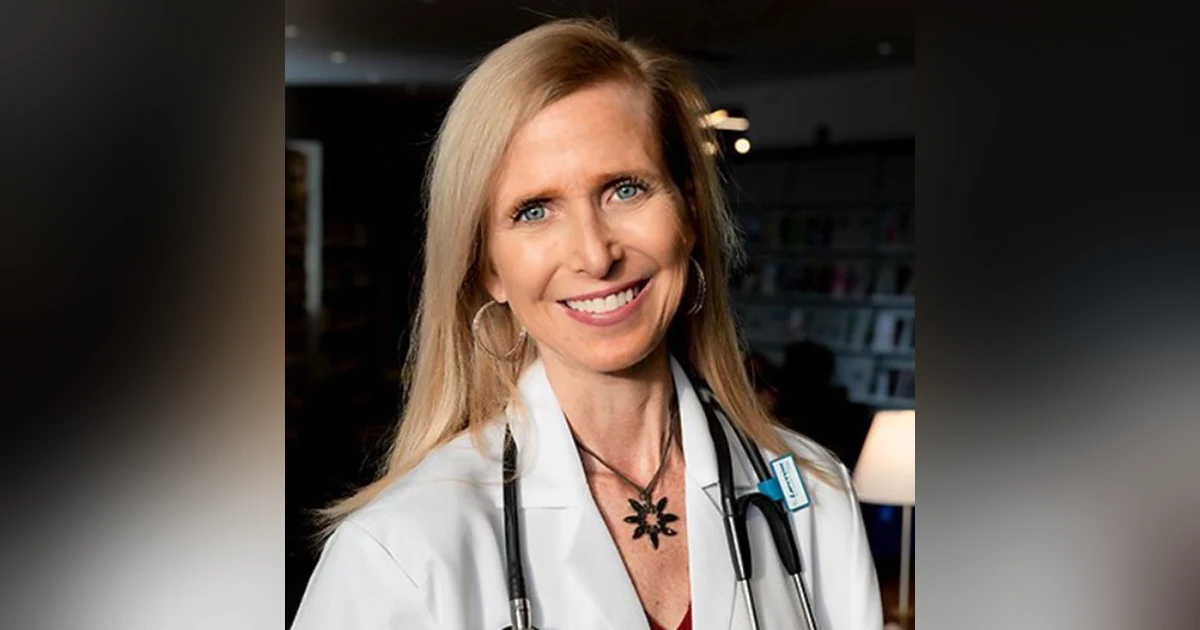

Dr. Melissa Sundermann (aka Doctor Outdoors) is a plant-based physician, double board certified in both Internal Medicine and Lifestyle Medicine and has been practicing medicine for over 20 years. She also has training in Integrative Medicine through the University of Michigan and has completed a Professional Training Program in Mind Body Medicine through the Center for Mind Body Medicine based in Washington, DC. She has been featured in several Lifestyle Medicine articles and podcasts as well as an invited speaker for health/medical events. Dr. Sundermann currently practices concierge medicine at LifeSpan Medicine. She does her best to practice what she preaches and enjoys running, biking, hiking, skiing and spending time outdoors and creating adventures with her husband, 2 college-age children and 2 dogs. She is a 10x Boston Marathon finisher, and 3x Full Ironman Triathlon finisher. Social Media:
LinkedInMentioned in the show:Lifestyle Medicine PillarsNature as the 7th PillarForest BathingSun ExposureWater Exposure
Welcome to Medicine Redefined, a podcast focusing on helping you reclaim ownership of your health. I'm Dr. Darsha, and I'm Dr. Altamasharaja, where your hosts, hair to challenge conventional practices and uncover the stories behind pioneers shaping the future of medicine. Our conversations not only focus on the individual level to dissect common practices for health optimization, but also zoom out to enhance systemic change. Join us as we look to break the status quo, move the needle forward, and put the help back in healthcare. Our guest today is none other than Dr. Outdoors, Dr. Melissa Sunderman. She is a plant-based physician, double board certified in both internal medicine and lifestyle medicine and has been practicing for over 20 years. She also has training in integrative medicine through the University of Michigan and has completed a professional training program in Mind Body Medicine through the Center for Mind Body Medicine in Washington, D.C. She has also been featured in several lifestyle medicine articles and podcasts, as well as an invited speaker for health and medical events. Dr. Sunderman currently practices Concierge Medicine at Lifespan Medicine, and more than anyone I know, she truly practices what she preaches. She enjoys running, biking, hiking, skiing, and spending time outdoors, and very impressively is a ten times Boston Marathon Finisher, as well as a three-time full Ironman triathlon finisher. Now, in this episode, we're going to talk about the six pillars of lifestyle medicine, but Dr. Sunderman is also going to make the case for why a seventh pillar should be added. Hint hint, it's in the title of this podcast. Yes, nature. Why should nature be included as a seventh pillar? With Dr. Sunderman, we're going to delve into the research and talk about the many benefits that nature provides us, our health, our overall well-being. We'll even dive into the specifics of sunlight, water, force bathing, grounding, and more. And I urge you, as you listen to this podcast, if you are able to get outdoors, to maybe listen to this on the beach, or going on a run, or going on a trail, I think it will impact you differently than if you were just to listen to it, you know, in a car ride as we typically do. I hope you enjoy this episode. All right. Well, we have Dr. Outdoors, Dr. Melissa Sunderman here with us on Medicine Redefine. Thanks so much for coming on to the podcast. Well, thanks for the invitation, Dr. Outdoors has thrilled about this. Yes, yes. We are so excited to delve into this topic. I mean, throughout our episodes, we've definitely touched on the idea of nature as medicine and the different benefits that come with it because it's been a hot topic, but I think you're that expert that can really tie all of these different benefits together and the different methods of which we can really embrace nature and kind of return to our roots so to speak. But before we dive into that, tell us a little bit about your background into medicine and how you sought out and found nature to be so healing. Absolutely. So my venture into medicine sort of many years ago, I'm in my mid-50s now, so bear with me in my story. I'll try to make it as distinct as possible, but I knew from an early age I wanted to become a doctor. And I didn't have anyone in my family that was even a medicine. I didn't have anyone who was a nurse or a doctor, but it was just this calling that I had, the curiosity that I had. And so I pursued that dream and was pre-med an undergrad. I did research in a lab at the University of Michigan for a couple of years, and that really solidified that I loved the research, but I really wanted to work with people. So I went to medical school and I went to medical school at Michigan State. I am a DO that stands for Doctor of Osteopathy, but the way that the universe works that stands for Doctor Outdoors, it's like how did this happen, but it's perfect. And as a DO, I was thought to think about the body as an integrated system from, you know, a very early stage of my career. And so that curiosity of how everything is interconnected has always stuck with me. And I end up doing residency in internal medicine. So I really enjoyed learning about a little bit about everything and going into primary care where I could develop long relationships. And so throughout my career, I did outpatient, I also was a hospitalist, so I took care of acutely ill patients. And about 2006, 2007, when I was working at the University of Michigan, I really developed this curiosity for what was, what encompassed wellness and both personally and professionally. And that led me to do a year-long Faculty Scholars Program at the University of Michigan in Integrative Medicine. And that opened up my heart, it opened up my eyes about all of the ways of healing that went beyond Western medicine. And I learned so much through my medical training, but this took me one step further. And so I learned about traditional Chinese medicine and are youvedic medicine and reiki and acupuncture. And not that I was specifically trained in those, but I knew what they were about. And so my patients were utilizing complimentary and alternative ways of healing. I could respect that, I could help guide them, and I had a better understanding of what they were going through. And then from that program, I ended up doing a professional training in Mind Body Medicine with the Center of Mind Body Medicine in James Gordon. And incredible program. In fact, Dr. Gordon has spoken at our American College of Lifestyle Medicine conference a couple times as a keynote. So just wonderful training. And fast forward, just that curiosity, I think that's what medicine is all about, is remaining curious and wanting to learn. And in about 2018, when my kids were going off to college, I have two kids who are now 22 and 24, when they went to college, I felt like I had a little bit more time to be a little bit more selfish in my career. And so I was deciding if I was going to go back to a fellowship and I went down to Google of all places and started plugging in words that resonated with me. So it was wilderness medicine and wellness medicine and the algorithm popped up. You might like lifestyle medicine. And up until that point, I heard about lifestyle medicine. And when I read the pillars of lifestyle medicine, it truly felt like coming home to me because it was everything that I had been practicing for myself and wanting to offer my patients. And then I found that there was this whole group of people of individuals who believed in the same principles and the same approach I did. I became board certified in lifestyle medicine in 2019 and I have not stopped. I have found my people, my calling. I'm very involved in American College of Lifestyle Medicine in some leadership roles. And I am the founding chair of the Nature as Medicine subcommittee for the American College of Lifestyle Medicine. I founded this about a little bit over a year ago. It's been a blast. Dr. Outdoors is just in her element. And well, that's, and I think a lot of mental medicine a couple of years ago to really pursue my passion for lifestyle medicine, longevity medicine, integrative medicine, and I was working at a wellness resort, Clichanian ranch in the Berkshire Mountains for a couple of years. And then in March, I transitioned to a concierge practice that is solely focused on the type of medicine getting better, like root cause of a disease and illness. And so it goes to show you that at whatever age you can try something new, you can keep learning and have a blast along the way. I love it. I see a lot of your passions intertwined with mine and altimages for sure. And would we found out what I found out about lifestyle medicine, which was probably three years ago, actually, in the beginning of this podcast, it was like that aha moment where it's, hey, finally, like something that can bring together the coaching aspect and the long term aspect of healing and really delving into different niches, too. And so there's definitely this need for it, you know, and we've had Dr. Beth Freides on this podcast, Dr. Robin Tiger, who I know you meet with at these conferences and are on panels with. So it's just so awesome to see how you also carved out that niche, which I'm also interested in. So you talked about having an integrative medicine fellowship as well as doing a mind body course. Now within those courses, were you able to extract nature as medicine through that? Because I feel like to my understanding when you're learning integrative medicine, a lot of it has to do with maybe, you know, herbal remedies or energy acupuncture, like you mentioned. So how did you take those concepts and translate them maybe more so to what your passions truly were? Yeah. So I think I couldn't put a finger on it quite that early, right? As defining it as nature as medicine, even though you're absolutely right. I mean, we look at all these herbal remedies that have been around for centuries about connecting with the earth, resonating with earth. So I knew that, but I hadn't found my voice yet, right? I hadn't found my voice in my platform. And so what happened was in 2022, the American College of Lifestyle Medicine was calling for abstract submissions. And I knew how much nature meant to me and how much of a healing power nature has always been throughout my life. And I decided, I'm going to go on a whim, I'm going to write an abstract talking about the benefits of nature as medicine and the benefits of movement in nature. And so I submitted an abstract, I had never talked about this before. And lo and behold, my abstract got accepted for a concurrent session on the big stage at ACLM, which is about 2,000 people and even better, I mean, I say it better now, but I was terrified at the time was my talk was immediately following Dr. Dean Ornish and Dr. T. Collin Campbell, two of the biggest luminaries of lifestyle medicine. So after they finished in front of 2,000 people, Dr. Outdo or Skulls on the stage and no one knew really knew who I was. And I gave this talk, which I was really nervous. I was practicing my deep breathing in the back of the room, but it went really well. And I had so many questions afterwards and I had such a positive response that that's when I decided to see if there was interest in the nature as medicine subcommittee and there was an overwhelming interest and it's been a success so far. So I think it's sometimes you find that voice and it's the right time and the right place and you gather that courage and you speak to your authentic heart and your authentic self. And I was ready for it. Dr. Outdo was ready to talk about what her true beliefs were. Yeah, for sure. So you mentioned that there are six pillars of lifestyle medicine as a great refresher for myself as well as the audience. Do you mind going through some of those or all those six pillars, and then we'll transition to the hopeful 7 that I know you're hoping to see. Yeah, absolutely. So the six official pillars of lifestyle medicine, starting in no particular order of importance because they're all related. So nutrition and like Hippocrates, the father of medicine said many centuries ago, let food be their medicine and medicine be thy food. And unfortunately in today's age and our Western diet, we've gotten away from that. So the American College of Lifestyle Medicine realizes what is on the end of your fork has tremendous power over the prevention of disease or potentially causing disease. So we advocate for a plant predominant dietary pattern. I like to call that plant slant, plant strong, plant forward, however you want to view it. Do you have to be exclusively whole food plant based? Well, if you want to, go for it. But I think that really when we're transitioning and what resonates with my patients better is to say, who plants slant, fill your plate with mostly plants. So when you talk about plants, we're talking about fruits and vegetables and beans and whole grains and nuts and seeds and herbs and spices. So really filling the plate, we like to say eat the rainbow. The average American is fiber deficient, right? Fiber is so crucial to the health of our gut microbiome. I'm sure you probably had some gut microbiome experts on your podcast. We know how important the gut microbiome is. So as Dr. Wellbulsi Witt says from fiber fuel, try to get at least 30 different plants per week. So eat the rainbow and eat the rainbow is not M&M's and Skittles, eat the rainbow in the form of plants. So that's a first pillar. The second pillar is exercise, physical activity. Now when I counsel my patients, I tend to use the term movement rather than exercise. Now I always love to exercise, that's just part of who I am. But for many individuals, the term exercise brings upon these feelings of dread or it's going to be boring or I know I should do that, but I don't enjoy it. So if we talk about movement and so many ways to move our bodies, that can sometimes take away those obstacles. And so if you love to go bird watching, that's movement. If you love to dance in your house, that's movement. If you like to swim, if you like to garden. So just really opening up the vision of what movement can be and usually we can find some form of movement that people like to do rather than calling it exercise. And we do follow the guidelines from American College of Sports Medicine, the CDC, so the ACLM we recommend 150 minutes of modern intensity exercise per week. So if you break that down into 20 to 30 minutes daily and you can even break that down. And then we also recommend muscle strengthening activity about at least two times per week. Moving on to pillar number three, sleep is medicine. So we're both physicians. I grew up in the time where we worked crazy shifts, like 36 hour shifts and I was convinced I didn't need sleep. I was like whatever, sleep is overrated. And I was so wrong, oh my gosh, once I learned about sleep and Matthew Walker who is an amazing researcher and author and sleep should be a priority, right? So we really want to aim for at least seven hours of restorative sleep. And so practicing your sleep hygiene, really making a consistent sleep patterns and prioritizing sleep. And getting to all of our psychopsies of sleep, we actually activate something called the glimphatic system, right? So we are all familiar with our lymphatic system and are clearing out the infection. But the glimphatic system is what goes through and it's almost like garbage trucks, ridding our brain of tangled proteins that accumulated through the day, whether that's amyloid protein or tau protein. So sleep is a superpower. Another number four, avoidance of risky substances of behavior. So that would be smoking, accepted drinking, excessive drug use or really any kind of Dr. Robyn Tiger and I talk to a lot of work together and we talk about buffering. So any kind of behavior that's not serving you well. So if that's a risky substance that's not serving you well or you're using to escape, that can be problematic. But for some people, their escape is gambling, you know, compulsive gambling or compulsive shopping or compulsive scrolling. So any kind of behavior that does not serve us well, I would say falls under that category. So risky substances and behaviors. The next pillar would be stress management and talking about Dr. Robyn Tiger. My colleague, she is a stress free MD. So learning, we all have stress in our life. I do not have a pill to take away stress, right? And stress can be a good thing, right? Every time I do a podcast, I get a little stressed and anxious, but that's a good thing because I'm going to show up as my best self because of that. But then there's other kind of stress, which is distress and learning ways to help support and manage that. And so when I do that training in the mind body medicine, those are tools that I use myself and educate my patients on, whether that's deep breathing, it's meditation, that's impacting mindfulness, so really filling those tools in that stress management toolbox. And the six official pillar is the role of positive social connection. We all were part of the large, one of the largest social psychology experiments on social connection. And that was called lockdown during COVID when we were all told to shelter in place, do not touch anyone, do not see anyone, you stay put and just stay isolated. And after a year and a half of that, we all felt this void, I know I did. And that's social connection. In fact, our current surgeon general, Dr. Vivek Murthy is a champion of this and he came out with a surgeon general's advisory last May that talked about the health implications of social isolation and loneliness. Now being alone is different than loneliness, I love my own time, right? Sometimes my kids are now kind of flown and sometimes my husband will go away and so I'm like, woo hoo, alone time. So that's different than being lonely and we know that social isolation and loneliness can increase mortality rates, also can increase the risk of dementia and cognitive decline. And in fact, I heard a statistic not too long ago that being lonely and being social isolated can have the same health risks as smoking 15 cigarettes per day, which is shocking, yeah. So those are the six official pillars of lifestyle medicine and I'd like to think of the pillars as spokes on a wheel. And I'm a biker and I've been mountain biking or actually I haven't my husband was biking my day and one of the spokes broke, not a good thing, right? The wheel will not revolve. So if you think about these spokes as being equally important and there might be times where you're like, oh, I'm really doing really well nutrition, but not so well in the movement. But I'm doing well in sleep to try to think of them as being interconnected and all equally important to make sure that we can revolve properly. Yeah, for sure. I've definitely changed my everyday routine to really looking at these pillars. And I know Peter Atea is a popular physician who talks about when you may be lacking in one of these. And for me today, that's sleep. I had a red eye from Vegas this morning and got home at 4 a.m. had to get to work at eight. So I was like really, really, really sleep deprived. So then for me was, how do I double down on my nutrition? How do I double down on the movement? How do I still really get these other pillars in so that I can speed up that recovery? Absolutely. And maybe 30 minutes before this recording, I went out for a two mile jog in the sun and it's just incredible how getting outside, running through, you know, by the river here in Harrisburg, having that sunshine on you just really elevates your mood and really gets you back. And I don't even feel like I'm sleep deprived anymore. I mean, we'll see what tomorrow morning brings. But it is really incredible when you start to focus and the synergy that these pillars have together is truly incredible. You're hoping to see a seventh pillar, which will be nature. And as I was prepping for this interview, I was just thinking about, you know, benefits of nature. But it's funny because I feel like you said to spokes on the wheel that it all ties together. You know, when you're in nature, you went when we talk about food, getting back to our roots, right? Even during the summer going apple picking, seeing where our food comes from. You know, that's that that's huge that brings on gratitude and it makes you appreciate your food more. But it also tends to lead to healthier choices. Yeah. We talk about movement. I mean, nature and movement, those go hand in hand. I mean, humans evolved with the earth, right? And so we were constantly gravitating towards, you know, warmer weather or colder climates or whatever it may be. Sleep. Now, this is interesting because I was trying to think about, well, how does, you know, nature and sleep go together? And we just did a recent episode on grounding. And so again, we evolved with the earth. We slept on the earth. And so, you know, if a listener's heard our last episode, it was really about how those electrons can transfer towards their body, neutralize free radicals. And really, there's so many benefits to that that really, really shocked me. And then we talk about risky substances, I guess, is there any data to show that being in nature tends to lead towards positive behaviors in terms of the choices we make? Well, I think that the more that you're, you know, in nature and connecting with the planet and breathing fresh air that's not polluted around you, you're going to want to keep it that way, right? And I think that, you know, just being in nature just elevates our mood. And so sometimes when we are resorting to those escapisms, right, we, that's because we're not being present. And when you're in nature, nature is one of the places that most, I think it's probably where we can be most present, right? Because there's so much going on around you. So I'd like to say, yes, that can help that pillar. I'm going to go back to the sleep pillar because another popular podcast or Andrew Hooberman talks about early morning sunlight exposure. And when we go outside before the hours of 9 or 10 am without wearing any glasses, because that's when the sunlight is more infrared, it's not going to be as dangerous for skin and your fur eyes. And spending that time in the early morning sunlight can actually reset our circadian rhythm, gets our chronobiology set, can activate our melatonin clock so that by the end of the day, our melatonin has built up, melatonin helps us sleep and also helps regulate our cortisol and help elevates our serotonin level so that that early morning sunlight is really important. So I'm going to tell my patients, it's great. If you want to go outside and move your body, walk your dog, but also if you just wanted to have a cup of tea or journal outside and most people don't think about that. So I'm like, just go outside, even in the winter, put on a coat, go outside. So we left off on stress here for this pillar, which I think the next to go hand in hand stress and social connection. I sure people can say, when you're out in nature, a lot of our vacations, we tend to go to the beach, right? Closer to water, closer to sand, or we might go up in the mountains, right? But we're always seeking out places that give us peace and a lot of times there's this serenity of landscapes that we're chasing. So you know, right there is that connection and in social connection, not only doing nature with humans, right? Having a broadening partner or traveling together, but connecting with the animals and the ecosystem around us, you know, I think a lot of us forget that listening to the birds chirp here in the crickets at night, wherever it might be, it makes you realize that you're just an animal here spinning on this earth through space with everything else, right? And we're just part of this larger ecosystem. Absolutely. And I think we need to come back to remember that we as humans are nature, right? And that's this concept of biofilia. And biofilia was originally coined by Eric from Social Psychologists, but most of us have heard about biofilia from E.O. Wilson. And he was a prolific writer about biofilia. Biofilia is the innate connection between all things living. So humans, animals, plants, mountains, water, everything, we are all made of carbon, we are all interconnected. So the more time that we can form that connection means we're going to care for the animals, we're going to care for our planet. When we're talking about planetary health, right, which is so important, you know, I've got kids and maybe they'll have grandkids and I want there to be a planet still. So I truly believe in this biofilia, the more that we can connect and respect and become in tune with all things living, we're going to take better care of it, you know, that's where we're going to put our efforts. 100%. I don't know, Dr. Sonner, if you listen to Lex Friedman podcast, no, okay. So you might have heard this guy named Paul Rosalie and he's like the real-life Tarzan. And he's got these amazing episodes that I think you'd really love that he talks like Friedman. He basically lives in the Amazon jungle at this point. He moved there when he was like 18, 20 years old and he just, he wrote this book, I believe it's called Mother of God and he really talks about biofilia and how the Amazon is the most central place on earth, the most biodeiverse place on earth where we don't even have names for almost millions of species that we've seen there. But it's just this endless constant cycle of life and death and you talk about carbon and he says, you know, whenever you see an animal die within an hour or two, you see it degrade and then it gets, you know, precipitation comes in the rain and you just see this cycle of life and death and it makes you feel so insignificant in the best way possible, right? Because you start to value your life and just like you were talking about being part of that bigger ecosystem. I'll definitely send you that episode. I think you'd really enjoy it. Yeah, absolutely. That's fascinating to hear about what goes on down there. We now live in times where we're just moving further and further away from nature, you know, I mean, no matter where we go and what we do, we wake up and we always have four walls around us in our cars, in our bedrooms, in our office spaces. And I think I was reading about how we may only spend 20 minutes a day outdoor, the average human does. Yeah, the EPA, the EPA actually did a study several years ago, it's probably worse now. The average American only spent seven percent of their day outdoors. The rest is spent, like you said, at home in our workplaces, in our schools, in stores, in public transportation automobiles. And so, you know, that 93 percent of our time is spent inside buildings. And that's not how, that's not what we're, you know, bound to do. And really, when we think about it growing up as kids, we knew this instinctively about biofilia, right? Yeah. And curious about the outside and digging in dirt and finding creatures and climbing trees and catching fireflies or looking for caterpillars or picking up worms or looking for the biggest worm after it rained. And so we knew that, right? And somehow as we get older, we grow away from that, unfortunately. And so it's really bringing that back, learning from our childhood, learning from our instincts that we belong in nature. Yeah. Let's get deeper into some of these topics that may be hot by the issues right now. So, one of them makes sunshine, right? So, so many people talk about fearing the sun at this point and, you know, there's the huge, I mean, rightfully so, maybe about putting sunscreen, but it's like the minute you go outside, you should have sunscreen on you, which I don't know, I truly don't agree with that. I think you do need at least some sort of maybe tinting on your skin before you can really think about sunscreen. Tell me a little bit more about the relationship with the sun. You mentioned circadian rhythm. What else should people know about how we evolved with the sun and the benefits that it provides? Right. Well, we talk about when we didn't live within walls and lamps and all these kind of things is we lived according to sunrise and sunset, right? That was how our lives and our days went. And that is truly what our brains and our bodies need and gravitate to. And so really, you know, ideally it's you wake up when the sun comes up and you go outside, you know, we were gathers and hunters and, you know, farmers and, you know, that's a really healthy lifestyle and moving our body throughout the course of the day. And when it becomes sunset, you know, you slow down and now we've got all these, you know, bright lights everywhere and screens and blue lights that our brains are like so confused because they're like, I have the circadian rhythm I want to follow, but it's not right because there's still really bright lights. And so, you know, it's really a good idea that, you know, you dim your lights in your house by, you know, even lights and candles, just signaling to our brains and our bodies that it's time to slow down and we talk about melatonin and how bright light when it shines in and goes to the super chiasmic nucleus to your pineal gland that produces the melatonin. And if we've got all this artificial light surrounding us, that cascade cannot happen and our brains don't know what to do because they don't want to fall asleep because of the, you know, decrease in the melatonin. And yeah, sunshine. I mean, we hear, you know, gosh, if you've had skin cancers, absolutely, you need to protect your skin. But going outside and, you know, producing vitamin D is a really important thing. And, you know, vitamin D, I mean, you can take a supplement and certain kind of mushrooms, if they're in this, they get some UV radiation could contain some vitamin D, but really the majority of vitamin D that we produce is from the skin going on to our skin and vitamin D is almost like a hormone, it's good for our mood, it's good for our bone health. So, you know, important to get outdoors every single day. And again, you don't want to be a sun-morsher, that's, you know, not a good thing. I grew up back in those 70s, 80s, when people were, you know, spring, oil on their skin, not, and I don't advocate for that. But I think that sometimes we get too scared of being in the sun. I think there's a, there's a smart way to approach it and absolutely getting outdoors every day and following that natural circadian rhythm of the sunrise and sunset. For sure. Now, you're in Massachusetts still? No, I'm back in Ann Arbor, Michigan. Oh, okay. Well, you're still, I guess, north, like, in the northern latitude, right? So, when, when it comes around, it's cold. A lot of people don't want to go outside on the cold. Sun sets even earlier than it was down south. Are you making a more cautious effort during those times to get outdoors? Absolutely, and I do have a quote. Dr. Outdoors, one of her favorite quotes is there's no bad weather, just inappropriate clothing. So, I think that, you know, I, and from Michigan, I worked in Massachusetts, like, we definitely have four seasons and one of them is really long called winter, but I'll tell you what. I mean, once you have the, the right attitude and the right gear, you know, of a warm coat and, and mittens and gloves, it is the most spectacular time to get outdoors. And, you know, after a fresh snow and just witnessing that and the beauty and the silence that, you know, it's, it's wonderful. So, I think a lot of people think of it's, you know, I don't go out that doors if it's below 40 degrees and really that's how to shift your attitude, right? And, and you're absolutely right. We just aren't out there as naturally and so really making that effort. And, when a quote that I love, it's very stories from Mitch Roll, this pertains to this a little bit, but he has a great quote, mood follows action. And so often we have a reversed action follows mood, like, oh, I'll do that once I feel like it. And so often we, I mean, we're amazing at making excuses for behavior change, right? I'm, I'm the best at, you know, that too. And so if we are constantly waiting to, oh, yeah, maybe I'll go outside when I feel like it, especially in winter. Well, that's fine. That could happen. So, just know, like, you came home on your red eye. You were feeling like, oh, my God, I am feeling exhausted, but you know what, mood follows action. I'm going to go outdoors, get some fresh air, connect with nature, move my body and your mood got better, right? So sometimes it's just, it's just making those small incremental nudges for behavior change that can make all the difference. Right, right. I absolutely love that quote. I've also heard it as a fizzy, all physiology pre-seed psychology. Oh, yeah. Yeah. Yeah. I like that. And it's 100% true. And then you get in that cycle of when you feel better, you want to do more. And so it's just building that, you know, step by step, positive habits. And it's funny you mentioned being in the cold. So my wife is from Boston and she always tells me, you know, it's similar to a cold plunge in the winter where you step outside and like you feel that cool breeze and it makes you resilient. She's like, you know, like the tougher the way it is. She feels good. Yeah. And it's funny because we're now moving to Tampa, but hey, we'll get more nature down there as well with some heat, sunshine and some water. Yeah, absolutely, absolutely. So speaking of water, let's transition over to that. Is there any benefits that we know? I feel like when people go to the beach or they're in water, they feel calmer. Is there like a scientific basis behind that? Yeah. So in fact, just last month, we had the one of the world leading experts of blue spaces, Wallace Jane Nichols, who spoke for us and his book is Blue Mind. It's a wonderful book. And he's got a great thing he loves to do when he gives talks. He holds a blue marble and he hands out these blue marbles whenever he's at conferences. And what he has you do is you hold the blue marble at arms length and you'll look at it. And he said, that is in space when the astronauts look down, that's exactly what they see when they look at the earth. It's a blue marble. And that's how important blue spaces are to the earth, right? And really that connection, and if you look at our physiological bodies, we're mostly water, right? And fluids. And even the salt water of the oceans and just the saline, the salt levels of our own bodies, there's so many reciprocal connections there. So the research I would say is more robust in green spaces, but that does not discount blue spaces at all. There's a study that was done fairly recently looking at adult midlife self-reported well-being. And what they found were that midlifers, I'm going to put myself in that category, being in my mid fifties, is they found that those people who spent time when they were younger at blue spaces, and remember blue spaces is not just ocean. So oceans, pond, streams, lakes, waterfalls, rivers, these are all blue spaces. The more time they spent there as youth, tended to translate to higher well-being scores in midlife. And what they thought behind that is spending time in blue spaces, you had this felt safe there, this connected, this curiosity, just these joyful memories, hopefully. And so therefore, you probably kept gravitating to those as you were getting older. And that translates to improved well-being scores. So the point being, I'm like, we're not in early life anymore. I mean, my kids really aren't either, but if I've got friends or family or grandkids one day to really take young people to blue spaces because it could improve their outcomes. But yeah, when we look at nature exposure, green spaces, blue spaces, they're going to have a lot of overlap of that calming, of that soft fascination. And actually Rachel and Stephen Kaplan, who were researchers out of the University of Michigan, coined the theory of attention restoration theory. And that really is, anytime we are in nature, our cognitive processes are, they just kind of stream down and we're able to think clearer. And instead of like a bazillion synapses going at one time, it's just funneled into the soft fascination where creativity is bolstered and productivity. And they've even done cognitive testing of having people, you know, giving them a test and then having them go for a walk in nature and coming back and they actually perform better on some cognitive tests and create a creativity test of just being out in nature. So there is something that on a brain level that truly goes on, that which comes back to this attention restoration theory. That's incredible. That's really cool to hear that, you know, it doesn't have to be a big body of water but even a stream or a pond just having those effects of, you know, what it might be. And I think the cool part about this too is like as we're going through the elements, is that they have this gentle energy about them. But at the same time, they're like forces of nature, right? I mean, you can't mess with a rush of water or a lot of fire and sun and they're just so powerful in the energies that they hold. Absolutely. So it's kind of cool to see that contrast. So moving on now to forest bathing. So I know the Japanese have a word for this called Shinrin Yoku. And this is something that's part of their culture, getting into the forest, the greenery. And I believe there are also certain chemicals that we as humans can take in, that help with respiratory function or whatnot. But you being the expert, take me through a little bit about forest bathing and hiking and what kind of benefits there are for that. Yeah. So I'll start with some of the origins of Shinrin Yoku in Japan, written in about 1982. And the reason why this came about is that in Japan, they were looking at ways to reduce stress in their workforce. So this is workplace wellness 101, right, 1.0, back in the 80s, nowadays, this is all trendy, right? We're in the, you know, in 2024 and we're like, we need a workplace chief wellness officer at our company. Well, it's actually early 80s in Japan. And so they put about $1.5 million into this to really look at could forest bathing help reduce stress and therefore could this improve productivity and less illness in their workers. And one of the primary investigators who is still a problephic researcher in this field is after King Lee. And he did some of the very early Shinrin Yoku forest bathing studies and he was particularly interested in immune function. And we know we were in medical school or, you know, anyone who's been in college or had been stressed out, like you go through a really, really stressful period. Maybe it's finals and you study and you study and you study and you don't sleep and then finally finals over and you've got time off and you get sick, right? Because we know that stress inhibits our immune function. And so, Patrick King Lee speculated that being out of the forest could reduce stress and that reducing that stress could actually boost our immune system. So he looked at natural killer cell activity. So natural killer cell activity is involved in immunity and can even like people who had high levels of natural killer cell activity had a lower incident rates of cancer, whether and as people with lower natural killer cell activity could have a higher incident rate of cancer. So his first, one of his first studies was he took participants out into the forest for two days and measured the natural killer cell activity. So he measured that baseline in the day and one day, day two and he saw that the natural killer cell activity went up just being out in the forest for two days. So then they wondered, well, maybe it's just a throw away from home, we gave them a vacation from home and they didn't have to wash dishes and do laundry and maybe that was the case. So they took those same participants and instead of going to the forest, they went to an urban environment, a big city with concrete buildings and loud noises and they did the same thing. Measure natural killer cell activity at baseline at day one, day two and they did not see that bump at all. So they came back to saying, well, it must be something about the forest and what was really interesting when I give talks, I love to talk about how nature is my favorite prescription because of, you know, minimal side effects and only side effects are going to be positive ones instead of adverse side effects cost, right? Pharmaceuticals are the expensive go outdoors. It's usually free and duration, half life, like medications that I prescribe, you prescribe usually every day or twice a day or maybe three times a day. Very few medications are monthly or maybe some injectables every six months. But half life's of pharmaceuticals are generally very short. When they looked at this natural killer cell activity, so those people who went into the forest for two days, they had the bump in natural killer cell went back home. They ended up measuring natural killer cell activity at seven days and at 30 days and even at 30 days, they still had an higher level of baseline natural killer cell activity than they did. So you going out for your run today, right? Is going to help your immune system for the next 30 days, which is just amazing. And then after that, some larger studies that went on where they would do some crossover, where they would have people go into the forest for a day and sit for 15 minutes and gently walk for 15 minutes and then the next day they would go to urban environments and what they found was in this study that the subjects had decreased cortisol level. When they were in the forest, they had decreased heart rates and they had decreased systolic and diastolic blood pressures. So clearly activating our parasympathetic nervous system when we spend time in the forest. And people always ask me, do I have to be on the forest all day? And I'm like, well, Dr. Outdoors would love to do that. I'd love to like just live it, you know, but we've got jobs and we've got, you know, responsibilities. So really what the researchers showed is the nature dose is about 20 minutes per day. If you could do more, that's great. That really, that the dose that I prescribe that I feel should be attainable is 20 minutes per day. And again, you can break that down into increments. If you can do your 10 minutes in the morning to get that early morning sun shine exposure and then maybe, you know, 10 minutes at lunch or 10 minutes in the evening, shooting for 20 minutes per day or 120 minutes per week is what the research really shows, we find the benefit. Josh, now, does that can that just be outdoors or would you recommend even specifically trying to go more towards a part or? I'm going to say I am going to say outdoors, right? And even people who live in big cities, like there's tree canopies, like, and so you talked about the chemicals. Let me come back to that. So, yes, fighting sides. So fighting means plant, right? We know that because, you know, plants that we talk about nutrition, those are perifitone nutrients. So, fighting plant side-sidled antibacterial. So, anything that is living in green and growing, so our trees, our bushes, our plants, our house plants, they produce these fighting sides, which are organic volatile compounds. And why do they produce them? Well, they produce them to protect themselves from getting ill. They emit these so that they can stay in prosper. Whenever we are around these green spaces, these plants, these trees, these shrubs, we actually inhale these fighting sides. So that can help our own immune system. It can also help with just concentration and helping us feel more refreshed. And coming back to Dr. King Lee, the prolific researcher, he actually did a small study a number of years ago. There's only 12 subjects. And each subject got their own hotel room. And six of the rooms were emitted with these organic volatile compounds. It was actually Pinocchi stem oil from a Japanese tree. And so they were emitting phytocides into six of the rooms. And then the other six rooms, they were emitting, oh, did nothing. After three days, the subjects came out and they tested natural killer cell activity. The people who were inhaling the fighting sides, their natural killer cell activity was increased by 20%, and there was no increase in the controls. And then the people who were sleeping with the fighting sides stated they felt more refreshed. So a small study, but still, it makes you believe that just being around trees and inhaling those fighting sides, a knock on one, Dr. Outdoors, I'm Outdoors every day. I think because I follow the lifestyle medicine pillars, no one's perfect, but I rarely get sick, right? And I think to myself, gosh, I wonder if it's because I'm inhaling fighting sides all the time. Can't hurt. Now, I know this is not the advice that either of us would give because it's still these people indoors, but I feel like we look at hacks and we're trying to get quick fixes. And so people may hear, oh, well, I can maybe use essential oils or I can get a little water fountain, you know, in my room or whatever it might be, or even those skylights or happy lights that people are now using as they wake up. What are your thoughts on that? I mean, is there a use case for those or? So I will say this, the best thing is to could be go outside. However, are there situations that you don't live in a safe area? The air quality is too bad. You are struggling with mental health and you really can't, don't feel you can leave your apartment or your house. That's where absolutely and sound bites, right, people will say, well, virtual. Can I just listen to nature? And there was a study that looked at sound bites. And so if you open your windows and either the participants either listen to six minutes of bird song, so melodic bird song, or they listen to six minutes of urban noises of loud horns and sirens and just boisterous sounds. And what they found was anxiety and feelings of paranoia decreased with listening to the bird song and feelings of depression increased listening to those traffic sounds. So you know, if you're at home and you can't leave, you've had maybe a really busy day, you're like working from home. Like I'm on Zoom calls from morning until night, open up your windows, put on some music in the background, YouTube of nature sounds, yes, get a fountain, get some essential oils. So I would say that the real thing is going to be the best and optimal, but there's situations that you just can't do that. So we're at the University of Michigan Hospital, it's really cool because when a lot of nurses will work 12 hour shifts and so they don't have the ability to go outdoors. So they have these three of them, these simulated nature rooms and they are incredible. So you go into these rooms, really comfortable chairs and they have blankets that you can use, you can light candles and a huge wall that's a screen and you can select what kind of nature escape you want to watch and it's real nature. You can go to a rainforest and you know the sound is there and the scenery is changing and it's like 15 minutes and so it's really been utilized for nurses to recharge when they're on a long shift to just feel like I'm connecting with nature, I can't actually go outside in nature, but getting the benefits and having some great results. Wow, yeah, that's fascinating stuff. I love it. You're putting context to it, right? So I guess there is a way we could prescribe that. So that's always key to hear, especially as people do and may live in unsafe environments or food deserts and things like that where they're unable to really go and connect with Earth as much as they want to. You know, as we're talking about this, it's just crazy to me how we don't learn this. Like we just know there's nowhere that we talk about forest bathing and the data behind it even though it's so strong. You know, are these really just siloed at conferences and you know lifestyle medicine or how do we get this into the hands of medical students, residents? Well, when you talk about all the pillars of lifestyle medicine, I was not taught any of these in medical school, right? My nutrition, they called it nutrition, I think was like tube feeding or a crep cycle or something like that. Yes, right. And then exercise, I don't think we talked about that sleep, no, definitely did not talk about that. No, so we really need to shift this whole paradigm from a disease oriented sick care system and how we approach, you know, my medical school training was system-based, disease-based, you know, here's a disease, learn about it, here's the pill, you know, the pharmaceutical to make it go away. Here's how you diagnose it. So we're all about, we need to get to root cause of disease and really are pillars of lifestyle medicine, when you look at chronic disease as an internist, this has been my whole entire career, right, of managing chronic diseases. So chronic disease is type 2 diabetes, high blood pressure, high cholesterol, chronic kidney disease, even dementia, you know, obesity, 89% are lifestyle driven. So when I see new patients and I'm taking a thorough family history and they say, well, I'm bound to have a heart attack and I'm going to get diabetes and I say, well, why is that? Well, everyone in my family gets these diseases. So I'm bound to get it and I definitely validate that genes run in family, families. But then I also say, so do lifestyles and recipes. And the good news behind this is your genes are not your destiny. Just because this one in your family does not mean you have to get these diseases. In fact, you've come to the right place because I'm a lifestyle medicine physician and I'm going to educate you. I'm going to empower you and I'm going to support you to learn how to make lifestyle changes. And that can be overwhelming, it can be exciting news for people that can also be overwhelming because it's like, how do I change everything that I've been doing? And I really think we need to emphasize just, you know, small and incremental changes. 1% better. Like if you don't eat any fruits or vegetables, could you start eating one a day, right? If you don't move your body and you've got an iPhone or an Apple watch, could you start by trying to get 1,000 steps per day? Great. You did that. Maybe you can up into two. Are you staying up really late on your phone and scrolling? Well, could you try to, you know, put your phone down and try to get to bed by 10, 30 or 11 and get up, you know, seven or eight hours later? So small and incremental changes. So you're right. Like, not only does the public not know this, but clinicians don't know this. So I think that, you know, I am a board certified lifestyle medicine physician. I'm on our membership committee. So trying to grow our membership, we have over 11,000 members across the world for the American College of Lifestyle Medicine and you don't have to be a physician to be a member. You, as long as you have a master's degree, we'll take you, right? So we've got, you know, all different backgrounds. And we're now about 5,000 physicians who are board certified lifestyle medicine. So the more that we can educate people within our field, then the people within our field are going to disseminate that information to all individuals. Because nowadays, I feel it's, it's malpractice if we are not educating our patients about this because it is so powerful. And like you said, they all feed them off of each other. Once you start doing one pillar, your car probably want to do another one. And they're going to probably do another one. And, you know, nature is medicine that's, you know, as you know, I'm a huge advocate for the 7th unofficial pillar of lifestyle medicine. I have a publication out that was released about a, about a year ago in the Mayor of Majoral of Lifestyle Medicine advocating for this. I talk about this. You thank you for the platform today that I can try to reach more people. And it's very, all of these are very simple and you're right people are into biohacking. And the biohacking probably helps. Like I, I do some biohacking within my concierge practice, absolutely. But we start with the fundamentals of lifestyle. If you don't have those down, the biohacking is not going to, not going to make it, right? So really, I feel that we need to get to true prevention. And as a, as a practicing physician for many, many years. And when I was working for large organizations, they would say, hey, doc, okay, we need you to do prevention. We need you to make sure your patients are getting their colonoscopies, their, their breast, their mammograms, their smoker, get their low-dose cat scans. And to me, I'm like, that's early detection. I need to start more upstream, right? With true prevention, getting the underlying root cause, so that we're not detecting those cancers or those disease processes when they're already there. I want to prevent them from, you know, the get-go. And we're all about longevity and increasing lifespan. But I really feel that we need to emphasize increasing our well span. No one wants to spend their last decade of life in illness and bed bound, right? Yeah, absolutely. Absolutely. Yeah. So how do you recommend clinicians who are in the traditional model who maybe have 10, 15 minutes with a patient who are excited about lifestyle medicine, right? I mean, they see a patient, they say, oh, my God, I could fix your sleep hygiene. You might need to turn your lights down, but oh, wait, you're also eating this. Let's change this diet. And oh, let's get a little bit more weight lifting in, right? There's so many different things that we can do to really help our patients. But sometimes that can just lead to overwhelm for the patient. How do you recommend clinicians kind of just go about helping our patients go in the right direction when it comes to the six and the unofficial seventh filler? Yeah. Well, first off, clinicians really need to try to do this themselves. There's been studies that clinicians who exercise or more app to prescribe exercise to their patients, right? So I think first and foremost, I hope and I want our clinicians to take care of themselves first so that they can offer that to others. So that being said, I would say, we talk about smart goals all the time. And that's setting a goal that's specific and relevant. And attainable and really to just break it down and again, that 1% better. So I think I agree. I think it would be very overwhelming. You're like, there's seven pillars. And here's what you need to do forever, though. So in a primary care setting, when you know you're going to be seeing these patients back again, or you have maybe a health coach or a nurse that can follow up or an MA, is starting small. And again, all the pillars are really interconnected, but maybe asking the patient themselves, like, here are the pillars. Where do you feel like you want to start? Where do you feel like you're really struggling? And for, you know, a lot of people that's probably going to be nutrition. The standard American diet, right, stands for sad because it is truly sad. And really just at first trying to limit ultra-process foods, oh my god, right? Then and there, it's huge, right? And sometimes it's better to present not restrictive of, you can't have this, you can't have that. Can you do more of the good stuff, right? So on your plate, could you try to do, you know, a salad a day? Could you try to do a vegetable, you know, a whole vegetable or a whole piece of fruit? So starting small and building off that, but I think it's important to have a partnership in a dialogue with your patient to figure out, like, where do they want to start? What do they want to do? And really going through that smart goal? Because what I think, you know, would be appropriate may not be appropriate at all, you know, like, oh my god, I can't do all that. So really coming up with, you know, confidence levels of, you know, on a scale of one to ten, how confident do you feel like you could do this goal we set up for you? If they are a seven or below, nope, got to modify that goal. If they're a seven, eight, nine, then you're like, okay, let's, let's see how you do with this goal. And again, this is about empowering. And that's what I love about lifestyle medicine and empowering people and supporting them and changing their behaviors is I can give them information, I can give them support, but they do it, right? So much better than here's a pill, take it every day. That's not empowering anyone, right? That's not having our patients take ownership. But if I say, I want you to try to go for a walk, you know, a couple times a week for 20 minutes and they come back and they're like, I did it. And I'm like, you know, they're like, thank you so much. You know, I'm like, no, you did it. Like I just gave you the idea and gave you the confidence that you could do this and that you would feel good doing it. So I think it's, it's so wonderful as a clinician, we talk about burnout and clinical medicine and really lifestyle medicine for me has been the antidote to that because I really feel like I'm truly helping individuals and, you know, seeing the end of it, people get healthier and happier along the way is just the biggest reward. For sure. Absolutely. Well, Dr. Sun, as you come to a close here, I just want to ask you, what is next for you? Tell me a little bit about what you're doing with lifestyle medicine and the organization. Wow. I'm doing a lot and it's so fun. So like I said, I'm on the ACLM membership committee. I became a fellow of the American College of Lifestyle Medicine last year, which is sort of the highest ranking you can get, very honored to be a fellow. I say on the ACLM planning committee, if anyone wants to come to the most amazing conference, our conference is in October, the American College of Lifestyle Medicine annual conference. Keynotes are incredible this year and it's down in Orlando, Florida. I encourage anyone to go. If you can't make it, we have a virtual option as well. So I joined a concierge practice that is focused on all of this stuff and it's wonderful because I have a lot more time with patients. I'm learning about continuing to learn, which is wonderful. I'm doing a lot of speaking engagements, talking about nature as medicine, but other topics as well, which just has been so much fun for me, doing lots of podcast interviews with Robin Tiger, who you've had on the stress free MD, you've had on your podcast before. We have a program called Revive and that is Lifestyle Medicine Wellbeing Coaching. We did a cohort for physicians in the spring and we had amazing outcomes because physicians don't learn this, right? And so we wanted to teach physicians really how to take care of themselves first and foremost and hopefully they can translate that to patients. And so we're doing some great stuff with Revive or actually hosting a retreat in Africa and Uganda in January. So CME credit, so if any of your listeners are any health profession, it's for health professionals because we are offering CME health professionals, their families and friends who want to come, come join us in Uganda and we're going to really connect with nature. Wow, that sounds awesome. I mean, yeah, definitely excited to put that in the show notes. So anyone, definitely go to the show notes, we'll link everything there, we'll also link your bios and so tell us a little bit about where we can find you on social media and even if people may want to ask about your concierge practice. Yeah, so my concierge practice is Lifespan Medicine and I do telehealth but then we also have offices in LA, Dallas, Miami and we'll be opening one in New York City. So I do travel to those offices to see patients in person but I also do telehealth. And then you can find me, I'm very active on LinkedIn, I share a lot of information about nature's medicine on LinkedIn so Melissa Sunderman and then I'm on Instagram. So I have two Instagram handles to make it a little bit challenging for myself. My two Instagram handles are the doctor outdoors and then my other one is motivator, Melissa. So I would love to have you follow me and connect with me. If you are a member of the American College of Lifespan Medicine or would like to join, you can become a member of our nature as medicine subcommittee. We meet on the first Tuesday of every month. Like I said, we had Wallace J. Nichols, we have all of the top researchers and authors and advocates of nature's medicine from all over the world who come and speak to our committee. Amazing. Well, Dr. Sunderman, before I ask you the last question, I just really want to say thank you for coming on here. You're on energy, it's definitely fun, it's relaxing and I'm even more excited to go out in nature and really go through the benefits. And even with my patients, I'm going to rehab hospital if we have a courtyard. And so I'm going to definitely start writing out more orders to take the patients out in the courtyard and enjoy the sun and the nature around them. But yeah, thank you. Well, definitely get everyone to your Instagram. I mean, you mentioned biking, but you also run marathons. I see you hiking, you know, you're more than a motivation, you're also inspiration for a lot of us. Yeah, I just ran a marathon. Actually, I paced a marathon on Sunday. No, Saturday. Oh, wow. Three days ago. Amazing. Amazing. It's definitely incredible. And, you know, for me, coming out of residency, going to join American College Lifestyle Medicine and just trying to get more involved, it's awesome to see the good work that you're putting out there, along with a lot of the other previous guests that we've had. So thank you so much. Yeah. Thanks for having me. It's amazing. Great. For sure. Last question for you here. And I know this could totally be a whole other hour. How do we put the health back in health care? Lifestyle Medicine. Right? And that's why I said it was just, you know, we need to start upstream and getting to underlying root cause and really focusing on well care and not sick care. And the pillars of lifestyle medicine, that's how we put the health back in and really believing and empowering individuals that they can do this because so many people think, no, people aren't going to change. But lifestyle medicine is really the answer to this. Yeah. Yeah. Thanks so much for coming on. You're welcome. Thanks so much for tuning into another episode. If this conversation vibed with you, please go ahead and leave a rating and review and share it with your loved ones and your friends. Spreading the word helps get this episode into the hands of others who may benefit from it. I want to thank our team, Harita Yapuri for social media, Ethan Jew for video, Zaynab Lugmani for research, and Sarah Khan for our news letter. And as our disclaimer always goes, everything in this podcast is for educational purposes only. It does not constitute the practice of medicine and we are not providing medical advice. No physician, patient, relationship, is formed and anything discussed in this podcast is not representative views of our employers. We recommend that you seek the guidance of your personal physician regarding any specific health-related issues. We'll see you next week.