
 Apple Podcasts
 Spotify
 Castro
 RSS Feed
 160. Progress Note #19: The Return of Medicine Redefined, Life Updates & Discussing Alex Hormozi x Chris Williamson

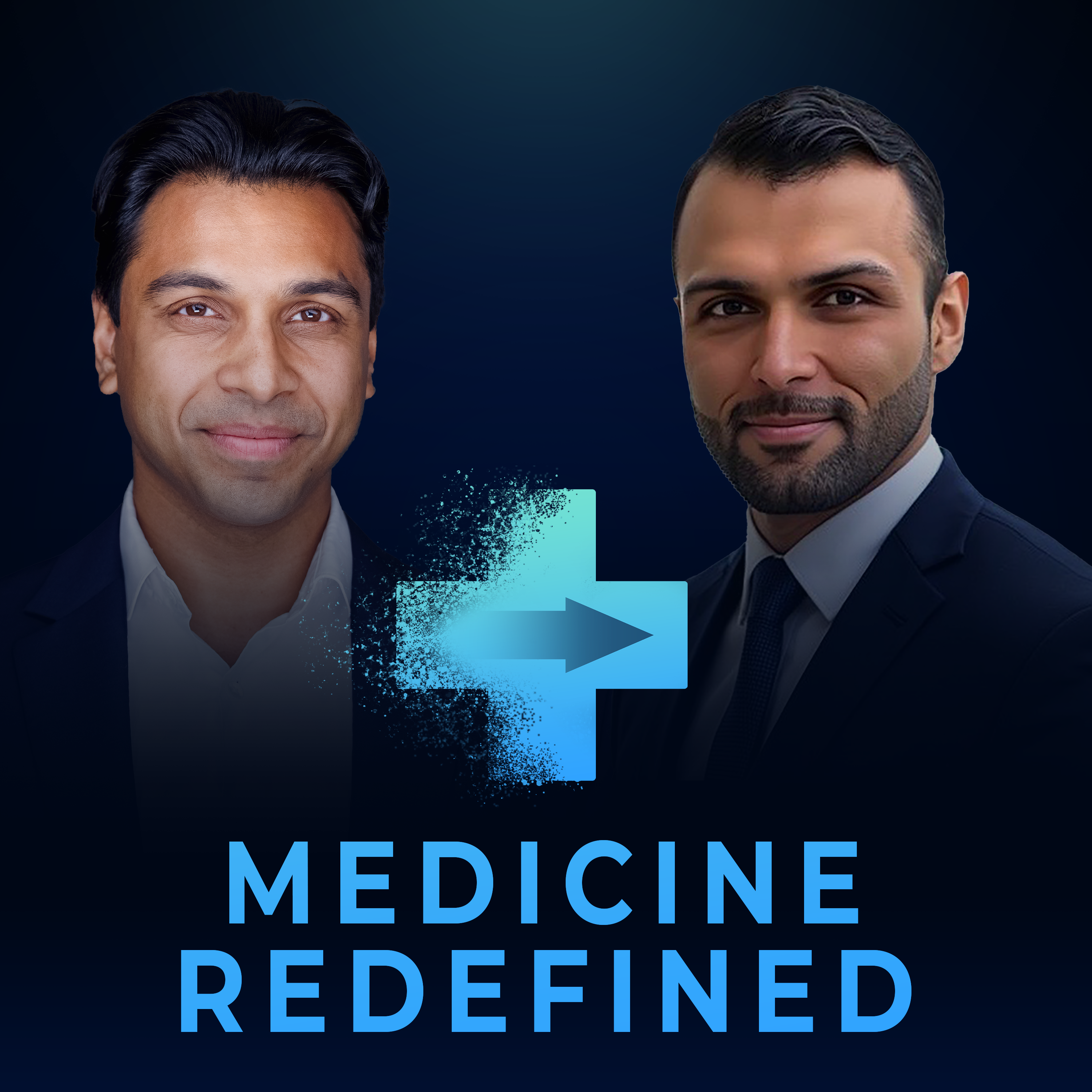
We're baaaccckkk!!
In this episode, we provide some life updates over the last 4 months. We'll also dive into the topics of work, success, and personal development through the lens of a couple podcasts we listed to with Alex Hormozi on Chris Williamson's Modern Wisdom podcast.
Welcome to Medicine Redefined, a podcast focusing on helping you reclaim ownership of your health. I'm Dr. Darsha, and I'm Dr. Altamasharaja, where your hosts, hair to challenge conventional practices and uncover the stories behind pioneers shaping the future of medicine. Our conversations not only focus on the individual level to dissect common practices for health optimization, but also zoom out to enhance systemic change. Join us as we look to break the status quo, move the needle forward, and put the help back in healthcare. All right, Dr. Darshaar, what's up buddy? What's going on man, long time, we're back, we are back. We're back and better than ever, we'll see about that hopefully, we'll look at the audience inside that one. Yeah, I should put a little bit more confidence in that one huh? Yeah, probably, probably. No, no, no, I'm excited, I think obviously we took what, it was a four months, or last recording was, or last published episode was June. June or July, yeah, June or July, I see, a lot of false promises because I think we had told the audience that we'll be back sooner than that, but that's okay, listen, you know, that's life is about flexibility and adaptability, so that's what we're here for. But first off, big congratulations to you, you are now a full-fledged attending doctor, already survived your first natural disaster. Yeah, yeah, that's right, and he needs a hurricane, not any patient craziness, so. Well, tell the listeners where you are, I think they probably remember, but you're down still on the East Coast, you know, catch us up with where you're at. Yeah, yeah, so obviously, you know, graduate, Penn State Hershey, and now down in Tampa Florida. So, wifey and I made the big move down here, really just good opportunity for what I wanted to do with, you know, the inpatient rehab skill nurse and facility, with, you know, hopefully as we always talk about, potential of a private practice getting into wellness, things like that, lifestyle medicine. So that was really one of the big reasons to move down here, plus the weather being outdoors, I mean, it's just the way of living down here in Florida is very, very different than the Northeast. You know, everyone you meet has a big open heart, everyone's looking to relax and enjoy life and especially in Tampa where you have so many transplants, like every other person you meet here is from the Northeast or Chicago or Ohio, New York or Boston Philly. So we made a lot of friends who also moved down kind of for those same reasons. So it's a really good friend group down here, a lot of good people down here that you can kind of bounce ideas off of, you know, share philosophies and just understand life and growth. So that was really the big reason we moved down. Yes. And you got a good taste of what, why people avoid Florida as well, a little scary one until what was the, I don't even remember the name of the hurricane. What was it called? Yeah, Milton. So we had Hurricane Helene a week before that, which, you know, luckily didn't come to Tampa. It was off the Gulf Coast, but a lot of people from the wind got impacted from Helene. And then a week later, we had Hurricane Milton, which landed as a category three. And so, you know, I was, I'm not really afraid of natural disasters or hurricanes, but it's different, obviously, being in Florida where you're getting, like, directly hit by it. So it landed as a category three. We actually evacuated our area because we're going to buy the water, actually went closer to the eye of the storm. So, you know, what they always say is you want to run from water, but hide from wind. And so, you know, we chose to go where the wind was, hide from the water because we were afraid of a storm surge. So what essentially what that means is the water can go up to like six feet above sea level and Tampa's not really built for hurricanes. And so, the last direct hit here was actually 103 years ago prior to Milton. So this is definitely new for the city. There's only really been three direct hits in Tampa. Legend has it that the Indian burial grounds have prayed on the burial grounds to avoid disaster. And it's funny because when the Americans, yeah, yeah, sorry, the Native Americans, yeah, they call them the Indian burial grounds here still. So, yeah, yeah. And so, as we don't want to get canceled on the first episode, the Native American burial grounds, which, yeah, so as Hurricane Milton made landfall and actually wobbled down south and avoided Tampa completely, so a lot of people were like, hey, we'll attribute it to that. So, yeah. Got more believers than it. So, yeah. Yeah. Well, that's awesome, man. And yeah, you had to evacuate and everything and luckily, you were safe. Yeah. That's awesome, man. Yeah. I know I'm still up in the Northeast here. And yeah, a ton of patients actually that will go, you know, we call them snowbirds, right? So they'll go down to the Florida area right around this or September time and come back in spring time. It's really interesting what I'm learning is in terms of patients getting lost to follow up. Like you'll order some imaging and whatnot and you're interested in patients like gone. Like, did you ever get that imaging done? Like I was really interested to see what was going to happen. Like, I'm curious, you know, some things that you're following up on. And they're like, yeah, yeah, I swear, I'm going to get it done. I'm down in Florida and I was like, come on. How am I supposed to do anything with this stuff? So, I'm getting to learn that stuff. So, super exciting. You're now practicing. Yeah. Tell us a little bit about your practice, your sala practice, what that's about. Yeah. So, sort of all for the inpatient rehabilitation facility. So it's called in Compass Health. So I'm hired by a company called Medrina, right now. So I'm an independent contractor. And so the beauty of that is I get to be at different facilities, essentially as a consultant. But my main facility, I'm the primary doctor at an inpatient rehab. So seeing patients post hospitalization for the most part, you know, you're thinking things like femur fractures, spinal cord injury, brain injury stroke, not seem to go home. And they have the potential to get stronger with physical therapy, not the patient therapy. So taking care of those patients right now in Tampa, and then I'm also seeing patients in a subacute rehab facility. So even after they go to inpatient or sometimes after the hospital, they're unable to maybe do those, you know, three hours of intensive therapy, they go to a skilled nursing facility, still get a little bit of therapy, get medical management. So I'm a consulting doctor at one of the facilities there as well. Mom, you're enjoying it? Yeah, loving it. Honestly, surprising. We can talk about this more. But I do not know if I would love inpatient rehab as much, you know, coming in because of the academic setting that we've learned in residency, but it is, man, private, like being in the community non-academic setting is wonderful, and I absolutely love it, you know. So it's funny because a lot of my attendants would be like, no, you never know. You might come back to the academic side, and now I'm just like, there's no way. Yeah. And I think being consultant to different experience too, right, not being the primary. So I'm, I am primary at my, at the inpatient rehab, I'm a consultant at the sub-keyes. Got it. Got it. Well, that is awesome. Yeah. And I've been doing some, some inpatient rehab consulting stuff as well, where I'm not the primary, which is I would say even sweeter, you're only looking at the rehab aspect of it. And I know this isn't my primary thing. And just do it from time to time on the side, and it is good, you know, keeps you from having skill atrophy in certain sets, still practicing and looking at the medical side of things. As people might remember, I am sub-specialized with fellowship training, and you realize that as you get further and further away from your primary training, you know, I was actually pretty proud of myself. I had a patient come in yesterday, where, you know, they had these symptoms and sound like basketball, clotication, and I was like, oh, I didn't quite sound like ankle arthritis. That sounds more like basketball, clotication. And I was like, oh, wow, I'm so proud of myself. And then later, I was like, why am I proud of myself? That's like basic stuff. Like, anybody should be able to pick that up. But I haven't mentioned peripheral artery disease in the terms of diagnosis to somebody, I don't know, in a several years. So, you know, it's funny how it doesn't come up to these problems don't seem to find you, and you don't seem to find the problems either, right? It's a two-way street, the further you get away from that. And so, working on the inpatient side, you get to see hypertension, just a managing hypertension, CAD, things of that nature. And I will say, too, let me add, I'm just like, it's very different from the academic setting where academics were definitely primary, and we might have internal medicine consulted. Here, I'm primary, but I have every single specialty of, I don't quote, disposal except urology and like dermatology. So, I have cardiology coming in, I have dephrology coming in, I have internal medicine, I have neuro, I have psychiatry, so you can imagine, you know, like now with everybody having all of these, you know, different diseases, it just makes it more seamless, right? When everyone's a communication, you can actually get specialists to see your patients. So, even that, I'm really focusing on the rehab more than anything, with, yes, a little bit of that medicine intertwines. Good. Awesome. What else has been up? I imagine you've still been traveling. Not as much, I think, you know, July, I went to Portugal with the family. My parents, Meera's side as well, so that was a good two-week trip. But since then, we've kind of buckled down, just, you know, getting into the grind of working. Tampa, I mean, when you're in Florida, every day feels like a Friday, so, you know, there's not much, you don't really need to feel like you have to go anywhere. Because everyone's out, robbing the weather is nice right now, I look outside. So yeah, just really been reading more philosophy still, reading books, listening a lot of podcasts, which I know we'll talk about. So yeah, just kind of staying and doing the same old things, working out, getting a fitness, trying to figure out that routine. So yeah, how about you, when you've last been once? Well, I don't know if the audience knows, but I had my first surgery, I want to say a major surgery, but I had my first and only surgery, and I guess it was a Hipscope having done, which was a very insightful experience. And a lot of lessons to be extracted from that happy talk about you today on a future episode. But that's been, it's given me a new perspective. I think I've always, my own musculoskeletal injuries have given me a different sense of empathy for the patients in terms of getting them back to their function and quality of life. But going through a surgery, like a big surgery like that, with the post-operative restrictions, the limitations, the expectations, both externally from the medical system of you, but also your own expectations internally of where you think you should be and how that affects your recovery and a both positive and negative matter has been very, very helpful. I think the most profound insight that I've gotten from that is the actual effect of immobility and not putting load and challenge through your body, right? And so what I'm finding to struggle in, I'm 35 years old now and so I'm not old, but I'm also not a young lad where the amount of muscle loss, not just on the right leg that I had, but just systemically because I was, you know, for the most part recovering and bent down and limited it with how much I could train, was very noticeable. And, you know, as a result, like I ended up just kind of replacing that with body fat and it is really an uphill battle to try to get that back. And again, this was an outpatient elective procedure, so I know something that we talked about, you know, one thing that people will often say is somebody over the age of 65, you break a hip, you're going to the hospital, 50% chance that the elective immortality is very, very high in two years and that's essentially a dead sentence. And what that means earlier today I was looking at something on LinkedIn, somebody talking about how in two weeks at 75 year old grandma, because of how frail you can be at the end of life and immobility and stuff and how important that is, but to experience it firsthand at only 35. For somebody who I think, you know, I spend a lot of time and invest a lot of energy getting that glider up really, really high, but how quickly it falls after just something a minor setback in the grand scheme of life, it really gave me a different sense of appreciation about trying to preserve that even more so and doubling and tripling down on it. Totally. I totally think this deserves that. So, no progress though. Like, I would love to pick your brain and like, you know, the mindset that you had before and after the way it's changed how you talk to patients like you mentioned, even your fitness program, right? Like, how you decided to manage the willpower that it takes, right? We talk about taking medications, getting to the gym, being a father, like, how do you balance all these things? Knowing that like you said, you're 35, you're old now, not really, but you know, it's, it comes to that point and that realization, we're like, oh, shit, I'm in my 30s, I'm being an athlete, you never think you're going to have that situation, you never think you're going to slow down. You know what I mean? Like, I'm going through that a little bit right now. Like, dang, I do have to take a little bit easy. Like, I'm not the same 20 year old sprinter that I was. Like, I do have to worry about injuries and things like this. So I think that would be a really good episode. I think for a lot of, just a lot of our audience, you know, young, old middle age, because they're all going to experience that transition for sure. Yeah, we'll do that. And then, you know, I even did a deep dive into how to optimize nutrition, going into surgery and for recovery and stuff. So we can always touch on that as well, because I think that's another thing that doesn't get talked about often. You know, we talk about rehab protocols. We talk about precautions and positioning in the physical aspect, but how do you optimize your nutrition and supplementation and things of that nature to help you recover faster and, you know, lose a whole lot as much of that muscle mass and function as possible. So we'll, we'll, we'll table that and we'll come back to it. Other stuff, man, I know I've been sending you a lot of stuff. I want to log in modern wisdom as a Chris Williams, that's me. Chris Williams. I think it's my new, my new favorite podcast and I'm sure people have come across it, you know, over one of the British guy now living in Austin as I understand it, puts out two to three episodes and he's got, I mean, he's approaching a thousand episodes at this time, which is amazing. I mean, how long he must he have been doing it for years, right? I mean, nearly 10 years or something like that in order to be able to get that. But he had, I've been listening to him a lot. It's quickly turned out to be my favorite one because he, the variety of guests that he brings on and a lot of, a lot of nuggets in there that I would love to explore with you. But what you mentioned, you've been reading a lot of philosophy and books, so tell us the facts. Yeah, actually. What's interesting about reading a lot of Christianity, one because I feel like it's just easier to understand. I feel like all religions talk a lot about the same stuff, right? Christianity, I've read just recently, I don't know how to pronounce it, ecclesides, but it's a book of the Bible, but it really just talks about, you know, what vanity is and good versus evil in this world. And it really kind of, I almost thought like it was a good response to the Hormosi episodes that you were sending, because they talk about like, we labor, what's this labor for? What is the purpose behind everything that we're doing? So it's a really short read, there's, I mean, a lot of different perspectives that you can take away from it. So the religious sense, it's of course, fear gods that keep your head down, do the work. But from a larger, I think, more modern sense, it's really about how do you balance that joy you can find in life, but also doing the work and not necessarily chasing or doing the work to chase what he calls the wind, which is the money, the fame, the popularity, right? And I think that's where Hormosi from those episodes kind of touches on, right? You do the work for the work and that in itself leads you to personal growth, personal development. Yeah. Yeah, so for those who don't know, we're talking about Alex Hormosi, an entrepreneur, philanthropist, I think made his mark in building up brick and mortar businesses and then scaling them. And really, it seems like what the business that he was in was scaling gyms and making them larger and larger and kind of selling that process and then investing in other companies and startups and actually helping them scale. That's kind of what he does. Very similar to what he seems like Dan Martell, the one that I sent you. So I'll point the audience to, there's a series, I think Alex Hormosi has been on their modern wisdom podcast, maybe three or four times. And I really liked those, first of all, they're very long. So that's a disclaimer for you guys. But what tends to happen in these is, I guess I don't follow him on X, but I guess from time to time, he puts certain quotes out on X and that's like, it's almost a journaling method for him. And so Chris Williams then follows him extract some of these nuggets and then they sit there and they kind of discuss his thought process, what that means, he'll elaborate on certain things, they'll go back and forth and I really, really love that. But I, again, I sent you some quotes. It's really, really interesting how he talks about. So to your point, you know, I think about a you and I and multiple guests that have been coming on here and we've got a few coming up, you know, we're going to have Dr. Robert Tiger come back. She's got another book and you guys might remember her. She's a stress-free MD and a lot of these guests have come back and we've talked about getting away from hustle culture, being kinder to ourselves. That seems to be the movement, right? The words like more phrases like moral injury and burnout and these words have become more prevalent and people tend to use them sometimes even inappropriately. And so as a result, it's all about like, do less work. Protect yourself and anybody who's doing too much work is quote unquote toxic, et cetera, et cetera. But this guy who moses so fascinating because, and I'm actually, I believe him, he loves to work. That's it all day every day. That's what he's doing. That's what he gets joy out from. He's just doing hard work, hard work, hard work. And that seems to be very interesting to me because it won. It's contrarian to much of the health movement today. And he's a pretty healthy guy. Like he'll talk about, and I mean, he's a fit guy's, you know, overall, he talks about sleep quality. This guy's just up from the eats well, relatively speaking. But in terms of just working, working, working, working and working with your head down without really ever expecting to stop working, you know, a lot of people even us, right? So you remember the words when we went into medical schools like delayed gratification. And I think we talked about that there is then like at the end of the tunnel, so to speak, we talked about that before. And so everybody who goes to medical schools like when I become an attending, when this happens is that arrival fallacy that we've also discussed before. But it seems almost like his philosophy is like, no, just do the work, enjoy the work, but never expect to like stop working. And I find that to be fascinating. And I'm curious, like, what is interesting? And so I don't think everybody can follow that pathway, right? I think he is made to do that type of work. His own mental models are made up of making the world a better place, right? Like he doesn't believe in owning a dog because he thinks a pet will hold you back. Whereas a lot of other people will say, I don't know, the ROI on having a pet or a dog is really, really, really freaking out, especially from a depression standpoint, things like that. And I think it really depends on what you're trying to chase, right? And I think for him, he fell so much in love with the process that the only way I think I'm still feeling every single person in this world is trying to accomplish something. And I've heard him before say he wants to be the most jacked billionaire the world has ever seen, right? So maybe those are his motivations, right? It's fitness in order to become a billionaire, you're going to have to put your head down and enjoy the process. But I do agree with him in the fact that if you put your head down and you learn to work, you're automatically going to change your philosophy over time in life. You're going to learn things about yourself, you're going to learn about failures, you're going to learn what it takes to succeed, right? And that's not only within a business perspective, but when it comes to fitness because in order for your business to succeed, you've got to have your health to succeed, you've got to have your relationships to succeed in order for your business to succeed. So it seems like he's working on this project, but by going so all in on it, everything else has to get better because it's forced to, right? And so I'm also reading Elon Musk's biography right now by Walter Isaacson. And so a lot of people will shit on Elon Musk, right? And he's a terrible person, he's not a good father. And I always ask people who say that, well, what do you want him to be? Right? Like, what do you want Elon to be? Because if he were to be the best father and the best boyfriend, husband and this person who was socially acceptable, then you wouldn't get SpaceX. We wouldn't have the possibility of having human civilization going to Mars. You wouldn't have Teslas. You wouldn't find new ways of energy, right? And so Elon's Elon, because of that Hormosi mindset, he is so ingrained in his work and he expects that culture with everyone he works with, which is why when he took over X, he fired like 75% of the people, because he said, you don't fit my agenda. And, you know, in that podcast, they talk about how that's not a bad thing. Like, I don't know why people look down upon that, because if you're trying to accomplish X, or I shouldn't say X as a company's call X, but you try to accomplish XYZ, you need to do that. You have to do what you have to do. So I do find it really interesting. I don't know how much I would vibe with Hormosi mindset, like one-to-one, if that's an exact fit for me, but there are aspects to it where I can definitely appreciate it. Yeah, have you seen the last dance? Like Jordan, yeah. That reminds me, and I think I might have actually talked about this, there's this one scene where Jordan's in the center of the interview and he's talking, and I'm going to paraphrase a little bit, but people can go look this clip up. He's saying, oh, you know, you might say that he was a tyrant and he was this and blah, blah. Yeah, but that's exactly. It's because you never want anything. And that's exactly what that reminds me of. And that's another appreciation that I've started to have. You remember, I used to have, I still have that, you know, the My Life and Weeks thing after I read Oliver Berkman's book, and I really had a sense of appreciation. Okay, what are the values for the core priorities? You've got to enshrine them, and that was the reason I had that. And then, you know, since then happened, I've also started to realize that, yeah, some you do have core priorities, but you can have multiple core priorities that can compete. And depending on the season of life, which we've discussed with Dan Pope in the past, you might have to shift priorities. What's unsavory is to say that you're going to shift your family as a priority to lower your child over your job. But we do this in medicine all the time. Everybody in medicine does this, right? People who go into military professions do it all the time. You sacrifice your families, and just because you know you're doing it for profession, maybe you're doing it for a country, whatever it is, with the expectation that a different phase in life, you're going to be able to prioritize that maybe. It doesn't seem like he's going to be the guy who's ever going to prioritize it. That was just fine. I found this part to be extremely fascinating that when he was defining love, if I remember correctly, his definition of love is something that you really must sacrifice anything for. And then he said to Chris that by that notion, I'm not only to sacrifice anything, including my wife. And he said that sat her down in total. He's like, I'm not willing to sacrifice my goals for you. And she said, oh, awesome. Yeah. Amazing that she said that like that's an incredible person right there. So yeah, definitely an end of one. I think a lot of valuable nuggets. So I think I agree with you. I'm not that person. I don't want to be that person. I think innately and I'm wired to be attracted to work and always find a project to do and go down that path, which is what's made me good at my job or made me good at solving certain problems in the profession that we're at. My goals are not are to step away from that. And I have to learn how to prioritize and take a step back and do the things that, you know, I see you doing and sometimes aspire to like travel and spend more quality time and be present in that sense. But two quotes that come to mind, right? So this is the one that I wrote down. You know, it's about talking about affirmations or journaling or whatever it might be. And the quote goes from Hormosi, you don't build confidence by shouting affirmations but by having an undeniable stack of proof that you are who you say you are. So if you say you're an exceptional person, he'll talk about that. What proof do you have that you're an exceptional person or that you're a unique person, you know? And you know, I think about this, let's just use our podcast for an example. We say, oh, we have an awesome podcast. What does that mean? And what proof do we have? You know, by what metric are we judging that is our podcast is awesome? Is it by, you know, five people who've listened to it, right? Is it by millions of downloads, et cetera, et cetera? And so he's very, very big in that. It's show me the proof that, you know, you are who you say you are. And a lot of people, and again, this goes back to that pendulum swinging too far to the extreme of, hey, let's be kind to yourself. And hard work is making you sick. And I think it makes sense because there's a correlation of mental health being on the rise, our recognition of mental health on the rise and understanding the hustle culture and mentality and too much type A is contributing to anxiety unnecessarily. But saying, okay, let's just completely pivot in a home or home or he says, no, no, no, no, no, no. If everybody just keeps putting affirmations in the mirror and nobody actually works, you're never going to have SpaceX. You're never going to have billionaires. You're never going to have all that kind of stuff. And so, you know, in order to be exceptional, you have to work hard and also understand that maybe that hard work is going to be for five years, if you're lucky, maybe 15 years, but the likelihood is going to be for 15, 20, 30 years. The rocky montage, as I say, is not 90 seconds long. It's nine years or 10 years long. Yeah, there's a lot of good stuff in regards to that, right? I mean, he talks about if you want to be exceptional, you have to be the exception, right? It's in the word, but how often do we actually think about what that word means? And even when it comes to affirmations and chasing the wind, what are we, what is it that we're trying to do, right? And I talk about this with Mir all the time. It really comes out of social constructs. We are all bought into living in this world. You know, we wouldn't be here with laptops having a conversation with podcasts trying to get people to listen to it if we weren't bought into the quote unquote game, right? He talks about the infinite game that never ends. But I always talk about his mirror that, you know, what social constructs and Morgan Howell talks about this is you're playing, but you aren't really thinking about why you're playing it, right? So maybe the expectation to have kids, the expectation to go to college, what a relationship is and what love is, what hard work means, what burnout is, right? These are all social constructs that we have been told by other people. But how can we redefine it and how can you live by your own standards and your own rules? And so what I've always believed in now, and I've been thinking about this more with my mental models is how do I have one foot in the game so that I'm able to be quote unquote socially acceptable. I'm able to quote unquote rise up the ranks. I'm able to put out content and still influence people so that I can build a world that I want. But how can I also have one foot out of that game so that I'm truly just living the way I want to live without any fear, without knowing that, oh, I have to have affirmations that are just approvals of people. So on one side, you have all this approval that you're chasing, but on the other side, it's really just how much can you appreciate yourself, right? Without writing anything on the mirror, how can you just wake up and say, you know what, I'm going to choose to live the life I want and I don't really care what anyone says. And so it's really tough to strike that balance, but the way I've been living more so rather than her mosey's way is what Gary Vaynerchuk always talks about. He says, no matter what you want to do, you want to act like you pull in rubber bands so hard and you want to live on both sides of that rubber band, both extremes, but you keep pulling that and eventually it's going to snap back to the middle and that's what balance is, right? And so when they talk about the hedonic way of living, the pleasure, the, you know, we talk about that's the parable of the Harvard businessman who goes to the fisherman and says, oh, I can make you a million dollars and you know, and it ends up saying, well, why would I do that if I could just live the life I'm doing right now? Why would I go through full circle? So how can you live both of those things, though? How can you make so much money and change the way humankind is in whatever way you see, but also live the life that you wanted and that you were put on this earth for? So I just think with the way things evolve so much now, I mean, the world is so different five years ago, 10 years ago, 15, the way we think about it, who's coming up as players to change it, it's just, it's crazy to think about and that's why I love these podcasts because they really make you think about purpose, they really make you question your ideals and question who you are as a person at the core. Yeah, and here's another interesting thing and I think the, you know, for you, you've identified that you actually want to have both of those. You want to have one foot in one foot out, right? Both of those things are important to you and in different phases, maybe you'll have at some point you might have both feet in for a little while in one side and then both feet out, right? And that's also possible is this game that you're playing, but I think that sounds really sexy. I think that's the diplomatic and the PC way to kind of approach this, but it's also okay to say, I actually don't want both sides. I just want to work and that's his thing because he'll say that, you know, he'll talk about people will judge him and say, oh man, that sounds miserable that you, you like get up and I think he just says like he has like supplements or something on the, he wears the same shirt every single day so he doesn't have to think about that. That's less than, and people might say, oh man, that sounds exhausting or that sounds like a life not worth living. And his response will be, okay, well, by what metric are you judging that? Because I love this. I love this shit and I live this shit. And so to me, it's a vacation, right? That whole Mark Twain vocation vacation thing. So that's another interesting thing is like, we know we put our own others will judge other people by what is important to us without understanding us what's actually important to that. He's got both feet right around. He's playing his own game. He doesn't care what you think. He's genuinely just doing his own thing. Right, right, right. Yeah, he's not living by his rules. I love one thing that I've started thinking about is, you know, his tactics and I encourage people, because I'm not going to get it right in terms of how to end arguments great very quickly. Somebody who comes in says to you, hey, like, you know, it says in the flammatory comment about how you look or whatever you might just respond with, okay, you're right. He says you're right. Yeah, or like, I forget if that's okay. But like, yeah, yeah, you're right. It very quickly deflates that and that's it. That's what they're looking for. And so there are so many times where people will try to extract your energy and try to send you an email and do that kind of stuff and you just simply have to agree because when you go back and you look in the mirror, well, you know, this is a good point that he makes there's two things. The one you're getting pissed off because there's some truth to that. And if there's some truth to that, just fix the problem, right? If you're actually interested in fixing the problem, right? Or if there's no truth to that, then why are you even addressing it? I really, really love that. And I, you know, I don't know why we're wired or maybe we're conditioned to have to, you know, refute that so much. Obviously, that's something that he's practiced over time. That's not something that comes naturally. I love that. That's a very monk-like thing, which is opposite to kind of like a lot of things that he talks about. There was another thing that I do want to, because I think I wrote that you had talked about. Where is it? Oh, in terms of talking about, you know, delaying gratification or doing the work. Another way, and I said this to actually my wife, because we had been talking about like, what are we doing? We're going through medical school training, going across the country, doing rotations, staying Airbnb's, interviews, etc, etc. And I think, you know, it talks about there's no perfect way to live your 20s. You either live them up and become an under-skilled 30-year-old or you work them up and become an under-lived 30-year-old. You just have to figure out which you'd rather accept the trade-offs and know that there are no do-overs. I love that. That is such a validating thing for anybody in medicine who's 35 years old and complaining about how they gave up their 20s as you didn't. You, you, you know, you skilled yourself up. Incredibly skilled yourself up. So that was really interesting. That was, you got that one. Again, made me think about, again, everything he says makes you question your own life, right? I know, like, I look back at my 20s, and I wouldn't change a thing. I mean, you get skilled as a physician, but I also enjoyed it. I understood the game early. I understood what mattered, understood what didn't. I understood where I wanted to be in the future, not per se exactly what I wanted to do and all those things, but I knew the mindset I wanted to have. I knew the type of person I wanted to be. And so I never really shifted from my core values in my 20s, so that I knew in my 30s, I could still enjoy it, but still be in a position to make a difference, right? For the patients I see, for my wife, for my family, and still enjoy, right? I think my, my M.O. in life is how do you get, how do you get, how do you pull up the zest in it? How do you just enjoy it? You know, whatever it is? How do you touch all the corners and aspects of it? So yeah, I mean, I think the way he speaks about it, though again, I think a lot of his frame of reference is about the entrepreneurial journey. And I think by his definition of being skilled in your 30s, I think exceeds my, right? Like in the way I think about what it means to be skilled, or what he means to have fun in your 20s, I think goes beyond what I even think what it means to have fun. And I don't know, I mean, I think I wish in that podcast they kind of defined a little bit more what they meant by enjoying and what they meant by the skills, because I think I would have shed a lot of light for a lot of people. Right. Yeah, because I think he would just argue that acquiring skills is, oh yeah, 100%. I mean, it is, it's time said, knowledge is ecstasy. Oh, I like that. And definitely is, you know, the other interesting thing that you, that I took away, and I actually, a little humble brag, but I find myself to be pretty good at this specific concept of, of knowing what hard feels like before. That's great. Yeah, before getting, I do the pro-sortography podcast today on the entire US. That's perfect. That's perfect. Hopefully, hopefully our parents are not listening to this one. But, you know, and I think the way that he lucidates that example, you know, maybe he was an fraternity and he talks about how you have these pledges and they expect that whole first rush, you call it whatever the process is, six weeks to be very difficult where you're not sleeping much, you're doing all kinds of, you know, low level tasks and you're cleaning up and doing all kinds of just horrible things. And, you know, a couple weeks in, people are, they start complaining, they start complaining and I think he was one of the leaders of the frat at that point and, you know, finally, they came to him like almost like a mob, starting to complain and they're just bitching and moaning about how hard it was and how they're being mistreated and this and that kind of stuff. And he just paused and he asked everybody, hey guys, like, how many of you were forced to do this, how many wanted to do this and everybody says they wanted to do this? I'm probably getting details wrong, but you got the idea. He asks them, how many of you expected this to be hard, everybody raises their hand? And then he pauses and goes, guys, this is what hard feels like. And all of a sudden, everybody just has a big sigh of relief, you know? And I found this to be, again, really funny because I remember when I was going into medical school, I remember sitting in there and having a conversation with my sister and I know exactly where I was and basement everything. I remember, I think medical school is going to be the hardest chapter in my academic journey. You know, I knew that going in, but when I got there and how hard it was and, you know, I was doing horrible, like I was like, holy shit, this is, I didn't anticipate it to be this hard, right? But the thing is you never know what hard feels like and you can, you can conceptually understand it and when you're going through it, keeping that forefront, be like, this is what hard feels like. This is what hard feels like. Same thing with residency. You're like, I think residency is going to be really, really hard to hear about that. You know, could it be hard to the medical school? I don't know. And so it's that whole concept of, you know, life doesn't get easier, school doesn't get easier, you just get better at taking the arrows and taking the stuff you become more resilient and managing the stuff, right? Same thing with parenthood. Everybody told me, everybody told me how hard parenthood is going to be and, you know, luckily, I've still managed to keep up my fitness and prioritize it because those are part of my lifestyle. But you know, you don't have to talk about this. It's like you're on call every single day with no off days. You're never off call, right? Like imagine being on call for like three years in a row, especially if you have a bad sleep or as a child. And so that phrase right there, this is what hard feels like. I feel like I want to get that tattoo on my arm. So anytime. But I've also find some people in my life who will want to do stuff and, you know, I think about the people who talk about starting tasks and talk about picking up projects and say, oh, I think I think it's going to be good. I think this is doable. And then when they're going through a thick of it, they're just like the most miserable people and they want to quit. They're complaining all the time. And I just want to be like, you knew this was going to be hard. This is what hard feels like. You know, this is this is what it feels like. So I love that one. That was an opportunity and I could 100% agree with Homozi, pledging for 12 weeks, getting my ass hooked, not literally, but kind of. And it was, it was, you know, we had a 50% drop rate in my frat. So it was definitely very difficult. And you know, everyone wanted it because, again, you're playing the game, you get the social approval, you're in college, you get no one to get the popularity, you get the fame, free entrance into parties, etc. But when it came to reality and when you're going through that struggle of hell, we can things like that. I mean, the last thing you want is to think about what's on the other side. You just want to get out of it. And if you just keep pushing, right, you just keep going the next day. I think Chris will, Williamson talks about this. He said, I'll just do it today. I'll just I'll just I'll quit tomorrow. I'll quit tomorrow. I'll quit tomorrow. You keep saying you're going to quit tomorrow. You'll be surprised at, you know, the skill acquisition you get, the mental fortitude that you build. And the success of that project, right? I mean, things tend to happen exponentially, you know, until they plateau and then you got to pivot or find another way to get to the next level. But I think a lot of what hard is, yeah, unfortunately a lot of people don't know, because they don't know how to stick to things anymore. You know, I think that's just a product of our culture, product of our attention spans. And you just see so many successful people now, right? 20 years old, 25 years old, that everyone feels like they're failing, admitted they come out of the world. So, yeah. And, and, you know, obviously social media doesn't help with that. When you just get the glamour side of life and you see somebody being successful, but you don't see the, I mean, Chris Williamson's a perfect example. You and I, we've had a different sense of appreciation for podcasting. I mean, we've, you know, aside from that little break, we've pretty consistently been doing this for coming up on four years. So just shy of four years at this point. We'll say it and people don't understand all the back work. And then this guy, I, I, I felt again seen and heard when, I don't know if this is true or not, but he said there was actual episodes that they had zero downloads and zero plays. And I was like, oh man, I really shouldn't be complaining because likely that's never happened to us. And hopefully you won't, you know, we always complain if we just have a few hundred or less than a hundred or something like that. And he talked about literally zero. And he kept just putting and showing up and showing up and showing up and and doing this. And again, he's 800 or 900 episodes in. So, I mean, I don't know, 2016, 2015, when he started. So that's really, really amazing. So I can't close this thing. I don't know if you have anything else, but I want to talk about one again, one of my, I, there was a bunch of quotes that I wrote down in there. This is the one that, that I really like as well. And I guess it's from Elaine Debaton, I'm not sure who that is. But it's talking about the lowly chapter, right? Some version of that. And he says, loneliness is a kind of tax you have to pay to a tone for a certain complexity of mind. Say that one more time. Loneliness is a kind of tax you have to pay to a tone for a certain complexity of mind. Wow. The sacrifice I mean to you, right? I mean, no one, I, so I wrote this thread actually in the day. I was like, philosophy is the only world. You know, when you start reading more and more and you start changing your minds, people aren't used to who you're becoming. And that's what that lowly chapter is, right? It's, it's entering that period where you're so different than who you were, than who you were socially acceptable. Your friends liked you for that version of you. But now you've entered this lowly chapter because you've changed your mental models, you've seen the world for what it is from your eyes, the truest, authentic way that you want to see life. You're doing the work that you want to do. And so that lowly chapter is just period where you have to be okay with paying that tax, right? For the complexity, for whatever it might be on the other end. And as you said, everything is seasonal, right? Things come, things go. Once that chapter's over, you might end up in a better space. But then again, there probably will be another lowly chapter after that, right? And that is life. Life is going through these different versions of yourself time after time. And that, that constant never really hit me maybe until a couple of years ago, right? I mean, it's hard when you're in your 20s. And you think, you know, everything, you think you're immortal, you're just starting out working, you're starting out making money or whatever it might be. And you think life might be the same, you know, for the next 50 years. But things happen at such a rapid pace, you know, there's no way of planning the next five years anymore. He even talks about this in his podcast that he now plans just like the next two weeks, because you never know what opportunities in this infinite game in different parallel universes can come at you. They're just going to change the course and of your, of the path of your life. And so, and we bring it back to that lowly chapter. Yeah, I think it's a necessary thing, necessary time period, if you want to become the best version of yourself. Yeah. And just to build off that to your point, you can certainly have multiple lonely chapters throughout life. And you also don't know how long or short each chapter is going to be, and it could be months, it could be years. And that's the part that gets to be really difficult. And maybe the interval between lonely chapters is very, very short. You can have two very long lonely chapters with a short, unloanly chapter in the middle. And that's what makes it tough, especially because we've spent a lot of time over the last couple of months, and there's good literature coming out, demonstrating the power of social connection. We're big into longevity. We also start understanding that, hey, that social connection piece, especially later in life can really add value to your, you know, again, long-term, your health span and life span. I think Sahel Bloom is the one who had all those amazing graphs on Instagram or something, right, about how lonely you are later in life. And so, I think the point that's actually even Sahel Bloom in that makes this very comfortable being alone and being comfortable with the person, because that's where you're going to spend most of the time. But lonely chapters is slightly different concept, because it's actually, I guess, shifting that graph earlier in life when you're trying to grow and change your mental models, which doesn't necessarily jive with life. But, yeah, I think that was something that resonated with me. I think that's why actually one of the reasons, you know, I missed doing this with you is so we can continue chatting about these things. And, yeah, I cannot recommend those three episodes highly enough. Again, I know they're very, very long. So, you know, just take it in chunks. I think they're probably average three hours a piece. So, that's going to be somewhere in the neighborhood of nine hours for people. But, I can't recommend the podcast modern wisdom enough. A lot of great episodes on that. I think he had the one with Ben Shapiro. Phenomenal really loved that. He's had a couple with different people. Just, I mean, he talks about current topics, but also, you know, he has Mike Isletel on there. So, again, he's very versatile as a podcast host. And so, I think that's really awesome. Anything else that you want to catch on? I want to talk about anti-establishment content creators, but I know you got some plants tonight, so maybe we can always table that. Yeah, yeah. Let's do it another time. You tell me. But, I think, again, in these four months, I think we both, it was a good break for us, because I think we've learned to change some of our mental models by listening to a lot of these podcasts. And it made us come back to this project that we love so much and maybe change the style. Maybe change the way we ask questions. Maybe we're going to different guests. And even our progress, those might be, you know, not truly just medical all the time, but also we're getting these concepts in this ever-evolving world so that, you know, I think it's all related in the end. So, I think it'll be good variety for the listeners. And I think no matter what age, right? We have a lot of pre-med students, a lot of medical students, a lot of doctors, a lot of laypeople, a lot of older people. So, I think these concepts resonate with anyone and everyone. So, I will echo about listening those podcasts. Yeah, they're long, but they're addicting. I mean, one hits, and then another hits, and you're like, man, this is just, keep going. Awesome. Well, excited to be back, guys. Thank you again for your patience. And we're excited to do with you, as always, you know, reach out to us if you guys have any questions, if you guys have any recommendations, topics that you wanted us to touch on, whether on these progress notes, or guests that you think align with our mission, you know, which is adding that health back and health care, but also care back to health care. So, we've got a great lineup for you guys as we report coming up towards the end of October and November and excited. So, be sure to follow us on social media. You know, Matt redefined pretty much on all platforms. So, to be back. Thanks so much for tuning into another episode. If this conversation vived with you, please go ahead and leave a rating and review and share it with your loved ones and your friends. Spreading the word helps get this episode into the hands of others who may benefit from it. I want to thank our team, Harita Yapuri for social media, Ethan Jew for video, Zanev Lugmani for research, and Sarah Khan for our newsletter. And as our disclaimer always goes, everything in this podcast is for educational purposes only. It does not constitute the practice of medicine, and we are not providing medical advice. No physician, patient, relationship is formed, and anything discussed in this podcast does not represent the views of our employers. We recommend that you seek the guidance of your personal physician regarding any specific health-related issues. We'll see you next week.