
 Apple Podcasts
 Spotify
 Castro
 RSS Feed
 15. Beth Frates, MD: Pioneering Lifestyle Medicine

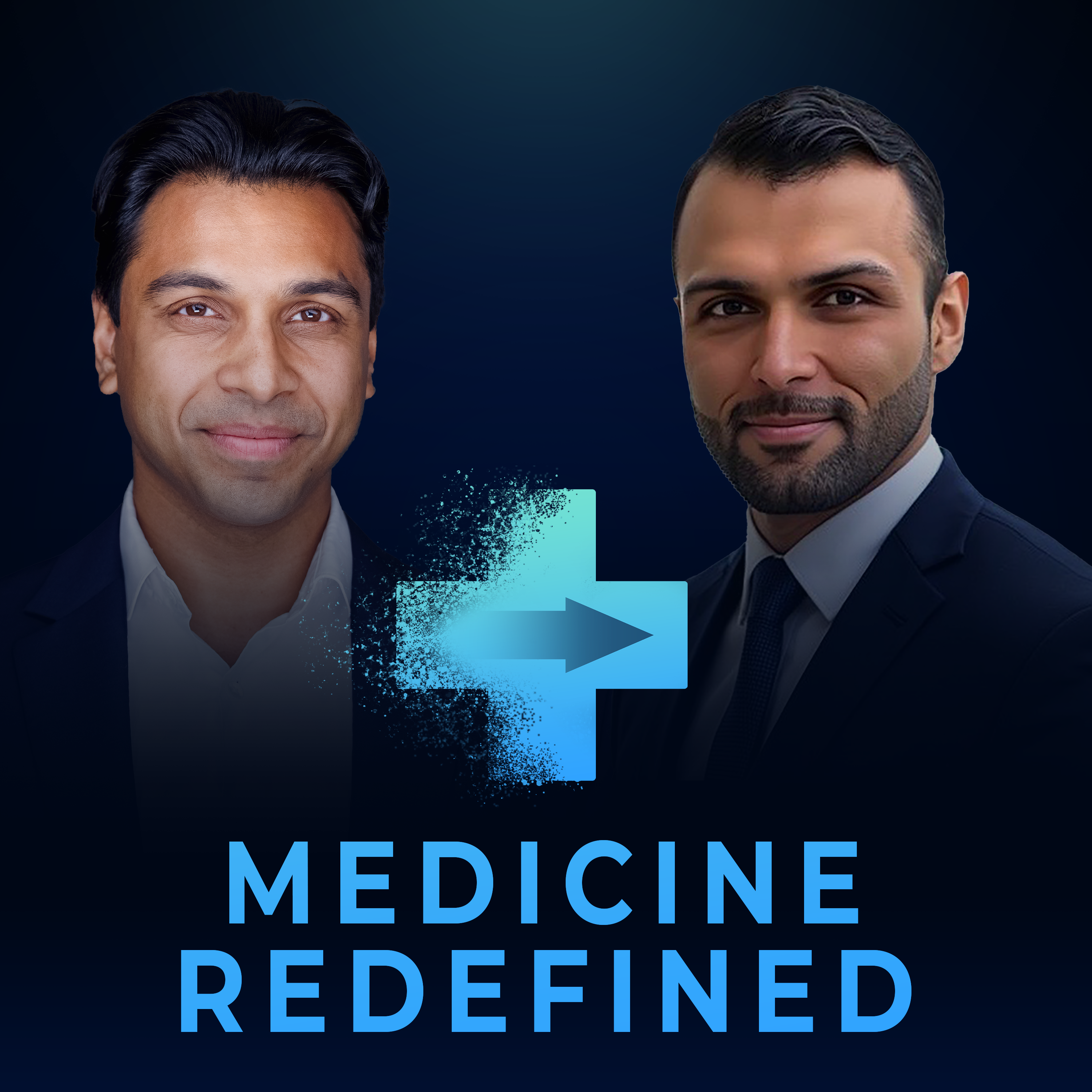
Hello everyone, I'm Dr. Darsha, and I'm Dr. Altamash Raja, and welcome to Medicine Redefined. A podcast where we will explore the often overlooked but necessary components of health, what we consider to be the fundamentals. We will investigate topics and practices that can give you and your patients the best chance to optimize a healthy lifestyle. It's time to move the needle forward and put the health back in healthcare. It's not a secret that doctors have a hard time creating a professional looking digital presence. Having a dynamic website, ranking in Google or growing your volume of patient reviews are not easy tasks, we're too busy to figure it out on our own. Advice media has been around for over 20 years and works with physicians creating more brandable online image. A track more patients, generate more calls and emails, enhance brand awareness, protect your online reputation. Fill a demo with Advice Media and receive a $50 Amazon gift card just for chatting with them. Three in five patients will choose one provider over another because of a strong online presence. If that's the case, what is your online presence saying about you? Don't delay booking your demo today, go to Drpodcastnetwork.com-for-slash-advice-media. That's Drpodcastnetwork.com-for-slash-advice-media. Alright, everybody, you are in for a treat today because our guest is no other than Dr. Beth Freides. Dr. Beth Freides is an absolute pioneer in lifestyle medicine. She is an award-winning teacher at Harvard and she currently works with patients to help them adopt and sustain healthy habits through her private practice called wellness synergy. Since 1996, Dr. Freides has been on the faculty of Harvard Medical School and has won multiple teaching awards for her work in many different pre-clinical core courses. She has also developed and taught a college lifestyle medicine curriculum at the Harvard Extension School, which is one of the most popular courses offered there and was actually chosen to be a case study for a four successful courses. Dr. Freides is also an accomplished author. She has a book that's actually in the list of 100 medicine books of all time by book authority and that's called the Lifestyle Medicine Handbook and Introduction to the Power of Healthy Habits. Now, throughout this episode, you're going to learn pretty much the core of lifestyle medicine, which is one of the tenets that me and Altmanche heavily talk about with all of our guests. So you're going to get great insight into what lifestyle medicine is and how Dr. Freides has truly expanded this upcoming growing field and that is really permeating throughout a lot of medical institutions. You'll also be able to hear Dr. Freides tell her inspirational story that got her interested in medicine and eventually lifestyle medicine. Enjoy. All right, everyone. Welcome back to another episode of Medicine Redefined Altmanche and I'm super excited for this episode. Join by Dr. Beth Freides. Dr. Beth Freides, how are you doing today? Wonderful. Thank you so much for having me. I've been looking forward to this conversation. The pleasure is all ours. Thank you so much. So let's get right into it. Offline, we were just about to get into a lot. So we said, hey, let's hit the record button and let's get it going. So let's talk about your journey a little bit, right? Your childhood into where you are now. How did you get into physiatry? Right. I didn't even know anyone in medicine growing up. My whole family was in business. My dad's dad, so my grandpa started a financial advisor, a accounting company and then my dad and his brothers took it over. So my world was finance and business. I saw the pediatrician for routine visits, but that's it. I didn't know anything about medicine. And I did like science and I did like math a lot growing up, but it wasn't until I was in college and there I was a freshman and I went to get my books at the coop at Harvard in Harvard Square. I was so excited. I got them and I want to call my parents and explain to them that I got my books and I'm so excited. I was an economics major and I want to tell my dad I was taking act 10 because the whole plan was that I would take over the company and be the third generation. So I wanted to share my books and so I called. I couldn't see it like it was yesterday, but it was many years ago now. I went to the pay phone right outside the coop and called my mom and she answered and said your dad loves you very much. And I thought that was very strange because I knew my dad loved me and I didn't understand why on earth my mom would be telling me this the very first moment that I called her. And then she proceeded to explain that dad was in the hospital with a heart attack and stroke and I needed to get to New York right away. Fortunately, my brother was also in college at the time and he had a car. He was at Boston University. So we arranged to have him pick me up at Harvard Square and drive me to the Valhalla Medical Center where dad looked to me like death. He was so pale and I had never been in the hospital to visit someone until that time. He had what I know now, of course, as nasal prongs and IVs, but they just at 18 looked like tubes coming out of every orifice that he had and he could not move the left side of his body. So it was really tough and I remember just walking in there, hugging him and then crying, just crying. And then, of course, my dad was crying, my mom is crying, my brother is crying. Everybody is just crying in the room and I do remember that Dr. Moses, who was our family doctor, so his dad's doctors, my doctor, everyone's doctor. And he came in and he saw us all distraught and he brought us into another room and he talked to us about what happened and why it happened that he had a heart attack and then part of his heart wasn't beating properly and then he got a clot and part of that clot went up to his brain and that is what is impacting his inability to move his left side, but he can recover and he gave us a great deal of hope and he, in fact, was a sensitive and intuitive man and physician and interestingly, he gave everyone a job. I don't remember my mom's job, I don't remember my brother's job, but my job was to help him with his hand because Dr. Moses has seen this before, right, heart attack and stroke and we know that fine motor movement hand is awfully difficult to come back and getting strength back in that hand is so important. So I was in charge of the ball, he showed me the ball and I was to help dad with the ball whenever I could and talk to him about the ball because I was, of course, going back to college. So I remember feeling okay, I have a job. So this gave me something to focus on, something tangible that I could do to help in this recovery and I learned he could recover, we didn't know how much, but he could recover, I learned a little bit about why it happened, but not enough and that experience with my dad led me to the library, why in the library at Harvard where I wanted to learn all about heart attacks and strokes, how they happen, why they happen, how do you prevent them? If you have one, we'll let happen again in the beginning was all about protecting dad and figuring out how dad could recover and how dad wouldn't have this happen again. And what ended up happening is that my dad and my mom went to intensive lifestyle medicine programs. I didn't know that at the time, Pritikin was one of them, Whitaker was one of them and he and mom traveled, spent about two weeks in these intensive lifestyle medicine programs where they learned, my mom accompanied him, they are very close, always tight and knew that she wanted to change how she cooked, she wanted to change how they interacted and she wanted to be right there for dad. So that's what happened, dad learned about exercise, he learned about a healthy diet, he learned about stress relief and everything, everything changed. Fortunately, he made a complete recovery except for fine motor movement in the left hand such that he couldn't manipulate coins, but otherwise you wouldn't know that he had had a heart attack and stroke, you would never know. So he really worked hard with PT, with OT. And I changed my whole career and my interests went right into cardiology, really the heart and stroke and preventing a stroke. So that's super, super interesting that you say, you know, your, your thought process went into cardiology, right? And at the age of 18, I can only imagine how tough that experience was for you, but also life altering in the sense that, you know, instead of thinking about the family business, you're now thinking medical school and beyond. So you get into medical school and you have this story of patient zero as you so often call it being your, your, your father as that first patient that you've really gotten to know. When you're in medical school though, I can only imagine that you're not really getting taught this lifestyle medicine that, you know, your, your, your father went through. How did you still keep it on your radar when you're getting taught by academia, nothing really about lifestyle medicine? Right. May I bring you back to college for a moment to my thesis? Yeah, absolutely, please. So I had this understanding, this was the 80s, I think this, this happened in 86. So I was studying in 87 and I wanted to understand everything about heart attack and stroke and I understood my dad, who's a wonderful man, always loved him. He managed stress in different ways before the heart attack and stroke. It was a little more challenging key. He could have, you get, get angry, nothing out of the normal, yelling, but you could just tell he had hostility and you may not be aware of this, but there was type A, behavior and, and research in the 80s was talking about a certain personality that's more prone to heart disease, a type A personality and what it was was the hostility factor that was the thing that was most risky for the, for, for heart disease. I was really fascinated with stress and this idea that mental stress could have an impact on the heart. And at that time, Rosansky and colleagues had put forward and published a journal article in the New England Journal of Medicine about mental stress and the heart. And I thought it was fascinating because they showed that when someone goes through mental stress and in this protocol, they did serial seven subtractions from 100 that you could see EKG changes similar to those when someone is on the exercise bike for a stress test. So I brought this study to the local hospital, Valhalla Medical Center and I, I went to the front desk, the information desk and I said, hi, I'm a medical student, I want to be a doctor and I'm a pre-med and I want to do some studies similar to this one on stress and heart disease. I mean, I'm thinking about it and just, I'm not sure these things happen these days, but I did do that. The woman, the receptionist was very kind and she said, well, there's Dr. K, who's a cardiologist. So I suggest you go meet with him. So I pranced myself up to the cardiology floor, found Dr. K's office, had my article in hand and basically somehow got to meet him and told him my story about my dad and how I really want to look at this mental stress and the heart. He said, terrific are you thinking you want to be a doctor? He said, yes. He said, well, why don't you do rounds with me in the morning? We'll do research later. You can have a whole internship. So he actually created an internship for me over the summer. I got paid and this is why cardiology was on my radar screen to begin because I started working with him right away. Now I do want to share with you that he was not a believer that mental stress would have such an impact on the heart. He thought that if we replicated this study, we'd find something different. And I couldn't believe it because I knew that we were going to find the same thing. And I thought, okay, this could already be a bias. So I said, could we get a psychiatrist to work with us too? Because I kind of think it's a little bit psychiatry too, isn't it? I mean, we're talking about the brain and mental health and stress. So he said, oh, yeah, sure. I have a colleague in psychiatry and you could rotate with him too if you want. Anyway, go to psychiatrist to work with us as well. We replicated this study. Of course, all I could do was be the stressor. They said, well, I mean, I was a medical student. I had no training. So they had me go in and talk to the patient and say, okay, now we're going to do serial sevens, take 100, subtract seven, subtract seven again. So I was meant to be the stressor. When I first went in to do the study, I was like, hi, I'm Beth Pegg. And we're going to do some mental stress now. So it's going to be, you know, serial sevens and suddenly I've got in three sentences. And then they came marching into the room and they pulled me out and they said, stop. No, this is wrong. You are not doing this correctly. You can't do this or you need to do it differently. You're a stressor. You don't go in there all bubbly and smiley and make them feel happy. You have to go in. You don't crack a smile. You say your words. You're very clear and do not smile and try to have them subtract zero sevens. And if they get it wrong, you say wrong. Do it again. Faster, faster. You're supposed to stress them. Anyway, awful. I had to do that. It was very stressful for me. I'm sure my heart was showing EKG changes too. It was just awful. It's like one patient cry. People do not like serial sevens. I will tell you now, they don't like to do subtraction from 100 serial sevens. I don't like to do serial sevens either. Especially when I'm asking patients. So I agree. We have to, I mean, as you already know, we have to do that. It's part of our neurological examination for stroke patients and the rehab unit. And nobody ever does. I usually just stop at 86. I'm like, you're good. It's stressful. So anyway, what we found was exactly what Roseansky and colleagues found. And that was fascinating. And I really admired Dr. Keg. He was my first mentor in medicine. And he was shocked and surprised. That was actually my thesis, the replication of that study. And I will tell you, this has everything to do with my career and the path because he was the first person that really set the tone for me in medicine. And many people in the 80s that I met at that hospital said to me, don't do medicine. All the doctors were saying that to me, don't go into medicine. You seem bright. Go into business. Medicine has changed. We can't do anything anymore. Insurance is tying us down. It's no longer fun. We're also not as well respected. You're at Harvard. You seem so bright. And you're a very hard worker. You should go into business. Your dad had the business, you said, you should take that over. People were steering me away from medicine. And I sat down with Dr. K. and I talked to him about that. And he said, well, this is what I have to say. You have a good feeling around medicine. You understand quickly what's going on with a heart here with patients. I think medical school will not be hard for you. I think you can do it. And I say this, if you enjoy it and you can do it, get your MD degree and then do whatever you want with it. Guess what? Once you have that MD degree, you could be a journalist. He said these things to me back in the 80s. You could be a journalist. You could work for a company. You could have run your own company. You could write books. You could, and he gave me a list and lots of things I could do. And I said, oh, right. Well, I do love it. And I love the material. So that's what got me in the path of comfort with this career going towards medicine. And then when I got to Stanford, I went right to cardiology. That's what I knew. And we, many of us at Stanford, and I believe it's still the case now, we do research throughout medical school. The first preclinical years were heavily in the labs. When we get to the clinical years, we stop our research or start writing papers from it. But we get paid for our research work at Stanford in the preclinical years. So I did do that. And I went to Dr. John Cook in cardiology who was studying the endothelium. And he was looking at how different diets impact the endothelium. This was animal research. And it was hard for me to do that. But I did. And it was bench work, obviously, and we were looking at the endothelial cells. We looked at cholesterol-rich diet versus nitric oxide-rich diets. So that was fascinating back in the early 90s. And the nitric oxide-rich diets that we found that the endothelium was healthier. And there were less plaques, which we would have guessed. And it showed what you would think. And to this day, we see. I learned from... For those who don't know, what would be an example of a nitric oxide-rich diet versus a cholesterol-rich diet? Right. So walnuts typically have a great deal of nitric oxide-rich diets, we consume them ourselves. So a mixture with walnuts would be what we used. And by the way, the endothelium is the lining in the blood vessels. So the endothelial cells are those cells that are in contact with the blood. And then you, of course, have your adventisha. You have tissue. You have cells. And then you have tissues that go around these cells and create your cylinder of your blood vessel, right? And the blood goes through it. So it's the endothelial cells that line it. And so you want healthy endothelial cells, because when those are damaged, then anything can leak out of the blood vessel, right? And into the adventisha and into the tissue. And then create inflammation, plaque foam cells, part of the atheroma, the cholesterol plaque that we know. So I did enjoy the research, but I did learn at that time, bench research wasn't where my heart was, and my heart was with the clinical, with the patients. Even though I was stressing the patients in my previous research and I didn't love that, I knew that if I were to go in academia, it would be clinical work, clinical research. So I was all set to continue on towards cardiology. And I did the research in the labs for two years. And then you start to get into clinicals, and I started to think, I better start learning about lifestyle for these physicians. Because remember my dad's story, I told you the medical side of it, the lifestyle side of it is that I saw my dad work to the bone, I saw him work 6am to 11pm, I saw him experience great amounts of stress, I saw him being disconnected from his family, although there was tons of love. But when he was in the house, he wasn't really present, because he was thinking of a hundred other things, he was going to work on the weekends, his diet was awful. He's a New Yorker that walked fast, talked fast, ate fast, ate fast food, he ate sugar and candies and cupcakes and oreos and all sorts of things that made him feel better and gave him that sugar high. And he didn't exercise at all. And I saw that life, I understood that life and I didn't want that life. And I started to see physicians, you don't have to be in business to have this life, I started to see some physicians who had that life. Also I had met my husband, well in college I met a guy named Jim Freides and I redated and in medical school we continued to date and then we were engaged and I knew we were getting married and I really wanted to have children. And I also knew I love children because I had been a babysitter and that's how I made money in high school. And I wanted to understand what the lifestyle of a cardiologist was and a woman in medicine, what does it mean? So I started to interview, just informally, I started to interview a lot of women, physicians and attendings. And as if it were yesterday I'm sitting in this room of a cardiologist who was lovely, I forget her name and let's not mention it anyway, but she was lovely, it was a wonderful person, she was brilliant, she had a lot of papers, I think at this point she was perhaps in her 40s, had kids, was already a associate professor and really someone I admired. And so I listened to her career and I said this is terrific, look at her, she's done amazing work. And then I said, are you married, do you have kids? And she told me and I said so how does that work with the kids? And she explained to me that she had a nanny and she would see the kids on the weekends and sometimes she would be called in on the weekends. And I started hearing a pattern that sounded an awful lot like my dad's pattern and I started thinking I don't know, I already know I have high cholesterol and I could bring that down with diet but I don't want to have all the other risk factors. I mean I was running, I was exercising regularly and I was trying to be a stress resilient but I thought this may not be the path for me and then I was going to all sorts of career affairs and trying to meet women that were leading a life in academia, I wanted to be in academics. I love academics, I always love teaching, I love learning, I love reading, I love academics so I knew I wanted to be in academics so I went to these different career fairs at Stanford and it wasn't until probably the end of third year I went to a career fair and I don't know who else was there. I mean there was a GP, pediatrician, cardiologist and some others and a physiatrist, something I'd never heard of before and again I wish I could tell you her name, I cannot. It was a vibrant woman probably, it's hard to say, right, 30s, 40s, she talked about caring for stroke patients, she talked about the musculoskeletal system, she talked about her own lifestyle, her how she was biking, running races, road races, she had kids, she spoke about family weekends and I gravitated to her so after the whole panel I spoke with her about physiatry which I, again, never heard of before, you think I did, it was my dad had a heart attack and stroke but no one mentioned the word physiatry to me or if they did I didn't remember. So then she started telling me about stroke patients and I could do a rotation at Stanford in physiatry so I signed up right away and I did my physiatry rotation focusing on stroke with Dr. Jeff Tarioka, I know that so well because he invited me back to do grand rounds at any rate and I had an amazing time, I loved it, you could spend time with the patients, I could teach them about stroke prevention, I could teach them about their recovery, I got to meet the family, they were family meetings, it was a team meeting, you actually worked with other healthcare professionals, the physical therapists, the occupational therapists, the speech therapists, you met with the family, this was a whole different kind of medicine that I had never seen before and working with the family really obviously touched me deeply because it's back to Dr. Moses, he was my GP but you sat us down, you could do this, I felt like I was Dr. Moses a lot of the time, I was having those family meetings and feeling like I was really making a difference and then being able to help patients have hope, part of me also wanted to be a psychiatrist actually but I didn't really gravitate towards schizophrenia, bipolar, a lot of the very important and interesting diagnoses that psychiatrist manage, so I felt when you were a physiotherapist you were doing some psychiatry, of course you needed a psychiatrist to help your patient when they had depression and anxiety and other problems but you were giving hope and you were helping a mental attitude, you were helping create the space for the patient to see that they had a way out of this mishap, they could actually even be better off and this is what my dad would have told you if he could have his life changed and it was all for the better the best years he had or the 27 years he had after his heart attack and stroke, so I was able to be that person that could help these stroke survivors specifically but of course I had spinal cord injury, traumatic brain injury and a lot of other patients when I was rotating through physiatry and didn't my residency but my heart was always focused on the stroke and then the clincher was I thought about my life with gym and hopefully having children you never know but hopefully and I knew because I'm there's a part of me that's a big kid and playful and I knew that when I had my own kids I was gonna want to be doing cartwheels running around with them being on the playground, being down in their level and just loving it and I knew from my dad right as a short window of childhood and you can miss it and I didn't want to miss it so basically I thought what's going to be the thing that will get me out of the house when I have my kids and keep me practicing and helping and healing stroke patients, that's it. I will always have a fondness, have a calling to help stroke patients for the rest of my life I just knew it so that's it that was physiatry, it was physiatry and stroke patients and it turned out to be the best decision I could have possibly made. Dr. Fredi thank you so much for sharing that heartfelt and inspiring story you know as Dar said earlier I we were also stoked for this interview because I have been following your work for quite some time and I always wondered you know how how did you get to where you are today and you know a couple years ago when I was pursuing physiatry just like yourself you know a lot of people told me it was the best kept secret right I don't think that's the case anymore and I wondered how you got there because you know you're a few years ahead of us and so I imagine that like you said it you know it wasn't on the radar for a lot of people and people didn't even know and there's two questions every physiatrist needs to be able to answer well question one what is PMNR right we have to explain that to people and then the second one why PMNR and and what I find is every time I have a conversation with somebody who's passionate about this feel like you are you know it's it's a very personal journey and so thank you for sharing yours with us and you talked about physiatry and of course how lifestyle medicine came on your radar so I'd love to know what your practices like today are you doing more inpatient outpatient are you doing lifestyle medicine what are you doing today right I will tell you that I am not practicing physiatry anymore I just do lifestyle medicine so my work is academic lifestyle medicine meaning as you know I do a lot of teaching and writing and curriculum development and in fact you mentioned earlier being board certified and there's board certification in lifestyle medicine now and I was one of those four item writers that wrote the the the exam and I love that I love that academic piece the lifestyle medicine interest groups that I have here at Harvard and and help to create throughout the country and now the world with American College of Lifestyle Medicine so I do a lot of that work and now where I am as the president elect of American College of Lifestyle Medicine doing a lot of presentations about lifestyle medicine and then here I've been congratulations by the way oh thank you that is exciting so I've been at heart for a long time since 1997 I'm doing a lot of CME courses here around healthy living lifestyle medicine for leaders health coaching and then I do my own practice so since 2009 I've had my own space my own practice of lifestyle medicine and coaching in that's 101 and that's group coaching and when additional piece of my work which came much later has been consulting so I think Jenny Craig was the first company that brought me on to their scientific advisory board perhaps 10 10 years ago and this is a fun way to use my experience in health coaching in lifestyle medicine to help companies help patients empower patients to make lasting change so that's my role there is to work on the coaching pieces and and then obvious solutions which is a wearable device that helps people to stay on track with their exercise their diet and especially their posture that they brought me on and more recently another company brought me on to do medical advisory work and I love that so that's my job it's a lot of different hats all of which I absolutely love I think a missing piece of this journey is physiatry to lifestyle medicine which happened in 2006 so after residency I wrote a book about how to prevent a second stroke realizing there was a gap as a resident I asked stroke patients we all know I'm fascinated with and dedicated to the stroke population it's been forever and I asked the stroke patients we had an IRB and we asked stroke patients and caregivers do you know what kind of stroke you had in far of time which bleed or clot do you know why what were the risk factors do you know what you're doing to prevent the stroke do you know what medicines you're taking do 50% of patients after being in rehab in my day was four weeks in rehab a week maybe at mass general in acute care so five weeks you've been with physicians you've been with nurses physical therapists all of us have been talking with the patient right medical students interns have been talking and teaching and 50% of people didn't pick up these very important pieces of information so I thought okay here's a huge gap there are no books on this we need a book how do you prevent a second stroke so when these people leave the hospital and leave rehab they're going to get the information they need this information otherwise we're going back and having another stroke what have we done as caregivers as providers we haven't done our job sure we got them stable they're they're up and going this is of course very important but but we we must make sure that they don't have the same problem so wrote that book and to write that book I co-authored it with attendings of mine that that I was close to wanted written many books and one was the head of stroke at spalling at any rate I looked at exercise nutrition stress resiliency we knew we know I knew about stress but I looked heavily into exercise not not in terms of physical therapy which muscles do you want to work to to regain function but what does aerobic activity do in terms of preventing the second stroke so really heavy into that and published that book co-authored it and I was at a meeting an annual meeting of Paminar from spalling the Harvard department and I was standing there and so my my my fellow attending some of whom of course have been there forever so I was a resident and they were in attending and they were saying oh you know proud of you and your work and someone in particular was Eddie Phillips and he was always an outpatient I never rotated with him but I knew who he was and he said Beth you know congratulations on that book you know what you're doing you're doing lifestyle medicine I said really what what's that he said you're helping people through their lifestyles to prevent stroke you did exercise you did nutrition you did I said yeah yeah I did do those things and I love those things in fact I love studying those things I love doing it for myself because guess what I don't want a heart attack or a stroke that's pretty clear and so I want to practice this myself and I want to help other people practice this too and he said well you know what why don't you come with me on this journey and we'll start the institute lifestyle medicine and Harvard and we'll create this thing it's like fantastic let's do it so this is like 2008 and we started the institute lifestyle medicine which to this day is a great resource for CME so every year at Harvard we give two or one and sometimes are on every other schedule but CME courses on exercise nutrition and sleep and it's grown and grown and I then got health coach training because I'm really into and always wanted to help people sustain the change so you write the book I thought that was the answer well people read the book they forget they they need some of people need a little bit more and so I took I don't know at this point probably four or five health coach trainings and certificate and motivational interviewing and really have practiced coaching for well since 2008 or nine I think I was certified one was one of the first physicians to really embrace this and and become certified as as a health coach and then talk about it and teach teach health coaching and the coach approach at CME meetings so and about 2009 when I got certified as a health coach I realized that I'd be doing a lot of work outside the Harvard system so this was a big choice and it was tough choice to go part time meaning I would start my own thing called wellness energy and then Harvard wouldn't own anything that I did or or created in that space if I stayed full time anything I did or created is always owned by Harvard because I did it on there on their time which makes sense so I separated myself back oh gosh what 13 years ago so at that point I had my own thing going and that has evolved with time in the beginning I was coaching patients mostly from my physiatry colleagues they would give me people who had diabetes or obesity or post stroke or and I would coach the patients I still do some patient coaching what's happened with time is now I am coaching leaders so so I am now the director of lifestyle medicine and wellness in the Department of Surgery at Mass General Hospital so I'm working with the Department of Surgery the surgeons themselves and the residents there to help them be as productive as they can be as healthy as they can be and it's really been a challenge during COVID but I've been happy to have all these different opportunities I still do work with with patients and they're all everyone's patient doctors are patients I still work with with a whole whole array of patients it's primarily now been deans of the medical school lawyer CEO's other physicians it's it's evolved a little bit and I've gotten into some also leadership coaching what's interesting is to be a good leader you need to be healthy you need to have a healthy body a peaceful mind and a joyful heart to really be a good leader so that's that's what I've been doing and that's that's that's what happened that's a journey wow so like Dr. K was right on point right you get your MD and there's so many different things that you can do you wrote a book your health advisor here your health coaching and I know there's a lot more out there too um so you mentioned some things that lifestyle medicine incorporates exercise stress management nutrition and when when you were sharing your journey there's something that struck out to me you you said you started out talking about your father's medical side of things and then you kind of brought in the lifestyle side of things but the lifestyle side of things happened before the stroke right it's it's it's where the work needs to be done and so often students who want to go into medicine when they think about being a doctor they think about coming into the hospital or coming into the clinic and what happens after that but we're here in lifestyle medicine trying to shift that focus in looking at preventative care looking at before they enter the ER before they enter that patient room what are those things we can do so let's delve into the six core focuses of lifestyle medicine what what are they yeah so it's funny because we've gone over the first three just briefly exercise nutrition stress resiliency and when we were doing the CMEs back in 2008 that that's what we focused on those three and with time and actually from counseling patients over time I noticed that when patients weren't sleeping they were having a whole lot of trouble moving their bodies exercising and making decisions that were good for their bodies in terms of their meals and meal time and this was becoming more and more evident right so then we we're adding oh we sleep is a critical part of this process as well so that's now four and then substance use so alcohol and cigarettes that's been on the radar for a long time because if you look at mocked at and colleagues original article really a landmark study in jamma from 2002 they looked at actual causes of death so we know diseases that are causing death heart disease cancer um uh COPD stroke we know diseases that are causing death but was fascinating about mocked at and colleagues is they then looked at weight those are the diseases what are the behaviors behind those diseases what are the behaviors that are creating those diseases and top of the list tobacco second physical inactivity and poor diet they were lumped together they were almost about the same as tobacco and and then you know we got into a lot of different things um accidents uh but those those three tobacco so substance use physical activity inactivity and poor diet so substance elimination moderation has been on the lifestyle spectrum story for a long time but we really started focusing in on it um closer in the sort of 2012 range ish and then social connection around the same time meaning the power of social support there's it's not just it feels good to have a friend that's true it does but what I love about lifestyle medicine again you remember I love to go to the library I like to look at the research I love to dive deeply so I did that with social connection when you dive deeply with social connection you look at an article from 1979 Birkman and Simon published an article when they were evaluating subjects over the course of nine years in Alameda County men and women they followed them for these nine years they put them a different age categories 30 to 40 40 to 50 60 to 70 put them all different age categories men and then women looked at what happened with them over the course of nine years put them into categories of social connection they had a social index how connected they were with others those with the least connections men and women in every single age group those with the least connections were the ones most likely to die so we knew back in 1979 that social connection was a really powerful force now look if you go back to the 1940s with Maslow's hierarchy of needs so you have at the baseline right the very the the foundation that we need physiologic needs food water after that you need shelter not to protect yourself there's animals there's that right there's danger you need a shelter then right next after physiologic needs shelter very next thing in the pyramid social connection belonging sense of love and belonging so we have known this for so so long and it used to be a pillar that was hard to sell on people on physicians on even patients so what's going on with your social connection i mean you knew what it was broken people who had divorced people who were struggling in that way in a relationship in that way you knew that that everyone would acknowledge well this is a hard time oh this is tough this is tough but that's about it but nowadays and now with this pandemic this pillar is going to no longer be one that is questioned with there's research though we can look at the research that shows maybe before covid that if you are not feeling socially connected you do if you do not have a sense of belonging if you're not if you are feeling isolated you're more likely to have a heart attack your wound healing is less you're more likely to have cancer i mean we the signs are all there and if you dug into the research you saw it you found it but it wasn't really something that was addressed in clinic visits exercise got up there quickly nutrition got up there quickly of course smoking and alcohol was was always there even when i was in a medical school that that in the nineties we were on that right away stress it got in later like in the 2000s it was her Benson here at Harvard actually started the Benson Henry Institute mine body medicine he really brought to the forefront the importance of stress reduction and resiliency and he was coming to CMEs back i went to a second CME in 2002 was one of the first times we had such an CME reduced stress reduction the importance of stress reduction so what i love about lifestyle medicine is there's science behind every one of these so for physical activity accumulate 150 minutes of aerobic activity in the week that didn't come from thin air 8,600 approximately studies were evaluated in 2008 by exercise physiologist scientist physicians United States Health and Human Services put up pulled these people together to evaluate thousands 8,600 journal articles and come up with some guidelines and that's when they created a graph that looked at how many hours of activity per week people were doing and then looked at all caused mortality and tried to come up with best recommendations and as as i tell you 150 minutes if you can do more you do 300 minutes in the week and then according to their research what what they found their there tends to be a plateau of benefits so in lifestyle medicine we're giving you the dose we're giving you the science behind the dose and then the secret sauce is how you counsel it you can't just wag your finger at someone and say you need to exercise 150 minutes in the week as if this this is like a magic wand this finger that's wagging around and it's going to puff suddenly they're going to be walking or running or biking or paddle boarding or whatever uh for their exercise it doesn't happen like that you you have to connect with them you have to go through a whole process of coaching them so then nutrition we focus a lot on a plant-based diet plant predominant diet in lifestyle medicine we focus a lot on the vegetables why the research is there if you look at the research even from 90s 2000s 2008 and it continues to this day when you add servings of vegetable to patients when they start eating vegetable their risk for cardiac disease goes down so you you by adding vegetable to your diet you're actually reducing your risk of having the heart attack the number one killer so we know this research-based we're trying to get at least three vegetables two fruits at least high personally i'm trying to get eight fruits of vegetables every day eight six six vegetables two fruits each day so but the dose that we're looking at anyway is at least three vegetables if you can get to five seven terrific but we know that when you add a serving of vegetable you're going to reduce your risk of heart disease so then you go to stress resiliency and talk about meditation again what's the dose be great if everyone could do 20 minutes of meditation at least five days a week but what research is showing us is some is better than none if that you can and this is true with exercise two some is better than none same with vegetables some is better than not if you could get people to debrief you know meditate do mindfulness-based stress reduction 10 20 minutes that would be so powerful for them and we know Sarah Lazar's work at mass journal hospital bring it back to the science she looked at meditators versus non-meditators those that were meditators had increased gray matter in their prefrontal cortex so their brain was different than those that were not meditating so we know that is good for for our brain our body reducing cortisol levels and as I mentioned with social connection okay we don't have exact dose on that we know that when you have lack of it and you're isolated it's unhealthy I don't know if you're familiar but if you if you have the lifestyle as a handbook after every chapter we give a fit prescription it's hard it was hard to do social connection but you want to at least be connecting with another and in a level that's beyond hey how are you five days a week and now covid teaches us what what happens when we're not able to touch hug be with others drinking has gone up almost 60 percent stress has gone up so we did our own little mini experiment with with covid and then we know with alcohol and smoking right smoking zero got we've got to work to stop to stop that with alcohol if you look at what cancer american cancer society recommends zero if you worried about cancer zero american heart association says zero to one for a woman zero max two for a man if you don't drink now don't start science-based this was different when my dad had his heart attack my dad at his heart attack in the 80s he was not a drinker thank god and uh so that was an issue for him but they told him start drinking glass of wine a night and he did but he was a man of rigidity and he followed the rules and and so he he had he had his one glass of wine and was fine nowadays if someone has a heart attack and stroke no one is going to say start drinking a glass of wine a day that's not what the recommendations are for the American Heart Association science-based science changes we learn new things so this is why i love lifestyle medicine and those are a little bit of information on each pillar hopefully that was helpful it certainly was thank you for for sharing that and explaining every single one of them you know all these pillars are quite similar if not outright the same as you know what i typically look at as the five pillars of health the one that i don't talk too much about is social connection and you know perhaps i should i know it's important sometimes i just kind of categorize it into kind of distress tolerance or mindfulness just because for the reasons that you mentioned it's hard to prescribe like how do you give frequency and you know intensity it's and timing and that kind of stuff but it's all the more reason to pick up your book right but you know people will often ask me should i focus on this versus that right they learn about these these pillars of health and it can be overwhelming right in other words like they want to know what that keystone habit is right so of course appreciating the the role of assessment which we talk about often on this show we know that that one change might be different from person to person right it's going to be the lowest hanger food move the needle the most but we also live in a world where people want to know the top three tips the the five things that's going to get my life completely right or all that stuff so you know taking a completely reductionist viewpoint on this if if someone comes to you and and learns about these from you the foundational components and everything is at a at a disarray where do you start like which one of these if there is one do tackle first what's going to pay the most bank for your buck yeah it's a great question and so i've been doing this a while and i've seen a lot of patients and i see disarray in a lot of areas when we meet it's interesting and it's fascinating actually because when you're in lifestyle medicine we know that if someone is overweight changing their diet will have the most impact on their weight we know that exercise is great for them and as it turns out exercise is great for the mind and the memory the mood so so much exercise will help with so much and especially weight maintenance and then stress resiliency the truth is most people get off their healthy path because something happens there's some stressful event so helping people manage stress giving them stress resiliency tools will set them on the sustained path to keep these habits going so to your question you know thinking of this way if an alcohol if all this has happened to me i'll give you two patient examples which will answer your question so i was working with a woman and she heard about me my business is all word of mouth people hear about me here in Boston and well now it's gone a little bit more virtual but it's basically word of mouth because i walk with all my patients and we walk and talk and we walk for an hour and this woman had heard about me and she asked me with me i said sure what are your goals she wants to eat more vegetables that that was her goal she looked very healthy and energetic and didn't appear to have any any problems but i said sure if you want to we can definitely do that i can i love to work on that terrific so we met i walked for an hour and it seemed it seemed fine but i had this vibe that i wasn't we didn't get deep enough but she shared a lot and and we we had a plan for introducing egg plant and some other vegetables that she was going to get the store and we had it all set out with smart goals and the next time we met she was late i neglected to tell you she was late the first session about a half hour that that that doesn't happen people are generally very early and they're rare and to go she was again late a half hour unusual we went on the walk and then suddenly we were just walking and she said what would you think if somebody was taking sleeping pills for 10 years what would you what would you what would you make of that okay so we went through sleeping pills can be useful and stressful times and maybe for short period who is prescribing them oh my oh my GP it happened to be her she was asking for a friend that then turned out to be her and then it went into a glass of wine oh no a bottle of wine a night but everyone does that here don't they no so what are we going to do about that so for her we weren't gonna start we'd die it although that's what we started with because that's what she said but in that case you have to go to the alcohol pillar so usually when there's an alcohol situation that's the one that needs to be figured out first but interestingly when you have smoking and I've had this smoking and overweight and oh and diabetes and obesity sometimes they don't want to start with that most important pillar of stopping the smoking they're not they don't really want to do that's what I've done in the past is say okay so you told me about what's going on and you told me you want to change a few things what do you want to start with this particular person I'm thinking about with the smoking said I want to exercise I want to get back to biking I thought oh perfect because you're going to be huffing and puffing and you are going to want to quit smoking so quickly I didn't say that of course I said sure let's think about it what do you what what what do you what what where's your bike well I haven't been on the bike for years I have to get it fixed okay this week why don't we think about getting the bike fixed so two weeks later he starts biking so you know what I got to quit smoking so thinking of time then I'm thinking about the the other patient I want to share with you with this question is a woman who is 74 by BMI she would be obese and she heard about me from a friend who had lost 25 pounds I'm not a weight loss doctor but people tend to be so focused on weight loss that they say oh you look great why do you look so great you lost 25 pounds what did you do and they said well I was with doctor Frey and and I lost all this weight so people think of me as a weight loss person I make it very clear though I am not I am not trained in obesity medicine I do not prescribe medicine for for weight loss I do not I do lifestyle medicine anyway she wanted exactly what he had and I said well wait I don't do that I need to focus on what you have so we did our walk and she hadn't walked for more than five minutes but we walked a full hour she couldn't believe it she wanted to keep going she loved it and she told me about her eating habits which were exactly like my dad's before his heart attack and stroke no joke and I couldn't believe it I'm thinking wow you are having what or what girl scalp cookies whole sleeves at a time you are you are okay okay well McDonald's is easy and don't get donuts and this and the whole the diet to me that that that's where I would want to start I mean I almost felt I remember this we stopped the walk and I almost felt like saying okay so what are we going to do with those girl scalp cookies you tell me you have three boxes so let's just get rid of those I'll take them off your hands I literally wanted to do that but you can't do that with coaching so I I instead said um all right so well good news is this was fun and you like the walking terrific will meet again what would you like to do in the next week I want to walk I want to walk every day and I want to walk for an hour every day this was so much fun I'm gonna walk that's what I want to do this week I don't work on walking and I'm thinking oh oh oh is that a little bit overdoing it first of all an hour she don't only walk like five minutes and max before meaning she wanted to do the exercise fine I'm making it for this to work you got to follow their interests so I didn't say great let's do an hour day instead I just was taking the coach approach and I said all right well an hour day wow well that that's that's part of it so let's look at your schedule so tomorrow for example when would you walk for an hour and she said oh tomorrow no no tomorrow I have work and then my cousin comes and I'm gonna actually make dinner for her so no I can't walk tomorrow okay so when's the next day you could walk well let's see well we can know I'm going to New Hampshire I'm going to visit my girlfriends and um we're not I'm not gonna have time to walk with them so and so has a bad leg and they don't walk okay and she walked two days that week for a half hour and um was pleased now it wasn't until really week three or four that she then started to address the the food so it's not the answer you want but the the answer your question is it really depends on the patient but I did give you this if you're looking for weight loss diet is that that the first thing if you really want to change your weight looking at what you're eating and changing what you're putting your system which you're going to do three times or more a day is a great way to go I happen to love exercise always have even as a child before all this even started I played field hockey on cross played in college I mean I I I love athletics so I am all for exercise and starting exercise whenever and however anyone can I also love yoga and meditation so I I would love to get someone into that but I don't use my own bias I can't I've been doing this too long it won't work you you you have to work with the person in front of you and figure out where are they going to put the energy yeah absolutely I mean yeah I think I think you just nailed it right the way medicine is moving is towards this personalized approach and I think patients are starting to turn into consumers right and they're starting to advocate more for themselves and the thing that I that I love about the stories and the the examples you just brought up is I really think the success boils down to the provider that they found right the fact that you do lifestyle medicine that's the first step and so as we talk about incorporating lifestyle medicine you know into the healthcare system how do we get patients one to care more about their own lifestyle think about it more but also find the proper providers to give that advice but then also on the flip side how do we get more healthcare providers to seek and learn and preach and to teach about lifestyle medicine to their patients yeah so there's a couple of really good questions so American College of Lifestyle Medicine does have a listing of providers so you could you could go there and that would help and that would help patients what we're trying to do is get lifestyle medicine to medical schools at American College of Lifestyle Medicine we started with lifestyle medicine interest groups there are 40 official ones and 80 waiting to get in to the to the system so it's it's going to get into the medical schools hopefully into the core curriculum soon so if you get it into the core curriculum then every physician hopefully would be able to at least counsel on exercise, sleep, nutrition now if they needed intensive lifestyle medicine intervention like Whitaker and the programs my dad did that there are still intensive programs here and others are doing it John Kelly and others around the country then you need more more time and you need a physician who's board certified in lifestyle medicine who's going to be able to wien off the current medications right and monitor the patient as they move towards this healthier way of living so the first step is in my mind and why I wrote this book and co-authored this in the first place was I actually want college students and pre-meds and people who are going to be lawyers people who are going to be teachers people who are going to be engineers to know the basics and the foundation of lifestyle medicine for themselves so they have some ownership of it so they know the basic guidelines and in fact I don't know if you know this but I really wanted to bring it a level even earlier to teens when they're starting to make their own choices they're going to head off to college and I was hoping and still I'm pursuing with the American College of Lifestyle Medicine that we can teach teenagers about these pillars these six pillars teach them so that they know this all right giving some ownership to the patient is key but with the physicians you find one certified through American College of Lifestyle Medicine how do we get physicians to want to do this to get interested in to learn about it well see me as a great way because we all need see me you guys haven't needed to apply or reapply for your license but every two years you have to prove right that you have taken a hundred hours of CME so in incentive is to go to the CME courses and to learn information that may even help you so we we do active lives so active lives doctors are active patients are active back in my residency you won't be surprised to know I did a survey study with some colleagues a couple of attendings and other co-residents and we asked family physicians do you exercise do you do aerobic training do you do strength training then we asked them do council on exercise do council on aerobic training do council on strength and we found back in 2000 and reported in the literature that physicians who exercise council on it specifically if you don't strength train you don't counsel on it if you strength train you counsel on it so how do you get physicians to to to get interested in this and to counsel their patients on it well one way and especially since COVID and you guys probably haven't seen the transition in in physicians as your residents and your career here has been a little shorter say than mine but there's been a rise in burnout and so helping physicians to lead healthy lives themselves teaching them for themselves how to reduce burnout how to increase joy in medicine teaching them about the data around exercise and depression and anxiety teaching them the data around vegetables and the healthy diets for themselves helps and we know that if if they're doing it themselves they're more likely to counsel on it so that's another way and especially with COVID that that is one way that that might this is one benefit that might come out of this which is we focus a little bit more on self-care a little bit more on what we can do to keep ourselves healthy does that answer your question absolutely yeah and you know what you're talking about is modeling behavior right the physicians have to take care of themselves first and they have to exercise and have to eat right and you're doing the lives and it's a perfect example of a case study actually even one step forward you know and one of our actually our first guest ever Dr. Simon Maibin who's also health coach much like yourself she as she says you have to walk the talk right and and if you're not going to train you're not going to exercise or if you go see a physician and there are some exceptions but the physician's going to be out of weight and not eating right and and telling you that or smoking in the parking lot and then you've seen that person and now you come into the office they're like hey stop smoking that message isn't going to get across as well but you know we talked a little bit offline about some of the challenges of incorporating this into the health crisis time I love the fact that you're trying to build this into the medical curriculum teach it earlier on so it's part of that core component and even earlier than that one of the issues as I'm early in my career and I've had these conversations when I'm looking for what my future practice may look like is sometimes actually oftentimes it's about the the bottom line right it's the bottom line that ends the dollar signs so reimbursements and insurance is a huge part at least in our health care system how can we help because that's a challenge that I think a lot of lifestyle practitioners have who are practicing at institution and you know perhaps not practicing in a private practice setting or maybe in academia how can we help remodel that and what are you optimistic about in terms of reimbursements and and for practitioners to be able to do this and you know from a practical standpoint yeah well fortunately we do have Dean Ornish and people who have been pioneers in this field for many many years in fact I followed Dean Ornish after my dad's heart attack and stroke and he's done so much research and is able to put forward a program which is reimbursed through insurance the undo it program which we can all get trained in and and do to there are models where you can be reimbursed for your lifestyle medicine practice and you can code for cardiac disease obesity diabetes you can get some counseling reimbursement what's happening now is group visits are being used and you can actually see a large number of patients you can do great work it increases social connection because the patients are together and you there are some billing codes that you can use if you pull the patients aside and and there's a bit of a visit associated with the with the group visit then you can bill for that and we are working at the American College of Lifestyle Medicine get in front of DC watching DC the politicians try to get policy change try to get more reimbursement for this type of work prevention treatment and reversal so preventing chronic disease treating it and reversing it in some cases you know that if we work with diabetics we change their diet their activity level their sleep we can get them off their medications not type one diabetes but type two so trying to get in front of policymakers so that we can make make these changes with reimbursement now first comes all the research dean and others have done a great deal of research so we have compelling evidence we have to keep showing insurance companies the evidence I'm definitely optimistic I think things will change especially with COVID and the necessity to address people's sleep their diet their exercise I think we we will see movement in the future hopefully by the time you guys are out and practicing in the meantime people are being creative and they are doing what they can for me it's out of the box and it's it's basically concierge medicine a lot of practitioners are doing concierge medicine meaning you know I'm not taking insurance and that's one way to go of course what what I don't like about that and what a lot of people don't like about that is that that means that if you can't afford it you don't get it so that's not right so we can't just stop there and we're not but at the moment that's one way to do it now other friends of mine are volunteering their time at clinics and they're helping people in underserved populations to appreciate and enjoy embrace lifestyle medicine for free and and at this point they're volunteering their time now now both of these are on the opposite side spectrum right we're making it free or it's it's expensive so that's why we we want it to to become part of mainstream medicine so everybody gets this type of care and I think in the in the future we will we will get there and for example even the intensive lifestyle medicine programs right my dad and mom could go there well they could pay to travel they could pay to stay they could so that's not really ideal for a community a country a globally we want these things available to everyone that's going to take time hopefully with insurance and changes in insurance and and policies we'll get more and more reimbursement for lifestyle medicine it's exciting and I think if we have this podcast again in a year or two we we will see progress I'm definitely looking forward to that and thank you so much for answering that question you know you're actually answering a lot of my questions before I even ask them and that's what I'm enjoying the most about this conversation you know I I struggled with that concept that you mentioned you know a lot of people who are practicing lifestyle medicine because we don't have the appropriate codes and they're doing conscious medicine and to me again it didn't feel right in my gut that hey you know because again I mentioned I I work in a lot of times I see patients in inner city Baltimore they can't even afford care with insurance like you know they can't even afford their copay they can't afford to pick up the medication which might be a $5 copay it's going to be very challenge to convince that patient to come see me for a 30 minute visit and so I love what ACLM is doing I love everything you're doing and I kind of had this conversation with myself recently is you know I can continue doing this I'm not really sure why I need to be fortunate if I didn't you know in lifestyle medicine but for all the reasons that you've talked about in the last hour or so about doing this on a global scale about being an advocate which you have been for a long time now and helping push the field forward if you know individuals such as yourself but you know Darish and I and and trainees and if we don't help and build to towards our research do you know actual studies like we do in other fields like Pima and our sports medicine then yeah insurance companies not going to be incentivized to pay for it and it's going to make our jobs even more challenging and so if most of us go into medicine because we want to be healers right we don't go in for financial reasons it's a terrible financial decision and you know if we truly care about that then then then we kind of owe it to to just our community and everybody to kind of do it from that perspective I want to go back to something that you mentioned this concept of burnout right there's a lot more awareness for today in medicine a lot of other professions too but for the sake of our discussion today let's keep it with medicine we know that there are very reasons various reasons for that right high volume patients EMR less reimbursements lack of control etc etc and less and less physicians today are inspiring the younger generation to go into medicine you said that back in the 80s I had a very similar experience that you know I would say maybe 90% of the docs that I shadowed said don't do it just don't do it and yet you know I imagine you faced many of the challenges that I just talked about that all these other docs did yet somehow you've continued to model this optimism and inspire people how have you managed to do that well thank you for saying that that and that I am doing that I hope I'm doing that I think that you look for small wins all the time yes there's a big win which is that we'll get reimbursed for our lifestyle medicine practice and everything that we do we keep looking for small wins I just keep looking for small wins and get happy and enthusiastic when I get a small win somewhere I also think that having a vision of your future of the future of lifestyle medicine and continuing to work towards that and knowing your motivation so if you have intrinsic motivation right so motivation is coming from within you not outside not mom told me to be a doctor dad told me to be a doctor somebody told me lifestyle medicine is important no be something like my dad had a heart attack stroke I live through it I want to spend my life helping people to prevent heart attack and stroke I don't know how I'm gonna do it I don't this is me as a as a college student and a medical student I don't know exactly what I'm gonna be doing but I'm gonna do that I'm gonna live my life so that when I meet people when I engage with people when I counsel people when I am seeing a patient I'm gonna make sure that I can give them again just a little win something that they can do that will help them be healthier and enjoy life a little bit more in the moment and I think it's these little wins for patients that that you want to give and when I get a little win with a patient and a patient makes a little change and they come back and they feel better that also energizes me so little wins for the patient little win for me in my practice constantly looking for the little wins more importantly going back to well why do I want to do this and and again what is your purpose what what is your passion in medicine and things then open up for you you you create opportunities opportunities come to you around this for example I felt I really want to help people that don't they can't afford these programs it's balding I do group visits and the group visits are $20 for anyone to join and sometimes that's too much so fortunately there was same you organization it's a it's a not for profit and they said hey we'll fund five of these for people who can't afford it so we'll pay you bet to do it but everybody can come for free so terrific that that happened during during COVID and I could work with people that was the very first time I did these virtual groups I never practiced virtually I did one Skype patient before COVID and I and that was kicking and screaming it was for a friend I just didn't believe that we could have a real powerful connection like I was used to when the patient was by my side but I learned happily that you can you can't have a really really strong connection over the internet online and these groups were powerful and I I got to meet people from Africa that joined I was we was incredible and this is a one good thing that has come of COVID which is that we now have this opportunity and we have solidified the platform and multiple platforms that can create social connection connection bonding patients to patient physician to patient in a really powerful way and if you have faith and just keep doing your job and working really hard and and you also have your feelers out and you're you're open-minded and you're you're you're feeling creative and you're you're ready to take a risk then maybe a funder will come to you it's always nice when a funder comes and and and provide an opportunity for you to do exactly what you were hoping to do give this free of charge to people who can't afford it who people who are as you say could could could have trouble putting food on the table so I think though that real answer to your question how do I personally stay optimistic it's my Greek grandma Rose you know this country and she was a team with a range marriage with my grandpa and they had a restaurant a Greek restaurant here in East Boston a section of Boston that would be considered socioeconomically disadvantaged and they worked really hard and they loved their job their family and she taught me to be grateful to be grateful for really the sun shining I can see her now obviously she's best way but she's all of about five feet 90 pounds and I can just see her at least about the sun look at the sun oh at least about the top of each oh the juicy page you know she well she just taught me that there is so much to be grateful for in the world and no matter what's happening awful things are happening you know awful things do happen and all things happen to her all things happen to her meaning they made a lot of money they had the restaurant and and a lot of money I mean they could what their goal was to send their four children to college and they would pay for it and they could do that and that was their goal coming to the US and they did it and they were proud and they made it up to own a building and then they owned a building in East Boston oh wow this was terrific for them and then my uncle he was a lawyer and also interested in karate he was also interested in ancient history in Greece and he took some kids degrees and enough you've been degrees but the roads are very very curvy they don't have any guardrails so he was with the karate kids that he took on this trip the parents paid and it was a whole experience and unfortunately his breaks didn't work properly and he went off the cliff and he was okay and three of the children were okay and the other was spinal cord injury patient from that moment on and this was a long time ago of course there was a lawsuit and they lost everything so she then became poor and anything that my my uncle made went to the family they could keep their house at any rate this story is I was probably like 10 or 11 when that happened and my grandfather herdery past had already passed away of a heart attack so my the oldest uncle was in charge as how it worked with a Greek family and he had everything in his name that's why everything was completely lost but you know what she she was grandma roast still smiling happy still making her orzo and a kudurakia and loving you and hugging you and the garlic will still everywhere she she was still happy just just she's happy because you know you needed the love of your family and you needed food and you walked around and you made a peach tree and you're just small wins small wins goes back to just a small win every day yeah I just I love that perspective the with when it comes to gratitude waking up every morning right and small wins especially when you're trying to change a system right for the better with that vision but also changing yourself and developing yourself and having that growth mindset and so doctor fatties you've been a pioneer at the age of 18 right starting research early already having this vision in terms of well what else what else you know can I find out and you're still a pioneer what would the doctor fatties of today tell that 18 year old doctor fatties get this interesting concept I've seen it a bit notes to the younger me thoughts what would you say to yourself I'm not that's a great question because I've not answered this question ever before in podcast I've been on a couple podcasts before and I haven't had that question yet that's you know what I think doctor k said it if you love something keep going on with it and just just be open to opportunity follow your passion you if you love medicine if you love lifestyle medicine so now there wasn't such a thing then but if you love lifestyle medicine follow that and be open and willing to take risks and see how you do I didn't know the term growth mindset but have a growth mindset and if you have a mishap just learn and grow and move on just learn and grow from any mistakes so be willing to take risks I think I would say that which really is a lot of what doctor k said to me yeah I I love that and you know speaking of following your passion our hope is that some medical students residents you know physicians early in their training or really anybody will listen to this and say hey I'm passionate about everything doctor fatties shared with us and you know maybe the concept of motivational interviewing and and being a guide with their patients on their journey to to help is something they're interested in darshan i are big readers we we love to read and we're always trading books and stuff and I suspect you are as well having that you've written a couple of books what are there any books that you would recommend to your students to your trainees you know aside from aclm and the Harvard Institute of Lifestyle for for that specific thing exactly for motivational interviewing for just kind of the coaching concept anything that you recommend yes so there is the Lifestyle Medicine Handbook of course that's number one that's number one just so you know when everybody listening understands I don't get any proceeds and I did and I put that that way specifically any proceeds go to American College of Lifestyle Medicine so I'm actually not just trying to sell this book the handbook of Lifestyle Medicine I don't receive any funds for it but I do think it is a good place to to start and there's two chapters on coaching and the coach approach Miller and Rawlnex motivational interviewing for healthcare providers is fantastic I love that book I like very much Carol Dweck's book called Growth Mindset I mean called Mindsets it's all about the Growth Mindset it's called Mindsets though and another book I would say there's co-active coaching if you're specifically looking at coaching there's also the psychology of coaching those are those are all good books to get into the mindset of the coach approach versus the expert approach and the the finger wag awesome yeah so my book list keeps getting large and large draft every episode but this is this is great this is what I live for is just constant knowledge constant learning Dr. Frady's this has been an awesome awesome conversation so far um obviously our listeners are going to want more of you where is the best place that they can find you reach out to you um I would say I have a website uh uh www.bethfradysmd.com the only so for me that I really do is Twitter which is at Beth Frady's MD I'm also on LinkedIn Beth Frady's MD so those should be ways and your and and your Twitter is fun your your posting pictures every day or those pictures that you're taking like currently like in the moment so some of them are photos that I take currently or my husband will take where friend will take or I have two boys that are 21 and 19 my sons and they will take some time they're off in the videographers and then others are from um the internet just photos that are common use so they're not always what I'm seeing in the moment and some are from the summer summer from the winter so it's not always what's in front of me in that moment yeah well I absolutely love your Twitter and I just want to let everyone know to check it out because you really are building a social connection through that so thank you absolutely and in fact that's kind of uh how we quote unquote met right virtually if you will is uh because of everything that you were doing there so Dr. Frady's you've got you know you've done awesome things thus far but you've got another big year coming up so I'm always excited to learn about you know what our guests are passionate about so what are some future goals for you but short-term long-term you know what are you excited about in the near future I'm really excited about getting lifestyle medicine into medical schools and working really hard with ACLM and their medical education committee to see what we can do and make movement there I have a passion for those lifestyle medicine interest groups they started when at Harvard in 2008 and they're really growing strong and there's now an award for medical students that can apply for funding and they can start a lifestyle medicine interest group get five hundred dollars they can go to the annual meeting and then use that money for their activities I'm really passionate about that and seeing that evolve and most recently I have this opportunity to be a co-editor for a nutrition textbook specifically for medical school so that is something that will take a little while and I am very excited to work on that project another book I'm doing with Dr. Rippy is on coaching and that will be released in January 2022 I'm the editor of that one I'm writing a couple of the chapters but I've brought in colleagues to write some of those chapters for this behavior change book so that will be a great book for you in your future in 2022 and then for me I just finished culinary psychology course at the extension school that's a new course that I put together with therapists from Oxford in England and a chef from UCB which is a college in the United Kingdom and we're doing this at the Harvard Extension School our last class is actually tomorrow we're going to have a panel of chefs and what we've been doing with this culinary psychology course is looking at how to cook healthy meals what happens when we're eating food what happens with our brain and then I'm bringing in the lifestyle medicine piece of well how do we encourage people to eat healthy foods well how to sleep affect our food choices how to exercise affect our food choices how about stress and so that that class has been a great journey it's only version one so exciting for me this year will be great version two get the feedback and how will we make this culinary psychology course even more exciting and efficient productive educational and engaging for the students that's another thing wow I absolutely love that you know because you know Dr. K definitely wasn't getting a lot of times individuals who are going into the field of the medicine they kind of look at it as the end of the line right I'll do medical school I'll do residency and this is it that's it for me but for you it was a jumping off point and and I just I want to thank you so much for for all you've done for being a pioneer for writing books starting practice for and for exuding this constant positivity and openness on social media which made me comfortable enough to just message you and invite you here you talked about modeling behavior today and and clearly you're doing an exceptional job at that and so thank you for everything you'll continue to do for the field of lifestyle medicine for just medicine in general and you've also mentioned today that it's about little wins and stacking little wins and so this opportunity to again quote unquote meet you and and have this conversation with you I consider that to be a big win so so thank you for your time I appreciate it oh thank you so very much I really enjoyed it I do hope your listeners have learned something and perhaps been inspired and be great to get feedback if possible yeah absolutely and that's for you I just want to thank you as well from the moment you came on you you were just talking from the soul and it just I felt so comfortable speaking to you and I know ultimately I just super honored to have you on here we do ask one last question to all our guests we just actually spent an hour and a half talking about it so if you just want to sum it up in a sentence or two but how do we put the health back in health care that's something that I think about a lot and I'm not sure I have a one I want to answer I would love to go for another do you have another hour and a half or what I have to do apart too absolutely so I may be biased here but I do believe that a focus on lifestyle getting lifestyle medicine into the medical schools into every practice of medicine so that people can understand what little wins they need in order to get the big win of health and optimal wellness is is the best thing I can see to do and it is surely what I'll focus on from here on in and have been for I guess my career that very thing sure thank that's that's as well put awesome well thank you so much Dr. Freides again it's been a pleasure thank you thank you wow well I truly hope that you all enjoyed that episode as much as me and all too much did um Dr. Freides it was it's just such an honor to have her as someone that we look up to um to to join us and share her emotion and insight into this upcoming field you know ultimatum I have been following lifestyle medicine for a couple years now and it's something that we're both truly passionate and interested in so it was just awesome to have the president of of lifestyle medicine come on and share her insight real quick I want to give my co's ultimatum a big shout out for graduating from PM&R residency and you know going on to doing bigger and better things now it's for some medicine and you know a lot of the things that we talked about in this podcast with the lifestyle medicine those tennis or those core values I know ultimatum is really about so can't wait to see what he does as he continues to learn um and and keep going with his education one last thing before we go remember advice media don't forget to schedule a demo with them to receive a $50 gift card and strategic insight on what your current online presence is doing or not doing for you contact advice media at drpodcastnetwork.com for slash advice media again that's drpodcastnetwork.com for slash advice media and now time for that quick disclaimer everything in this podcast is for educational purposes only it does not constitute the practice of medicine and we are not providing medical advice no physician patient relationship is formed and anything discussed in this podcast does not represent the views of our employers we recommend that you seek the guidance of your personal physician regarding any specific health related issues everyone if you're listening to this most likely that you are very interested in lifestyle medicine functional medicine integrative medicine and just evidence based medicine in terms of how we can all optimize our lives and so we are coming at you every Monday with a new episode don't forget to rate review share subscribe take care everyone