


 Apple Podcasts
 Spotify
 Castro
 RSS Feed
 136. Peptides, Solving Health & Learning to Learn | Asare Christian, MD, MPH
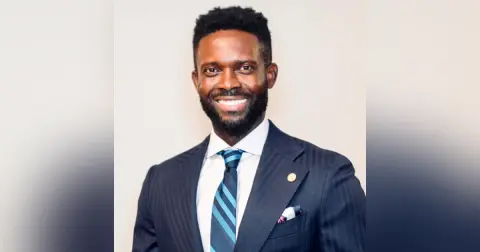

Asare Christian, MD is a board-certified Physical Medicine & Rehabilitation physician who practices musculoskeletal and pain medicine in Wayne PA. He also has an academic appointment with the University of Pennsylvania PM&R Department. He received his medical degree from the Medical College of Wisconsin and completed residency training at the Johns Hopkins University School of Medicine. He also received his masters in public health from the Harvard School of Public Health with a concentration in health policy and management.
In this episode, we discuss:
- Peptides and their role in general health, as well as MSK medicine
- Understanding disease and health at a cellular level
- Problem solving for health
- Learning to learn
Resources Mentioned in the Show:
Find Asare:
Hello everyone, I'm Dr. Darsha, and I'm Dr. Altamash Raja, and welcome to Medicine Redefined. A podcast where we will explore the often overlooked but necessary components of health, what we consider to be the fundamentals. We will investigate topics and practices that can give you and your patients the best chance to optimize a healthy lifestyle. It's time to move the needle forward and put the health back in health care. Welcome back everyone. Our guest today is Dr. Asari Christian. Now long term listeners of the show will remember Asari from episode 68 where we talked a lot about creating a holistic experience for patients with pain. We pick up some of that here, but the bulk of this conversation is about cellular medicine and peptides. We talk about the role of peptides in general health as well as musculoskeletal medicine. For those of you unfamiliar, this will be a great primer because peptides have been very popular for all sorts of conditions. Things like BPC, thymacin beta 4, thymacin alpha 1, and many more. If these sound foreign to you though, don't worry. Asari does a fantastic job explaining the differences and specific indications for each of these peptides and how we can think about using them and incorporating them into solving health. We also talk about the importance of understanding disease and health at a physiological level because this allows us to treat for much better long term outcomes. We spend a great deal of time talking about problem solving. Of course in order to do this, it all starts with a deeper understanding of the person in front of you or yourself globally from a biopsychosocial perspective, things that we've talked about before, but also microscopically at the cellular level. Because solutions may be micro, such as finding a specific neurotransmitter or agent like peptide, or macro, such as habit building. All in all, I think it's a fantastic follow-up discussion with Asari and he has us rethinking quite a few things regarding solving disease. As a reminder, Asari Christian is a board certified physical medicine rehabilitation physician who practices musculoskeletal and pain medicine in Wayne, Pennsylvania. He also has an academic appointment with the University of Pennsylvania Department in P.M.R. and he received a medical degree from the Medical College of Wisconsin and completed residency training at the Johns Hopkins University School of Medicine. He also holds a master's degree in public health from the Harvard School of Public Health with concentration and health policy and management. Now, without further delay, please enjoy this discussion with Asari Christian. I had Asari Christian. Welcome back to the show, man. Thank you so much for having me. It's great to be back. Yeah, pleasure's hours. And, you know, we wanted to bring you back not only because the way you think about medicine, billion lines closely with us, I mean, your physical medicine rehab trained, but you also explored the depths of things that are cutting edge, things that talk about longevity and lifestyle medicine and root cause medicine. But we actually received a review from a listener who said, hey, I want Dr. Asari to come back and talk about peptides. And, you know, I know it's Halloween, so I'll play the role of Genie. So we'll grant that wish for tonight. And we definitely will touch on peptides. But first, you know, for the listeners who may not have heard you come on the first episode, why don't you take us through a little bit about your practice, the way you think about medicine and your patients and the things that the different types of conditions that you're treating. Yeah. Well, guys, thanks again for having me and I'm wanted to be back. It's been more than a year, I suppose. And a bit about myself, I'm also a physical medicine rehab doctor, so I'm glad that you guys are doing these things and are spending what we do. And my practice, which is called Ethan Medicine and Wayne was started two years ago. And the whole idea, my background is in physical medicine rehab, pain management. So this practice, the inception of the practice was to use health as a way to solve pain. So that was the whole idea because what I saw in my practice before I opened this particular practice was that when people are healthy, their outcomes get better. People would say, I've done everything and nothing works for me. So people's outcomes from surgery were better when they were healthy. Outcomes from physical therapy were better when they were healthy. Outcomes from energy medicine was better when they were healthy. Outcomes from supplements were better when they were healthy. So it became, you know, to solve pain, I need to really focus on health. And even though I had this inception, that's where I need to focus on. The saddest thing is that, you know, actually, when I started this practice as a doctor who's been a doctor for eight years, right? I did not know how to make people healthy. I knew how to solve disease. I knew how to read MRIs. I knew how to do ultrasound guided injections. I knew how to do all of those things, but I actually did not know how to solve health, right? So it's been a real amazing blessing journey to figure out going back to med school, all the things that we learned in medical school, understanding, you know, cellular biology, biochemistry. All of this things is actually what influence the cell and not influence how people become healthy. So since that time, I've really dived into different areas of, you know, cellular medicine, regenerative medicine, you know, anti-aging medicine, all of this processes that actually predispose us to disease, really trying to understand what goes on. And then going back to med school and understanding the biochemistry, the Krebs cycle, the mitochondria, all of these things are involved in how we care for people. So being able to get back to that fundamental and then learn in different ways of how to help people navigate. Because, as you all know, there's so much information, there's so much noise, and people are looking for clinicians to guide them in how to navigate. So I think it's been a wonderful journey to kind of get into all of this, understanding the whole person, because I know if I don't solve the microbiome, people's pain doesn't get better. If I don't balance hormones, people pain doesn't get better. So who am I as a rehab doctor solving hormones and solving GI problems? But that is what we have to do to get people healthy. So it's been an evolution, I've been incorporated more to both things into the modalities to be able to help many people. That's where we are. Yeah. I think one of the themes of this episode, too, is going to be learning how to learn, right? I think if people go to your website, they see your journey. You said you mentioned PMR, you saw sickness, didn't know how to treat it. How did you, there's a lot of doctors who go through what you went through. They have this switch, they say, man, I want to now pivot to being more health conscious towards my patients. How did you choose to learn and go back to the medical school days of biochemistry and learning about the mitochondria and learning about these different pathways? I mean, that's a struggle for a lot of doctors to kind of get out of their comfort zone and branch out and learn breath as well as death. Yeah. So I think all of that came about, and sometimes it's even a surprise, right? Because there is, you know, those of us in the conventional medicine field where we can hospital, where we're taking care of sick people. So when you're there, the focus is on how do you solve sickness, right? We need to solve sickness before we solve health. It should be the other way around, but we don't have it that way. So for me, it became kind of looking into this integrative space of medicine, where there was all of these doctors who are already doing these things, they're talking about, you know, I went to a conference on peptides and some of them medicine, and they're talking about how you can change the polarity of an astrocyte or microglia or mitochondria, all of these things that I kind of knew, but I just didn't even know how to, to modulate that, you know, system to get people healthy. So just listening to different people, and then I became interested. And again, if you are open to learning, and I think that's where you have to stop from, right? First of all, you need to be open, have some self awareness, and then you get open, and then more information comes in, and then you keep looking. So I have been fortunate, there is tons of, you know, organizations that are pushing beyond boundaries in terms of, you know, functional medicine, a forum, all of these organizations, and there's many people out there that you can model who are doing some amazing working terms of solving health, there could be orthopedic doctors who now can solve any type of illness because they understand the cell, right? So for me, one of the fundamental things I came to recognize was that, you know, our vulnerability as people is the vulnerability of the cell, right, at the basic level we are a cell. And if you can understand what goes on with the cell, really understanding the biochemistry, the bio energetics, all of those things influence health. So that's kind of where I started my journey, and since then I've taken a lot of courses, I, you know, follow things on YouTube, lend from your podcast, guest, and everybody else, and that you just have to be open and keep lending from different sources instead of, you know, waiting for somebody to come hand you a pharmaceutical pamphlet to say this is how this drag works. We can go beyond that. So that's been the journey. Sorry, you know we're big fans of learning here. In fact, part of the reason we started this was so we can continue doing that to enhance our own knowledge and our own practices, but also help educate our colleagues and those not in the field. I want to play devil's advocate for a moment though. We spend however much time in high school beyond that. It's four years of undergrad and other four years of medical school. And then after that, it's anywhere from three to seven or eight depending on the specialty and if you decide after that that you want to do further training and torture yourself and make less money, you might do some fellowship training as well. So it's all about this deferred gratification and it's that light at the end of the tunnel that Darshan and I have spoken about before. And we finally get there, right? We finally get to the very end. You're making big money and well, something like that depending on what you're in. It's the arrival fallacy, right? You've finally gotten there and you finally can practice the way that you wanted to practice. But what I'm hearing from you is that it's really quite not that, right? You have to continue learning and you have to completely revamp how it is that you approach. Whatever it is that we've learned over the four years of medical school and your residency training because we know this type of stuff is not taught in the standard medical education hence at least one of the reasons for this podcast. So I guess my question for you is what would you to say to that person who is just done with it, right? Is invested in this but that they just don't have the energy or the bandwidth to continue expanding more and you know, they can make the argument that this is something that should actually be taught in the basic medical education curriculum. Yeah, so that's a great observation because like you said, you know, you spend all this time in training and then, you know, where do I start? But the great thing is we actually all those, you know, and I'm going to point people to places that I learned from, but the idea is that we actually learned all of this stuff in medical school except that we did not learn how to use it in actually solving health. We learned tons of pathophysiology, physiology, biochemistry, pharmacology. We learned all of these things but we don't learn how to integrate them to solve health, right? Because you go to rotations and a patient comes in, we listen to the diagnosis, okay, they have some type of infection, they have some type of disease, this is the drug you give instead of understanding what went wrong, what, how did this happen? And is there another thing that, you know, we know the body's systems of systems. So instead of just blocking a pain signal, what is actually causing the pain, okay? And so I think all that information is actually there and that's actually what has cited me like, oh my gosh, the mitochondria, yes, the energy of the cell without energy, nothing works. So if mitochondria goes wrong, it's been implicated in all disease states. So it's not making sense. But where I started from, I followed, I started with the seeds, performance, Dr. Seeds group. So this is cellular medicine. So it's called SSRP, seed, scientific research and performance institutes. So this is where a group of clinicians really focus on cellular health and trying to modulate the activity of the cell. And you know, my journey into kind of learning different ways of, you know, getting to the cell started with being part of the International Peptide Society. So I learned from that society, a lot of the basic mechanisms of the cell and how we can use peptides or specific molecules, drugs, the things that we do, pharmacology, supplement, we can use all of those things to affect the cell. And then from there, I, I learned about SSRP, which is Seeds scientific research and performance group. And this is just a bunch of amazing clinicians who are really pushing the boundaries and talking about how we change the polarity of the cell. Because the understanding is that the cell has all this intelligence and the cell will always adapt to something good or something bad. And it's a function of what signal are you giving the cell? Are you giving it the right nutrient? Are you giving it the right stress signal? Are you giving it the right hormonal signal? All of those things implicate whether the cell is going to be bad or it's going to be good. And that's involving every aspect of pain, anything that we do. So that picked my interest. And the fascinating thing is I went to one of these conferences and that was the first time I've gone to a conference where, you know, the doctors were talking and I actually could not understand what they were saying, right? And I was like, I know some of this was from Med School, but I don't really know, you know, what it means. And then the other thing that was also very encouraging and inspiring was like, this was the first conference I went to. This is the peptide conference where this before were actually they look healthy. This is doctors who look healthy, they were happy, I mean, they have all of this thing. So I was like, oh my God, this is interesting. What is this people doing, right? Because I've gone to other conference and we've been to some of this stuff and nothing to kind of push anybody, but like, you know, we had clinicians and we had doctors and you go into these conferences and you see doctors who are very unhealthy. How are we going to solve health if we can solve our own health? So it was a very encouraging place for me to be and since then, again, the education never ends. We are always getting new information. There's always new literature coming out. So kind of getting plug in there, it kind of hooks you and you keep pushing to your guest solutions for your patients because now, you know, I realize I don't have to solve pain by, you know, using sodium channel blockade or using lidocaine or any of those things. I can solve it by just working on the microbiome. I can solve it by getting people to get good sleep. I can solve it by, you know, getting people to get off certain tablets. So all of that converges on the cell and even I think the idea or something that I think will be relevant for, you know, anybody who is interested in this space of navigating a new way to learn medicine is that then you get a broader understanding of how all of this interventions that people are doing, the supplements, the peptides, the medicines, you know, the injections, the energy medicine, all of those things converge on the cell and it's doing something to the cell. So if you can get a better understanding of how the cell works, it makes it easy for you to integrate and also continue to help people because not all of the solutions will help for everybody. And again, talking about precision medicine. So that's kind of been the journey, yeah. I love that, man, especially the part about going to a conference where you knew nothing, you knew very little, right? I think I'm thinking about our annual Academy meeting that's coming up in the next two to three weeks. And I was just looking at the schedule and like, which ones I'm going to attend, which ones I'm not. And like, yeah, I already know this stuff, yeah, it's boring. I don't really want to go review this stuff. And just to think about going somewhere where you know nothing and how overwhelming that might be, but also exciting because you're like, oh, I'm going to learn no matter where I go. That's pretty cool. But let's, let's get into peptides now, right? Let's honor the request of one of our reviewers. So you hinted at them, you hinted at your, your journey into learning about them. Maybe let's start with the very basics. People probably heard about peptides either in social media or bodybuilding forum or somewhere, maybe on the news. But are they in a, in a very fundamental way? And you, you hinted at the role of them in musculoskeletal medicine. That's kind of our world. But I'm also curious because my understanding of the literature, there is some role when it comes to, you know, skin health, gastrointentional health. So you brought a microbiome a couple of times. I'd be curious to get your thoughts on that. But let's start there. Yeah. So, you know, peptides, I guess everybody has a head of peptides now, but as we know from med school, so peptides are just a bunch of amino acid chains. And amino acids that are held together by a peptide bond, okay? And basically peptides comes together in a simplistic form. You put a whole bunch of amino acids together through a peptide bond and you make a protein. So by definition of using a peptide in the context of therapy, using it for medicines and things like that, the FDA have defined peptides as anything that has less than 50 amino acid chain, okay? So anything above that is considered a protein and I think above 60 or something like that, it becomes biologic. And a good way to kind of think about this in terms of therapy is that we have, in terms of pharmacotherapy, we have small drugs, right? Small drugs or small molecules, which is the pharmaceutical medicines that we make. Those are things that we don't actually have in our body. We have to synthesize it. So, for example, metformin is a small molecule. This is a drug that we make. A lot of the drugs are considered small molecules. And from there, you go to a peptide. And a peptide is kind of in between like a small molecule and a biologic. And even though they are very different, peptides has this capacity because we make our own peptides or because it has endogenous activation or endogenous receptors in our body, peptides seems to be a lot more safe in terms of what we can use to solve problems for people, right? So you can use supplements, you can use small molecules, which is our drugs, you can use peptides, you can use biologics. But all of those peptides seems to work a lot better because this is the same thing that we have in our body. And people, when we start talking about peptides, people have this idea that this is a new concept. In fact, peptides is not a new concept. We've had peptides since the 1920s. And one of the most common peptides that people are aware of is insulin, right? Insulin is a peptide. So basically, peptides are things your body make. We make our own insulin. If you can't make it because you have diabetes or some pancreatic pathology, then we can introduce insulin into your body, right? And just like insulin, working to take glucose out of the bloodstream into the muscle and to storage, same thing, peptide does the same thing. It has a specific function. So when it comes to musculoskeletal medicine, as you're talking about, as you know, soft tissues, we tend to have a lot of injuries from soft tissues, muscles, tendon ligament, all of those things. And the problem with those specific musculoskeletal issues is that they tend to be hyposelola and hypovascular. We don't have any vessels there. So they don't heal very well, right? And specific peptides are very good for signaling. The body to create pathways that allow specific nutrients and blood to get to those areas that can help with healing. So there's a lot of peptides that we can use for healing musculoskeletal injuries. There is BPC-157. Everybody has head of that one. Everybody has head of it. So that's a great peptide. And actually, that's something we can isolate from gastrojuice, okay? So we have it in our body, and it goes in, does its work, and it has all this pleotrophic effect. So it's going to help with inflammation, right? When there's injuries, there's inflammation. When people have chronic pain, there's neuroinflammation. There's inflammation in the brain itself. So it can also target that. It can help with improving collagen synthesis. It can help with angiogenesis, creating blood vessels to this areas that normally don't have a lot of blood supply. So those are some of the areas that we can use peptides for, and you talk about the microbiome. There's all of these other peptides that we can also use for the gut. And one of them, BPC again, is something that we can use for gut health. It has GI benefit. It has cadiaprotection. It has neuroprotection. So all of this, things in the body, create to communicate and take care of itself, is what we're trying to introduce back into the body. There's multiple peptides, and you all have different things, and we can talk about some other ones, beyond the BPC in terms of a miscalculation, but I wanted to pause and see if you have any questions. Yeah, let's stay there for a second, right? Because this is the one that I've gotten asked about a few times with, by some colleagues in Muscoz Get All in Sports Medicine, a close friend in physical therapists also asked me about that. You mentioned how it's derived. I want to dive a little bit deeper. You also highlighted the mechanism of action for this. My understanding is that it can be ingested orally, right? There are some topical applications, there's injections. In your experience, pros and cons to different modes of administration. Yeah, so as we kind of define peptides are this amino acids, right? So amino acids breaks down under gastric juice intervention. So a lot of the peptides are actually injectables, okay? So if we don't have a formulation that can go through the GI truck, then the best way to do it is injection. So a lot of it is injection. But there is also specific formulation of specific peptides, specifically the DPC that can be taken oral. There is other peptides MK677 that can be taken oral. So there's all of this different formulation. We have some intranels or sprays. We have some topical application. So it depends what you're using it for and what kind of peptides it is. There is some that are not so good in the GI truck. DPC, for example, is a great one that you can either do via injection or either through oral capsule intake because actually, it's actually very good for the gut. So if you're trying to solve a gut issue, you likely want to take a capsule or a pill. And then if you're trying to solve a mastoscopic issue, it makes more sense to use an injectable where it can get straight to where it needs to get to. So in terms of formulations and how it's used, it's very dependent on the type of peptides. But in general, majority of them, because they are all amino acids and they have a peptide bone, they tend to be injected to bypass the GI system. But then again, there is development and formulation signs that will make some of these peptides easier to ingest in the future. But for now, majority of them are injectables. With respect to the injections, is it like a viscous substance? What is it? Would you use an algae? Is it more kind of like a corticosteroid? Is it more like a viscous supplementation type stuff? What does it look like? How does it? So yeah, majority of them, it's actually very clear. So it's like water. And you just, you know, it just has the same consistency of water, but it has different, you know, obviously it has amino acids in there. So majority of them is clear. And you use a small 30 gauge needle. So it's like insulin. So if you've seen patients use an insulin, it's kind of the same mechanism, right? Because insulin is a peptide. So you draw it into a syringe and you inject it subcute. So subcutaneous, it doesn't have to be intramuscular, it doesn't have to be, you know, intraticular. We don't really recommend those things. So subcutaneous, you can put it anywhere, you have fat in the abdomen in the glutes anywhere else in the shoulders, anywhere you want to put it. Sorry, do we know the sources of these peptides? Are they human derived, animal derived, are they being made synthetic in the lab? So that's a great question. And all of those things are true. So some are coming from animal sources, some are coming from plant sources, some are coming from synthetic products. So but this will be coming from a compounding pharmacy, so a compounding pharmacy who has specific certification. So acid tends out, peptides are very regulated because they're very close to biologics. So you know, a few more amino acids and it's becoming biologics. So it's very regulated by the FDA in terms of the sources that are actually getting the product from. So sorry, I forgot the question. What's the question? No worries, no, I was just wondering with the sourcing of it, you know, if it was synthetically derived from humans, from animals, and the reason I asked to, it just popped in my head is, you know, with Botox, we wait three months, right, because we don't want the immune system to develop a reaction to it. Is there any type of concern with that when it comes to peptides, knowing that we're going to get, you know, quote, unquote, a higher dose or more of a, you know, yeah, just just a larger amount than our body might be used to. Yeah, so that's a great question. So yes, there is some concern for immunogenicity in peptide therapy or even kind of invulating those receptors. So for example, CJC epimoraline, which is a growth hormone, releasing hormone and the growth hormone, releasing peptide, you know, you tend, we tend to cycle them. So after three months, you have to back away specific peptides. You use it for about six, eight weeks and you back away and the whole idea is, you know, this is physiologic system. So we don't want to over drive the system, okay? The good thing, even in fact, about peptides is that because it's physiologic, meaning the same thing that your body makes. So for example, all these growth hormones are peptides are very similar to what your body is making and it has all this physiologic benefit. So you cannot overdose on it. If you take too much on it, the receptors, there's negative feedback system that's going to shut it down. And contrast to steroids and other things that people were used to just build a whole lot of muscles, right? So growth hormone, releasing hormone, peptide, the ones that we're using is very specific and it has that physiological feedback. But you're right. We do have to worry about some immunogenicity and other things like that. So some things are recommended that you do it for a few months and then you back away and let the body kind of heal itself before you go back to it. Yeah. Yeah. I'm also curious about the dosing, right? I think we're going to spend some time talking about the literature and the animal studies, something we spoke about offline. But how in the absence of good at least human and clinical trials in this country, in our language that we can interpret, how have you figured out the optimal dosing regimen for patients? Yeah. So the good thing is I didn't have to do that work. So that work has already been established. So a lot of studies have been done. And then, like even how we come up with dosing for human beings, right? We do animal studies and based on that, we can kind of project how what dosing to use for human beings based on weight and other things like that. So a lot of this dosing has already been established through the International Peptide Society, through Europe, you know, also peptides have been used in Europe for more than 40 years. So this is not a new concept. They're just new in America and the issue with peptides is that it causes an endogenous biological molecule. It's hard for anybody to put a patent on it, right? You can't say I own BPC because BPC is making their body, right? Well, even the same thing, GLP receptor agonist like it was, it was ZMPIC. The reason why pharmaceutical company can take it is you actually make a ZMPIC and you're got, but when you make it, it's, it's last for only two minutes. But if you can take that molecule and extend the half-life of it, make it look, stick a little bit longer about a week, then you have a ZMPIC and you can go and get approval for it. So those are some of the limitations that we have with peptides because they are this endogenous molecule. It's hard for somebody to say, I'm going to put a patent on this particular thing. So that kind of limits the research and the need to do that. But outside of that, there is actually, you know, more than 60 FDA approved peptides. There's tons of peptides in medical use that people don't even know that they are peptide. Vancomycin is a peptide. Anallepro is a peptide. Basic tracing. Everybody use basic tracing. Topical ointment is a peptide. Lupron is a peptide. What is octetide? There's tons of medicine in endocrinology space that are all peptide-based. So it's not, you know, it's not a new concept and it's been established how we use it. And then again, you know, come into this place of individualized medicine, you know, using your sense to kind of go from there. This is recommended. Dozing, if somebody can tolerate, you may have to stab slow and kind of go from there. But the good thing is, again, these are all physiologic things that we make in our body. So you cannot really overdose on this. They've actually given people thousand times the dose of time I seen beta-4 and it doesn't do anything in the body. The body is just going to shut it down. So from that standpoint, we have some guidance on how to dose it. Yeah, that makes us how in a sense in terms of nobody's really incentivized to do high quality clinical trials, right? Because there's, I suppose, no financial gain to be had from that for the reasons that you mentioned. So when you, let's go back to the individual, again, this is very selfish of me to ask this question, but it's, you know, it's my podcast. Yeah. When you think about those soft tissue injuries that are hypovascular, like let's take the cuff, right? That might be one, maybe some like a medicine, trees, ankle, sprains, et cetera. What's the one that you'll reach for? You mentioned there are a ton of different ones. Is BPC one of the first one you'll reach for or is there a better one that might be indicated in that? So that's a great question and I like that you brought this question up and it kind of points to this idea and hopefully this can be something that all of us will start thinking about. So one of the concepts I've also come to appreciate is aging, right? Aging is a disease. As we age, there's all of these things that are going on in our body. So for example, when we take osteoarthritis, somebody have osteoarthritis and they are cysty or whatever it is, right? The underlying mechanism is very different than somebody who is 20 years old. Nobody gets 20, you know, osteoarthritis when they are 20. So as we age, there's all of these things that are taking place in terms of mitochondria function. Seneca. Or osteoarthritis, for example, you have connoisseurs, you have metallic proteases, you have all of these enzymes that are dysregulated and cause an inflammation, right? Because they're old. So it really becomes, you don't just pick a peptide and I think that's the message is like you still are a doctor, peptide is just one tool. So it depends on the patient. So if I have somebody who is older and have had this problem, you know, first of all, we got to look at the whole picture, right? Are they sleeping? Are they, you know, are they able to make their own growth hormones that they even have, you know, they are appropriate substrate to allow the body to heal. They have enough protein in their body. They have enough collagen, all of those things. So it becomes really thinking about the person in front of you and what you need to do for them. So that's baseline, right? How do I optimize their health or how do I optimize the therapy that I'm about to give to them? Right? Because it's going to be different for you than somebody who is cystic. So when it comes to, let's say, you know, middle-aged men, 50, 60, is that middle-aged? I don't know what age is, but somebody there, I'm getting close to that at some point. So, you know, they come in, they have a root-of-calf tendonopathy and if, you know, we're going to talk about peptides. So we can use BPC, that's one, potentially, okay, and I can tell you how we use it. You can also use, potentially, a tymosin beta-4 or tymosin alpha-1 if there is an immune component to their complaint, if they have, like, autoimmune disorder, something else going on that I'll probably go for something that has immune-modulating benefit as well as regenerative benefit. So that could be tymosin beta-4. I could also use pentosine power sulfate, which is another peptide that's very good for degenerative changes and individuals who have kind of overall systemic problems as well. So it becomes really trying to figure out who is the person in front of you and what will be the appropriate way to manage their issues. So for example, if somebody comes in and you're not sleeping, if you don't sleep, you don't hear, you're going to keep quarters all up and that's going to influence that whole cascade. So perhaps before I even give you a BPC 157, let's work on psychedium rickent. Rhythm. We can use specific peptides to help with that. CJC can help with sleep. VIP, or there's an active intestinal peptide can help with psychedium rhythm, C-lang, just so it's really, and that's what I love about peptides is not, so that's why you have to understand the cellular mechanism. How do I solve this problem? Not just going to let's give you something that just solves tendonopathies, right? Because if I am just giving you the peptides and you're still drinking, you're not sleeping, it does not work in vacuum. So a better approach becomes really understanding what's going on with an individual. So then as a clinician, as a doctor, you can kind of provide which way to go because, you know, you ask these questions and everybody goes, oh, it's time I was in beta 4, it doesn't work that way, right? And we are clinicians. So really, it's the person in front of me, but we know that if you're trying to solve inflammation, if you're trying to solve regenerative things, if you're trying to solve metalloproteuses, then it becomes which of this peptides is going to do all three or four things that I want to work on. If it's just inflammation, then which two is going to help me with those particular problem that I'm trying to solve. But I wanted to circle to kind of get people to understand that, but definitely BPC-1, 57 is a good one. Pentusimpolosophite is a great one. This is actually disease modifying. It's in stage three, phase three trials. It's already approved in Australia for osteoarthritis. It just works amazing. It does amazing things. And that's actually a medicine that we use to treat interstitial cystitis as a capsule. So I think that the medical name is the generic name that I think is emiron. I could be wrong on that. As a peptide, in a small dose, it's pentusimpolosophite, and it works very differently, and it helps manage all of those issues that happens with tendinopathy. So those would be my big four. Timosimpolosin-4, one BPC, and then PPS, pentusimpolosophite for MSK issues. But then I also love to get a copper, which is also very good for, you know, so it depends what you're trying to solve. Gotcha. Yeah. I've got some of those peptides here up on the screen. It was funny, to be honest, I didn't look at any of the research papers. I was trying to get a quick understanding of what kind of peptides are out there, what they do. And so I was looking at these large language models, chat, GPT, and Pi AI. And actually, exactly what you were saying here is that with GHK copper, times in beta-4 increases the lifespan of the cell, right? And you already mentioned this earlier, probably work on the mitochondria, different mechanisms within the cell to really increase that lifespan. But I love what you said here about how, you know, prior and after given to peptides, it's about the lifestyle of the patient, right? That can really help the peptides work synergistically and enhance the effects for it. Otherwise, it's kind of a washout. So to that extent, are there any biomarkers that you're looking at prior to administering peptides to know what you're going to give, and then also afterwards to know if there has been an effect? Yeah, so that's a great question. Most times, you know, if we're trying to solve an inflammatory issue, right? Or immune issues. There's specific labs that you can get that will suggest inflammation, a lot of GI markers. And this is all like functional medicine tests that have come to learn about there's something called cytodex that gives you all of the cytokines, profiles to get a sense of what's going on in individuals inflammatory states. So there's a place to start with those things. Sometimes we come at cost issue that doing some of those tests may be cost prohibitive for people, because first of all, this stuff is not covered by insurance. But if you can do it specifically, when it comes to GI type problems, I will do a GI map test that shows these biosis or increase zonal line, suggestive of interstennial permeability, and then we can use a specific peptide that works on that. So most times, yes, we have to do some labs to use the peptides. But other times, if somebody's coming to me, a young person, and they've hurt themselves, they're torn some muscular thing. Yeah, I understand the injury right now. There's no need for me to get a lab. But so it becomes an individualized process with this. And the thing, too, is for even the CJC epimoraling, they end up increasing IGF1. But all of those things are such flitting type markers that it doesn't help you clinically to look at these things. But then there's other testing that are out there that will help you to look at DNA oxidative stress on DNA that you can check and see if by providing specific mitochondria peptides will change that biomarker. Gotcha. And then to dovetail on that real quick, and I'm going to use Botox as an analogy again. You know, oftentimes in the studies of Botox, we see that the, it'll be most efficacious around the second fourth injection, it's possibly, is there a set number of injections that you have already planned with peptides, or is it just a one-on-one basis? It's one-on-one basis, and it's also based on the peptides and what you're trying to solve. So for example, let's take the guy who has the rutina peptidinopathy, right? So the goal will be, okay, they have this acute injury, let's bring down inflammation, and then let's work on. So even that, you can rotate, right? Because you understand the process of healing. So first of all, when they have this injury, there's acute inflammation, okay? Acute inflammation is not when you're trying to regenerate. So that's not where you're going to use a tymosin beta-4, which is more regenerative process. So the idea will be, okay, let me just use something that's going to work on the inflammation right away. So I can put in a BPC 157 or tymosin if I want to work on common things now. And then after that, I can introduce a tymosin beta-4, which is more regenerative. So it becomes really thinking through the process. So there's no really set amount of time to make it efficacious. It becomes really understanding all this pathways and where do I start to solve the problem? Because as we're talking about, they all converge on the cell, right? You can do fasting that will improve mitochondria health. You can do exercises that will improve mitochondria health. You can take a membrane of, you know, metforming, all of that converge on an AMPK, right? Pathway, that turns on all of this processes. So by understanding all of those mechanisms, then you go, where do I start? Where can I start to work on this process? And where do I end? There is specific, you know, like when it comes to, you know, like semi-gletide, right? People are using it for diabetes management and also for weight management. With those things, it becomes a process. Okay, let's use it for six months. We got to our goal. We build some habits. And I love the fact that you talk about getting people to build habits. Because all of these things that we are talking about don't work in vacuum. You have to change your habits. And that's kind of what I talk about last time. And I'm still interested in, you know, how we get there. Perhaps peptides can help us. In fact, there's some literature coming out as to how, you know, GLP receptor, you know, you have the receptors also in the brain. So it's actually modulating people's habit. The psychiatric group in Harvard are all using that to kind of help with, you know, weight loss or managing weight gain from, you know, psychiatric medications. And they've also seen that it's helping people to change their habit. They back and away from tobacco. I actually have a guy who stopped drinking from, you know, being on some agglotite in my clinic. So all of those things have to get towards changing people's habit. And it becomes what are you treating and who the person is in front of you? So it becomes a very more individualized, personalized medicine, which is a lot of different from what we used to do, right? Everybody comes in. They have pain. You take ibuprofen. You take dichlofenac. Everybody comes in. They have a migraine. Everybody gets the same stuff. Whether they're 50, whether they're 60. So this becomes a lot more individualized, but obviously they're standard and there's processes. And you just have to kind of figure out how do I solve the problem in a most effective, cause-effective way? Because again, distance I'm not covered by insurers. Yeah, obviously it requires a lot of time as well to have those deep conversations, right? And all the thinking that you're clearly doing here, as you're sharing with us, but also about every single individual process is how am I going to solve this problem, right? Going back to the word that you was right at the outset about solving health, I want to shift to talking a little bit more about outcomes, right? So I, the closest thing in my mind when I think about this, I know it's not part of biologics truly because it's just smaller than that. But if we're thinking about regenerative medicine, right? The most common thing that we've talked about a couple of times in this podcast, PRP, right, would available evidence depending on what pathology we're looking at. I'm curious how you make the decision in terms of when you're going to reach for PRP, maybe a cellular treatment versus peptide. And I suppose I'm also interested in learning about the efficacy with respect to time. For instance, people are probably familiar with PRP. And one of the things we'll say, hey, maybe in a very lay explanation, you're converting a chronic injury in acute injury and that whole healing process has to start, right? So I would tell patients, hey, really kind of about four to six weeks we have to give it before we kind of start seeing some positive effects. You have to stack the good quality to rehab and everything else on top of that and all the baseline foundational things that you spoke about in terms of other health things that they have to take care of sleep, et cetera, that kind of stuff. And really 10 to 12 weeks before we can say, hey, did it work? Did it not work and then reassess? What's that thought process when it comes to peptides? And I'm also curious about how you decide which direction to go to? Yeah. Yeah, so that's an excellent question. And the issue that we have with peptides is that again, so we don't have a lot of the peptides that we use. There's FDA approved peptides and then there's even for BPC-1 for seven, right? That we were talking about. It has no FDA approving, it has not been FDA approved. There hasn't been a lot of human studies. So that's the limitation of this peptides. But what we know is that those are peptides that clinicians who understand the cellular mechanisms have actually been able to push the dial on people's life, right? And it has very, very little drawback because it doesn't have a lot of side effect, okay? So trying to figure out, so that's the first thing we have to establish. A lot of these things that we're using don't have a lot of research in terms of human use, but a lot of them also do. Like time was enough for one, time was in beta four. These are all like active compounds in specific pharmacological drugs that have been around for a long time, like pentosing. It's been around for a long time. So it's just going back to those things and using them to help people in a way that has been used in the past. But when it comes to trying to figure out, like you said, we can solve the same problem with a PRP. We can do that with peptide, we can do that with ozone, we can do that with some supplement, all of those things, right? So all of those things have a place. So it becomes who is in front of you and what are you trying to work on, okay? So, and it's also patient preference. There's people who've come in and they've learned about PRP and they go, I want to do PRP. And I can say, well, you know, if I do the PRP, it's going to be between 1400, 1600, 100. But, you know, we can solve the same problem with something that's going to cost you $800 from a peptide standpoint, right? So it becomes really educating people and trying to figure out what people have explored already. Somebody have done PRP twice, three times is not working. You know, I'm not going to offer another PRP. It'll become, okay, let's explore this peptide and then getting people to understand it. This thing's don't work in vacuum. And in fact, the point you brought, which is very interesting is now we have more than like 100,000 papers on PRPs. 50% of them say it works, 50% of them say it doesn't work, right? What's going on, right? Is the person in front of you? If you're eating junk, if you're not sleeping well and you're inflamed, is the same thing that we've taken out of your body to be injected back into you. You put in the same growth factors into your body. It's putting shit back into your body. If you're full of shit, you get in that same back thing in there, right? So even how I approach that, I'll pull people on prolonged, maybe in fact, and I'll do all of this into optimized cellular health even before I do PRP. And I'm not measuring that versus somebody's PRP, but you get good outcomes. So kind of thinking for yourself. So it becomes really who's in front of you and how do I optimize, or how can I optimize the therapy that I'm giving them, right? If I have somebody who needs to do some type of strengthening therapy to be able to get better outcome from, for example, losing weight, right? And they can't do that. I have to pick something else. So it really becomes trying to understand who's in front of you, causes a big issue. And a lot of times it just becomes what people are, what kind of risk are they willing to take, right? Peptides don't work for everybody. There's people that we've tried this thing on, they spend money and they didn't get the outcome. And maybe it's because we didn't put the whole picture together very well. So there's a place for all of these things and it becomes who's in front of you and what's going to be the most cost effective. Meaning it's going to be, it's going to work for them and it's not going to cause them a lot of money. Because the other thing I've also come to appreciate is that when people are paying for things, for health, they expect a lot more. So you have to be diligent and kind of be out there for them and make sure that whatever you're giving them instead of, and that's what happened. People going, I want to PRP. People have come to me and I refuse it. I was like, no, this is not going to make a difference for you. At this point, you need to go get a new surgery. I mean, I can put that in there and charge you $1,500, all right. But it's not going to make a difference. So it becomes understanding all of those things and figuring out how you can optimize people's health with that intervention. Are there any adverse effects that we need to be mindful of, whether acute intolerance, things of that nature? I know we talked about overall safety, particularly because it's endogenous, but yeah, you know, in terms of response. Yeah, so it's, again, that's also very peptide-specific. So most of the injectable peptides, the most common side effects is people are going to have some erythema, some flushing. I can okay. Specific growth hormone releasing a hormone or growth hormone releasing peptide. You have to be cautious with individuals that have cancer because they can actually make that grow. So you have to be very careful. You have to sometimes people can have some nausea and other things related to GI. You know, anything you put in your GI track can kind of create some post-ins. But overall, those are the most common things. I haven't seen anybody with any significant side effect upon people of nausea vomiting from ozampic or semeglotite, which we kind of expect, right? But outside of that, the BPC, the CJC, the time was enough, one time wasn't beautiful. Any of those peptides of views have not had anybody having this significant side effect. There could be some weight gain, there could be some increase in cortisol with specific growth hormone peptides that you have to be careful for. But outside of that, overall, a majority of peptide that were tolerated. Can you use this in pediatric populations as well? I don't. I mean, you know, we don't have a lot of steady impedes. And in fact, we don't have a lot of studies, you know, some of these things in adults. So it becomes and people need to be aware of those things that, you know, we don't know the long term, you know, it's been saved, even though it's been studied in other contests and other places. You still have to be honest with people so that people know that they are taking some risks with this because it has not been around long enough, right? And we understand that short-term, so far, no issues. Well, I love that, man. I think the biggest takeaway with this, despite peptides being sexy and us talking about the mechanism action, research, all that good stuff, which is easily accessible to people, I think the most important thing I would love for the listener to take away that it, you know, the bigger picture in terms of context and kind of the environment around that is going to influence how successful the specific compound is going to be, whether it's PRP, it's different cellular thing, the specific peptide. And that's so important because if somebody just saw an ad or heard an experience, somebody else has a positive experience with peptide and they come to your clinic and say, hey, listen, can you check me with whatever they got? And this has happened to me, by the way. This has happened a couple of times with mniotic products, right? And we're like, oh, can you do that? And I was like, unfortunately, I can't actually because FD says I can't. But, you know, so that's really cool that you're doing that and are able to also zoom in afterwards, as I mentioned, and talk about the specific cellular processes. And then also considering cost, right? Something we talk about, financial harm is a really, really big deal. And so if you can solve the, you know, one problem for half the price, then that's something to be considered of as well. So thank you for sharing all that. Here is one disclaimer I do want to give people. I do think that from my sports medicine background, this is important to consider a lot of these things as we talked about their role in FD and regulation and whatnot. If you are an athlete competing at a high level, you need to be mindful of these products when you're putting into your body. Specifically, for instance, BPC, the one that's been most popular and the stuff that people ask me about and bodybuilding forms, that is a substance S zero according to the world anti-doping agency. And what that means is that it's a non-exempt substance, right? So things such as metoper law and stuff can help you performance, but you can get a therapeutic exemption with a physician. Whereas BPC, they've made a straight thing. Hey, there's no rule. And because of all the things that you mentioned. So for my athletes in my sports medicine world, I'm like, listen, just don't, it's not worth it, right? That risk reward ratio is just not really worth it. Obviously, the higher up you get, the stronger you'd consider that. So something to also keep in mind. Anything you want to add on to that, that you think is worthwhile mentioning for people? Yeah, I think that's a great point that you brought up about water, you can't use peptides if you're high performing athletes. And in fact, even BPC was just bad, I think 2021. People could use it, NFL players, everybody could use it. But now you can. The good thing is, you know, it's all cellular medicine. You can signal the cell in a different way. You don't have to do BPC. If we can get you to sleep very well, your body have this capacity and intelligence to regenerate and to heal faster, right? Increasing your protein intake, increasing your collagen intake, increasing vitamin C, increasing all of this thing. So there is ways to get to the same solution. And I think that's what, you know, affluent and I've come to appreciate that we can kind of use all these tools because at the cellular level, they all converge. All of this things that we're doing for people, you can use small molecules. You can use small molecules to get people to heal faster. You have to understand the pharmacology, you know, to understand what's going on at the cellular level. And then go, okay, maybe let me just use this thing to help them heal faster and then take it away because it has side effect. Or maybe let me use this particular drag with this drag combination. So for example, I'm trying to get you to lose some weight or whatever and we put you on metformin, right? We know metformin depletes your B vitamins. Maybe let me supplement that with your B vitamins, right? So kind of understand all of those things. There's ways to do things that still get you the results. But it takes some growing up and some learning to really feel comfortable kind of manipulating all of those signals to get the results you're looking for. Love it. As Zaltvarsha said, you've been saying and the simple things stay simple as they dominate, right? So good sleep is always going to be prominent and healthy diet is always going to be there. And you know, for those who watch the Blue Zos documentary, it's the simple things. Those have always stay and yeah, exactly the fundamentals. Thank you, that's what I was looking for. I mean, you know, everyone's looking for that quick fix. Even I get on shore as medicine, regenerative medicine evolves, a lot of people are saying, oh, I can take a break here. I can do this and that. I have peptides to rely on or something, right? But very important that you guys both highlighted on that. But sorry, thank you, man. This has been an awesome conversation. We will put all of those resources that you mentioned earlier in the episode into our show notes. But most importantly, where do our listeners find you? What are your socials that they can go to and learn from? Yeah, well, thank you so much for the opportunity to come and talk about this briefly. I know there's a lot more to it. And my practice is called Etha Medicine. So it's A-E-T-H-E-R Medicine. And we have a website, ethameticin.com. We are in Wayne, Pennsylvania. So we're very close to Philadelphia mainline. And if anybody wants to reach out to us, our phone number is 4848061101. And I'll also do some education on Instagram. So check us out at ethamethascomedicine. And we talk about all of these things and to help people feel empowered and do the right things for their health. Fantastic. And on your social media, I mean, you are staying up with the latest medical news within longevity, precision medicine. Is there anything that you're really excited about that's on the radar or that you're currently learning about and offering? Yeah, so I think one of the things that I've come to appreciate is, why do we develop disease? We all care about. I'm interested in prevention. I have a public health background. And it's always prevention. And one of the fundamental risk factors for disease is aging. So really, and we've also come to appreciate the science behind aging. Why do we age? So having a better sense. Instead of waiting for somebody to get Alzheimer's before you intervene, we know what goes wrong. There is sense. There is mitochondria dysfunction. There's microbiome dysfunction. There's loss of prosthesis. There's telomere atration. There is deregulated nutrient sense. And there's all of these pathways that are going wrong within the cell that influence people's disease or health state. And we understand those so well. I mean, first it was kind of all in animal studies and now it's kind of, we're doing a lot more study now. So I'm very excited about longevity medicine because that even influenced me as a Vietnam doctor. When I'm taking a look at somebody's knee and they have osteoarthritis, I'm not just putting cortisone in there. What am I doing with cortisone? I'm just blocking the signal, right? I'm not doing anything to influence what's going on within the osteoclast, osteoblast activity that's going on within the bone marrow. I'm not doing anything within the candor sites, the cells in the cathletes that have become antigenic. They push out antigens and it creates all of these things, right? Because they are all cells. And what's going on with them as we age? mitochondria goes down. So if I'm trying to solve that person's problem with osteoarthritis, even if I'm gonna do cortisone injection, I'm gonna put on something that helps with mitochondria health. I'm gonna put on something that helps with autophagy, right? We can talk about fasting, mimic and diet or getting people to fast and getting people to do all of this thing. So I think that concept of aging and really being able to integrate all of that into our practices, I think should be something that we should all start integrating, you know, that this principles are there. I mean, if you solve it, you can get better outcomes for your patient. And it also helps you to kind of specific, right? So, you know, if I do a cortisone injection, yeah, you know, you'll be fine. You'll be able to get rid of it. You're mitochondria, but somebody who is who is cysty, who's already on a bunch of, you know, steroid, immunocompromised, immunosupprise and putting more steroid in your knee, not a good idea. So I think the science of aging is super, super, super important. The other things I was talking about is really kind of trying to understand the whole system, right? The body is a system of systems and they are all connected. And hormones, I need to understand that because hormones influence pain, right? All the inflammatory things that are going on autoimmune disease, the influence pain, I care about pain and I care about function as we have doctors. I need to understand how to solve it from that standpoint because I can give you a pen tin, I can do all of this things. It doesn't work. Maybe I need to understand that there will be vitamins in neuropathy and how to kind of help people from that state standpoint. So I think getting this knowledge of how we can solve problems of health is actually very exciting for me. You know, I said we have a doctor that I can do more. You know, so I can go, you know, I can have my spinal cord injury patient and say, hey, you know, we can work on certain things, right? Instead of, okay, coming for your specificity tripping and that's it, right? Yeah, we can work on bone health, we can work on GI health, we can work, they have all of this, they already vulnerable. So in fact, I even think this is where we as we have doctors need to reinvent ourselves to really get to a place where we have this patient population where a lot of times, of course, we have healthy people, athletes and all of those things. But majority of our patients with brain injuries, stroke and all of those things, we are not doing much for them. They just come in and that's much it. But you can improve mitochondria health and that will help. You can use some stem cells and that will help. So aside about all of those things and looking to lend more and hopefully get there to make sure that this works for my patients. Yeah, love it. It's a very fascinating time to be a medicine right now, right? I think you just have this trifecta, what you just mentioned about the fundamentals, lifestyle medicine, the biopsychosocial model, and then quote unquote, like the shining new objects of regenerative medicine and all these different biohacking techniques that if I may call it that are coming out. So very cool stuff. Sorry, last but not least, the theme of this show is about putting the health back in health care. But for you, it's been about a year now since you've been on the show. Is there anything and you're a man of learning? So is there anything in the last year that you've really learned from all the traveling that you're doing, everything that you're learning within medicine, from maybe your patients that have really enhanced your perspective on that? Yeah, putting health into health care. Yes, and I think it circles back to this new appreciation I have for the cell, the intelligence of the cell, intelligence of the cell. I mean, that's, that's it. I've come to appreciate that so much from one cell, all of this and happening, right? And it has all the programming that you're not growing teeth in your eye, or you're not growing hair in your mouth, right? So all of this, respecting, you know, respecting the intelligence of the cell is something I've come to appreciate. And if we can go back to those fundamentals, and try to figure out how do we modulate the cell to do the right thing. It's always going to adapt to a good or to a bad. And that decision, even aging, is so adapting. You know, the mitochondria goes, you know, well, I can carry out all of these glucose that you push in here. I'm going to shut the system down. And then the next time you know, you know, make it insulin and all of this thing. So the cell will always adapt. So respecting the intelligence of the cell and understanding how you can manipulate with signals that translate to health. I think it is a great place to be. And that's kind of what I've come to appreciating, put it into how we solve health. Amazing. Well, I will end it with this. I was listening to a podcast episode today, and the guest was asked, what is the meaning of life? And he said, self-respect. So, you know, comes down to self-respect, respect your cells, and the human body is amazing. I'm not so. Thank you, Gail. Awesome. Well, thank you. Sorry. Appreciate you coming on. Thank you very much. Yes. As always, we want to thank our team, which has been growing lately, so we can make this a better experience for you. So thank you to Ethan Zhu, Harita Yoperee, Sarah Haan, and Zanand Lagmani for all they do. Lastly, please remember the important disclaimer that everything in this podcast is for educational purposes only. It does not constitute the practice of medicine, nor should we constitute as medical advice. No physician-patient relationship is formed, and anything discussed in this podcast does not represent the views of our employers. We recommend that you seek the guidance of your personal physician regarding any specific health-related issues. However, if you enjoy the show, please be sure to subscribe, review, and share with anyone who you think will gain value from this. And until next time, thank you for listening.