

 Apple Podcasts
 Spotify
 Castro
 RSS Feed
 126. Wellness is a Mess in the Hospital and How to Get It Back | Alfred Atanda Jr., MD
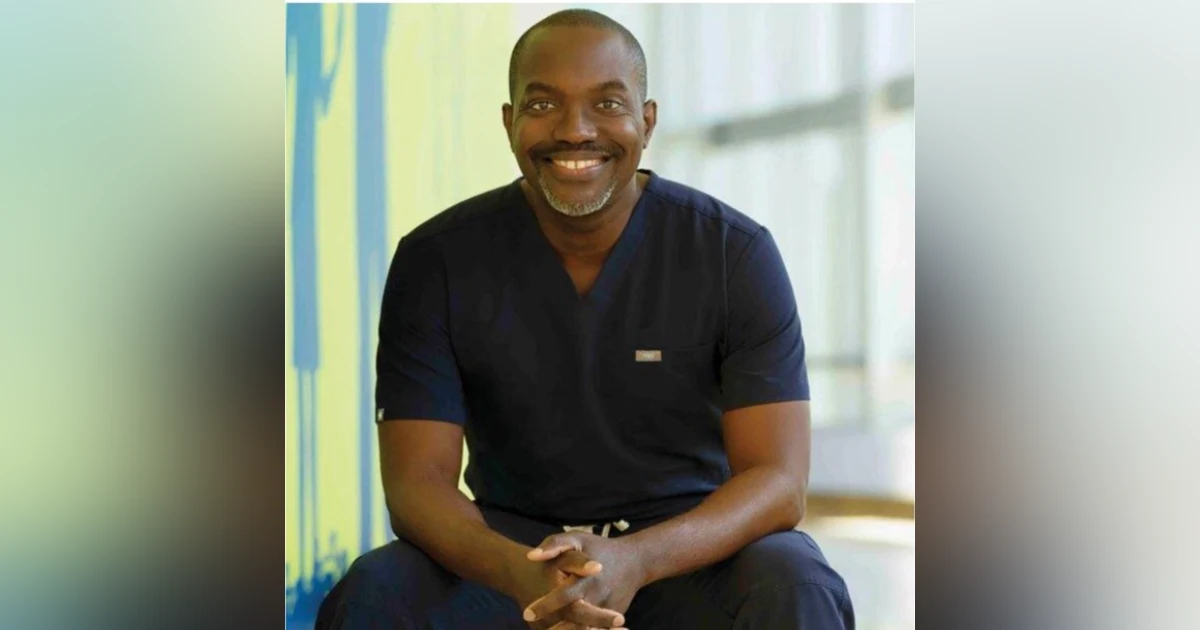

Dr. Alfred Atanda Jr., is a pediatric sports medicine surgeon at Nemours Children's Hospital. He graduated from the University of Pennsylvania School of Medicine and completed his residency training at the University of Chicago. He then went on to complete his fellowship in in pediatric orthopedics at DuPont Hospital (now known as Nemours Childrens) and sports medicine surgery at Jefferson Health. He is also the Director of Clincial Wellbeing at Nemours Children's Health. Dr. Atanda is a motivational speaker touching on topics such as finding one's purpose/calling, time management, effective communication, daring leadership, continuous improvement, lean thinking, identifying alternative revenue streams, and design thinking. He leverages various digital, social, and multimedia platforms to connect with professionals in a vulnerable way to motivate and inspire them to attain their fullest personal and professional potential.
Alfred Atanda:
Hello everyone, I'm Dr. Darsha, and I'm Dr. Altamash Raja, and welcome to Medicine Redefined. A podcast where we will explore the often overlooked but necessary components of health, what we consider to be the fundamentals. We will investigate topics and practices that can give you and your patients the best chance to optimize a healthy lifestyle. It's time to move the needle forward and put the health back in healthcare. Our guest today is Dr. Alfred Atanda Jr. He is a pediatric sports medicine specialist in Wilmington, Delaware with over 18 years of experience in the medical field. He obtained his MD from the University of Pennsylvania School of Medicine, went on to complete residency at the University of Chicago, in orthopedics, and then he completed two fellowships, one at the DuPont Hospital for Children, which is now known as Nemours Children's Health, and that was completed in pediatric orthopedics, and then a second fellowship at Jefferson Health, which was in sports medicine surgery. He is also the director of clinician well-being at Nemours Children's Health, and that is exactly what our topic for today will be. For those of you that don't know how wellness is in the healthcare setting, it's really not that great. Someone knows that it's needed, but the way that it's been delivered has been absolutely atrocious. For example, asking residents to come in at 7 a.m. to attend a three hour lecture on how to be well seems like the opposite of wellness, and that's because it is. But throughout this episode, Dr. Atanda will touch on what wellness actually is, and how we even got to this state in healthcare where wellness is very much needed. Given his leadership position, he takes us through some of the initiatives that he is working on, and the importance of having a wellness champion at hospitals and programs to really transform the overall culture. So if you're in the medical field, you will find this episode very relatable. And if you aren't, it's okay, because you will get great insight as to why healthcare professionals are burned out, and the necessary steps needed to reverse the damage. Let's get to it. Dr. Alfred Atanda, welcome to the show. Thanks for having me, guys. Much appreciated. A pleasure as ours. It has been a long time coming. I know we were chatting about how it's taken several weeks to make several months to finally sit down. I know, just for the listeners, I think we got connected through my wife, and you gave a talk at their, I guess it was one of their resident retreats, and it was really moving. She said these are her words, and so she made it be connected with you and thought that you would be an excellent guest. Our initial conversation that we had, I guess a couple of months ago, I knew that this is something that we need to just need to get you on here to talk about. Many of the things that we've touched on here and there before, but I think it would be good to get your perspective, particularly in the roles that you have taken on over the last couple of years and all the different hats that you've been wearing. But before we talk about all those good things and just resilience and whatnot, why don't you give the listeners a little bit about your background, your journey, and kind of what brought you here today? Yeah, so I am a pediatric orthopedic surgeon. I specifically specialize in sports medicine surgery, and at my hospital I'm a regular surgeon like everybody else. I go to clinic, I do procedures, surgeries, etc. I've always had kind of a fire in the belly, I would say, about how to not just improve kind of the health care that we deliver to our patients, but also kind of improve how we deliver care. And starting off, it starts with us. And I've always felt like we weren't as optimized as individuals. Mostly in surgical training, I feel like I was given the skills necessary to do surgeries and to see patients in the clinic. And ultimately, as an attending, I have what I need to make hospitals money. And that's the long and the short of it. But when you break it down, I mean, there's so many other facets to being a successful physician and being a well physician, and a lot of those tools, most physicians are walked around and they just don't have them. Things like communication skills, how to be a good team player, how to be a good leader, how to be a good financial steward, a business person, etc., etc. So over time, I started giving lectures to our orthopedic residents about some of these kind of missing tools and gaps in our education and our knowledge. And it kind of evolved to talk in other residents and fellows throughout the hospital and then even outside of the hospital. And then this job posting came up three years ago in 2020 for the director of clinician well-being at our hospital. And that's probably about 20 to 25 percent of my time now that's strictly devoted to improving the well-being of not just physicians, but also I work with physician assistants and nurse practitioners, but by and large, it's mostly our physicians. And that's been very eye-opening and I've spent a lot more time talking about well-being than I have about orthopedics and sports medicine recently. So it's just like a whole new kind of paradigm shift in my career, which has been very exciting for me. So let's talk a little bit more about that, right? Like, I'd like to know exactly what that means. I mean, 25 percent of your practice, I mean, that's a huge chunk, right? And someone argue that needs to be 25 percent of everybody's practice. I think every single person should be devoting at least 25 percent of their own practice for their own well-being at the very least. I think we're ought to be better for it for ourselves and our patients. But what does that entail exactly? And maybe even define the word well-being and the context of how you approach it with providers, I think one of the things that we've learned of last couple years, especially after COVID-19 pandemic is people more so than ever realize that if they had taken care of themselves, then we wouldn't have this great resignation. We wouldn't have high rates of burnout. And so because people would be more resilient. So talk a little bit about that. Yeah, I mean, we always start out by saying that burnout and well-being aren't necessarily opposites. So well-being isn't just the absence of burnout, right? So burnout, it's defined as issues with personal achievement and lack of sense of achievement, depersonalization and emotional and mental exhaustion, where as well-being, that's more being at the top of your practice in terms of how well you're working with your teammates and team members, this culture of wellness, personal resilience, efficiency of practice. There's this whole interplay of things that are required for well-being, quote-unquote. And one of the things that I thought of when I first started this journey was, I used to think burnout was kind of related to weakness, especially coming from the surgical world. I used to think, when I heard that term is like, oh, this person couldn't cut it, this person wasn't strong enough, they couldn't deal with it. And I think the culture of healthcare, unfortunately, has put the burden and the onus on the individual to be able to kind of, quote-unquote, survive the inefficient and chaotic environment of the US healthcare system. And in my travels in this role, I now know wholeheartedly that burnout is a symptom of a poorly designed system. And the issues that come with our system manifest in individuals, but they are buried and mired down in large complex healthcare systems and organizations. So my role partially is to give individuals, you know, different tools and things that they can use at an individual level to kind of help support them and improve their own personal resilience and the culture of wellness. But by and large, my line share of what I do every day is how do we implement systems level interventions that are then going to trickle down to improve the lives of the people that are doing the work. And you know, you would think that when you talk about wellbeing, you're like, oh, you know, let's have happy hours and do yoga and have respite rooms and various things. I'll tell you what, if you have a terrible work environment, there's no amount of yoga that's going to make that better, right? All the little pebbles in your shoe and the thorns in your side that you experience every day when you're even just trying to log on to a computer or trying to order a lab or order a test or all the inefficiencies and workarounds that we have to deal with. Those are systems level problems. Now obviously, individuals have to be well and we have to do things at the individual level. But to get the most bang for your buck, it's literally about how do you improve the system so that the environment in which the people who are doing the work show up to every single day can be as optimized as possible. And that's something that's really opened my eyes because I never looked at burnout and wellbeing and all those sorts of terms that way. I just assumed kind of like you said, it's personal resilience of what can you do to kind of be able to wade through the healthcare system every day. But in addition to those individual level interventions, we definitely have to hit it kind of at a 360 degree view at the systems level as well. At what point did you come to the realization that it is more of burnouts more with the manifestation, as you said, of just kind of inefficiencies or inadequacies of the system? Was there a personal point? Was this during your residency further down into your attending hood? Where was that light bulb that clicked for you? You know, when I was coming up, I remember when I was a med student at Penn in Philadelphia and I have this vivid memory of being a first year medical student, we had this opportunity to shadow different docs or whatever and I was supposed to be shadowing docs in the ER. And of course, me being the nerdy future orthopod, I was watching one of the second year residents do a reduction of a forearm. And I remember looking through that glass door watching him do this, the kids like consciously sedated or what have you. And I just remember how much I wanted to be like that resident, you know, how much I wanted to be able to do something to really improve somebody's life. You know, this kid fell, broke his arm, blah, blah, blah, goes to the ER and this individual is doing something in real time immediately to improve that. And that was kind of the picture in the image I always had in my head of what it would be like to be an orthopedic surgeon. And then fast forward, you know, four or five, six years and I show up for residency, I was at University of Chicago in the Midwest. And all I could remember is, you know, being on call on a particular Saturday or whatever in the middle of the summer when it's really busy as a junior resident, I can never stop thinking like, why is it so hard just to do my job? You know, I thought of all the, you know, you had your little check boxes and your list and all the things you had to get done. And the amount of energy that you would have to expend to do any one task was like astronomical. And I was like, why is it so hard? Like, why is this system just out to get me? Like, I would think of myself like playing a video game. And there'd be like a hundred people all armed with tools and guns and whatever. And then there's me who has like, like a hammer and a screwdriver and like one shoe on my foot. And I'm here to like battle this onslaught. And it was like me against the world every day I showed up to work. And in addition, you're supposed to be learning. You're supposed to be, you know, making contacts and networking with people. You're supposed to be doing research. You're supposed to be taking board exams. You have to wake up every day. You have to be healthy. And I was out in the Midwest. And, you know, my, my wife at the time was actually in the East Coast. So we were separated. So I had to, you know, maintain a relationship and all this stuff. And that's kind of, it's like a weird analogy. But that's when I started to realize that something was wrong. And of course, I was like, well, you know, you're just a resident. It's surgical residency, you know, orthopedics. It's five years, blah, blah, blah. Just put your head down and take it one day at a time. It's like running a marathon, right? It's one step at a time. It'll, it's a finite amount of time and you'll be done. But then I became an attending after, you know, I did two years of fellowship, which may or may not have been a mistake, but I did two years of fellowship. I show up as an attending and that feeling never went away because I just had new problems. You know, as he is a trainee, you know, you're sleeping in the hospital, you're doing this, you're doing that. And I used to think of my attendings as like these folks that were just kind of shielded and they showed up to work every day, you know, at seven thirty instead of five o'clock when we showed up and they didn't have to round and they made all this money and everything was about them. But that couldn't have been further for the truth, you know, attendings have the same issues of the system and inefficiencies and just things that just impede your ability to do whatever it is that you love to do, which theoretically would be to take care of patients. And so I long, that's a long answer to your question, but I did learn that early on that something was inherently wrong, but it didn't really hit me over the head until I became an attending and realized that, well, not only was it not getting any better, earthquake, frankly, I thought it got worse because now, you know, my existence is directly tied to revenue, right? As a resident, you know, if you get sick and you don't come to work for three days, well, guess what? The other residents just do your work. If I don't come to work, now there's money that the hospital's losing. So you have way more pressure on you as an attending because now your time and energy is directly equated to revenue. And I think there are so many things about the system that, you know, I don't want to blame the system, like blame the man, but there's just so many things that are inherent in our culture that just make it hard to do the work that we want to do. And that's like in a nutshell, like my work as the director of clinician well-being. How do I take that burden off of the individual doctor? Like I don't want them spending their time and their energy trying to figure out how to make epic work quicker, how to make it easier to get onto a computer, how to make it easier to build and code. I take that burden on for them and I work with senior leaders and we have a chief well-being officer. She does that full time. She's an ex-room metallologist. Well, I guess she's still a rheumatologist, but she does that full time. So me and her working together kind of remove that burden from the individual physician so they can breathe a little easier and really just focus on providing patient care because as the two of you know, there's a whole bunch of extraneous things that you have to deal with and think about that have nothing to do with providing care to patients and other human beings, which sounds crazy. But that's kind of what our culture unfortunately has evolved into in healthcare. Everything stops with us. You know, there's so many just administrative tasks and burdens and policies and this and that. So it's really trying to whittle all that stuff off of the plates of the doc so that they can be free to do whatever it is that they need to do. You're scaring me, Dr. Atanda. I'm going to be an attending next year, but it's funny. Ultimately, you said the same thing in a previous progress note that we recorded. I believe it was episode 113 about ultimage completing a year of attending and it's the same kind of sentiment. So this perception that life gets easier and that there is light at the end of the tunnel doesn't truly exist, right? And I love the way you put it when you mentioned how the work is hard. I want to tap into that. Where do you think that sentiment and perception come from through residency and even afterwards? You know, is it from an expectation standpoint? Is it us trying to live spontaneous lives of shining in the present moment, trying to take care of all the patients in front of us, but also needing to think ahead about things like attending to it, trying to find a job? You know, where does that overall sentiment come from? Yeah. I mean, I think at least for me in my experience when I was training, there was this common theme that you had to be tough. There was this unwritten dogma that you had to be kind of superhuman, that you couldn't get sick, you couldn't miss home, you couldn't have a bad day, you couldn't, you know, be upset about a complication or what have you. You had to like wear this armor and just carry it around with you everywhere and put a version of yourself out to the world that you thought people needed to or wanted to see. I don't know what it's like in other specialties, but in surgery, like that's just how I always felt. Like you couldn't really put your true self out there. You had to have this facade always up and that gets exhausting. You know, carrying around that armor is it's heavy. And all the while, like I said, you're trying to like help people, you're trying to learn, you're trying to be a family person, you're trying to exercise, you're trying to be a normal human being. And I think, I think we're partially to blame, you know, I think we have this persona of like, oh, yeah, I got to be tough. Oh, I feel terrible, but you know what, I'm going into work. I'm not going to call out. I'm not going to let anybody do my work. Like we're type a neurotic perfectionist people in general. Like that's how you get to this level. And it's kind of like a double edged sword, right? So to go through all those years of training, you have to have some level of grit and determination. But I think sometimes maybe we take it a little too far and we don't know when to be like, okay, well, yeah, I am having a tough day. I'm going to take a day off or I'm going to go home early because I can't stop vomiting in the bathroom or whatever, whatever the issue is like, I'm a human being, you know, like I have to understand that I can't really help patients the way I want to. If I don't help myself, and I think just the the underlying culture that we've all been exposed to is so patient centered and so like institution centered that you're almost just kind of taught to neglect yourself inadvertently. And I think that is an enormous problem that's ingrained in our DNA from, you know, the time you're an early med student doing rounds and you're a sub-eye and you're doing this and doing that. Like you kind of develop that I don't know what the word is, but it's just like ingrained inside of you. So by the time you get to an attending, I mean, it's fully interwoven in who you are. And that's a problem because you encounter problems and you have complications and you have stressors, you have family issues, you have money issues, you have all these things and you don't know how to deal with them. You don't know how to take care of them. You don't know who to ask for help. You don't know if you're allowed to ask for help and a lot of times things just get buried and buried and buried. But as you know, just because you sweep things under the rug, it doesn't mean that they go away. I mean, they're always going to be there, whether you like it or not. So part of our job and well-being is to teach people how to deal with different emotions and different things that come up in their lives and give them, you know, the resources that they need to find help. You know, I'm not a social worker or a therapist or a psychiatrist. I can't help them, but I can find people who can help them and your individual docs shouldn't have to spend time in energy looking for help and advice of different facets of their lives. The system needs to set that up. So it's at their fingertips. So it's easy for them to access whatever it is that they need to keep them well, to keep them optimized. And that's another large component of what I do is pointing people in the right direction, letting them know that those resources are available. Because you know, when I came in this role, I learned that there's all sorts of things that are at our disposal, but there was nobody ever to tell me like what it was or where I could find it or how I could access it. So even just pointing people in the right direction is a victory. You know, you don't have to reinvent the wheel and come up with these great programs. A lot of hospitals have the programs. They just don't have great ways of getting it to the people who need them. So you can see, you just start like peeling the onion and you just start discovering and learning all of these things. And it has been really exciting for me because to be honest with you, you know, I was kind of getting, I don't want to say stuck, but I was like, well, here I am, I'm an orthopedic surgeon, but there's only two main ways that I can be valuable to my organization, either by seeing patients or doing procedures on those patients. And that's like literally it. I don't have a lot of flexibility and autonomy as to how I provide value to my organization. And a lot of the impetus for me doing this work is that, you know, I do it mostly on Fridays. I do the well-being work and a lot of it I can do virtually. So not only can I provide value to other doctors who may be struggling, but I can do it in a way that's convenient to my life. Right? I can do it at home and I can go pick up my kids from school or I can take a break and hit the gym for 30 minutes across the street or I could just feel like a normal human being once a week. And then the other four to five days, I'm back in the grind in the hospital 12 to 16 hours a day. But, you know, even like all these like little things are some of the things that I preach to some of the residents and other attendings that I work with. But long story short, I think we have a lot of work to do. I think we have an uphill battle because our culture has ingrained a lot of these things that we're now slowly painstakingly trying to undo. But, you know, it takes time and a lot of effort. So I'm wondering if pointing people into the direction, if that's even enough, right? You mentioned that this is so deeply ingrained or in DNA and by the time you become an attending, that's all you know, right? You know, this this type A neuroticism, I tell anybody that I see my students often, I'm like, I don't really think they're such things as a type B in medicine, right? There's type A1 and A2. Really, that's about it, right? And kind of what you said, that's how you get there, that's how you succeed, that's how you match into residency and fellowship and so on. And I remember going through residency and fellowship and having, particularly now because ACGME is really taking this whole wellness initiative very seriously, right? I don't know, you know, when you're training, when you had the whole ACGME rules, with the 80 hour rules and whatnot, not that every program based by that. But, you know, wellness has been at least ACGME and every program is paying more attention to that. That being said, though, as you mentioned, there is a sense of camaraderie, right? When you're in residency and you have this personal pride almost, when you know that if you don't show up or if you take a sick day or if you take a quote unquote mental healthy, it's going to fall back on one of your colleagues. And if you're a quote, good soldier, you're not going to let that happen. Right. And so by the time you get to an attending, you just want to be a great soldier, right? And so, yeah, the resources are out there. They exist. But why would you go take that step towards that? You know what I mean? So, you know, by just knowing that something exists, and I'm thinking about asking Dr. Robb and Tiger something similar is, I'm wondering if that's that's enough. You know, so I guess for you, you've been in this role for at least three years understanding HIPAA rules and you can't follow up with people. What else could we do aside for pointing them in the right direction where you can maybe nudge them or you can follow what people follow up with people to see, hey, how are things going? Are you checking in? What are your thoughts? Yeah, I mean, I wholeheartedly agree with you. By the time people are attending, it's often too late, you know, like we have to try to start early when folks are training medical students at the resident level. But once they are attending, I think there's a lot of stigma around asking for help. And it doesn't even have to be like mental health help. It could just be financial help, it could be organizational help, time management help. A lot of times people, they don't want to ask for things. They don't want to be that person that needs like extra help or whatever. And rather than one of the things that we try to do, again, we're always looking at like the department and systems level rather than having individual people go and seek help and do different things. We bring it to a department level where, you know, you have department meetings and faculty meetings. You ingrain it in the normal, we call it the culture of wellness. You make it kind of part of what departments and divisions in the system are doing. Because in that way, it's already kind of ingrained in their day-to-day jobs and their workflows. They see their leaders, you know, divisional departments heads talking about it. And I think it makes it easier to digest for people. It makes it feel less like, oh, there's something wrong with me. But this is now more of like what our department is doing. And this is what my chief or my department head is providing for us. So it just rallies people around something a little easier. I think if you email an individual and talk about something that they're experiencing, automatically, it's kind of the knee jerk is to kind of like recoil and kind of move away from that or kind of internalize that. So by making it more commonplace and making it more like a group type of thing, I think that's the best approach. But everybody also is different. Everybody deals with these sorts of issues differently. There's no one size fits all approach. So what we try to do is really, like I said before, we have like a 360 degree view of these sorts of things. We introduce it at the department level, the division level, the hospital level, but we also have it at the individual level. So depending on who you are, where you're at, what your situation is, you know, we want to meet people where they're at. If you have one way of providing a solution, there's going to be a certain subset of people that that just doesn't work for. So part of my job is to be cognizant of that. And to be able to offer support and advice and help in lots of different ways to be able to capture as many people as possible, who may need that advice and help. I love the concept of bringing the group together when speaking on the culture of wellness. You know, I think too often we just ask individuals, like you said, but when you bring that group dynamic to it, you know, it's like the concept of everyone is afraid to speak up, you know, but then one person does and it's realized that everyone was thinking the same thing. So I'm wondering what impact it makes to have a champion like yourself, having somebody in a leadership role in which you can make a difference by the way you talk or through the way you organize events. Now, a lot of places don't have a champion, but rather someone throughout their time there who just asks, how's it going? And people casually answer, fine, good. And so if someone else hears someone saying that they're good, they by default feel like they have to be good. But having you in a specific role, what kind of impact have you seen as an advocate? That's a great point. I mean, it's huge. I think when you have somebody that's dedicated to this work, who is one of them, like I'm a surgeon just like everybody else, I'm a physician just like everybody else, they see me in the OR, they see me in the clinics, they see me in the cafeteria, that individual has to be visible. And it has to be somebody that you could literally just walk up to and just talk to and bounce ideas off of, you don't want it to be some kind of senior senior senior level individual that's kind of quote unquote untouchable that's up there. In order to lead the people, you have to walk amongst them. And physicians, as you know, we tend to not necessarily buy in or trust things that non-physicians have to say. Unfortunately, there's a very large adversarial relationship between administration and physicians. It's like lions in the hyenas, you know, it's an age old battle. You don't notice it much when you're training, but when you become an attending, it's very apparent. And our hospital was very good and strategic by putting a chief well-being officer at a C-suite level individual who is a physician. And then myself, the director of clinician well-being under her, who is, you know, I'm currently still practicing. Like I said, our well-being officer is all administrative now, but I think that goes, that speaks volumes because your average physician walking around, she's like, oh, there's Alfred right there. Yeah, I know him. We talk about patients and, you know, he operated on my nephew's son and this and that. I'm one of them. And they can walk up to me and talk to me about issues because they know that I'm going through the same thing. I have the same problems, the same issues, the same hurdles, the same barriers. And I think if you're, you know, for listeners out there who are contemplating, you know, coming up with some sort of program like this, it's nice to start out with somebody who is currently practicing in that environment and doing the work and is visible. And you have to be somebody that's, you know, somewhat friendly and affable and, you know, smiles and gets along with people. You don't, you don't want to rude, you know, director of clinician well-being, that doesn't help. But I think you hit the nail on the head and just being one of them and just being in a position, I think it just gives people hope. Like, oh, Alfred goes to work every day. He does his work. He does his job. And he's still looking out for us. So in the hospital, put him in that position. So the hospital must be looking out for us, you know, I think it just rallies the troops a little bit. And in our environment, it's worked out very, very well, which has been nice. One of the things that we can appreciate, and I think people who've spent some time in administration really any aspect of administration and medicine realize that this change does take a while. The larger the institution that you're in, the harder it's going to be, the longer it's going to take, maybe the more red tape there's going to be. And so what are your conversations like when you do have those people, you know, kind of on the front lines that are dealing with these frustrations? Maybe it's EMR related, maybe it's scheduling related staffing, whatever it might be that you're also experiencing on a day-to-day basis, but they come to you, the Alfred, you know, we talked about this. I brought this up on the meeting or I brought it up with you three months ago, and it still hasn't changed. And I can see that person at that point getting frustrated because day-to-day, you know, somebody who's seeing 20 patients a day times five days a week, they don't have those academic time, they don't maybe have administrative time, that really builds up at that point. That's when they're like, okay, I just got to take matters into my own hand. You know what I mean? Because it's affecting me, and it's actually just searing into those, maybe again, not burnout, maybe moral injuries are better words sometimes, like that's something that I think people struggle with as well, particularly in residency. So how do you counsel your colleagues and say, look, we're working on this, have faith, trust, this process takes some time. A lot longer than you expect. Yeah, I always give this analogy about comparing like a cruise ship to a jet ski. You know, jet skis are fun and sexy, and you know, you can change course and do flips and do all this stuff, but they're not very big, and they don't weather many storms, and if you hit a log on the water, you're kind of toast, and you know, you could probably go like three miles before it runs out of gas. Whereas a cruise ship, as you know, can go across the ocean, and it can go through any storm, and it's set on its course, and it can really get you from point A to point B, no matter what the circumstances are. But you can't change course very easily, right? It takes a tremendous amount of energy and gas and all this other stuff to move a cruise ship. And unfortunately, most large health systems are like cruise ships. They are sturdy, they're strong, they're not going anywhere, but it's almost impossible to change course. It is possible, but it feels impossible. So one of the things that physicians have become the masters at are the workaround, right? For those of you, I don't know how old you guys are, but when I grew up in the 80s, watching MacGyver, Jerry rigging bombs and things with paper clips and a piece of gum, I mean, that's what you become as a, as definitely as a resident and as a trainee. I remember doing all sorts of crazy stuff just to get the work done. And as an attending, you kind of carry a lot of that with you. And it seems like it's positive in the moment because you're getting whatever it is done that you need done, but it's incredibly detrimental in the long run to focus on workarounds. And that's what we do because it helps, you know, that one patient that you're doing X, Y, Z for that one order you're trying to put in on a long term scale, it doesn't create any solutions. So you constantly have to keep doing that and it's frustrating and it's tiring and it's exhaustive and it's inefficient. But what's the alternative? You know, the amount of inertia that you would have to overcome as an individual physician to change how like some orders put in an epic or change some process, it's astronomical. You're working, you're tired, you're overworked, you have a bunch of stuff to do. So it's just easier to just kind of jerry rig something. So that notion of what do I tell people? Like how do I rally them? How do I keep them from just doing workarounds all the time? And what I usually do is I focus on, you know, I usually sit down literally one on one or one on however many with a group. And we usually list out all the problems, all the thorns in the shoe, all the pebbles in their side pebbles in the shoe, excuse me. And I like to look at it from like a, I caught a two by two grid and impact is on one axis and ease of implementation is on the other axis. So you want to focus on the things that have a tremendous amount of impact, but are extremely easy to implement. And obviously the things that don't have much impact that are hard to implement, you want to kind of put those in the parking lot. So by mapping, I called like a mapping session, a white boarding session, by kind of mapping everything out, it puts so many things in perspective for individuals. And it gives them kind of empowers them to then tackle their issues in a systematic fashion. So they have like the bigger thing, if you're trying to change culture, forget about it. That's going to be astronomically hard to implement. That's a five year, 10 year thing. Just park that over here while you're working on that cultural thing. Let's look at like this tiny little problem that just needs, you know, somebody an epic to like switch a flip a switch and then it goes away. You don't have to deal with it anymore. So we sit down and work with people and get them to really understand because I'll tell you what, as an individual physician, you don't understand how you can even make your environment better. All you know is you feel the weight of whatever environment you're part of and you're carrying that weight around everywhere you go, but you don't even know what to do about it. So my job, I don't even really solve a lot of people's problems. I just put people's problems into perspective so that they can then think about how to solve them. And of course, you know, I give them the resources and help them find people to help them. But it's this notion of really categorizing what you're up against, prioritizing what you're up against. Okay, and then there's big buckets, right? The number one problem that most physicians face, the category of documentation in the EMR, pans down. That's the biggest issue. So that's like one bucket. Then there's like the efficiency of practice stuff. Okay, so my template isn't accurate. I have people waiting in my waiting room. I have too many, you know, administrative tasks or things to do. You know, so when you categorize these large problems, then you ask them like, well, what is the most meaningful to you? What is the most burdensome thing to you? Because me personally, Alfred Atanda, I don't have many problems with documentation. I'm fortunate. I'm at a sports medicine facility. I have two masters level athletic trainers who work with me and all my clinics and they do all my notes. So documentation is something I don't even sweat it. I don't even think about it. But that's just me. You have to meet people where they're at. You can't just assume that just because you're a physician, documentation is an issue, you have to literally sit down with people and talk to them and learn from them about what their challenges are, what their issues are. And that way, you can kind of steer the ship as to where you devote your time and your energy and resources. Because again, people just feel the weight of all of their issues. But you have to, it's kind of like, you know, if you, you know, you go into your basement or your attic and it's spring cleaning time and you open the door and you just see all this stuff that has to be clean and you don't even know where to begin. So what do you do? You shut the door and run off and go do something else. That's your workaround. You see your problem. You don't know how to deal with it, but you feel it and you hide. So I take you into that attic and we look at every little thing and we, we don't take anything out. We don't clean anything. We just organized it in the different piles and then you tell me what pile, you know, bothers you the most or that you want to deal with the most. Then we focus on that pile and we look at the first thing. Okay, this is this. Okay, this is that and you just systematically do it in a way that just alleviates so much anxiety from people and it allows them to understand that you can actually control some, not all, some of what's going on in your environment just by prioritizing things. And then after that, you build momentum because, you know, we do this in a lot of little projects. So I can give you some examples if you want, but we work with like little tiny projects, whether we're observing people in their clinics, we're looking at the kind of patients they're seeing. We're looking at how long it takes them to do x, y, or z. And we collect a little bit of data. We show them the proof of whatever it is. We do a little intervention. We show that it's improved. And then that's win number one. It may be small. It may be tiny, but it's something because then it points people in the right direction of, okay, now what are we going to do? Second, now what are we going to do? Third, and that's really my role, like I don't understand all of the problems that all the doctors go through. I'm just an orthopod, right? From your average allergist or GI doctor, like I don't understand what it's like to be in their shoes, nor could I ever do that. But I do know what it's like to have problems in your work environment. And just by having somebody, like you said, to Arsh earlier about having that particular role, being visible, being one of them, it's so much more of a leg up. And I imagine myself just being a pure administrator, like nonclinical, trying to go around the hospital, helping doctors. I probably wouldn't have won 100th of the success that I have. Because right when I show up, they'll just turn their brains off. We all do it, right? So really getting down in the weeds with people, empowering them, getting the ball rolling, you know, that little pebble starts to churn, and it also all eventually becomes a stone and a boulder, and it becomes big. But you have to get those early wins to get buy-in from people. Because just like you said, it's hard for people to see that. And just giving hope and just giving concrete examples that people can hold onto, I think, is huge. I love your ship analogy. I want to stick with it here. You mentioned projects and data. What are some of those initiatives? And if you can give us specific examples that you created to make bigger waves so that the cruise ship can be guided to a better destination, how do you assess the impact of those waves moving that ship? Yeah. So it's multifactorial. So we have a lot of validated measures that are specifically destined to measure well-being professional fulfillment. There's the MBI. There's the professional fulfillment index. There's team-based care. Evaluations look how well teams are working together. But to be honest with you, we like to hit it not just from that perspective, but also from a concrete practical efficiency perspective. So whatever project that we're embarking on, one of the things that we always do is we define the metrics ahead of time. Before we do any solutions or countermeasures, how are we going to know that this is successful? And that depends on the individual person, whatever they want to get out of it. Do we want to show that this impacts their well-being? Do we want to show that this allows them to see 10 patients an hour instead of the five patients an hour they were seeing? Do we want to show that it minimizes the time in their in-basket and the EMR from three minutes per patient to five seconds per patient? Like whatever it is that means most of that individual. A lot of the stuff that we use to measure success is going to be more, for me, is going to be more efficiency of practice type stuff just to show because we want to show that people can do their jobs quicker, easier, faster, that sort of thing. A lot of times we do tie in well-being measures to a particular project, but I'll tell you what, just from my experience, that's not as important as efficiency. To be able to show an individual physician or a clinician that you can do something twice as fast as you're used to a week ago, that resonates so much louder than, hey, by doing it this way, it makes you this much more fulfilled or it makes you this much less burnt out. Those are things that you want to show and they're important. We have a lot of different ways to measure success, but we leave it up to the individual person to see what means the most to them. To add to that, just having metrics isn't enough. You have to show, okay, well what are you going to do if you don't meet those metrics? Are you going to scrap this project? Are you going to pivot? Are you going to re-engineer something to make the project a little faster, a little better? What is it that you're going to do when you are realizing that you're not as successful as you want it to be? Because what happens in a lot of situations, hospitals usually implement things in large-scale and they usually do it when it's very polished and it's very developed and that's an okay mentality, but if you bring in the startup mentality to that, you want just a minimum viable product. You want just something that's quick, that's fast where you can learn quickly, fail quickly, make multiple iterations and have something that's going to work for the end user. Because what happens is if you wait two years and three million dollars into a project when it's this fine polished diamond and you bring it and you present it to everybody, what are you going to do when you realize that the doctors hate it? You're not going to just scrap it. You've spent however much man and woman power and time and energy and money and that is an enormous problem for healthcare systems. As you have people who may be ex-physicians or administrators, they have an idea, they work with a vendor, they have some initiative that's satisfying some new Jacob requirement or whatever it may be, mitigating risk to the organization, they present it on a platter and the physicians can't stand it. But guess what, it's not going to go away. So you have this battle because they want us to use it because they look foolish if they just spent five million dollars in something that doesn't work. So we try to do the opposite and well-being. When we're trying to introduce something new, we take two, three early adopters, physician champions, people like myself, nerdy people that are just rolled their sleeves up and try it out, test it out, you do it for a week with minimal resources, then you reconvene and say, okay, did this do what we thought it would do? Oh, it didn't? Okay, how can we get it there? Oh, you know what, this just isn't going to work. Okay, well, two doctors lost like five days and three hours of their lives, you can strap that. You know what I mean? And that's how you get things done because if you wait till it's like this well-oiled machine, what are you going to do when invariably it's not doing what you thought it to do? So that's kind of like how we look at metrics. And this is all laid out before we start any project because I think how you measure success is probably more important than the actual initiative itself in certain situations. And that's something that I've learned along the way. Is you constantly, I'm a big nerd and in detect and the startup world, you constantly have to be evaluating what you're doing. It doesn't make sense, is it worthwhile? And it's not necessarily about money, right? It's not just, okay, I'm only doing it because I have an ROI, but you have to do it because it's moving the needle towards whatever it is you set out to do in the first place. And a lot of times people don't know how to think and put you know their projects in an appropriate framework like that. And that's something that we've been you know, hopefully been able to help a lot of people with. To your point earlier about walking among the people, I think this is another point to be made about the fact is you have to have people in and on those conversations, sitting on those tables when we're making decisions about implementation change, right? System change and protocol change. And they have to be kind of on their front lines and be dealing day in and day out. So they can't say, well, wait a second, this doesn't make sense because of this. If you have people who haven't practiced or aren't in the clinic and on the front lines, they won't know the reasons why physicians are going to hate it in the future, right? We talked to Peter Valenzuela about this is that's that disconnect between admin and stuff that you're talking about. I'd like to talk a little bit about COVID-19 and not the sense that people are thinking, but you I'm wondering how COVID-19 again, it's no stress, no secret that it was a stress on the healthcare system. But how did it, if at all, positive the effect clinician well-being in any sense, what were some goods that came out of it? I can think of one or two for sure. And then maybe from your lens specifically, what were the biggest complaints, the reasons why physicians were maybe headed more towards burnout or complaining a little bit more or had more gripe with the system? Yeah, so COVID as you know is an incredibly stressful time period. Obviously, it's still in existence, but it's not as it's at its height as it used to be, obviously. I think there was a lot of smoldering on the undersurface of issues with physician well-being and burnout. And COVID was just a lighter fluid that just brought it to a head. You had people well-intentioned hardworking physicians leaving medicine, taking their own lives in certain extreme instances. And that didn't just come about because of COVID. That was always there, but COVID really brought it to the forefront. And I think, obviously, it's not an ideal situation, but one of the big things that I think that's positive about COVID is that it did bring to light this issue of not just physician, but clinician and frontline working worker well-being. At the time, during the height of the pandemic, it was about actually, you know, contracting COVID and having pulmonary issues, but it then indirectly turned into like, well, we don't just have to put PPE on our frontline workers. We have to take care of them in general. And I think that was a huge catalyst. So your second part of your question in terms of one of the major gripes that I think physicians had that came out of the whole pandemic was, I think, this realization that they weren't being taken care of. You know, once we started talking about physical things that you needed to be able to take care of COVID patients and such, I think it just brought to light that there wasn't a lot of resources and time and effort from large healthcare systems to take care of the people that are doing the work. And you know, I always give this analogy when I give talks. There are four main reasons why large healthcare systems do anything. Number one is because of patients, right? If there's untoward outcomes or challenges or complications or gripes from patients, you see everybody is clamoring and moving to rectify that. Number two is money. How do you save more of it? And how do you make more of it? Number three, C-suite level and senior leaders. When a C-suite level individual comes up and says, hey, I want X, Y, or Z, you'd be amazed at how fast that that can be put into place. And lastly, it's external regulatory bodies. So J-co, your OSHAs, HIPAAs, you know, cyber security, whatever it may be. And one of the things that has obviously left out of that is taking care of the people that are doing the work. So if one of those four things comes to light, there's a lot of change that happens very quickly and very swiftly in healthcare. But when physicians talk about themselves and, you know, overnight trauma docs want better call rooms and we want this and we want that, it's like we're complaining and we're like whining. Oh, you make all this money. You're the doctors blah, blah, blah. What are you complaining about? But God forbid a patient goes somewhere and complains. I mean, you could see how quickly the wheels turn. So we're trying to interweave the well-being of the people that are actually doing the work into the DNA and the fabric and the culture of healthcare systems. We don't want well-being to be this separate like, you know, office or suite that's down the hall that has me and our chief well-being officer. Just like every decision for the most part in a large hospital is reflected on with patients at the forefront and generating revenue, we want well-being to be part of that for every decision. How is this going to affect the people that are doing the work? How is this going to impact our lives? If we bring this change or bring this initiative, how is that going to affect us? And that's that cruise ship analogy. That's going to take a long time, but that's where we're moving towards. Like, I don't want to be the director of clinician well-being. I want to be out of a job because if we get to a point where every decision that's made, people take into account the well-being of the people doing the work, then I'm done. I don't even have to be part of things anymore. And that's where we're striving towards. And it's hard, you know, culture change, culture each strategy for breakfast lunch and dinner, right? I mean, it's enormous to change the way we think and the way we do things because that's kind of the way we've always done it. And that's for me, that's like my goal to the point where every question that's asked, there's like a little tale and writer at the end of that question as to the end user experience. And I keep focusing on physicians because I'm one of them. And that's where a lot of the work comes from, but there's obviously a whole host of frontline folks that need to be accounted for and taken care of and thought of as well. I like that framework for the points you brought up. Those are the things that I think about, but never thought to bucket it like that. You know, one of the things with COVID, one of the taglines that come out of the pandemic was the great resignation. And I heard a guest on another podcast reframe it to the great revelation. And it goes to your point about how this problem was always underlying. It's just that people finally got to a point of thought that there may be something greener on the other side. And so I'm sure you've had these conversations with folks, nurses, physicians, other healthcare professionals. One of the objectives for hospitals is to retain their employees and keeping their nurses, physicians, etc. staffed. Because you know what happens when we see turnover and people going in and out of systems. I mean, it can be chaos at times. Right. They like to keep a type running ship. How do you support your colleagues when they may be thinking that there's a better opportunity outside of healthcare and medicine? Because nowadays, you know, I think a lot of people have been thinking about having a side job or a side hustle. And so I'm curious to get your thoughts on how you talk to people about retention versus visiting the idea of chasing other opportunities. Yeah, I mean, you know, two of the big factors that contribute to poor professional fulfillment and satisfaction that doctors deal with. Number one, is lack of flexibility and autonomy. And number two is decrease meaning and work. And just inherently, most of us are shackled to our jobs. Like, you don't have a lot of flexibility, right? I can't wake up tomorrow and just say, you know what? I'm going to just work from home for the next three days. And that's just what I'm going to do. Like, you don't have that flexibility. Like, you kind of are married to your job in a sense. And there's two options. One is to, and this is kind of route that I've taken is you have different side hustles and different things that you do on the side that you have flexibility and autonomy for. And you have good deep meaning for, but not everybody can do that. It's not easy having like a job job. And then an outside job now you just have two jobs, double the work. So what we try to do in well being is well, how do we bring flexibility and autonomy to your current job? And then how do we find deep meaning on a deeper level for you? And what I mean by that is it's been shown that if you spend up to 20% of your time as a physician or clinician doing something that's particularly meaningful for you, that is protective against burnout. And I don't mean like for me being an orthopedic surgeon, I mean something that truly brings you joy and that you find particularly valuable. And luckily for me, I have this role because this role gives me flexibility and autonomy, but it's particularly valuable to me because I'll tell you a little example. So I have a life coach, executive coach, and part of what I did at that neurology retreat that we're talking about without to mesh's wife was I did this little Venn diagram example. I'm actually going back to the neurology group in a couple of weeks to do strictly this Venn diagram for about an hour. It was a small part of my talk back then, but basically I took all of the things that I love to do and all of the things that I'm good at and all of the things that I could see myself being paid to do and I made like a Venn diagram and where those three things overlap was like quote unquote my sweet spot or my pearl. And when I sat down with my life coach, I went through this whole exercise and I scribble all this stuff and what he found was and I don't have it in front of me, but basically he was like well what's missing from your diagram? And I'm like well, I mean maybe I could have been an architect or maybe I could have been a professional soccer player or whatever all this stuff. He was like where is physician on your diagram? I was blowing away, you know at the time I was 40, now I'm almost 45, this was almost five years ago, I've spent half, if not more than half of my adult life to become an orthopedic surgeon, I make this elaborate Venn diagram all over my wall with like 80 different things I wrote and not once did I write on there by be a physician, be a doctor and I didn't quit. I did start to tear up and cry I should say and it just blew my mind. So when I went through this diagram, what I realized was that what means the most to me is the connection and the ties that bind us together at human beings, as human beings, because when I'm in the pack you and I've just operated on a child and I'm looking at the kid and they're waking up and they're groggy and their mom or dad comes in and their parent looks at me, I look at them that moment, that spark, that hurl is why I wake up every day. It's actually not to do the surgery. I mean the surgery is fun and you know I like working with my hands and yada yada yada, everything else I put on my personal statement as a med student but that's not where the fire and the belly comes from. Like I sit in my house and I put together drawers and build things for my kid and it's fun, but that connection that I can now have with another random human being because of something I did for them, that is my pearl and that's why I do what I do. So after I realized that, I still do surgery and I still make money for the hospital, yay, but I now realize everything in my world is about connection and it was just a kind of around this time maybe a year or two later when I started you know when this role came up and I said, you know what? This would be a great way to connect with other physicians. Like I can work with people when they're struggling, I can work with people when they're lost, when they're confused, I can feel that connection and that spark. Like I've met all kinds of doctors in my hospital, right? Before that, if you were in a surgeon, I probably had no idea who you were and you're lucky if you were in an orthopedic surgeon because I barely knew who you were. But now I know doctors from all walks of life, nurse practitioners, PAs, people that I never would have met and that connection has really revolutionized my career and the way that I look at what I do and the ability, and I'll wrap this back to what I was talking about, the ability to do that 20% of the time has really rejuvenated me and gets me through the other four days of the week because I'm doing something that's particularly valuable to me that provides value to our organization. I don't have to go out and get some other job or whatever. I can still do it within the confines of our hospital and it's that kind of mentality that we talk about as how you retain people. It's not easy, right? It took time and energy, emotional intelligence, self-awareness for me to really grapple with these kind of things and I'll tell you a lot of type a neurotic physicians, they don't have the capacity to do that or it's too uncomfortable to sit there and cry with a life coach about like what you're doing and where you're going is not something that's easy. But I think if you're talking about retaining people, you don't want to just retain them so they keep showing up and collecting a paycheck. You want to retain them so they can find that spark, so they can find that joy, so they can find that value. And again, they're not going to be able to do it every day of the week, right? They still have to kind of go through their charts and do their cases and see their patients. But if some small subset of your job can be hopefully in alignment with the greater organization you're in and bring you that value and that joy, it'll work wonders at getting people through the week for sure. And it's that alignment piece, right? You don't want somebody just having a side hustle that brings them value, but it takes them away from their regular job or it keeps them distracted at their regular job. You want everybody to be moving in the same direction. And that's also something that, just like I said, at that neurology retreat, that's what we do. And we're going back so everybody is going to sit there and do their own thing. And this is, you know, a small thing with five or six neurology residents, but imagine doing that on a large scale where hundreds of doctors can feel comfortable doing that with somebody guiding them, going through it and really opening their eyes as to why they do what they do because you forget, you know, you put your head down and you take it one step at a time and you slog through your training, you get through attending hood and just trying to make money and feed your family, you forget that that initial analogy I told you of that young 24 year old kid I was looking through this door in the ER enamored by this orthopedic resident, you forget that because there's so many other extraneous things that you have to deal with just to do your job. So we try to bring that connection and that spark back to people so they can now retool and pivot and kind of think about what they're doing holistically so that they can ensure that they're doing what's best for them, but also doing what's best for their organization and of course, you know, their patients. It's remarkable how powerful reframing can be, right? I was listening to a podcast earlier with Erica Colberg, she had Mark Manson on, very famous author, I think he wrote the book, The Settle Art of Not Giving Enough, and she was asking about the difference between gratitude and happiness and he pointed out that no gratitude is only helpful when people are just miserable all the time and they can't see the bigger picture, they can't zoom out and see all the good things going for them. So, you know, a personal example, I was not too long ago in a car accident and everything turned out to be okay, a car is drivable, not in bad shape or anything like that, but I can't stop focusing on this little dent in the car and everything like that and it's on the side where, you know, the car seat for my daughters as well, daughter wasn't in the car, but everything turned out okay, I was actually on my way to an exam that day, made it to the exam, everything was smoothly, nobody got hurt, and I'm just perseverating over this little dent and got to get a fix and the stress and the insurance and all that kind of stuff and my wife just keeps telling me, she's like, can't you just see like the car still drivable, daughter wasn't in the car, you made it to the exam, everything worked out, it's going to be fine. I was just like, yeah, you know, but day in and day out when I walk up to the car and just don't see that and so it's just it's so helpful for me personally to have that person at home who can help reframe and I'm willing to bet that, you know, if we everybody had like a little life coach walking around with us while we were in a clinic, getting frustrated over not being able to put the specific order in your EMR and whatnot, but saying, hey, but think about the chicken scratch that you don't have to read now when you want to look at outside providers notes, right? If you had that in the forefront, whatnot, all the positives that come from that, patients being able to schedule online or whatever, you know, whether that's a good thing or not, or not, it's a debatable topic, I suppose, but all those things that we don't think about, I mean, I think every single person would be much better for it, right? That conversation that we started about burnout and well-being, I think would be more prevalent if people had an opportunity to have a monthly or maybe a bi-monthly reframing session. Well, imagine a world if as you were training, you had somebody working with you through medical school and residency, teaching you about those very things that you just talked about, giving you tools and principles on how to reframe things or, you know, a lot of principles from design thinking. And there's so many things, tools that we don't have that we need. And, you know, I always tell people, like think of the most stressful day, and I always talk about a trip being a trainee, think of like a 24-hour Saturday call and how stressful it is. Most of the time, your particular knowledge of your specialty, whatever it may be, is not going to make that situation any less stressful. It's usually because you're communicate, having poor communication with another doctor or another specialist or down in the ER, down in the trenches, or you're not sure how to lead people following you around, your junior residents and medical students, or you're not self-aware of how the words and the actions that you have are impacting those people around you. Like orthopedic surgery probably doesn't get me through 5 to 10 percent of my day every day. There's so many other tools that I have to put into play just to survive and get through. That luckily for me that I've taken a lot of time and reflection and done a lot of outside reading, but a lot of folks, we don't have that. You know, you show up with a quiver full of arrows, but there's only three arrows in it and you need like a hundred to do whatever job you're doing, you know, or you, and it's sad because most of us don't even realize that we're not appropriately equipped to do our jobs. And I don't mean from a medical and technical standpoint, and also, you know, from a well-being perspective, that's also what we do, because we shed light on the gaps in our knowledge. And when you talk to a bunch of nerdy doctors about that, they get offended because they think you're saying that they're not smart. They don't know how to do their jobs, but it's not that at all. It's empowering people with all of those kind of intangible quote-unquote soft skills that we never had, but we so desperately need to do our jobs effectively. Yeah, let's shift gears a little bit. You mentioned earlier that you're very much into tech. And then offline when we had talked about that, you also mentioned, you know, different ventures and things that you were looking at. And as Darsh asked, I think as social media has become more prominent and medicine and more accepted and medicine, people have found outlets, not as a way to replace medicine, but supplement and maybe even augment their own clinical practice. Aside from helping people find the spark in what, you know, their primary job, right, their finding job, how do you look at finding avenues outside of traditional medicine, I put that in quotes, or even using medicine as a way to catapult your career and finding other avenues, right? Whether it could be, you know, becoming a chief medical officer for a company and helping with the engineering phase, right? I mean, so in your world orthopedics, right, to all these big companies, you think of only one for me comes to mind as striker because I feel like they're everywhere, but I'm sure there are others out there. You know, for us in physiatry, orthotics, right? Prostetics is a big one. Robotics now taken over tech, you know, I'd love to get your thoughts on AI as well. We've talked a little about that. How do you look at that piece of it? Yeah, you know, it's interesting because before well being my, you know, after orthopedics, my true passion was digital health and telemedicine. I started doing telemedicine in 2015 way before COVID made it sexy and popular. And one of the things that I learned early on in my career, again, when I talk about this idea of, you know, flexibility and autonomy, you know, I can only provide value to anyone when I'm in the hospital, but sitting here right now in my home, I have a tremendous amount of knowledge swirling around in my brain that we all have as physicians and as specialists and clinicians, but the system is designed that you can only utilize that for the greater good in certain capacities, usually when you're physically somewhere. So a lot of the talks that I've given prior to well being about digital health is all the other ways that you can actually be value valuable and generate revenue just with the knowledge that you have. One of the biggest things that I've done over the years are our second opinions and e-consults. There's tons of companies out there that contract with specialists in the e-consult world that connects specialists to primary care physicians. So a primary care doc in a rural town in Montana sees somebody with like shoulder pain or ankle pain and I get like a little clinical vignette, some reports. I respond over email through a platform and then you get $50 an email. Sometimes it's a second opinion. Somebody says, see in a patient and the patient's like, well, you know, my 16 year old needs an ACL surgery, I'm not sure. I just want another opinion. So a third party company finds you, you schedule a date, you do a little video thing, you have the MRI, you talk to the family for five or 10 minutes and you get 400 bucks for it. And it started to really hit me because I do that all the time anyway for free, right? How many times have you ever been approached by a friend or a neighbor or a family member about something medical? And you kind of think it's almost like taboo, right? Like, well, I can't accept money for that. I can't do this. I'm a physician. Well, guess what? This is America and this is 2023. You have idiots on social media spewing nothing, making millions. And I'm an orthopedic surgeon. Like, why can't I make money for all the knowledge that's swirling around in my head? So long story short, yeah, I've been doing e-console, second opinions. I do speaking engagements. I do well-being work for like non-physicians. I go to like private companies and talk to them about well-being because guess what? They're full of neurotic type A perfectionist people too, right? They're just not doctors. And being creative and really thinking about how you can leverage not just the knowledge that's in your brain, but also just who you are. It opens up so many doors for you. And I think again, when we talk about tools, the physicians just lack. I mean, this idea of like being an entrepreneur or a physician entrepreneur and being business savvy and being, you know, how to take whatever it is you have with very little energy and inertia to overcome and making money off of it. Most physicians, they don't even know that e-console exists or second opinions exist. Most large hospitals don't have them. It's usually through like private companies and it's usually cash. I mean, insurance companies don't necessarily pay for video, video, second opinion consultations. So I try to open up people's minds to just think about how you can leverage everything that you already have going for you because one of the good things that I've noticed, especially since the second part of my kind of entrepreneurship has been about speaking engagements. You walk into a room and you tell somebody your physician, they automatically assume three things about you that you're hardworking, you're smart, and you're a good person. Now, you very well may be none of those three things, but that's what people assume about you. So if you're going out in the world and you're trying to network and you're trying to hobnob and you're trying to get opportunities and you're trying to diversify your income stream, just being a physician gets you so much cloud that most people don't think about. And how do you capitalize on that? I think is a skill that's just like any other skill and learning how to be comfortable doing that because again, we are extremely valuable individuals but we've been pigeonholed into how we can provide value to larger organizations in ourselves. So I just try to broaden people's minds in their horizons to just think outside of the box because you have so much to give to the world and your knowledge is so valuable. People get up every day and go to hospitals for our knowledge. So moving knowledge and information from point A to point B rather than moving people is the whole crux and premise of all this stuff that I'm talking about. And finding a way to do that in your spare time that's not disruptive to your life that's convenient to you, I think can be very, very eye opening and can be very, very valuable and beneficial for sure. Amazing. Well Alfred, we've been going over a little an hour now. It's interesting because when I was thinking about this conversation to your point, a lot of the things that I wanted to learn about were individual strategies that we could focus on to help build resilience. I was particularly interested from somebody who was an orthopedic surgeon. I think when it comes to medical specialties or few other specialties, probably no other specialties in terms of people who go into it which require more resilience than maybe orthopedic surgery. Maybe I guess neurosurgery, I'm not really sure. I'm sure you'll argue against that. And so it's interesting now after speaking with you for an hour, I realize that maybe that's not where the primary focus should be. And I think I certainly do agree. It is much more challenging to your point right about the cruise ship. We always talk about the ship, healthcare being a big system. But I am excited. I'm excited because more and more people are having this conversation at your level, right, in podcasts like we are here today, but also in social media. And so I'm excited to kind of see what's next for you. And so that's my question. What do you have coming down the pipeline? As I mentioned at the outset, you have so many different hats that you're wearing, right, 20% of the time that you're doing this amazing work that you've spoken about for the last hour. What's next for you? Well, I have a lot going on, but I think my biggest goal, just I'm a little biased because of the work we do in orthopedics is I really want to leverage technology and reimagine how we provide musculoskeletal care to people in this country. And I think the next wave of the future you heard it here first is this idea of I call it provider to provider consultation. One of the things that happens in orthopedics a lot is people go to urgent cares and ERs and their PCP prior to seeing us. And then they have to navigate the healthcare system in order to get to see a specialist. And what we find is that oftentimes people come to see us and they don't really need to be in front of us. It's just what they were told when they were in the ER or their urgent care would have you. And I've been piloting a lot of systems utilizing telemedicine to figure out how we can embed specialist knowledge in all of the primary care modes of contact and into the healthcare ecosystem. So whether it be your PCP, whether it be your rural health clinic, whether it be your local ACME or the mall or whatever, how can you leverage technology to get my knowledge and my information to the first point of contact into the healthcare ecosystem? Because if you were to go buy a house or a car tomorrow, you would have so many people at your disposal, you may have to pay some of them, but they'd be offering to help you get whatever it is you need, your house or your car. But in healthcare, you don't really have that sort of navigation. It's very episodic. It's very like, okay, you're here at the urgent care. You get your discharge paperwork and then that episode is over. Then five days later, you come see me. What happens in between those five days? Your life still goes on, right? Just because no physician is talking to you or thinking about you doesn't mean that you don't need help. You don't need guidance. So my future is to really think about this idea of provider to provider consultation to effectively navigate patients into and through the healthcare ecosystem. Mostly with real time, on demand, audiovisual consultation in the emergency room. Hey, you have a kid with a fracture. This is how we treat it. This is what we do. This is when they should follow up. This is the type of doctor they should follow up with. This is the day they should follow up because the people don't know and the ER docs don't know. Not as it's not their fault. It's just not what they do. We tend to only focus on patients when they're directly in front of us because that's how we get paid. I've been trying to push this model in this idea mostly because it's started with a lot of unnecessary emergency room transfers that we were getting. Somebody would break their arm. They go to an ER. Everybody would freak out and they would send them to our hospital. But we found out like 30% of the time they just needed to come to clinic. You know, we looked at about 400 transfers and we found that most of the time it was unnecessary. But nobody says anything because we get paid. There's more chicken for everybody, right? The urgent care gets paid. The ER gets paid. We get paid as a specialty referral center. So how do I move my knowledge to that first local urgent care and help guide them and then counsel the patient because when you come see me in the clinic, what's truly valuable to you is not the cast that I put on your leg or like the crutches that I give you. It's the knowledge and the advice and the information that I give you about how that problem is now going to affect your child's life or your life. When can you go to work? When can you drive? When can you go to school? Hey, you're going to Yellowstone next week with a family for summer vacation. Can I go? Can I do this? Can I fly? That's what's truly valuable. And I can give you all that right when you're in your first urgent care, right? You can have a cast tech in that urgent care, put a cast on and give you a pair of crutches. You don't need an orthopedic surgeon to do that. But the unfortunate part is that's what we get paid to do. So there's this whole disconnect between what's truly valuable and then how hospitals make money. So long story short, I want to figure out how to upend that and move knowledge and information to where it needs to go to appropriately shepherd and guide and navigate patients into and through the healthcare ecosystem in a way that's convenient for them in a way that healthcare systems can still make money. But in a way that now specialists and other end physicians can have control and autonomy of who they see. Because then we can triage and filter the people that come to CS and keep everybody else out. People only come to see me as a specialist because they think they have to because some other doctor told them they have to why because of fear of liability. Don't do this, don't breathe, don't go to school until you see the orthopedic surgeon and then they come and see me and the kids like fine. They're like playing sports, but they just need like a clearance note to go back to gym. Why? Because that's what the urgent care told them. If there was a way to get my knowledge to that urgent care, I would tell them it's fine. You can go to school. I'll see you in three days. You can live your life. It'll be okay. But we don't have really good ways to break down the episodic nature of the healthcare that we provide and move the knowledge not just to patients virtually via digital health, but from one provider to the next. So long story short, that's what I'm working on. That's what I'm hoping to get off the ground. That's where my tech startup money time and energy is going towards. And it's a bit an uphill battle because hospitals want people like me in the operating room and in clinic. They don't want me talking to outside hospitals and doctors guiding them. And I get that. But hopefully, just like everything else, the culture will shift eventually, but it'll just take time. We are optimistic. I think all of us shared that optimism. Well, Alfred, I want to thank you. I mean, you're speaking about offering your knowledge. And I can't help but be excited, but also feel a little bit guilty because you've shared this with us for the last hour and a half for free. I don't know. Maybe you'll ask for a check later. We'll see. But before I ask you the very last question, please tell the listeners where they can find you. Are you on social media? If so, what are your handles? Yeah, I'm on Instagram as Alfred Atanda Jr. I'm on Facebook as Alfred Atanda linked in as Alfred Atanda Jr. And then my telemedicine concierge service that I've been talking about with provider to provider consultation is called sports link MD. And it has its own Facebook and its own Instagram as well. Awesome. Well, Alfred, Dr. Atanda, I want to thank Ultimash's wife in addition to you. But for her to connect with you and then to have you come on to enlighten us. In all seriousness, thank you so much. I am actually the wellness champion in my residency program. And so this episode has been nothing short of phenomenal. And I can't wait to share it with my co-residents and faculty. And so that we can take that next step forward. I mean, it's something that we pride ourselves on. But you've given me a whole bunch of ideas now that are in my head as to how to close the gap between attending in residence and how to just foster a better culture. So again, really just want to thank you. Of course, the theme of our show is putting the health back in healthcare. So as our last question, how can we do that? How can we put the health back into healthcare? Yeah, I mean, for me, with that question, you know, I tend to focus on relationships and connections and everything else will work itself out. Obviously, a lot of what we do is centered around revenue and this and that. But maintaining the connections and the relationships and the ties that bind us as human beings together, whether it be with patients, whether it be with our colleagues or staff, whether it be taking care of our colleagues and our staff and our frontline workers, I think that's the center of everything. And as long as we keep that in mind, people, I think everything else will work itself out. Awesome. Thank you so much for your time. Thanks, Alfred. Yeah. Thanks guys. This was fun. I really appreciate the opportunity. Thank you all for taking the time to tune into that episode. My hope is that we see a lot of wellness initiatives at health systems throughout the country, not just one person speaking to groups of people about property nutrition, what mental health is and yada yada, but actual systems in place to ensure overall well-being, which will translate to a better work environment, a positive culture, and even better care for our patients. If you enjoyed this episode, please help us out and give us a rating and review. It really transforms the algorithm and it gets this episode and our podcast into the ears of other people. And make sure to share this episode with anyone that you think will find it useful. Of course, thank you to our team, Ethan Zhu and Harita Yapuri for the production of this podcast and everything that they do to promote this podcast on social media. And as always, our disclaimer, everything in this podcast is for educational purposes only. It does not constitute the price of medicine, and we are not providing medical advice to no physician, patient, relationship, is formed, and anything discussed in this podcast does not represent the views of our employers. We recommend that you seek the guidance and repersonal physician regarding any specific health-related issues. Have an awesome one.