


 Apple Podcasts
 Spotify
 Castro
 RSS Feed
 124. From 350 Pounds to 6 Pack: Insights Into Weight Loss, Discipline, and Mindset | Bishoi Khella
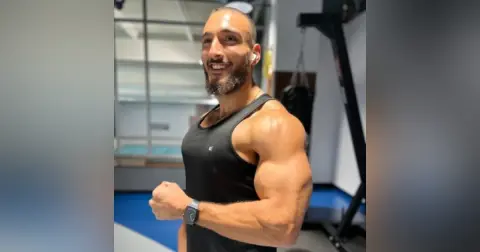
Bishoi Khella does not work in healthcare. But he knows a thing or two about being healthy. Bishoi was 355 pounds at his peak weight, living a busy lifestyle, drinking alcohol, eating out at fast food restaurants. He knew he had to the potential to be fit - he was into fitness and pretty lean back in high school. But much like David Goggins' early days, there was no discipline and the weight kept stacking on. He finally decided he had enough after he went on vacations with his friends and was embarrassed by his lack of energy. Bishoi started a lifestyle and fitness program called 75 Hard which changed his life forever.
Mentioned in the show:
Hello everyone, I'm Dr. Darsha, and I'm Dr. Altamash Raja, and welcome to Medicine Redefined. A podcast where we will explore the often overlooked but necessary components of health, what we consider to be the fundamentals. We will investigate topics and practices that can give you and your patients the best chance to optimize a healthy lifestyle. It's time to move the needle forward and put the health back in healthcare. Hello everyone. Today our guest is Beshoi Kella. So who is Beshoi? He's not even in the healthcare field. He's not a doctor, he's not a scientist. He has nothing to do with healthcare. So why did we bring him on? Well, if you have heard the name Beshoi over the last four or five months, it's because you've probably seen him on social media. There's a really famous Instagram account called House of Highlights, which really highlights a lot of athletic themes, and Beshoi had an amazing weight loss journey and actually documents his transformation through a series of pictures. And so what you really see is this guy who is about 355 pounds, and then they show his last picture where he is absolutely ripped and cut. So before you see this episode, I really recommend going to the House of Highlights page or even just googling Beshoi Kella and you'll see the before and after pictures of what this guy has gone through. So given that he has gone through this weight loss journey, I mean, I thought he was imperative to reach out to him and bring him on to really talk about what were those tips and tricks, what was the discipline he needed to have, what was the mentality he had throughout this pretty long journey, you know, right now in the US with our healthcare system, everything seems to be revolving around a quick fix. And of course, that's just isn't true for us wanting to have good health. And so I think having Beshoi come on is just a testament to not only what we can achieve, but also the discussions and the realistic discussions that we need to have with people when it comes to weight loss. You know, a lot of times we can always talk about different approaches and different medications and we can talk about the principles, but it's different to have a guest come on and actually go through the fire and actually talk about that pain and suffering that they had to go through in order to achieve their best health. So this is a really motivating episode. I do just want to put a warning out there. This episode there is some strong and explicit language that we use. A lot of it is Beshoi's emotions, very similar to David Goggins if you listen to him where he will use some swear words. So if you are sensitive to or offended by a profanity or our podcast is something that you listen to in the car and that you have kids around, just letting you all know that there is that warning to this episode. Other than that, let's get to the episode. I think this is something you all will enjoy. All right, Beshoi, what's going on my man? Thank you so much for coming on to the podcast. It's up bro, happy to be here. Yeah, thanks so much man. You know, when you book the time to come on to this podcast, I was super pumped, you know, just thinking about this episode. You're obviously a very unique guest for this podcast, you know, offline. You were like, Hey, man, I don't know what your podcast is about, but I'm not a doctor or a scientist, but I said no worries because we like to talk about personal development, life coaching, building good habits. And as a physician, I believe one of our roles is to teach patients how to take ownership of their own ill health, you know, if that's something they're suffering from and you're somebody who has talked to talk, walked the walk and had an incredible health transformation. And so I'm super pumped to talk about your journey and I know the listeners are going to be amazed and take away some key points that they can implement into their own lives. Appreciate that man. Yeah, I definitely happen to be here and honestly, man, I love what you guys are doing because it's the part of health care is the self ownership of the stuff that it's not just take these meds and hope that everything's just going to fall into place. And then you're taking, you end up taking 15 different meds, one to counteract the side effects of the other when most of it could have probably been helped if you just had a good lifestyle. And so nothing against the health care industry, nothing against medication, but I think people need to take into account their own responsibility for the things that they're doing and they're messing up their bodies or doing other things and that's where I think you should start before you get into the whole medicine side of things. And I can't wait to delve into that and especially your mindset about the topics that we're going to dive into. But let's start with your weight loss. How much weight did you lose? Where did you start and where did you end up? Yeah, so I started two years ago at 350 pounds and the lowest weight I got to was 187, 10.9% body fat. So I got pretty shredded. Wow. But yeah, now I'm back up to 195, just trying to cruise that that way and build up some muscle and keep going up. My end of goal is probably to get to 220 pounds of still shredded weight, but just put on more muscle mass. Yeah, for sure. And how tall are you? I'm 5'8". Okay, so you're 5'8, 300 plus pounds, right? Was that your peak weight? Yeah, 350. And honestly, I don't even know if that was my peak weight because I avoided the school all the time. So I have no idea if that was my peak weight. I just remember the heaviest I ever saw on that scale, was that the doctor's office funny? They should say that was 161 kilograms, which I think translates to like 352 or something like that. And I was like, wow, bro, like I had no, like, you know, you avoid the scale, you think you know, I didn't even think I was pushing 300 by that point. And then all of a sudden, you're like, holy shit, I'm 350. So yeah, it was a little bit of wake up, bro. Wow. Well, let's get into that. You don't get to 350 overnight. So tell me about your childhood and your relationship with fitness as well as eating slash nutrition. Yeah, for sure. So I grew up as the fat kid growing up. Like, I was a chubby fat kid up until about 16 years old. And then at grade 10, you know, I was in high school, you know, everyone's like, everyone's like trying to get girlfriends, trying to get girls, pick up chicks and, you know, you're not going to do that. All right. I didn't think you were going to do that if you were overweight. In high school, grade 10, I was pushing 260, bro. And like, as a young kid, that's terrible. And then yeah, so I was like, man, if I was going to get any girls, I got to get my shit together, get in shape. So I started working out. I'd run, I had, I was lucky enough to live across from the school. So our school had a track. And so during lunch, I would dip home, quickly change and run around the track around my school and then go back to school, finish up class. And then after school, I'd hit up the weight room for an hour and do weights. I was doing two a days back when I was 16. And yeah, bro, I lost 80 pounds in probably six or eight months, like it was crazy. Got down to 180, felt great. And then it stuck like that all the way up until 22 years old. Like I was living breathing fitness 24, seven, like I'd go home, watch kite green videos, all the bodybuilder videos, work out for hours and hours on end and like the summer. My summer was great because, you know, back then you're not really working, you're working like a part-time job. And so I had all day just to go to the gym. I spent like three, four hours at the gym back then. And that was my life, man, up until about university and the university. I started a business and should just went downhill, you know, I screwed up my shoulder. I haven't really said this before, but my shoulder like clicks, it's like, it's completely just like destroyed. And that happened. So I took a couple of weeks off and at the same time my business started to skyrocket. So I was putting more time into that and slowly, well, I wouldn't even say slowly, man, I gained 120 pounds and probably like a year, a year and a half. Like it was complete 180 in the opposite direction. So yeah. So what made you gain that weight? Are you someone who eats when they're stressed or was it more of like a, you know, fuck it? I'm just going to do whatever at this age to survive with my business. Honestly, the thing is for me is like, I'm either 100% or I'm zero. That's like, that's the thing. Like I don't know balance. I like, and everyone says everything in moderation, like not get it. I get that lifestyle is what keeps most people happy and most people like above baseline. But for me, it's like, I have to be bust in my ass off 24, seven or I'm not feeling fulfilled enough to even do it. Like, and that goes with everything. And so it's just the all or nothing mindset. It can bless you or it can fuck you. It depends how what trajectory you're on because like, honestly, it's a blessing now that I'm on top of this path because I promise you, no one will outwork me now because I'm literally in the, in the field 24, seven, like just working. I don't even have 10 seconds to breathe. Like my whole schedule is blocked off and I'm business, then filming content and working out like two and a half hours a day reading, meditating, all that shit. And so if I'm on the right trajectory, like, I don't think many people are able to do this for this long. And so it's just, it's just a matter of keeping on this path because once you start slipping up and, you know, you start getting a little taste of the freedom, quote unquote, eating like shit, you know, missing workouts, that can slow, that can easily spiral into just throwing your hands up and fucking it off completely. Yeah, for sure. I mean, for those listening, if they are familiar with David Goggins, I mean, you're your story sounds just like his, you know, rebounding the weight. And then even the things that he talks about with having a little bit of freedom, you know, he goes into that in a second book, which is called Never Finished. He talks about how his first book came out, which is called Can't Hurt Me. And he's doing well. He has the fame and then boom, all of a sudden, he's not doing what he's known for doing, right? He's not waking up at 5 a.m. and doing his normal routine and runs and he ends up calling himself a bitch and it's a wake up call for him. So you talk about this all or nothing mindset. I mean, is that how you run pretty much all the models in your life or is there anything in your life that you will separate, you know, keep as a separate bucket, separate it from stress, nutrition, fitness, maybe, or are you living in some aspect as an epicurean where you can quote unquote, enjoy. Yeah, man, honestly, I'm trying to apply it to other areas of my life and I'm trying to look at it at other areas of my life and it's honestly mostly all or nothing. I can't even think of anything that I do have fast and even like in a good way, you know, like where it's just like in moderation or anything like that. Like I can't even, even with business, like if I'm working on shit, I will stay until I'm done with what I need to work on. It's just, it's just, it's just how I, I am, I guess, and maybe that comes from my dad, like my dad is like the biggest hustler, like, but I remember back in the day growing up, this guy would work 24, seven, like as an engineer and then after work, he'd be studying what I was studying in school because I was doing computer science and business, trying to help me in my, in my degree and like saying, the same old like grade three math at this point, this is like advanced, advanced computations, he's trying to do that all night. Like, it's just, I don't know, just seeing him grow up, they'll growing up, I guess like just that work ethic from him is where kind of left a little mark on me. Yeah, I mean, that's definitely impressive. You're coming into this weight loss journey with an incredible work ethic. What was that initial motivation for you? What was that conversation in your head when you stepped on the scale and said, oh shit, I need to get back to that fit in the short, you know, back in high school at a way lean or wait. Yeah, it didn't even happen like that, to be honest, man, like it was, it was kind of strange. Like I had so many things I should have, should have like snapped me straight, should have got me back on the right path, but it didn't, like I remember the first time I really noticed like shit was gone a little far was like I was on a, we're going on a business trip to Hawaii for a photo shoot for our company and I get on the plane and I'm sitting in that chair and the seat belt won't close and I'm sucking in as hard as I can and that shit is not closing and I'm like, bro, what is going on? I asked the flight attendant, I'm like, yeah, like I thought they were going to kick me off the flight. I had no idea seat belt extenders existed and she brings me the seat belt extender. I put it on and I'm like, bro, like if you're so fat, you can't even sit in a seat. Like this is just your life is about to be a lot more difficult and bro, there's so many stories like that. I almost died on a mountain in China because we were all the way up on some cable car. I don't even know if I've told this story, we're all the way up on a cable car and we're up there and we're like touring the whole mountain all day and I'm tired of shit, like I'm like taking breaks, everyone's like going off on their own and I'm just chilling and then we go up to the workers there and we're like, hey, how do we get back down? I'm seeing the mountains clearing out like how long till we have to take the cable car back down. She goes, you got 20 minutes to get to the cable car or else you got to stay on top of the mountain. They had hotels and shit but it was a long weekend and so there was no availability in that hotel and so it's like a 30 minute walk and we had 20 minutes to get there and I'm 350 pounds at this point, I can't even move, we've been hiking all day and we're going up and down hills, up and down hills and bro, this is the most embarrassing part. There's like these mountain guys who like basically live up on the mountain and they got this like little throne thing that they carry like back in the day of bamboo throne. These guys did us offer to carry me to the cable car for a thousand dollars on these bamboo sticks. I'm like, no bro, fuck that, I'm going to make it there and I'm going to go to this paramount. Otherwise I would have to sleep on the side of the mountain and get eaten by coyotes or some shit. So like all these stories, man, I couldn't even walk up these steps, like my back was flaring up, I was drenched and yeah, man, like there's so many of those stories but the final straw was a trip we went to in Mexico. We were all just chilling partying usually when we go on these vacations but it was the height of the resource where empty, no one was there. And so the trip just moved to be like an exploration trip, a chill trip where we're hiking, we're doing activities, activities I could not do because of my weight, like walking around the city for an hour, bro, I would walk for five, ten minutes and my back would be on fire, I couldn't even do that skiddoos or what do you call it, ATVs, all those things. And then I get back from that vacation, I'm like, bro, this was supposed to be a time for you to relax, the time for you to enjoy your trip and you had a miserable time while all your boys, all your friends are having the time of their life. And I'm like, this cannot be the rest of my life, man. And so I got super lucky that one of my boys did 75 hard, I don't know if you're familiar with it. I learned about it from you actually, from your videos. Yeah, okay. So maybe for your listeners, if you guys don't know what's 75 hard, is it's a program by Andy Fercilla. It involves you doing five tasks for 75 straight days. If you miss a day, you have to restart. The tasks are no cheat meals, no alcohol, take a daily progress photo, to work out today, 45 minutes each. They can't be back-to-back, read 10 pages of a self-development book and drink a gallon of water. So that's what 75 hard is, you have to do it for 75 straight days. I got lucky enough that one of my boys did it the year before in December. I saw his results. I saw not just his physical change, but his mental change. He started acting differently. He started being a person of word, keeping his word to himself, not taking shit from people in the sense that he was not a pushover. He was not going to just do things because he'd do things that he shouldn't be doing just because he got convinced to doing it. So seeing all that, I was like, when he asked me to, we got back from that Mexico trip, he asked me to do another round. He was doing his second round. I was going to start and I'm like, fuck it, let's do it, man. I could not say no to that. And so, yeah, man, it started 75 hard on March 16th of 2021, and that was good, man. Did you fail on the first attempt or did you get through it? No, so surprise. I get to ask that a lot. I've never failed a single round I've done of any of the live hard phases because there's phases after and I'm at like 10 times right now. So once I, that is a testament to the all or nothing because, bro, once I'm on that path, once I'm doing it, there's no shot. I'm going to stop. Like, bro, I remember I had so much momentum on one of the phases. I was like envisioning, fucking media or striking the floor and I would still figure out how to run through the rubble of the, of the debris and shit because that's like how much confidence that program gave me into keeping my word, keeping my momentum going. And yeah, man, that was the start of it. So it was like, it's kind of strange because I had all these little like actual wake-up calls and the last one was kind of like a stupid one in the sense that like, man, you didn't enjoy vacation, grow up, but that was the one that kind of, kind of pushed it forward, you know? No, I feel you. I mean, a lot of these conversations, it's funny, right? I mean, you don't imagine it in a young 20-year-old talking about not having fun on vacation because not being able to walk. I mean, these are conversations I'm having with 60-year-old patients who want to go to Italy, you know, and I'm telling them about how to get in shape so that they can walk the steep steps in post-Tana or be able to get their luggage overhead on the train. But I mean, for you, this is the real deal. Is there a time where you thought about your future, like, if you kept on the weight at the steady pace, tell me about your mindset at that point? No, because I think we do this all the time. We tell ourselves, like, this is just temporary. But then temporary turns into five fucking years, 10 years, 15 years. You ask smokers, for example, people who smoke. It's like, they think that they were going to quit a year in and now they're 40, 50-year lifelong smokers. This is what happens when you're on the wrong trajectory for so long. You're just on autopilot. You're not even consciously assessing the things you're doing anymore. You're just pure unconscious into the wrong direction. And so it's the same thing with me. Like, I never, when I gained all that weight in the first year and a half, I never once thought I would be five years later still at that weight. I always thought that I would get it back at some point. And here I was five years later, the same, if not worse than I was before. And bro, it's funny, you say that because the thing that most people don't even have to think about was like an actual concern and actual struggle for me, like getting up to get fucking water. I would wait until someone else would get up so I could be like, yo, can you grab me a cup? Because I didn't want to get up. And I was 350 pounds, bro. I wasn't like 800 pounds, like I could get up. It's just that's the sheer laziness I was in. And so it's like all these little things, like every little thing people wanted to do, like doing, going out to restaurants, like let's go out to a patio was a thing that I had to conscious to think about how are we going to get there? Are we going to have to walk? Do they want to walk? Can I maybe uber there? Like, all these dumb little things that just are so mundane to most people, I had to actually rationally think about it. So it just became so hectic to live like that, man. Yeah. You have some videos on Instagram about the times back then when you're jumping out of a hospital bed and kind of just being a goofball. But if you don't mind and you don't have to disclose anything if you don't want to, but what were the symptoms that you were feeling throughout being at that weight? Yeah, no, I'm happy to talk about anything, man. So the reason a lot of people think like I was in the hospital for something serious or you know, I got like gastric sleep or something like that. The reason that that hospital video you got was my first ever panic attack. I've never had a panic attack before my life. And I thought I was having a heart attack, I thought I was dying. I was like, just working on my laptop one day, all of a sudden I feel this white flashing light in my eye. I just down like three coffees and probably smoked five cigarettes at that time. So I probably had something to do with that, but I go to the washroom, check my eye, see if anything was in it. Nothing was in it. Then I feel this huge gush rush down my entire body and I'm in pure panic mode. I call my boy because I don't want to pass out and have the paramedics not be able to get into my place. I call my boy. I'm like, bro, call 9-1-1. I'm dying. You know, just come help me, come check out on me. But I was so scared that I would pass out that I busted out of my door, ran downstairs and met the paramedics at the front of the building. I'm sitting in the back of that gurney and you know, I'm strapped up to a shit ton of machines. They're checking my heart rate. They're checking my EKG. Everything. And my heart rate was 180 beats per minute. It just laying down in a gurney. I'm like calling my brother and telling him like, yo, I'm probably going to die. Call mom and dad, tell him I love him. I'm telling the paramedics like, yo, please do not let me die, man. I don't want to die. And so that's the way that hospital video me just fucking around pretending I was waking up. That's where that video comes from. And honestly, man, I never really struggled with any depression or anxiety. Like I was a happy fat kid. I had a good life. You know, I enjoyed, I enjoyed my life. It was just these little things started to add up. And I guess years and years of guilt start to, you know, weigh down on you. And I think that's the reason for my panic attack because I always say that's like, once you peek behind the curtain of what it's like to have a great life, then you've got to go back to being a nobody, got to go back to living just like a pure slob, bro, at that point. You are almost in a worse position than someone who has never experienced the other side. Because you have that constant guilt on your head 24, seven of what life could have been and you chose not to go down that path. And so I think years and years of all that building up in my head of guilt just manifested in that form of a panic attack. And then for a whole year after that, bro, I became hyper fixated on my body. I didn't even lose weight after that, by the way. That wasn't even the final straw for me. So it was like, I don't even understand how now looking back. But for a whole year, I had panic attacks almost every single day because every little twitch in my eye, every like natural body twitches, you know, like you get a little cramp in your arm or a twitch in your eye, that show would set me off because I was spiraled down. I would think that was a stroke or that was a heart attack because I lost more sense of confidence in my health. I had no confidence in my health. But I knew I was unhealthy. And so the only way I got out of that was to like kind of work out occasionally, like a few times a week, and that gave me a bit of confidence just to keep me above baseline. But in my head, I did not change my identity at all. I was still the fact kid who occasionally worked out, and that's why I never stuck. That's why that time was not even the time that I lost all the weight. That wasn't the final time I lost weight. So you know, you got to kind of aim to change your identity, change who you think you are as a person, to be able to sustain any lifelong habits that you want to keep. It's great that you use that word because I had those exact words, identity shifts written on my notes. And I think it's key word. I think the human mind is such an enigma. And I believe one of our jobs during our lifetime is to try and understand ourselves, you know, and understand the things that we tell ourselves, the justification. The sabotaging, the self sabotaging that we so often do. I mean, you have this perfect example that you talk about. You pulled a curtain and you've done it once before and I think that's the difference with you. A lot of people who quote unquote, just get fat or like that throughout their childhood, but you knew you had this potential in you as a lover of fitness. But as you're going through 75 hard, take me through what it's like when you're dropping that weight and dealing with living through multiple bodies, right? You're having this identity shift from being a chubby packet, 350 pounds to now where people look at your transformation and see a rip due to it with a six pack. And sure, you've got the loose skin, which serves as a reminder, but how did you learn to live in those different bodies and what it did do for you mentally? So I think your mentality just naturally shifts as you wake up every single day and keep the promises you made to yourself because your initial identity is a 350 pound guy is a bunch of broken promises. Be fucking day, you wake up and tell yourself, I'm going to this Monday is going to be the Monday. I start, bro. And then Monday comes around and you're like, Oh, shit, I got this to do. You skip it. Or you make it through Monday, Tuesday, but Wednesday, it falls off. And so, you know, as you continuously break promises to yourself in all aspects of life, you said you're going to go home for dinner. You don't go home for dinner. You said you were going to finish this task before 5 p.m. You haven't even fucking started yet. You procrastinate on studying. You know, you're watching TV and said all these things that you have committed to and keep lying to yourself and lying to other people about are why you're anchored to this shitty identity that you currently have and that's what's holding you back. That's what's pulling you back and anchoring you to your past. And so that's what 75 hard does for people. For me specifically, every day I had to make keep the promises of those five tasks where I failed. And so, every day I woke up and did what I said I was going to do, regardless of how I felt. Like, bro, at 350 pounds, your shit is busted before you can even think about it. Like, my legs were fucked, my back was fucked. I was bleeding from my nipples, from my shirts rubbing up against my test. My shoes were swollen, my feet were so swollen, my shoes were filled with blood like all those days. All those winds you put under your belt, you start feeling proud of that and you start thinking who the fuck else can do that. Like not many people can say they did that and that's how you start painting a new identity. And obviously, as you continuously do that for, you know, 75 days and for me, I did it for basically two years, you know, you just naturally start shifting into a person who keeps promises to themselves and that's how I feel like you make a new identity. I love that. I think I've heard you say that 75 hard is a good place for someone to start for a transformation. Is that correct? Yeah, I think it's an excellent place to start and I don't think, I don't even think from a fitness perspective, like there are better fitness programs out there, man. This is, you're like killing yourself on this program, you could probably, you could probably lose the weight doing something a lot easier, you probably have better results even with the rest aspect because rest is a huge part of building muscle and losing weight. But I don't think there's a single program out there and not one that I've come across that will shift your mindset the way 75 hard does. And the thing with 75 hard is people look at the program and they're like, holy shit, man, this is so extreme. I took it extreme. I decided to run every single day for 75 days. I decided to lift weights and bike and go to the opposite extreme because that's what we talked about at the beginning of us of this chat. But for other people, like if you're 500 pounds or you're 350 pounds or you're 600 pounds, a workout for you is literally sitting down on a chair and standing up for 45 minutes. And so it's very scalable. He doesn't, the program doesn't say you have to do this exercise or you have to do this. So whatever is an exercise by your definition of 45 minute walk, you standing up, you're doing yoga for 45 minutes. That's considered an exercise. And so I think it's very scalable. People get scared because they think workout and they think they got to be running or they got to be doing some crazy ass shit for 45 minutes, twice a day, 75 days. But that's not the case. And so that's why it's applicable to anyone, I feel. Gotcha. And the five rules of the program, what was the hardest for you? Yeah, definitely the working out, man. The working out was tough for me because it's not like, it took the longest and it took the most mental, it had the most strain on my like mental, I don't even know, not mental health, but more like my psyche, I guess, because like, bro, I was going through the trenches every single day, like, bro, trying to run at 350 pounds, like it's mentally taxing because you're so heavy, everything hurts. Like your back is about to blow, your knees are like killing, like it's probably not even like the best thing for you to do at that point from a health perspective to run. But honestly, like, I didn't care because I knew as soon as I continued on and kept going, all that shit would eventually go away. And at the end, what would be left is someone who is able to go through hard shit and get to the other side. And that's what I was aiming for the whole time. Exactly. I think the mindset shift is the most critical piece that people forget about. They just want the results. They want the aesthetics, the good health, but they forget that you need the mindset shift to play it long term. Like you said, because you went through this, you can go through multiple times and go through the trenches because no one can outwork you. A lot of people in the coaching world would say that we need to meet clients where they are. What do you think about that statement? Do you think that's accurate or are you more in the mindset that the client needs to meet you because you need to push them to develop that mindset? No, I would never stoop down to some, bro, the reason you're coming to me for help is because I'm supposed to lift you up to where I'm at. And I'm not saying I'm in the highest place possible, but obviously if you're hiring me for help or I'm not even, I'm not even, this is, I don't have a business that's coaching or anything. But if I were a coach, I would never go down and meet the client down there. Yeah, obviously not, obviously I'm not going to put you through a 10k run when you're 350 pounds, but I will put you through a 10k run mentally, whatever that might be for you. And so I would never, as a coach, never meet the client where they're at because the reason they're coming to you is so you could elevate them to a higher level. And so it might not be where you're at in terms of the actual stat, like 10k, you got to do 10k, but your version of 10k is what I expect from you. And that's, that's where, that's what I think about that, man. I agree. And I think a lot of the time, at least in healthcare world, when we have conversations with people, the conversation is about you got to meet where the patient is. But to me, that doesn't make sense because the patients don't know where to meet. They don't know where to go. They're pretty much just going to be in their own comfort zone. And if I'm going there, they're not going to have that trust long term. And I think one of the biggest drivers is quick results, you know, whether it's mentally, whether it's physically, having that quick inertia can really propel people until they hit a plateau, which by the way, did you have a plateau? No, I just kept, because I kept pushing up like, when, if I was running 10k this, or not while I wasn't running 10 at the beginning, but if I started at 6k, I was running six and a half and two weeks. I was running seven. I was running eight. The 45 minute workout became a suggestion at that point. At one point, I was running 13 kilometers a day for a whole last month. I was running like 50, it was taking me an over an hour every single day just to do the run. And then I was lifting for an hour, an hour, 15. So I just continuously pushed up that I was burning more and more calories. I never actually hit a plateau. Wow. Okay. Yeah, that's impressive. But just going back to the point, a lot of people will hit that plateau and then it's like, okay, let's get to that next gear. But you were already doing that. But yeah, I agree with the coaching method. Let's shift a little bit here and talk about your habits and what you do on the day today. You know, focusing especially on the discipline and consistency aspects, how you have chosen to form your habits around what you do. I mean, you mentioned how you're working 24 a second and how everything is booked up. But what do you do and how do you go about your day? Yeah, for sure. But before I get into that, honestly, I think the reason why habits are so important to begin with is because it automates a lot of your life because you start looking at people like Elon Musk or like super highly successful people. And these guys are running five ballty billion dollar industries and you're wondering like, how the fuck do they have time when I don't even have time to like cook dinner? And the reason why I feel and I've seen it firsthand is the more and more shit that you can automate and put on autopilot because of you because you're doing them so for so long. You have the momentum, the less they take up mental calories. And so they're not in the front of your mind. You're constantly thinking about them every day. So when I first started 75 hard, that shit took up my entire life. And the reason is is because I've never done that. And so everything became like I had to consciously think I'm going for this run. Where am I going to plan it in my day? How am I going to do this? But now like every all like the 75 hard part of my life is the easiest part of my life now because that's just the automated part. It's not something I have to even think about. I'm it's automatic. I wake up, I drink a shit ton of water, like I drink a whole one of these. And then I go out for my run. I come back, take a cold shower, eat breakfast. And then I pop onto my laptop for about eight hours, nine hours working. And then I go to the gym for my second workout to exercise. Then I get back home. I read, I journal, I meditate, and then I chill for an hour and go to bed. Got it. Let's talk about nutrition. How important do you think it is to calorie track? Not only just where you are now, but when you first started. Yeah, so now I think it's important for me because I'm at a point where, you know, I'm trying to chisel away at one percent. And so those one percent are much harder than the initial, you know, 50 percent. When you're 350 pounds, bro, all you got to do is put down the fucking pizza for a couple of days and you lose some weight. It's true. Like that's the end of the day. Like I'm beyond it's the first year and year and a half. I didn't track a single calorie, track a single macro. I lost 120 pounds in my first year without doing any of that. All I did was eat generally healthier foods that I believe to be healthy. Chicken and rice, ground beef, egg whites, things like that are healthier. I stopped eating pizza. I stopped eating wings. Like everyone knows this in North America. Like this, unless you're in a country that doesn't have access to this information or, you know, doesn't have access to internet. Bro, we all generally know what is healthy and what is not healthy. And so, you know, people just, we just all try to rationalize and rationalize on why something is healthy. It's not, bro. You generally know. And so that's what I did. I went to the basics. I did that and that naturally put me in a calorie deficit. So I didn't even really need to track or do anything. But now like, yeah, for sure, I've seen a lot more, a lot better results in the last, you know, eight months I've been calorie tracking, macro tracking now. And yeah, because everything's calculated, I'm eating the exact amount of protein, carbs and fats that I'd need to eat to fuel my body for my level of activity. And so, yeah, I'm seeing a lot faster, better results. But had I told that to myself at the beginning when I was already throwing in, 15 other new things that I needed to do, I might have not stuck to it, to be honest, because it's like, now you got to weigh out all your shit. You got to meal prep beforehand. It's just become so many things that you're trying to tack on at once. I don't know if I would have done that, to be honest. Gotcha. Did you utilize any type of fasting, intermittent fasting? Yeah, yeah. I was doing intermittent fasting for probably 16 or 18 hours, at least 16 hours. Yeah, so I'd capped my last meal at eight and then eat anywhere from 12 to 2 the next day. Okay. Did you find that beneficial from a chlord deficit standpoint? Yeah, I found it harder for me to squeeze in a shit ton of calories in a shorter time window. I think that was the only real benefit for me. I know there's a shit ton of health benefits for intermittent fasting, but for me personally, like, I think I'm actually not going to be able to eat as much food in six hours and I'm going to eat in 16 hours. So that's why it kind of helped me. Yeah, I think it can be a great tool for someone who's just starting out. You know, and I was doing it two, three years ago. You know, it was like all the rage. Science checked out, the hormones, all that stuff. But you get to a point where I was just like, I need to build muscle and I was not building anything. You know, I did feel good and I had the mental discipline, but now I have shifted over to a 24-hour fast once a week and then the rest of my days, I'm eating the breakfast, lunch, dinner, you know, getting the protein in, the macros, like you said. But now I mainly do it for the mental discipline. You know, I think having those hunger pains can actually teach you how to be human again in a way. And I think a lot of people who go through these bad diets, just like what you said, you know, is about keeping it simple and we know what that means. So why are we trying to justify anything else? You know, if you stay consistent, you should get those results. All right, cool. So what about exercise? What's your current regimen right now? Are you strictly weightlifting, doing cardio? How do you manage the two? Yeah, no, nothing's changed, bro. I wake up, I run 10 kilometers a day in the morning and then in the evenings, I lift weights. So just whatever my body split is, some Mondays I do chest and triceps, Tuesdays I do back and buys, Wednesdays I do legs and shoulders and then I repeat for another three days. And on Sundays now I do an hour walk, I don't run on Sundays anymore. I do an hour walk in the morning and then do like some sort of yoga or abs, something low impact for the evening and then I repeat it and pick it back up on the Monday. Amazing. I know a lot of people will ask you about cheat days. You have a video on this, but what is your take on having cheat meals? When you're starting, I would say no, man. I'm sorry, I'm sorry for you know, a week is not enough for you to break the mental curse of or the mental, mental attachment you have to a cheat day. So if you're having a cheat day every week or every two weeks, it's not enough for you to change your relationship with food and I have a video on this. I like like, bro, you, if you have a food addiction, like you're actually addicted to food, you're eating it when you're happy, you're eating it when you're sad, you're eating it to celebrate, you're addicted to food at that point. And we don't tell, you know, drug addicts to eat, to be clean all week and then Sunday, bang up whatever you want and then pick it back up on Monday. You know, we don't say that to those people and food is almost a little, I don't want to say more difficult because a drug addiction is very tough to overcome. But, you know, you're not seeing commercials of drugs on TV all day. You're not walking by bakeries with where the smell smells amazing or pizza, you know, all day. And, you know, so it's like, it has its own challenges. And so, like, bro, this is why until you can re-change your relationship with food and start viewing it as a source of fuel, a source of energy for your body rather than like a source of happiness, a source of dopamine, I would say stay away from any cheat meal. And that's why 75 hard worked out perfectly for me because it was 75 days, which is a very long time and I think it's the appropriate amount of time for you to change your thinking process of how or your habits because, bro, everyone says 21 days to build a habit, 21 days. Well, I've done 21 days so many times. It doesn't feel long enough. It's not enough to rewire your brain, I feel. Right. I mean, Tai Lopez says 67 days, but I wonder if the current more long-term research is heading down that three months closer to the 75 days for what it takes to break those chains of bad habits or to build good habits. But, sure, so some people listening to this may be in the same position that you were once in before and they might say, be sure, well, like you said, I'm not going to work as hard as you, you know, so how can I expect to do this on my own? What's your advice on how people can avoid loopholes? You know, so that when they smell McDonald's on their drive out of the gym, they aren't compelled to go towards it or, you know, whatever it may be that can drag someone down, breaking a 75 card program or, you know, just whatever it takes to break that initial inertia. Yeah, so honestly, I would say just get started and do the hardest thing that you could possibly do at your at your stage, whatever stage that may be, whatever the hardest thing you could do there is power to keeping your word and once you doing once you start doing it for long enough or you keep stacking these little small wins day after day, you'll start building an addiction to the wins and those will start, those will start over weighing any addiction you have to anything else. So once I started doing it for long enough, you know, that I, I was like trying to see what I could push to next. What okay, I did, you know, 5K in 45 minutes this week, can I do a little better next week and you start trying to etch your way up and start doing a little better every week. You will develop a sort of love for that process more so than anything else that you won't even want that shit anymore because you want, you want to see what the next step is because every time, you know, we, we tend to go and up and down spirals, right? We work hard and then we fuck it up on a weekend and then it takes a bunch of momentum to try to rebuild and so you're not really pushing forward. You're going front and you're going back and forth, back and forth. And so once you can continuously move up for us in extended period of time, your source of addiction quote unquote will be what is next, how can I get further? And so, you know, I don't really have any tricks of, of, you know, driving by McDonald's and not getting it and not going in and grabbing a McDonald, I just don't fucking do it bro, like keep your word to yourself. That's what the most important thing is and, you know, as as you continuously do that, you will build the discipline, you will build the momentum you need to carry to the finish line. Yeah, 100% man. Actually, today I read a blog post by Mark Manson. He's written a famous blog and just turned into a book called the subtle art of not giving a book. But this blog post was on Threats, the new Instagram app and it was all about how we all want things, right? Like quote unquote want. We think we want these things and most of the time we had the advice that we get when we don't achieve and get the things we want is that we didn't try hard enough or we didn't put enough effort. But very rarely do we ever talk about what you're willing to struggle for. Like what are you willing to go through with pain and suffering to actually achieve those things that you want? I mean, most of us in today's social media world just see that it's glitzy and clamory, right? Like we actually think it's possible to achieve the Elon life, the Mark Zuckerberg life just by coasting, you know, just by building a business without thinking, hey, if I want to be that successful, well, no shit, I'm going to have to go through hard times, right? I mean, Mark Manson talks about if you want the best relationships, you're going to have to go through unpleasant talks. If you want the fitness journey, you're going to have to go through pain in the gym. If you want the body, you're going to have to give up alcohol or, you know, whatever those favorite foods are for some time. I mean, a lot of people just don't think about living life on those terms anymore. I mean, I think we used to, but now with the advent of social media and advertisements everywhere, we're just multitasking and it's tough to send ourselves and our mindsets to truly understand what are those things that are our priority? Like what are those things we truly want? What are we willing to sacrifice for? I mean, I think that's your story, too, man. You really talk about how you were just willing to go all out on this. Yeah, I agree, man, because at the end of the day, bro, you were going to have a tough life, either way. If you're working out and doing all this shit is going to be tough. But the other side of it is when you're 50 years old, you're going to start having health complications, 60 years old. If you're that overweight, not many people live past the certain age, if you're that overweight, from a weight perspective, too. And it's a lot more than that, too, bro. Do you want to walk your kid down the aisle, bro? Do you want to be able to do that? Do you want to be able to play baseball with your kid? Or do you want to be the fact I can't even show up to your kid's baseball practice or coach the baseball team? Like all these little things that you want to do in life are being limited by your weight. If that is happening, you have to get that in check. And this is why, bro, I fucking hate the body positivity movement. Like I cannot with a movement because, you know, sure, bro, you should love yourself. And it's not a matter of looks. It's way bigger than looks. Like looks are the last thing on the fucking list. It's way bigger than what people are thinking about how you look. At the end of the day, it's about, are you able to do shit with your life? Are you living your life to the fullest? Are you able to experience life in the way that it was intended to enjoy and love it? Or are you having a terrible time? You can't even do a shit, you're watching TV. Like if you were sitting on a computer or if you were sitting on your couch 24 seven watching TV, if we were to strip away the TV, you would be 10 times more miserable because you can't do all these other activities that you that other people are able to do. Yeah, I'm the same way in my thinking and that gets me canceled whatever. But, you know, when we're in the hospital and a lot of obese patients coming in obviously, I mean, when we write our notes, we'll actually put obesity in the note. And then underneath it, a single line that just says complicates all aspects of care, right? So I mean, I just tell people, where is the body positivity in that when they come to the hospital? Like no one is saying, good job. You should be proud of yourself. And no, obviously it's complicating your health and more than anything like you said, you need your health to live. Otherwise, you die. So yeah, I think, you know, to me, body positivity, it's interesting. But now there's a movement, H-A-E-S, health at every size. And I'm saying, sure, you can be heavy set and be healthy. That's not what we're talking about though, right? I mean, they are putting overweight women on magazines, on covers and telling us to celebrate this. And like you said, I mean, I don't think it's anything about self-esteem. But do you think it's fair to tell people to have self-esteem and confidence? Or I mean, there's a huge mental health crisis happening right now, worldwide. And I'm thinking, if we are telling people it's okay to be where you are, what are we truly doing moving forward? Like, what are we doing to the next generation? How do we actually bring health back, you know? I mean, I don't really think many people thought this through. Yeah, no, 100% agree. And listen, bro, just to clarify, we're not talking about being 5, 10 pounds overweight. We're not even telling you to become a fucking 5% body fat fitness influencer. We're just talking about getting to a healthy way. And so you shouldn't, yeah, you shouldn't be shamed for, you know, being a normal weight. But what they're doing is going to the opposite end of the extreme. They're putting 300 pounds, people on the cover of magazines. Like, bro, I don't give a fuck what you say at that point. It's as nothing to do with health at all sizes at that point. There is no healthy 300, 400 pound person on the cover of the magazine. That is not health at all sizes. And so, yeah, bro, I understand because their then goal here is to is the mental health crisis. I understand. But for me personally, man, like, how I view it is, if you have these feelings of, you know, guilt or feelings that make you feel like shit, that is a biological trait for you to be better. It is coded in you to try to become better. That is why you're having these feelings. Let alone like, let's leave out all the people like making fun of you and shit online. You would probably still feel like shit because you are not living up to your biological potential. And so, you know, that's how I view it, man. It's like, we do need to be, we need to relax it too, because also, you got models who are like, you know, absolutely also unhealthy in the other way, where they're just at an unhealthy low weight. And so, this just pushed it into the opposite end of the extreme, what we need is a middle ground of true health, a health way, you know what I mean? Yeah, yeah. And again, just to clarify, so no one actually cancels us, we are not that chaining, just talking about getting to a healthy weight, but totally agree. You know, one of the things because of this movement is body dysmorphia on both sides of the spectrum. Is that something you struggled with? Yeah, I mean, it's not dysmorphia. Like, I don't view body dysmorphia in the sense that like, you know, I'm still fat right now, but I view it in the sense that I look at myself and I'm like, yes, we're at a good point, but you're not done. You are never fucking finished. You will continuously push to become better. And every time, bro, this is a, this is a common trait because every time I felt like I hit my peak physique, when I continued on for another four months, and I look back at those photos of what I looked like four months ago, when I thought I was at my peak physique, I have blown that shit out of the water. And so, it's not a matter of, it's not a matter of dysmorphia. I'm thinking I'm, I'm, I'm, I'm fat when I'm actually like at a good weight. It's a matter of I could always do better. And you apply that to all walks of life. You are never in a place where you could just cause. You need to apply that to your business, to your relationships. Can you be a better father? Can you be a better partner to your wife, a better parent? And you know, that's, that's what you need to apply. You can always do better. Yeah. So, Beshoi, are you a goal center? Like, are you making sure you're getting through a marathon or hitting a specific weight? Like, when it comes to bench press or other lifts, how do you keep track of your goals and progress right now? Yes. So, for, for like specific weightlifting goals and stuff like that, no, I don't have, I don't have goals like that where I'm like, you know, I, I want to hit two 25 bench for, for this amount of reps or anything like that. I just go in and give in my all every time I get in the gym and my all is never, is not always the best. You know, like, one day it'll be a little lower than the day before. And so, it's just my only standard, my only metric of success is in that moment, was that the hardest thing for me to do? Yes or no? The answer is yes, regardless if it was worse than yesterday, I'm happy with the result because, you know, things change, you know, you slept a little less, you know, you didn't eat that, you didn't, you didn't get the right nutrition the day before, you didn't drink enough water, you know, all these little things play a role. But in that exact moment, did I give it my all? And if I did, that is enough for me. And so, yeah, I've, I've set out goals for marathons and things that I do, but it's never paid related. It's mainly like, how far can I push myself mentally? And so, I did a marathon actually last year and I was trying to crack four hours just, just, just like, it wasn't something that I was like, yes, I were going for the four hours, but it was just something that would have been nice. We have, I had 406 or 409, and so I've unfinished business, I got to get back there and this up over to do it again. I like it. I like it. The Goggins mentality. So, one of the things I wanted to ask you, the biggest loser, popular TV show where, you know, these people are going through some crazy, crazy training, nutrition, and they lose a lot of weight. You have found a way to keep it off, right? We've been talking about it for the last 50 minutes as to how you do that. What do you think it is with others who regain that weight or at least are not able to keep it off? I mean, this is a pretty common occurrence we see of rebound and weight. Is it getting to complacent or just having too much freedom? Yeah, so I think a lot of people get to a certain place and think they're done. And that's why I'm able to continue on and continue push better and become a better person in the physical aspect of things because in my head, I am never done. But people think that once you get to a certain weight, you could coast. The reason why you got to that weight is because of all the effort you put. So, if you start going back and doing the shit that got you to your overweight self before, you will eventually end up there. The actions you take will drive you down the path that you will end up. You know what I mean? And so you were 350 pounds from those actions. So now that you get to 200, do you think you can start eating like shit all day again? You will naturally just end up back there. And so, that's the thing is that finished mentality is the problem. You think you are done. You are never done. And the other thing is too is I think with this, my 600 pound life, specifically that show, I think the reason why most people relapse is because you are taking them out of the environment of regular life. You see that with like reality TV shows too, where people go on like, you know, an island, a remote island, and they think they fall in love in 13 hours. And then all of a sudden you get back to real life. They get sent back to real life with real life problems. And then, you know, they are like, and I fucking hate this person. And it's just, you are in some utopian world where you are being monitor 24-7, your under strict conditions, you know, and I'm not saying there's nothing wrong with that, but there has to be some sort of reintegration process into your regular life because, you know, I think I forget who said this. I think it was Hermosi. He said the easiest way to break a shitty habit is to move because a lot of our habits are anchored to our location. But then, you know, where are you going to move at my 600 pound life? Where are you going to move forever? You can't be in that, you know, boot camp environment 24-7. So you have to figure out a way to reintegrate back into a regular life. Right. Right. Makes sense, man. What books do you recommend that have helped you and maybe any other resources that you've used throughout your journey? Yeah. So when I first started man, a lot of the books that I read were strategic in the sense that I wanted to brainwash myself into believing that what I had to do was nothing compared to what others have done. And so I read Goggin's books, for example. I read, I read, uh, can't hurt me and never finished recently. I wasn't out back then when I first started, but now that it's out, I highly recommend both of those. And then Tim Grover's books too about being relentless. It's called relentless. That one, that one was a fucking incredible book to just gear your mind in the right direction. I read a book that if you're trying to get into running, a great book is called Born to Run and it's about tribe. Yeah. It's about a great, it's about a tribe who runs basically 50 kilometers every day, just in bare feet in the wilderness with nothing. And everyone's asking like, yo, uh, what are the best shoes? What are the best this gear? These guys are running barefoot in the wilderness. And so it kind of reduces your attachment to needing specific things for optimal performance. These guys run in shitty sandals that are tied up with nothing. And so that's what I did. And the more you can brainwash yourself into thinking what you're, what you have to do, the mountain that you have to climb isn't so bad compared to what others have had to do. And they have still figured out a way. The easier your journey becomes because the same thing goes with that four minute mile thing, right? That's a famous story is like everyone was, everyone could never, no one could hit it. No one could hit it for years and years until one person did and then fucking high school kids are doing the shit now. And so it's just a matter of belief, you know, and I surround myself with people that made me believe that I could push to where I needed to go. For sure. Um, Bishoy, I would be remiss to ask you. I mean, obviously I found you in contact with you after seeing your transformation on the house of highlights Instagram page. I mean, you blew up on social media. So how's life been since then? How are you handling the fame? I'm sure you're getting a lot of requests, but what's been new with you? I'm still the same old dude, the same, same guy. No, no fame, nothing. I'm just, you know, I'm getting a shit ton of DMs. I'm trying to help as many people as possible. That's why I set up a site with everything I did in crazy details. I literally, I'm probably 10, over 10,000 DMs right now. I'm just people needing help and I don't want to leave all these people in the dust. So I set up a site with everything that I did in crazy, crazy detail. Like I'm talking, you know, microscopic detail. And it's all for free on my site. So if anyone needs it, they could just hit up there. It's just my name, Bishoy, Kelo.com. It's all free, not a dime. And just, you know, help as many people as possible. That was one of my goals in 2020 when I came into when I was sending out my goals in 2020 for 2023. It was to help inspire as many people and provide the help that they need. Because now, bro, with this, thing that I put up, you have no fucking excuse in terms of knowledge. The only excuse you have is literally action. There's no excuse now. It's not a knowledge gap anymore. Everything is available in one space by someone who has done it. So it's not like, I got a recent 15 different articles, 15 different diets, 15 different things. It's all there. It worked for me. It'll work for you too if you just do the work. Awesome. Yeah. We will definitely link that into our show notes. What I love about you, dude, is that you don't just cater to one audience, right? I mean, you're not just catering to someone who's over 300 pounds. I mean, I'm over here learning from you. I commented on your one of your posts saying, like, damn, I'm motivated about to drop 40 right now, just watching your videos, right? Just like it's very goggins-esque mindset. I mean, even for people, like me, who understand fitness, who are fit, still like, man, you're right. My goal is to cut right now, right? Get down to 160, but then it's like, what after that? Sure, take a step by step, but I also don't want to get complacent, right? And I think you're in this, like, leadership role, almost, you social media. That's just helping everyone, honestly. And I know I appreciate that. Thank you, man. I appreciate that. Yeah. So you're a first form athlete now. I saw you take a tour over there. I was there for, I was there for the really F podcast. So as Andy Fercil's podcast, I was filming there, but yeah, it took me, it took me on a tour. We've brought that facilities incredible, man. Those guys, these are doing good shit, man, because you don't really see that nowadays. Like, everyone's trying to push product, push, push, like, just, you know, business sales, sales sales. These guys genuinely want to help as many people as possible, and I fucking love that company, man. Yeah, they're killing it. Yeah, dude. I mean, it just, it looked impressive. I mean, massive basketball court, huge gym, just very impressive stuff there. All the people there too, bro, is like, they're all like basically on the same path. And like, they're just hustlers that work all day. Like, you see their stories. I follow like 50 of them now. And these guys that they wake up five, six a.m. do their workout and then hit the office like, man, imagine being in that environment for so long and trying to surround yourself with people like that. You there's no option but to win at that point. Yeah, that's the key, right? Surround yourself with people better than you. And you start to emulate whatever they're doing. Amazing, man. Um, well, hey, why don't you tell the listeners your social media and that way they can follow you and get the motivation that they need? Yeah, man. My socials on all platforms is just my name. So it's B showy color, B I S H O I K H E L L A on everything. Perfect. And once again, we'll put those in the show notes. Last but not least, the showy, I totally understand you're not a physician or scientist, but still going to ask you because I think your perspective matters as you've gone through it. How do we add the health back to health care? I think the best way to put health back in health care is put the onus of who is responsible for their health back on the patient. Not some quick fix drug or quick fix pharmaceutical that'll patch up the job at this moment. And so we need to have an underlying change in someone's beliefs or change in someone's actions that will result in a better health for them. You know, and so like I said at the beginning of the call, man, it's not a matter of let me patch up and give these little give these pills to someone that'll patch up the job temporarily when you could it just it just becomes harder to be able to be a long lifelong thing. And so if you can change that person and spend that time to help that person, you know, make a mental shift that will have a benefit longer benefit, that is how they will stay healthy and not need you for the long run, you know. I love it. Those are true words. Well, the short dude, I really appreciate you coming on here. I really appreciate your perspective and everything. So thank you. Yeah, anytime, bro, love being on here. I'd love to shoot in the shit with a physician, bro. This was a little intimidating because I don't know what to talk about. Your perspective is very much appreciated. I think the listeners will get a lot of value from this. So thank you, man. Thanks for listening to another episode of Medicine Redefined. If you enjoyed this episode, please be sure to check out some of the additional resources in the show notes. Please also check out our social media platforms where you can find more content like this. You can follow us on Instagram, Twitter and TikTok at MedRedefined. We want to take a moment to thank our team for the production of this podcast, specifically Ethan Jew and Harita Yipri. Lastly, please remember the important disclaimer that everything that this podcast is for educational purposes only, it does not constitute the practice of medicine nor should it be construed as medical advice. No physician-patient relationship is formed and anything discussed in this podcast does not represent the views of our employers. We recommend that you seek the guidance of your personal physician regarding any specific health-related issues. However, if you enjoy the show, please be sure to subscribe, review and share with anyone who you think will gain value from this as well. Until next time, thank you for listening.