

 Apple Podcasts
 Spotify
 Castro
 RSS Feed
 114. Artificial Intelligence in Healthcare (Part I of II): Deep Genomics, Cancer Prevention & Replacing Physicians? | Jo Bhakdi
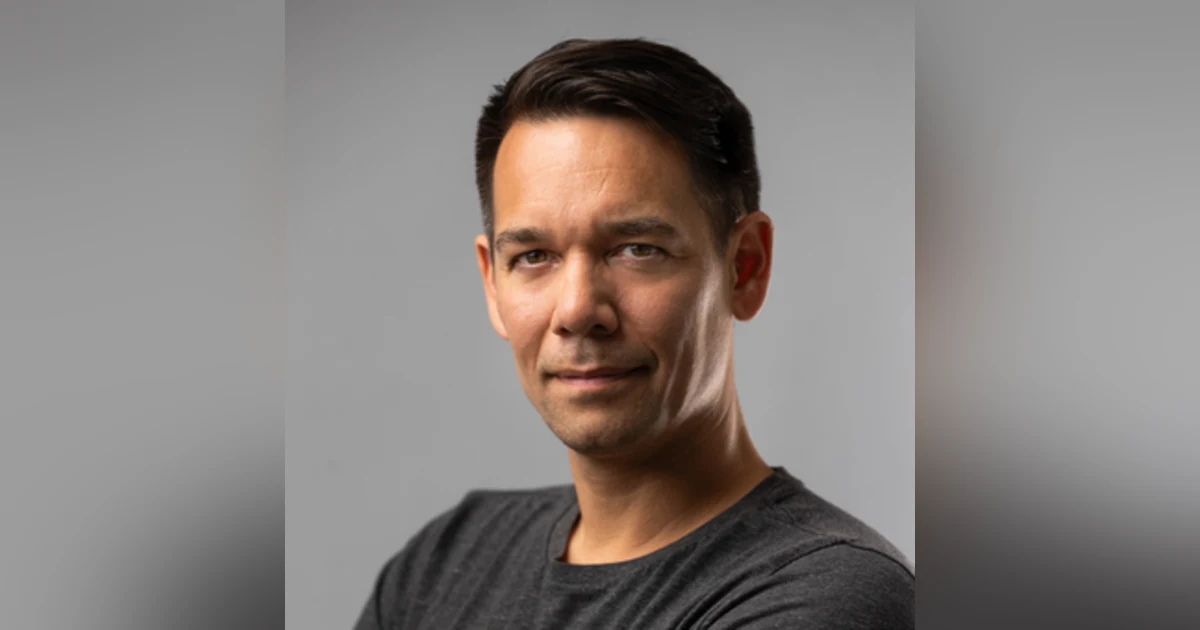

Jo Bhakdi is the Founder and CEO of Quantgene with the mission to extend the healthy human life span by a decade within a decade. Together with Quantgene’s team of scientists and engineers, he is dedicated to introducing cloud, AI, and precision diagnostics into the standard of care to enhance the quality and accessibility of care for everyone and protect human life. Born to scientist parents, Jo grew up with a backdrop of medical research before earning a Master’s in Economics from Tubingen University, one of Germany’s leading academic institutions. Prior to Quantgene, Jo held executive positions at BDDO and Omnicom with a focus on business model innovation and technology, then founded i2X, an investment platform that provides quantitative analytics for biotechnology and technology portfolios.
Hello everyone, I'm Dr. Darsha, and I'm Dr. Altamash Raja, and welcome to Medicine Redefined. A podcast where we will explore the often overlooked but necessary components of health, what we consider to be the fundamentals. We will investigate topics and practices that can give you and your patients the best chance to optimize a healthy lifestyle. It's time to move the needle forward and put the health back in healthcare. Welcome to the podcast everyone, I'm one of your hosts Dr. Darsha, and in this episode we're going to go over artificial intelligence and its role in healthcare and medicine. It is one of the topics that has been most requested by our listeners, and we're finally getting to it, and we have definitely brought on a legitimate expert to really go deep in terms of the topic. Now obviously over the last year, AI has just made such a boom, it's been talked about everywhere, not only in medicine and healthcare, but any field that you mention, it's being talked about on all sorts of podcasts, especially chat GPT, and just a lot of the newer companies and technologies that are now coming to the surface and really redefining the way that we live life and that we are going to live life. So our guest today is Joe Bhakti, he is the founder and CEO of Quanchine. His mission is to extend the healthy human lifespan by a decade within a decade. So he has brought on a team of scientists and engineers, and he is dedicated to introducing the cloud AI precision diagnostics into a standard care to enhance the quality and accessibility of care for everyone to protect human life. He was born to scientist parents, he grew up with a backdrop of medical research before he earned masters of economics from Germany. And he has held executive positions at BDDO and Omnicom with a focus on business model innovation and technology. And then he went on to found I2X, which is an investment platform that provides qualitative analytics for biotech and technology portfolios. So as you can tell from the bio, Joe is somebody who really truly understands medicine at its core, but also the business development and the technology aspects behind it so that we can drive it. For those of you that listen to Peter Atia, you may have known that he mentions that we are moving from medicine 2.0 to 3.0. And in this 3.0, artificial intelligence is going to play a really big role. So in this episode, again, we go deep, we talk about things like is AI going to replace doctors? What type of capabilities will it have in the clinic or the operating room? What are the dangers? What are the goals behind AI? Are we looking at robots and computers that patients will talk to? Or are we really just building technologies on the side to aid us humans? So we go into a lot of it. This is part one. So be sure we will come back with even more next week. But enjoy this episode for now. Let's get to it. Joe, welcome to the show. Thanks for having me. Super excited to have you here. I think that something that we've hinted at time and time again is just AI. And it's as we were talking about right before we started recording. It seems to be all the rage, particularly in medicine, because you might be familiar with this. I think chat GPT recently was announced that they passed all three levels of the board examinations, the licensing examinations, which is like one of the greatest stressors for us as they're going through our training. And so it is exciting at the same time, somewhat demoralizing, I think, for a lot of people that AI has been able to accomplish this. But I don't think anybody was surprised, right, that that future that we've been talking about for decades now is finally here. So I suppose maybe a good place to start is for those who are listening and maybe live under a rock who are not familiar with AI, open AI, chat GPT, that kind of stuff, what is artificial intelligence in that context and really what got you interested in that field? Yeah, I think, well, that's a complicated question because we have a specific perspective on medical intelligence, that's how we call it. Of course, I can go into technicalities that less interesting, they are like deep learning models, there's like no machine learning, there's pipe torches, it doesn't matter. The bottom line is systems become intelligent when they're not hard coded, that's how I describe it. If you hard code a logic into a computer, it's not intelligence, it becomes intelligence when the computer or the system can learn and come up with stuff that you never told it to do. And there are all kinds of ways of doing that. Recently, we have a huge breakthroughs with large language models and also on the imaging generation side. People in the know were not too surprised, but I think for most people who are not deep learning experts, it's just this inflection point, right? So for anyone in the industry was clear three years ago, yeah, yeah, this is going to happen, but now people who just see chat GPD four or whatever you have, it's just completely shocking. And if you see what Microsoft just did, they connected all the office tools now, it's crazy, I just saw that yesterday, they connected all these office tools with an AI that's not just chat GPD, but also does certain things with the data. So it connects basically there, what's the drop box thing that Microsoft has like one cloud? What is it? One drive. With PowerPoint and word and Excel and that's nuts like we, it's the amazing things now we have this breakthrough. And this is exponential every week. You have this shocking new thing coming out now like the APIs of chat GPD and so forth. When it comes to medicine, I just had a conversation with a finance expert right on financials, people in finance, lawyers, doctors. I always told everyone when you look at chat GPD three, there was like 10, you know, the 10th percentile in the bi exam or something and law and then chat GPD four is like 90th percentile and it goes from like, oh, yeah, being not good as not close to human at all to the 10th percentile next versus 90th percentile next version. There's no human on earth anymore who can even remotely get as close as chat GPD five will be and say if I will be launched this year probably, unless you long get his way and stops it, but let's see about that. So I think we are in the middle of the hockey stick now and that means all these professions will be massively changed in 21 months and when I say massively, I mean massively. I think the idea that doctors are just getting removed from the equation is completely not happening, but you will definitely always need doctors, but it's a massive force multiplier which means you probably need 1 percent of doctors who do a million times the work of the current doctors and 99 percent of doctors have a problem because they are fundamentally not needed because the 1 percent that gets AI empowered can do the work of a million doctors each. So and of course, most people think I'm exaggerating, but I think I'm unfortunately not exaggerating. So I think that's literally what it is because imagine you can you can diagnose as patients, you can do like 100 per minute or something like that and your error rate goes down dramatically. You still need meta systems that you design as a physician to review these things, but it's you can write reports, you can build insurance whatever you do in milliseconds now, so it's it's a big deal and this is you know we have talked about this for so long, it's like self-driving cars, no one believes in it and at the second it happens it's totally gave over right and this will happen in seconds right at some point why is it suddenly here? Oh yeah, it will never make a mistake again ever and that's going to happen. I don't know when but could have many day now. So it's a very big so I can't emphasize enough how big of a deal this whole situation is and now it's out in the wild and it's like going exponential, everyone connects the systems and it's going to be very interesting. So you know I I had started this conversation with a ton of excitement and anxiousness because I was looking to the to the brighter future as we can harness the power of AI to make medicine better right that's that's kind of what the podcast is all about but now I'm a bit terrified because you're telling me that the likelihood that I'm going to be in that 1% is very very low. Well it's it's one what's interesting is I wouldn't say it's very low because 1% of doctors still a lot of people and the fact that you're doing the podcast already tells me you have a set of skills that makes you much more prone to be in the 1% because these skills I mean I love innovation and disruption that's why I'm so excited I'm not that scared because I think it's like being a child again with a level of disruption like that because who will be the who will be these super doctors well number one they need to know medicine so you guys know medicine that's good that's your entry point that gives you then you're one of the hundred percent but from there everything you need for AI besides just being decently smart is completely new as a skill set you don't need coding you don't any additional medicine you don't know anything else other than having the curiosity of a child because we're all children now because and we are children every week again because at that speed of innovation what you need to do to complete the outcome for anyone this week is go on Microsoft I'm not paid by Microsoft just say I just said it is so yesterday and learn office the new office from scratch and empty your brain and say forget everything you know but this office thing now has worked and here's a little box and the box I can click on it and suddenly it asks me any document you want to consider we can click all that what you want me to do okay right upper summary and everything about patient zone so find the patient by documents and this thing will just do it and then you can say I like this can you turn into a PowerPoint thing for the board you'll discuss it like it's a tumor board or whatever and it does it you knowing that you can even do that knocks out every single competitor you might have as a physician so but how do you know that what is required nothing you just have to watch YouTube and do it and dabble around and that will continue now every week because now with Google comes up with something and then Microsoft comes up the next version and then chat you then this is going to have every month or every week and that's not going to end in the next three years so I think that's the beauty of it like I feel like a child again because I have never seen any of these things no one has ever seen any of these things so you know and then in four weeks ago was about chat gbd3 now is chat gb4 and api so it's like crazy and each of these things is a total force multiply of unlimited dimensions that you need to basically just dabble around do a click here here but see that does it do what I want so I think this child like curiosity with a good understanding what your objective is that's why you need to be a doctor that is what makes the one present yeah no Joe I'm gonna take the opposite I'm pretty optimistic about AI I mean I find it very curious because you know I just read a book called range by David Epstein right and his main focus is about being a generalist and one of the issues with society especially doctors that we love training we keep going further and further into specialization to a point where we think we're so specialized that we can't be taken over until you have someone called AI maybe come in and do your job and then it's tough to zoom back out and try to find another role right I think though a lot of people when they think of AI and medicine their minds might be going to a bunch of different places one might be diagnosis another might be writing and billing another might be even the emotional communication from your perspective where do you think at least the timeline is for AI to be incorporated in terms of medicine well the timeline for that is now okay that's for sure so we already fully like we are scrambling to get jet gb fully well no one knows what fully means but we definitely use that every day but we also a medical intelligence company pre jet gbd so we also have a deeper perspective on non jet gb related intelligence which is mostly how do you handle data how do you create proprietary data sets and genomics how do you handle that stuff and actually derive new medical insights outside guidelines or pre-guide like stuff that you have to invent so that's going into the deeper frontier of science and medicine where jet gb can do much because you need to design and devise new data capture systems that actually find out totally new things so that's not even medically related I think every company the same way every company needed to be a cloud company for a long time now even the most companies still don't get it but you need to be a cloud company and now you definitely need to be a AI company like now like you have to basically train everyone in these AI tools and say every month you need to educate yourself what's going on and become really good I want to see everyone using that so you know so that's the confusing piece for me is that quantin was always an AI company only now that have jet gbd and the whole craziness there now we are double AI company so we have two different forms of intelligence that we need to consider push yeah so again one of the things I think that you know in order of the potency and efficacy for AI is as we alluded to a couple times its diagnostics right we've talked previously about all these nonsense that we have to kind of put into our mind just so we can pass a couple tests and complete discard because as we get further and further into our training it's just not relevant to what we need to do and you know we need to look stuff up we can google it does take some time whereas AI can do it in a matter of microseconds right and then ultimately come to a pretty pretty accurate diagnosis and probably a treatment plan to the emotional connection discussion piece of it's going to be interesting I'm curious to see how we're going to evolve in that you know I don't think we're we're going to be able to replicate that in the near future but I certainly am excited to be rolling on that front as well but I guess on the on the front of diagnostics genomics is something that we've talked about at least offline or briefly session online as well can you talk more about your company serenity just genomics and bridge that into precision medicine in terms of how we can use that and how people are maybe even using that today how you guys are using that and then what does that mean to the average physician average consumer patient absolutely so first to the emotional part I just I forgot who that was but someone just talked to someone they said they did a test on this I was very shocking basically chatchivity doesn't much better job than most physicians go to emotionally so as you may see if you tell chatchivity okay here's a new diagnosis it's a mom and there's a kid and please have a conversation with a kid about you know how do I explain this they were like blown away so I would be very very cautious making these like sometimes it's shocking how much better it's actually in fiction or in emotional stuff or poems and stuff you're just completely blown away so I don't think that's lagging a lot that's actually very interesting interesting but on you can test it out just give it a tough case and say how do you how would you explain this to the children or and you will be probably shocked so quarantine so our what the company is quarantine and serenity is a product we're launching quarantine is a deep genomics company so we do very advanced human genomics from standard you know whole exome sequencing pharmacogenomics have we connect medication issues to your genes to just basic genetic risk factors for diseases and what that means for your risk profile and what that means for your preventative care strategies to very new platforms we're wanting is one of the leaders in the space the one most important being liquid biopsy so that is a blood-based multi cancer detection technology we take three blood samples 30 milliliters extract from the plasma yourself 3 DNA DNA outside cells from cells that have died that includes potential tumor cells or tumor DNA we then sequence it with single molecule precision which is a new thing we can actually investigate every single molecule of DNA at certain targets identify how many targets carry cancer variant tumor associated mutations then run it against an AI model that we trained with our own clinical data which is a simple model by the way it's more about the data than the model and then detect cancer's early stage and of course it's a total game changer because with a simple blood draw you can now detect basic all cancer types except for people bestoma at early stages in the blood and by doing early detection that's what most people are not fully aware of if you have we just had a case super healthy person you know mid like mid 40s was we detected our one of our systems detected kidney cancer early stage totally shocking like out of blue early stage kidney cancer got a recession like we removed was back in the job one month later cancer free if we wouldn't have detected that cancer you can look up what it means right late stage like if you have kidney cancer symptoms meaning stage 4 maybe stage 3 maybe most likely stage 4 you have a problem like your survival rate under 10% so you go from 98% survival long term survival to under 10% 5 years survival so it's like dramatic same person same cancer if we would not have detected that one year later or no one can exactly predict but one to three years later very little chance of survival and what that means is by having these new precision medicine AI enabled but also such as AI genomics plus AI imaging plus AI we combine these in the serenity product by doing that I am convinced I don't have the data yet for specifically serenity to prove we need more patients for that but I'm convinced we already defeated cancer this serenity I'm convinced if you do serenity once a year your chances of dying of cancer have been reduced by at least 80% over your lifetime and I stand with this statement I know physicians will go a little mad on me like how can you even say that but there is a lot of evidence surrounding full body MRIs and AI enabled plus genomics in conjunction with each other plus knocking out all care gaps that's part of us we also see all your standard screenings in what's late we have a big data intake so big data preventive care data to just adhere to guidelines plus deep genomics plus complete imaging in conjunction in a single product for under five thousand dollars a year still expensive but affordable for a lot of people in my opinion you will see that the knock down cancer deaths by 80% in that population that it hears to that once a year and that means we knocked out cancer as a top 10 cause of death so that's also like something people have to get aware I think we are already in a period where we have technologies to eliminate cancer from the top 10 just wow I mean it's it's pretty exciting here right just think about how much cancer really derails a lot of people's lives a lot of people's livelihood I am curious though when you say deep genomics right it makes me think of deep learning and I'm assuming you're kind of meaning it in that same sense for the listeners who might not understand those that that terminology right when they think about your company and you talk about getting blood work and putting it pitting it against your AI model can you just explain briefly maybe you know if you're explaining it to like a fifth grader what exactly doesn't mean to use AI within your company so with deep I actually don't mean AI in this case I just mean literally deep okay because it's um when you think of AI there's always like I don't know who said that same ultimate or something how they think around it's like three pieces of the equation data algorithms and compute power right that's the three pieces of innovation that drive the engineering of AI and there's always debate is it the algorithms in the 60s I thought it's all about algorithms like who has the magic algorithm that makes it work today we know the algorithms are half trivial it's always the same thing you're doing so it's more about the architecture of data and algorithms plus compute power you need massive compute power and you need massive data so it's still a triangle but data becomes more and more important and compute power so you can have basically the same deep learning model but if you have a trillion data points and the other person has ten you're just going to win even if the other person has a hundred times more valuable algorithm it doesn't help so in genomics deep means okay fifth grader it's very kind of simple if you look at your healthy genome that's what normal genetics is you have 30 trillion cells we want to know okay dash who are you genetics wise we take your cells and we start sequencing your cells like we have an instrument like a machine like a hardware chemistry machine that reads out your genome and the questions how often do we have to read out how many genomes in order to get an answer and the answer is roughly it's called the sequencing coverage how often you have to look at each point statistically the answer is a hundred x you look at a hundred times at your stuff why because it's complicated it's distributed we want to make sure we capture each piece at least 20 times because you have these two chromosomes and two alias so mom and dad so if you capture something 20 times and there's 50% elite frequency you see 10 times right because it comes from only one part and the other part is different that gives you enough resolution because if you only see it twice it could be wrong so more we needed to pretend that when we do cancer detection why it's deep you have a whole different problem that's why it took so long to develop these things we sequence at a depth of your 25,000 to 50,000 x instead of 100 because what we just did with your healthy three trillion cell average with a hundred now we have to look at the little DNA fragments and make sure if I take a thousand fragments from a thousand DNAs and one stand from a tumor cell and 999 do not stand from a tumor cell because it's needle and a haystack problem you blood it might be just one in a thousand I find that and statistically then you don't have to look a hundred times if you have a thousand pieces you want to find one you can't look a hundred times you need to look actually 25,000 to 50,000 times and you can imagine what that does to cost is like a linear increasing cost so that's the problem and technological talent is all over the place because you have error rates so that's why we call it deep you have really imagine a stack of DNA now you have a deep stack like a thousand two thousand three thousand and you need to investigate every single piece and find the one in one or two thousand that carries a different variant than all the others and then requires a super ultra deep sequencing and you deep you take a deep dive into the DNA structure of your blood as opposed to normal genetics got it thank you so much for that because then you get massive amounts of data and then the AI has to deal with the data so it's kind of indirectly absolutely so you're dealing with accuracy and speed as well right that's the the name of the game especially for you as a CEO right if you're trying to beat everyone else to the market or whatnot so it makes a lot of sense like I can tell you just as a just as a rule of thumb why can we detect all these cancers early stage in the blood now was or traces of these cancer signals well if we do one sample a single sample that we sequence we get 10 billion data once like each patient delivers 10 billion unique letter reads like DNA so that's very different from a ps8 test like if you do a ps8 test you literally get one data point the number we get 10 billion and you need to feed it into a gigabyte of data you feed it into our amazon cloud there's a huge bioinformatics pipeline that you have to read out every single letter align it to the human genome compared overlap map read out filter out errors so it's like a bigger creation well okay so I want to take it back to serenity so you did mention cancers liquid biopsies what else can genomics do for us currently so it can do a lot of things so number one cancer detection that's I think we have most people are the most excited number two something very different it can read your genetics understand your genome understand basically imagine you find a lot of variants on your genome that makes you different from other humans and then map these variants to a database that understands the associated medical risks so oh you have that variant that is found to elevate your lung cancer risk 8x just statistically that is very important so we can build these risk profiles and that's changes the standard of care because instead of care the screenings we have the preventative screenings we recommend to the population are normally very low resolution they say your dash your mail your this age now you need a fit test a year or every 10 years a colonoscopy and you need like every two years and you're physically or something once you run the genetics and some other things you figure out well you're not just that age and male you're much more you have a very you have an 8x high risk for that but a 2x lower risk of that therefore you shouldn't get every year this you should only get every two years but you should get this thing every six months and as you can imagine that's very very important because that changes the equation of risk and preventative care and that has a direct impact on your death risk mortality risk so basically it's like you want to the future of genetics that is here now allows us to create much higher accuracy risk profiles and much much better preventative protection much better and it's more magic now we can basically see oh dash we ping you with a text message like it's time in three months you should schedule ABC done so from your perspective cycle that was easy but what's behind that is our own crazy situation where we kind of assess all these risks we tied into guidelines we know there's a guideline for high risk colon cancer candidates they're very changes the screening frequency and the screening type and the downstream you know confirm it or the diagnosis so there's a lot of complicated stuff that you don't need to know you just need to know we have a high precision profile of your risk and we make sure we are knocking out these risks very systematically with a text message just say it's time to do this done love that there's a ton of stuff that I want to follow up on I'll start by you know asking I think are there any types of cancer that this type of screening genomics-based screening cannot identify in terms of your DNA so in theory the answer is no because every cancer carries some form of mutations somatic variance on the genome otherwise it would behave like cancer in reality there are two caveats number one we are early right so for example quenching has limited data on certain cancers theoretically we can got a guarantee we detect them but we cannot tell you with one sensitivity and specificity because we have insufficient samples so and since there are 50 different cancer types it's going to take a while before you have them on all types but theoretically you can already argue we're going to find them all then there's gluoblastoma which is a little different brain cancer because there's a blood brain barrier and there's a huge filtering going on with cell 3DNA from you know any kind of list with that's on the other side of the area so we probably can detect it there it's actually something that we have to study that show we can do a little rest of mind the blood but it's going to be my gut feeling is at a much significant reduced rate and there are other cancers like leukemia funnily enough leukemia which is like should be easily detected in the blood it's actually very hard to detect because the mutation profile of leukemia is very problematic so leukemia is very heterogeneous in terms of if you take a hundred leukemia patients and see what mutations they have they're all over the place very inconsistent they are very heavy on TP53 which is a tumor suppressor gene and that's always bad news because it's like spread out so it's much harder to detect the signal for leukemia for example pancreatic cancer or hormon cancer very k-res heavy and k-res is such a strong it's a very limited number of mutations on k-res that change the RAS protein and the RAS pathway and so it's like a handful of mutations that occur at 90% of pancreatic cancer patients so that makes it a much stronger clear signal whereas in leukemia it's just a mess right and then you get a mess and some people have also messy mutations on TP53 who don't have tumor so leukemia is also a tough one so you mentioned earlier imaging that in conjunction with this type of data and this type of information can be powerful right it can strengthen the signal if you will what other than whole body MRIs other imaging modalities that you guys routinely use so that the fundamental logic behind why we're doing it number one is if you have a signal from liquid biopsy from genomics like this deep genomics signal there's always the same issue with medicine how do you know it's not a false positive and what point are you confident and sometimes these signals can be very thin like there is a signal we found basic two mutations like literally two molecules okay what do you do you can run it against the control sample and see well looks like no one ever had that many as a control but still just two to be a little not confident should we follow up with something or not now let's say these two are associated with potentially liver and kidney cancer right statistically like there would be most likely either liver or kidney what we found okay if you then you're imaging full body MRI and you don't see anything in the kidney or liver you say like wow there's one tiny little signal genomics maybe not enough to actually go downstream let's just wait and do it again in six months if the imaging comes back and in the kidney you see a tiny lesion where the radiology says says well I wouldn't do anything because could be kidney cancer but the odds are like under one percent could be just a fatty lesion then you combine the two and say like well but what are the odds that you found a tiny little genomic kidney cancer and and a tiny imaging kidney cancer signal of all the organ systems and all these millions of mutations you found these two they're just codes are exactly one organ you have a totally different signal strength so there's a squared correlation geometric correlation if you have orthogonal signals they are completely orthogonal they are completely independent signals right a lesion in the kidney on imaging has nothing to do with genomics like there's no way that this correlated if it's missing or not likely so that's why we love these two completely independent angles and no one has ever done that by the way so it's the first system that really combines two cutting edge systems to your question we don't unless you are a smoker and you need CT scans on standard of care we don't combine it with any other imaging x-anti like before we know anything because it's an agnostic screening it's for healthy people and you want to basically have a broad inside and if you don't find anything don't do more stuff now if you find something that requires downstream specific organ specific screenings then you are off to the races right away and say what we need like whatever you need that can be targeted MRI can be targeted CT can be all kinds of stuff that depends what you find and what the guidelines are got it yeah I know the orthogonal signal thing makes sense to me right it just creates a nice little x for you x marks the spot and then you're you're much more likely to hit that bull's eye at least from a detection standpoint and then maybe early intervention when appropriate you know one thing I realized we forgot to ask is you mentioned similarity hasn't been officially rolled out yet is that correct uh yeah I mean we are now in the middle well we are we wanted to do a stealth launch but now we just rolling into this whole thing because people start to use it and the words start to spread so we get people in so but yeah we want to we're still preparing I think our websites and marketing could be a little stronger before we do like a big bang thing but here in LA and Miami we're already having people going through it and we can already tell they're telling other people and which is good for us so we didn't pull the real PR trigger yet because that's just a marketing thing we want to be sure the website is like clean but the system is fully up and running patient goes through it and we get very very strong yeah part of people so part ignorance on this but have other similar systems genomics based testing been around in the states or other people utilizing this type of technology to for early detection so no one brought it together in a product you can just buy and combine that and get a report that incorporates big data genomics and imaging in a singular report to exist safe but there are other people like grail for example that send it in policy gallery I mean I have my opinions on it I don't want to say too much I don't I think there are other systems I'm more impressed by than grail because when it's stuff I don't understand and normally genomics that's not because I'm dumb or don't know stuff just don't totally understand how this works so they are also in big I think trouble on a corporate level right because they were bought by Illumina for reasons no one really understands and then Illumina got trashed the stock the capital markets because they didn't understand it now today actually today it's an interesting day the FTC ruled that actually the merger is not approved so the merger was not approved in the US it was approved in the US and not in the European Union and now suddenly it's not approved in the US either so the reverse decision which is very bad for grail because I probably have to get kicked out of Illumina now I don't want to speculate too much but based on how much money they raise and how they burn and that they don't make much I don't understand exactly how they would survive outside Illumina so there is a whole problem there and I'm not just bashing them I think there are other people who are not live who actually had strong signs and interesting stuff three normal interesting example they're working on that I think they have a great team thrive at exact sciences they were bought by them they have very similar technology to ours for hat in the past now we are more updated but maybe they also updated it so this is definitely coming but if grail goes away one thing would be the only or serenity you see only system life but that could change over the next 12 months gotcha well Joe as we've started talking about this and just learning more about AI genomics you know I think both Darshan have realized there's no possible way we can do this topics service and our audience justice by wrapping this up in the next couple of minutes and I know you have to go so if you'll agree I certainly think we're going to need a part two just so we can dive a little bit deeper into how it's going to continue to develop but before I let you go I do want to have two more questions I think one of the things that comes to me and concerns me you know understanding the healthcare model in this country at least right we're we're practicing Darshan and states the concerns that people have when we have this type of advanced testing and and risk stratification that we're talking about early detection really just deep deep knowledge that people can get it can certainly be powerful right and it can be actionable but it can also create an opportunity for unnecessary testing unnecessary anxiety and for lack of a better word harm I suppose this is something that's been brought up to you more than once as you've developed this out and brought it to multiple providers and these concerns have been raised how do you address that do you have thoughts and I just be curious to get those so there's a we definitely need a part two for that and I think that's a very important topic like now we got the takedown we understand the potential now what is happening when you actually do this and the challenge in healthcare is that and and we kind of innovated this whole problem and addressed it in a very new way with serenity so when you look at serenity this is not a liquid biopsy test serenity is a service to keep you and your family safe from harm so why did we not sell it as a liquid biopsy test because we said the test alone is not gonna it's gonna potentially create much more harm than good same with a full body MRI same with comprehensive medical data if you just take in the old system of medicine everyone was very specialized to your point in the beginning that's also true for vendors if you were a diagnostics lab or genomics lab you drop the ball right after delivering the test result to a doctor not even patient like here's your result by and then the doctors has located what do I do now with this what we realize is things have become so complicated and so much upside and integrating this you cannot do this anymore we believe and vertically and horizontally integrated medical systems so if you provide genomics you should also provide imaging you should also provide medical intelligence you also provide primary care physician advisory with primary care docs who are trained on the whole system you also budget out the time you need for the patient you also consider how long consultation need to be and you also consider what the downstream care coordination has to look like because if you don't you have a super powerful tool you put in the wrong hands of the wrong physician this physician doesn't understand what it means and there's only two minutes with the patient because that's how they schedule and then you have a giant mess so the question of anxiety even falls positive but specifically downstream harm from false positives these are not fixed variables that's the big mistake of the current system to say what is the false positive rate and the harm rate of your test in my opinion in the future that's a dumb question because the answers we don't know it depends what you are going to do with it and in other words for a patient don't just buy one test and give it to a random physician buy solutions that keep you safe where whoever provides the solution is accountable for the entire outcome and manages everything because the physician needs to be integrated with the test the downstream coordinate needs to be integrated with the physician the medical intelligence portal needs to feed the physician based on the clinical data and only if you do it all together can you achieve great results that's a very new system because that's why serenity is self-payer right now or executive health because we don't want just to sell liquid biopsy mildly cancer detection to some wild Kaiser Permanente thing and then you have no idea what they do with it and we look bad because they might have a lot of false positives because they're read it wrong I'm not badging Kaiser I'm just taking this is a non-integrated system to us so there is a future of medicine you need to own the outcome and to own the outcomes like Tesla or the iPhone right Apple cannot say well it's not my problem I produced a chip and gave it to the phone guy and then the phone guy mess the chip up not wrong like no they they own the iPhone say if the iPhone doesn't work it's our fault we cannot say intense fault what Tesla they cannot say well you order the Tesla but you know bad luck you know the battery people messed it up it's like no like you order the Tesla you get a Tesla so the same should be true medicine but it's not right now that's why we invented serenity so it becomes true I love that I mean it's a it's a whole systemic mindset perspective change it's a steep uphill battle Joe I love the idea behind it certainly want to explore this further with you we want to be respectful your time I know you you have to kind of jump off but we'll table this and come back to hopefully somewhere in the near future when our schedule is aligned but any parting words that you want to leave our listeners with our audience with any pressing things that come to your mind that you think is worth including here I think that last topic is super important should be part of part two what actually does it mean for you as a patient and how do we build the future of medicine my advice to patients is when we look at healthcare and talk to other people vendor systems technology doctors the excuses are the same they say patients don't want to pay for healthcare themselves therefore the insurance has to pay therefore everyone's going to get sick and die because we can control that craziness because they're going to say oh we can't pay for this go here and now not that and now your food and no one can build holistic systems my advice is if your health is important to you you need to wrap your head around the fact that you need to pay yourself because then you become the boss and you pick and choose what is good number one pay yourself and number two then you're the boss and seize control of it and really try to understand what people are trying to sell you that's how you make a giant leap in personal protection love it awesome until part two thanks Joe awesome thank you guys thanks for tuning in everyone I hope you found that episode as fascinating as I did you know I was very pro AI and Joe has really helped shape my framework even more about it what especially when I talk to my colleagues about the future of medicine you know it's not necessarily black or white there is a lot of gray area but having an expert like Joe come on can really just elucidate those loopholes and those things that we weren't really thinking about that maybe we should so the future looks promising and next week is even more promising because we'll have Joe back again for part two as always our medical disclaimer everything in this podcast is for educational purposes only it is not constantly the brightest medicine and we are not providing medical advice no physician patient relationship is formed and anything discussed in this podcast does not represent the views of our employers we recommend that you seek the guidance in your personal position regarding any specific health related issues and thank you to our team Ethan Jew and Harita Yebore for the production of this podcast and we'll see you next week as we talk more AI