

 Apple Podcasts
 Spotify
 Castro
 RSS Feed
 111. Beyond the Bump: Redefining Newborn Care and the 4th Trimester | Jess Daigle, MD
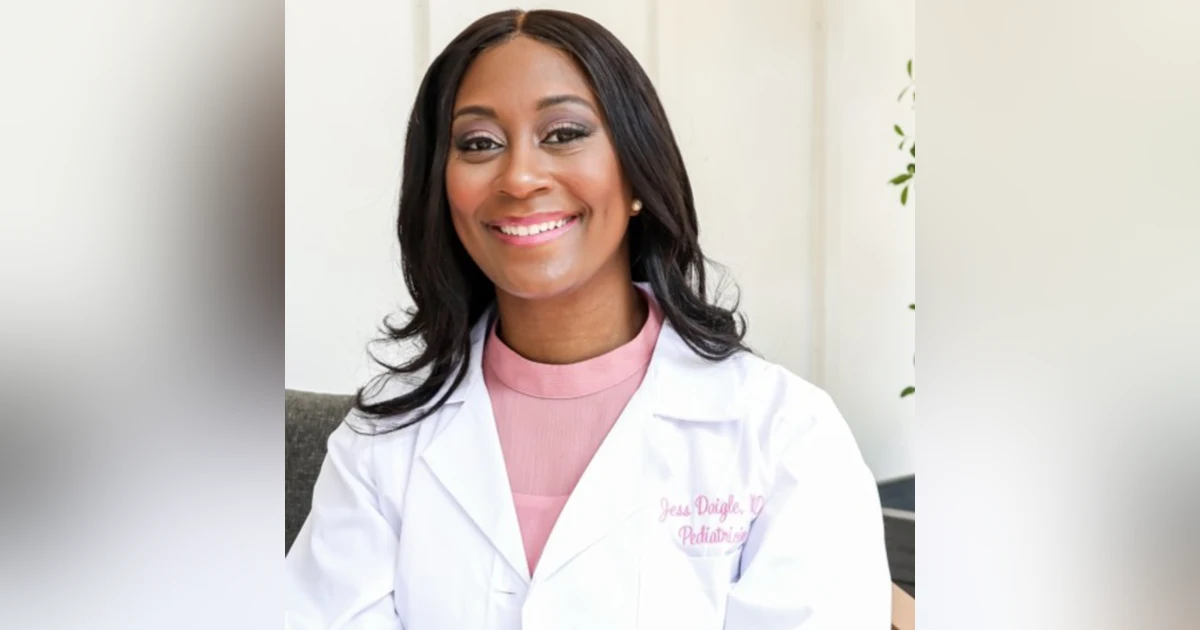

Jess Daigle, MD, is a a pediatrician who specializes in newborn concierge medicine, placing emphasis on individualized attention, comprehensive support, and nurturing the overall well-being of both the newborn and their family. She received her medical degree from Louisiana State and completed her residency at Morehouse School of Medicine. Having witnessed the transformative power of a tailored approach to healthcare, Dr. Daigle made a conscious decision to depart from traditional medical practices and delve into the world of concierge medicine. Through her work, she aims to redefine the newborn experience, particularly during the critical 4th trimester, and challenge the existing healthcare norms by offering an alternative, empowering path for parents. Her expertise encompasses a wide range of topics, including newborn care, postpartum support, breastfeeding, sleep training, and early childhood development.
Hello everyone, I'm Dr. Darsha, and I'm Dr. Altamash Raja, and welcome to Medicine Redefined. A podcast where we will explore the often overlooked but necessary components of health, what we consider to be the fundamentals. We will investigate topics and practices that can give you and your patients the best chance to optimize a healthy lifestyle. It's time to move the needle forward and put the health back in healthcare. Our guest today is Dr. Jess Dagle, who is a pediatrician who specializes in newborn concierge medicine, placing an emphasis on individualized attention, comprehensive support, and nurturing the overall well-being of both the newborn and their family. Having witnessed the transformative power of a tailored approach to healthcare, Dr. Dagle made a conscious decision to depart from traditional medical practices and delve into the world of concierge medicine. Through her work, she aims to redefine the newborn experience, particularly during the critical fourth trimester, and challenge the existing healthcare norms by offering an alternative and powering path for parents. Her expertise encompasses a wide range of topics, including newborn care, postpartum support, breastfeeding, sleep training, and early childhood development. You can expect a refreshing perspective and valuable insights into newborn concierge medicine, the significance of the fourth trimester, and the transformative power of leaving traditional medical practices behind in this episode. Dr. Jess Dagle is truly an inspiring healthcare professional who is making a profound impact on the lives of newborns and their families, one personalized journey at a time, and now for the episode. Dr. Jess, thank you so much for coming on to medicine redefine. Thank you so much for having me, it's a pleasure. Yeah, pleasure is mine as well. So, you know, I was really curious when I was doing some research listening to some of the episodes that you've been on other podcasts, I've never met or talked to anyone who's gone from medical student to doing like concierge pediatrics and more specifically newborns and health and postpartum mothers, tell me about your journey, how did you get interested in that and then really figure out that's kind of the way you wanted to practice? Yeah, so from young, I always knew I wanted to be a pediatrician, particularly a baby doctor. I formed my first preterm infant and I was like, I'm in love. And so, I set out on that journey to become an antitologist and so, you know, won't for all the traditional training, you know, all the regular school, then in med school, to get residency. And in my residency, I actually end up having like a miscarriage and that was my first window into understanding more about how doctors interact with their patients because I felt like I was treated like a doctor going through the process instead of a patient. And then I had my husband who wasn't really understanding why we couldn't make certain interventions, you know, and I realized that, you know, the healthcare team wasn't really catering to his lack of knowledge of the incident. And so, that was like my first thing, like, you know, like you file that away, right? And then I ended up getting pregnant again and then my son was preterm and this was going into the end of my senior year in pediatrics residency and he was born at 31 weeks and was in the NICU for about five weeks. And so, I was like, well, look at that, I want to be a NICU doctor and I'm having my own preterm infant. I was like having that experience, right, that real life experience and that also then to open my eyes and to like more of what our patients are going through, like the strongest they're enduring, especially with bringing home a preterm infant. He had to go back on two feedings and just other things that it was a struggle and it didn't matter that I was a physician. I still had to deal with the same emotional torn walls and doubts and fears that I imagine my patients were going through. And so then I got into fellowship but I was separated from him a little bit. And so then I ended up resigning because I, you know, it's one of those things and this is why I'm so passionate about helping moms and babies now is because a lot of people don't really know what motherhood is like and it's until you're in it. And I didn't really know what kind of mom I would be. I don't know if anybody really knows what kind of parents they're going to be right. I think you have hopes and dreams like this is the way I will parent. But I was really like struggling being separated from him. Like I felt real guilty and like, how am I pursuing doing this when I, you know, I have my own preterm infant that I need to take care of, right? So I resigned from fellowship and, you know, getting a job in a level to NICU which was great. So I was able to combine the knowledge that I had already attained in that first year. But, you know, and continue on helping the patient population that I wanted to help. So, you know, I did it for six years and then I was like, but I feel like there's more to me. You know, and that's where that book made for more that we did with Dr. Una, some of the other women in the HIV business school was perfect because I felt that resonated with me like, yes, I have so much more to give. And, you know, but I didn't realize that about myself at first, you know, my only had that one dream, right? And so then I started to think, well, what do I enjoy about my patient encounters? And I love like educating my family's like the bedside right there with families, especially explaining to them what's going on with their baby, helping them through difficult times. I felt like that was my skill set, that was my gift. And I was like, how can I spread that out a little bit more than just the hospital? And so I, it also just simultaneously been thinking about old school medicine. And interestingly, for my personal statement to med school, I actually talked about my draw to becoming a doctor was that old school medicine of that personalized care of fill out. You would hear people describe how the doctor come to their house because, you know, that was even before my time. But I like the idea of that personal, you're being vulnerable because medicine is vulnerable. It is personal. You're, I mean, like, is your health, like your money and your health are like the two things that I think you get personal with, you know, and so I'm like, you know, like with, for somebody that trusts us with their vulnerabilities like that, I think that's special. And I think that we should look at that as a privilege and how can we preserve that relationship? What I like to think was that good doctor patient relationship. And so, but I talked about in my personal statement how, you know, you could see medicine was changing. Even while I was in school and going into medical school, like you hear other doctors talking about, I actually used to get discouraged. People say, don't, don't go on a health care. It's like turning crazy, insurance is taking over, you know, and then get it. I didn't really get what they meant by that until being out in workforce and you're like, man, they were right. They were telling the truth. You go to school to be help people and then you get out and start working and you realize there are so many systems and politics. The business of all these things that tend to hinder you from doing what you really set out to do. Like I think 99% of the people who set out to be a doctor really had altruistic reasons for doing so, right? Right. So, it was a combination of who I like to serve, taking care of moms and babies and being able to provide that time in an outpatient setting too because the hospital I was unrestricted because I considered the patient's best side if I wanted to for 15, 20, 30 minutes if we had to go through things, I wasn't really restricted. And so, I was like, how can I recreate that on an outpatient basis? And I stayed away from general clinic because you are forced to see so many people, like, they want you to hurry up. I remember I was in residency. I used to get in trouble all the time because they'd be like, you in there too long with that patient. Nothing more to use, yeah. Get the mom, she's a 60 year old and she just found out she pregnant. You can't talk to her in five minutes, you know? And so, you know, just little different things like that. And so, I was like, you know, who's to say that I can't create the practice that I desire, right? So, I started to do some research and I found this, this Indian doctor, which I love her Dr. Naya Patel and she's in Colorado and she was doing, like, the concierge medicine, like, at Google, like, home care because I was like, well, people do home health. Like, home health has always been there, but it's been other people like traditionally nurses and, you know, like, therapists and things like that. So, I was like, well, why we can't bring the doctor back to the home, right? Like, everybody else goes. And so, when I saw she was doing it, I felt so encouraged about this is possible for me because, you know, someone's already doing it, you know, you feel a little bit more justified in here. So, that's really how I got into the desire to do it. And even since then, like, I resigned from the hospital last year and started working on it a little bit before that, I've even evolved a little bit more into my understanding of what are the needs that a mom really has because even me going to the home as a pediatrician is technically not enough. They really need, like, an air team of people that's helping them on their journey because it's not one person that can do everything for them. So, that's something I'm more even now, like, how can what I want to do be a part of the bigger picture? Yeah, for sure. I love that story, right? I think when the pre-meds listen to this, I mean, they got to replay the first seven minutes of this episode because there's so much value in what you talked about. I mean, I mentioned this a lot of times that as an 18-year-old, you're a pre-medical student and you have this dream of just helping people, you know, and, of sure, along with that, it was the money and the prestige of being a doctor, and it's a dream, right? But in the end, you're there and you just manage yourself in a white coat, make it a life-saving decision, right? And then you get into medical school and you have no idea what medical school is like as a pre-med. You just go through it, take your exams, whatever, and then you go into residency and as a med student, you have no idea what a resident, you know, truly is. You just see them, you shatter them, you talk to them, then you're in residency and you're like, all right, I'm a real doctor now, but you have no idea what attending life is like, right? And so, I always talk about when you connect the dots from pre-med to attending good, you're 18 and you have no idea what you're going to get yourself into, which I totally understand why so many people say, don't do this path, like, you're just going to be in front of a computer. And hey, as much as I love admin work, I would much rather talk to people, like, that's my strong suit, that's your strong suit, like, we love coaching and helping people in front of us. And so, I see a lot of value in what you're saying. Was there a turning point, you know, as you were the patient going through this, was there a specific conversation that you remember or a specific event that made you say, I want to switch the way I take care of patients, right, rather than being a hospital, rather than being a clinic, obviously, because you're seeing so many patients in so little time. Was there a true turning point during your journey that said, I'm going to now shift over to this type of work? Well, I feel like I've always been a truly curious person. I've always wanted to know why and understand things, and especially, like, my husband will always like, don't doctor me like when I come in, when I come home. He's like, you're not in work anymore, because I'm always on work, why did you want to do that? You know, he's like, oh, so I think I've always been a very curious person, which I think has served me in my medical journey, because I've always wanted to learn and be in, you know, it wasn't, it didn't feel like a struggle. Yeah, it was always like, hmm, let me see why that is, why that must have moved that way, right? But I can, I can serve for sure to tell you, when I was a resident and observing, I really took to observing my attendings and seeing your residents, like how they approached patients. And I owe myself that I was going to take all the good parts of what I'm learning. And anything I thought, hmm, that's probably not a good idea. Make note of that too. Yeah. So I used to like, when I would watch around, I would look, I would be, you know, observe the attending that was really good at reassuring at mom, like, I noticed the difference when, you know, this mom was worried about this, but after this conversation, because this person was so good at explaining or whatever, you know, now they feel a little bit more reassured or whatever. I think though, I think one, I paid attention and I decided what kind of doctor I wanted to be very early on. And then when I had kids, I then had that extra layer of understanding of what a family, like how important it is to make sure that they understand what's going on with their kids instead of it just being like, on the doctor, do what I say, you know, I realized the team approach was so much more rewarding. And, and almost like taking the arrogance out of, out of the medicine, which I think is one of the things that we do need to do. Like, I think we've forgotten how much of a privilege it is. And we're just kind of moving forward in arrogance in a lot of ways instead of being like, you know what? I'm partnering with my patient on their health journey, right? It's different if somebody feels like you're in it with them versus, you know, like you just, it's like everybody bucks that kind of system eventually, you know, it's like, but it's like, but the person really cares about my outcome and they're taking the time to show that because they value that I need to understand certain things, they're valuing my questions. They're not looking at it as a challenge, they're looking at it as, you know what, maybe I do need to explain a little bit more about this hypertension or this diabetes or whatever it is. You know, because sometimes we take for granted that people really understand stuff when they really don't. And so I think it's a combination of just early on deciding what kind of doctor it'd be and then letting my life experience this factor into that and kind of reinforce that even more. Yeah. Love that. Ultimately, you know, my co-host unfortunately could make it today, but me and him always talk about the root meaning of doctor, right? And Latin means docerra to teach. And, you know, one of the quotes that I love, I forget who said I'm an Einstein, but he said like knowledge, that feeling of when you truly understand something is ecstasy, right? And like I want to give that to my patients so that they feel empowered to take over their life's journey, right? And of their help, which is the most important thing you have in this world, in my opinion, I mean, without it, you're not here in this world, right? So love it. Love that. I love that too. I've never looked up the word that for like his origin. See? Look, I'm learning something now. There you go. There you go. I'm curious to hear about your practice. And let's get into kind of the science of it and your relationship with moms and newborns. So you talk about how you help in the fourth trimester. Can you explain what that is? Yeah. So the fourth trimester, which was a term coined by a pediatrician actually, it's like a little piece of Dr. Harvey Carp and so he postulated that newborns were still undergoing a lot of changes, even though they were external. So you know, we like to think, okay, the baby is born, that's it. Well, they're still having to go through a lot of physiological changes and they're still learning. And so he thought that maybe we were kind of rushing like the babies as well, but also along with that, the moms are also undergoing their own physiological changes and hormonal changes. And I remember I used to laugh before, you know, I had kids when people used to be like, oh, those pregnancy hormones, I used to think that they were like exaggerating. And I feel like I feel ashamed to say that as a woman, but it's true, like I just kind of felt like people were just like generalizing it, like, you know, trying to label women. But the truth is there are hormonal changes that are affecting your mood and affecting, you know, even like your body composition and just so much is going into that process of after having a baby. And when I reflected on my own journey, I'm like, yes, like you're undergoing so much. And then you're trying to, you know, see who you are now as this mother, this role. And then you have this baby and you're like, I'm responsible for a person like, you have to sit with that like, that's deep actually. You have a whole life that is like relying on you. There's no longer these you have to be concerned for yourself. And I start to realize that we don't really prepare women. I had a mom actually on that I saw on one of my local assignments recently in Instagram. He was like three, I asked her like, what are three things she didn't know, you know, she was coming to new mom and she was like, no one told me it was hard. Like I just feel like my friends can tell me they just said it was great and the baby is cute. And she's like, you know, my baby is cute and stuff, but no one to prepare me for the complete life change. She said, no one told me that I was going to be kind of, you know, mourning my whole life, you know, while I'm living this new life. And that I needed that I wasn't going to just bounce back right away to the person I used to be, you know. And so I kind of asked her some probing questions to get at like, well, what do you want your life to look like right now? What do you, what do you envision? And in reality, if someone had told you it's hard, what difference would it have made for you? Because sometimes somebody can tell you something, but until you're in it, it's like just like we just said. Yeah. Don't go be a doctor. You're like, but I mean, there's my dream, like, you know, and you don't have the same perspective as them. So we still go ahead because we're like, which is somehow think maybe our experience is going to be different. Well, you know, you know, you know, that humanity, like we always think, maybe they just have a different story than us, you know. And so, but the truth is, they were telling the truth, like it is hard already, right? And so I was just tell parents, instead of more than focusing on that, that's why I work so hard to validate that experience because some things I cannot change for you. I cannot change that labor is painful, but I can support you in it, right? I can say, yes, I do get that. This is hard. But hey, what about this? This is what we can do to alleviate that pain or alleviate that struggle. And so that's really what the fourth trimester is. It's really that transition period from being pregnant to getting into that, to that really into your motherhood journey. Yeah. And it definitely seems like a crucial period. Actually, one of the questions I was going to ask you, which you just answered was, what makes a mother feel so vulnerable in that period? But I think you answered it beautifully. I mean, right? It's not just the hormones, but it's also this, I don't want to say existential crisis, but it's almost this like thinking about life and your life and your new purpose and meaning possibly. As you do have to take care of somebody now, right? That's a huge responsibility that, like you said, no one knows until you go through it yourself. You know, resident and same people and with their new babies. And I was like, oh, this baby is cute, but I wasn't going home to take care of this baby. I will keep the bottles and where if I think they're going to eat, right? And why they have this new ration? Why does their poop look like this? And why are they shaking? I mean, babies do so much stuff that's normal. But if you don't know, you think you're like breaking them for real. Right. Right. Yeah, absolutely. So I want to go through some of the lifestyle factors that you would teach or things that you have value on that you would tell mothers when it comes to themselves or their newborns. First I want to talk about is emotional health, right? We just kind of touched on it a little bit, but it's depression after delivery seems to be a very common place and oftentimes goes either undiagnosed or misdiagnosed. How do we, how do we raise the rates of accurate diagnosis? Right. From a patient advocacy standpoint, but also from a physician, right? A pediatrician or their OB guy. How would they also assess to make sure that we are taking care of the vulnerable patient at that time? Yeah. I think you touched on a good point. I think one of the biggest things and which is why I'm even building or adding to, you know, the problem that I want to build is really recognizing these things early on in the pregnancy. For some moms, waiting until the fourth trimester is often too late. So education is really the biggest thing in awareness. So putting it ahead and saying, hey, this is possible and this is what it looks like. There is the e-burgr scale that we can do as pediatricians and OBs, but then it's not enough to provide the scale to the mom is what is the next step. So we need to be aware of who can help the moms and what's their access to that kind of, okay, are they, is their insurance even allowed them to go to a psychiatrist or a counselor if they're who's right? Because we're really good in medicine about checking off saying that we did something, right? I was talking about that today with like a baby who was in the hospital, who's mom, you know, did drugs and pregnancy. And, you know, when DSS comes, they like to say, okay, we check off, the baby is going to this person, but they're not really aware of what is the home environment really like, are you going to really be checking in and see, is this baby continuing to be safe, right? So instead of just being able to say, well, we did our part, right? I just like, yes, check, you gave the scale, but is there some follow up? Like, did you check back in two weeks or a week later to see was, did she get the help she needed? It's like, it's like sending a referral, sending your patient to the cardiologist, but you know, you know, follow up, did they make it to the cardiologist, what did the cardiologist say? What's the next plan? And so sometimes we kind of, we practice medicine, and we really need to focus, we really need to be more multidisciplinary with the care we're providing. And so that's why I'm actually, I think it's in August, going to do perinatal mental health certification because I want to be more aware of what does it look like? Because a lot of things, people think we've talked, we're talking a lot of things in residency, but we're really not like, I was not really taught nothing about postpartum depression in residency, like, not to the scale that I need to understand it if I really want to help moms, right? And so I think it's just on us, because, you know, they're trying to change so much about residency education. I think that it's going to be on you as a provider, which some of my physician friends hate that we're provided. They're like, I want to be called physician, but they say, you know, we as, as people in healthcare, it's going to be on us to be that much more curious and invested in the education and the learning that taking that continuous medical education, very serious for ourselves. So not just to say, okay, I got the CME, so I can keep getting my board, but I'm really learning from information as valid, going to be valuable to the patients that I'm serving. And so the answer to your question is going to take us really understanding what it does look like, these diagnoses in the moms and being committed to a true follow up to get them the help they need and not just saying, oh, I gave them that little scale and they were kind of here and I told them where to go, but I didn't follow up if it was possible for them. No, Lai, I mean, the providers of the future are going to be the ones who are not only just keeping up with the literature, but the ones who are also seeking to make healthcare better, right? I mean, anyone in the entre and D school, right, that Facebook group, everyone's looking to learn. And those are kind of the providers, I use the term providers as well. I seek out those providers, not only to learn from, but probably where I'll actually get my care from too, right? Because I think it's the next evolution of healthcare and they're looking around the corner. So good for you, for again, that are, for again, that pre, that, sorry, certification for the perinatal mental health, that's, it sounds, yeah, very cool. I know one of the things that can lead to depression or at least anxiety, depressed mood in women, new moms, is breastfeeding, right, especially if the baby can't latch. What do you tell mothers, you know, when you talk about building a team as well, I'm sure like a latch in consultant is somebody that's of utmost priority with that. What kind of value can you share about that? So I think, again, it goes back to the awareness. So a lot of times we're waiting until the end to address some of the education around breastfeeding. So when a mom is in the hospital having her baby, that should not be the first time she's come across breastfeeding education because, you know, you really have to be prepared. That's why I used to do a postpartum planning workshop and I needed to really get back to doing that. But I talked about like the areas that are affecting where you have a baby and how you can build your systems and teams ahead of time. So like when you're in the beginning of your third trimest for you can be figuring out, you can start interviewing a pediatrician. You can figure out who are the lactation consultants in your hospital. If you're going to have a doula, do they have lactation training so they can come and help you because the facility that you're going to deliver at, do they even have lactation consultants in house, what, you know, are they about the clock or because that's why I became interested in it because, you know, if a mom had her baby on the weekend, she was out of luck like because they were have somebody maybe just during the weekend out on the weekend and it was like, well, so if you have a baby on a Saturday, you don't get the same experience, like that to me didn't seem fair. So I was like, well, I could be one more person there, you know, pushing breastfeeding in terms of educating and encouraging them on because, you know, certain little key things you need to know right at the beginning of your journey that can to help you be successful. But if you don't know like that a baby, a do cluster feeding, you'll think, oh, I'm starving my baby because they're making just drops of colostrum where you see this like 60 ml bottle of similac or infamyl and then a mom's like, I'm not making that much and then, you know, they think they're doing something wrong right or culturally like so I, you know, it wasn't I breastfed because I knew from a physician standpoint that it was important, but I hadn't even thought to ask my mom, but I did like afterwards, I was like, my, did your breast feed me? She was like, yeah, actually, but a lot of people, that's not their story. They might be the first person in their circle of folks that are, is breastfeeding. And so then they have that pressure of if it doesn't go exactly like they think, then there's grandma, auntie, cousin, sister in the corner like, you just need to go all ahead and give that baby some formula and you're like, no, that is not the answer, you know? But already stressed out because they want to get it right. So you're already starting from a place of anxiety because you already want to get it right. Don't let you already be an anxious person right because some people already have very anxious personalities or dealing with other mental health disorders, even going into pregnancy, right? And so that just exacerbates the situation having this added stressor on. So I tell my family, if you're committed, if you really want to breastfeed, get, do a pre, a breastfeeding, prenatal breastfeeding class. So you know, what it looks like that first one, you know, first few days in a hospital to at home, be committed, lie down, know who can come help you. And it's really about knowing and advocating for yourself in a way, right? Like, hey, I'm going to do this. I'm going to give behind the education that I need and then I'm going to know who I can go to if I'm in trouble, just like, just like we do it with everything else. And, you know, I've started to recognize breastfeeding is medicine because there are medical conditions and moms that can impact their pregnancy. And they may be blaming themselves and it may be something medical we need to address and it'll make them more successful. So it's really getting the information and finding the right person that's going to help you just like you do with your choosing a doctor, right? You know, okay, I'm pregnant. I know I need to go see an OB because they need to do scans and they need to do labs and stuff. Well, treat your breastfeeding during the same. Okay. I need to identify the lactation and need to get some, you know, what is pumping? What do I need to do? I don't know. I'm getting enough. All that stuff will give you that baseline foundation so you can feel sure enough to be successful in your journey. Now there are some people that it could be going well, but it stresses them out still. So you'll hear controversy about the fed is best for ease. And I think those people feel like the formula people coined that just to push like, oh, I can't even breastfeed. Alicia, feed your baby some formula. And I always say breast is best, but breast is the better thing to feed with, but feeding is the goal, right? So you want to be like, that is the goal that we can't argue that. But I always told my families, unless you have some extended circumstances, give yourself a chance, you know, and by having the right support, you increase the chances of being successful. Yeah. I love that. And, you know, you use the word journey a couple of times there, even when it came to breastfeeding, which I think is very important for people to understand, right? So what we know about journey is from our life experiences that it's imperfect, right? There's ups and downs and the only way to make the journey kind of worth it and try to retrend goal is by advocating for yourself and getting the resources and educating and trusting the process, right? Figuring it out and finding someone but trusting the process. Yeah. No, I just want to say you need to have somebody in your corner, like it's not meant to be when people use those cliche terms, like it takes a village, that is so true. Like, it might be cliche, but it really is a perfect explanation of your pregnancy process, your motherhood process, anything worthwhile that you're going to do in your life, you know what I mean? You need that. Yeah. Yeah. For sure. Okay. I want to jump over to the next kind of lifestyle factor here. Talk about movement and exercise, right? Something that doesn't really get a lot of attention when it comes to new moms. And I think there's a lot of myths out there or there's a lot of confusion, but do you recommend any specific type of progression when it comes to exercise or movement, just for the mom to kind of feel healthy and kind of get back to however they want it to be or even, you know, more so just to kind of get the hormones lined. Yeah. So that's a good question. I think that, you know, if you talk to the OBEs and things like that, they will say, you know, whatever, say if you were a fairly active person, you can, prior to pregnancy, you traditionally can continue that, you know, through your pregnancy. And then depending on what your delivery looks like, you know, like if it was, you know, traumatic, blood loss, different things like your pain tolerance, you know, you could, at the guys of your OBE start doing some light things like walking and those kinds of movements. As I've gotten on this journey, I've learned a lot more about pelvic floor therapy and things like that. Like how chiropractice can help you and I didn't even know all this. I was like, what the, what the, I mean, that's what I was praying for. But I think the overall goal is light movement because, you know, if you've had a C section, they're going to give you guidance about those kinds of things. So I think if that means a lot to you, you're most likely somebody who's already been in your, on your fitness journey, you're going to, that's a part of where you recognize as part of your own self care and things like that. Then talking with your doctor is going to be the best thing because in that moment, they'll be able to make a specific recommendation based on what your overall health has looked like in pregnancy journey and also what your labor and delivery process was like, because that will also affect the recommendations. But overall, like getting back into a more moving, I've been seeing them in the hospital like that's the day those C section moms, they want them up and moving, you know, even if it's just walking the floor, walking back towards the bathroom. So definitely, even if it's like walking and movement, I think that definitely is recommended. And then just going at the advice of your OB is always going to be best. Right. Makes sense. You know, I want to transition back to how you talk about concierge medicine and doing home visits because I just, I, the concept's very interesting. And I think there's a lot to learn from it, right? Being a PM in our resident, we feel like sometimes we're, we're kings of asking about the home environment, right? We have to know how many steps they have to enter. We have to know if they have a ramp, how many floors, the toilet, the shower, right? Because it's all about function. So I'm curious. When you, when you have a home visit, what are you looking for aside from just the patient or action? Is there any type of clues that you're looking for that can help you guide better treatment down the road? Well, I think, I mean, you can look at just the overall like home environment to see, you know, or, or things on how to put this, like just, I guess overall, it says to the home environment to see if you need to make any recommendations, especially when it like the safety of them taking care of their baby and like health and environment and things like that. I think it just gives you more of a window into what are, what might be some of the struggles that your families might be going through that they may not be so open about if you had no point of like, you know, when, when child support has to go and see does the baby even have a crib or a bass and net or, you know, like things like that doesn't look like, you know, they have a safe place for the baby to be and things like that. So that would really be like the biggest thing to be fair. You know, I do like a cursory, but it's not like you're all over people's house either to. I like the idea is what they're going to really be all of your business, but, but it's really just saying, are they comfortable in their living environment to, you know, things like that? And I think it really more for the home business or more for convenience. And even now, you know, I've kind of started to, like I said, you know, like, yes, me going to the house to do an exam is for convenient for the mom, but it's really about the time that you can spend. And so I'm even looking at doing like a hybrid model of a brick and mortar and home because some people are still like, some people don't want you in their house, too, like, you know, it's a very specific amount of people. They really want the time that you spend, like, like, they were okay with coming to clinic. The problem wasn't the clinic so much as, well, they took all this time to bring their baby there. And you see them for like 70 minutes. And it was like, I didn't pack up this baby. I didn't do us love. I'm in pain. I said in the bedroom. And I couldn't even really get the help that I felt I needed the time and attention. The home environment, more going there makes it more, more convenient, but it's really about what you're able to do with that time of sitting there with them and making them feel comfortable, you know, with you and things like that, like, you're being more personable. Yeah. How does your model work? How long do you typically sit with patients and then, is it more than one visit typically or is it kind of just one time is it fine? My package is designed to do four in-home visits, like, it's over like 12 weeks. So four in-home visits, like, and then virtual check-ins in between. Because remember, like I was saying, it's not just the old, you know, I didn't do this one thing and then that's it, like, it's recognizing that there are going to be different things that are going to kind of arise as the baby is growing, as the mom is progressing on her journey as well, right? So it's really about being accessible if I had to be honest. So I'm actually even thinking of maybe like a membership model because when I was starting this practice, I was hesitant to start because business is, you know, medicine is a business too. And then, you know, business has to make money to be sustainable. But then in order for me being one person, the time it would take for me to do this, then I have to really have a pricier model almost just to afford to be sustainable. And then it makes me feel like, well, I'm kind of isolating the very people that I feel like I'm planning to help. I'm actually working on creating like a membership model with that because again, me as a pediatrician, yes, maybe they might need one or two visits with me, but not even necessarily in the home so much as maybe virtually or maybe just a phone call or sometimes it might be a quick question that they can ask, asking in a group thing, like, hey, the baby was spitting up and saying that and you can quickly say, oh, get this and that. And then they're reassured because a lot of stuff will go to the pediatrician office for most of the time can be answered with a quick, you know, three to five minute phone call. And so looking at how I can create a model that can help a little bit more people, you know, without cost of, okay, I got to pay you this much money just to get you to come over to my house. But, you know, I really need to help this kind of way. Yeah, I think, you know, if a provider isn't listening to this, it can be tough to relate with that dilemma that we go through when it comes to, where do I set my price? Because like you said, you have to be able to have a sustainable business, but then you kind of also excluding people, right? And I've had people come up to me because as I think about this in the next two to three years, one hope I saw my practice as well, you know, people have asked me like, oh, well, then you're only taking care of the rich, so to speak, you know, and, you know, a lot of times my answer is, well, it's to me sometimes that can be better than spending 15 minutes and not really accomplishing anything over the course of 10 years with, you know, one person who can come and see me. I'm not, I'm not executing at my best. I'm not doing my best, right? And so I love the way you kind of talk about creating a model system, which I think has become more and more popular so that you can kind of expand that range, get more people, be more accessible to people, but still have the business of look. So, yeah, because some people may really, because again, some people may really vibe into it and, and, and it may not necessarily be like the, the most rich, you know, which is something I learned that I'm going to be a business school too, it's like, well, who bow at service, right? Because, right. Some people can't afford it, they may not necessarily care about it. And then somebody who, who may not be like extremely wealthy, that, that's something that they care about, so they, they save up for that, like, like, how somebody might use a doula and somebody else might not, right? Like, there are people who are very wealthy, probably having gotten a doula, they might have just asked somebody, that's a bull or something, or they might have their family that can rally around them, or their mom that's going to come and be there, you know, like, I, I feel like I was doing pretty well often. I had family, I didn't hire a doula, even though that's become more of a thing like over the recently, at least in my, at least from my awareness, I've been seeing more things about doulas over the last couple of years, picking up especially maternal mortality crisis and things like that, being more discussed. So, yeah, so I just really want to make good impact and put out the help that I, you know, use my gifts and the way that, that are meant to be used. You know, ultimation I ever talking, we heard this video where this guy was just saying, everybody is going to spend money at some point on their health, it just depends when, right? And so, there's going to be people who value health early on, and they're going to, they're going to pay into that subscription model, and they're going to value their health, right? More than just kind of the, you know, socioeconomic class that comes down to health priority, I think. That's good. You're right. Because there's some stuff some people pay for, I don't, I don't have this funny, I'd have been in the hospital, and some of my patients hadn't had better cell phone than I did. They were like, with that iPhone 7 for a minute, and they was on to the 14, you see. And probably the 15's coming out in like two months, you know, you know, that phone is crying. Oh, she just let it go. I'm like, I'm going to wait until it's high. But there's somebody who is just the next model, that's their thing, right? So, you're right. It does pull down to like your priorities and your interests, right? We do make, we do make the things we want happen, happen. Oh, man. Well, don't judge. This has been a lot of fun. I have a couple more questions here for you. What is next for you? So, okay, actually, let me, let me back up. If you could have a dream team, right? If you're talking about bringing in other providers on, what would your dream team consist of? Like, which type of providers would be the best to go for a home visit and keep that continuity of care alive? Yes. I'm glad you asked that because when I thought about the maternal health crisis, I'm like, we need to start in pregnancy. We don't need to wait until they've had the baby there at home in the struggle. So, as soon as a mom finds out she's pregnant and if we do really good about our awareness and showing people in the world that we want to make pregnancy and help a priority, then as soon as a mom is pregnant, she's going to get a care team assigned to her that will follow her into her post-bottom dream. So, that would include the provider, which could be an OB, midwife, you know, in the PV restrictions, like if you put, it's like, it's the leaders of the team, so to speak. And then you would have doula, you have lactation consultant, you have social worker, it would be a mental health person, like a counselor, a therapist, right, nutritionist, because some people might need a counselor, like, let me customize a plan for you, or like, these are the things you need to eat to optimize your health and this pregnancy, because you have this, this, and this, that risk factor, right? So, again, it's somebody that's following them along, so not every person will be needed at every time, right? So, the doula might be more of a consistent person alone, and then maybe social worker, be able to, okay, hey, this resource or this issue has come up, you know, at 20 weeks, hey, let's get the social worker on it so we can start working on X, Y, and Z, right? So, then the doula may fall into being your advocate at the hospital or the home birth, or wherever you are, and then your pediatrician will come in, and they'll do that, and then that doula person can still be, because like I said, I go to the house, I see the baby, I may educate you and talk to you, but you're also still concerned about the stressors I got laundry to do, I need to, I got a cook, and I got other kids that don't need to pick up from school, so it's really building a real, a real support team that at every step and every phase, the mom has a person that is a professional, that is committed to success in that area, and helping them to be the best, and so that's what I would envision, and my big hairy audacious goal as Dr. Wooner says, is to have a post-partum wellness center, and so after that, they will, they can come and continue to, like if they want to get out the house, because again, that everybody won't show all of them in their house, but they still want the resources and the access and the community, and the community, so then they can be other moms at this place, there can be, or lactation health, oh, you want to get a nice massage, oh, let's have a course wellness, you know, I'll have a little round table about breastfeeding levels, or you know, mental health challenges, or whatever, right, and so I just think it's hope being real holistic, and I remember when I used to just laugh at that term, but it is such an important term, because we're not, we're not one phase, we're multifaceted, and I think our care needs to be approached the same way. Absolutely, I love that, it's more talking about more of the integrated model of healthcare, right, and we actually had Dr. Omelara, Dr. Owen from melanin division. I love her, I mean, her vision bill program, yes. Oh, amazing, so she came on, and she enlightened me, saying that, you know, it's an 80-20 percentage, 20% of a patient's health is determined by what we do, our treatment, our medication, kind of what we do, and 80% is actually all social determinants of healthcare, so what they do at home, what they do at work, their food, and usually all that, right, and that's kind of mind blowing to me, right, because like you said, we're multifaceted, multi-fazed, and so often we get siloed as providers thinking about our 20% is actually the, you know, 90 to 100%, whereas not even close, so. Yes, like what is the patient's story before they hit your door, and see, I think that is what has made me effective as a pediatrician, is I do care about those details. When I am, and when I am doing something for a family, I try to make it as easy on them as possible, you know, like, okay, you need this, well, what pharmacy is really going to be best for you, or what, what is this, you know, and, oh, hey, do you know, you can use this good RX coupon that can get you a little bit, you know, I'm involved in making sure what can I do to make them successful at following out my treatment plan, right? Instead of just saying, like I said, we're good at checking the box. Here's the script. I'm done. I did my part. I told them to go take a month to do it. Exactly. Yep. Yep. Do we make sure that they really had the wherewithal to go get this medicine? Like, you know, and then we let them know, hey, if you have problems, please reach back out to our office so we can help you. Like, that's, that's what we need. For sure, totally. Well, Dr. Jess, tell our audience, what is next for you? It might be a loaded question. Oh, it's really more the same. It's like, it's funny to say that because I am, I feel like I'm evolving even as I started this as I learn more. And I'm followed this, I read this article by Nadine Jane and, um, obviously, he's fantastic. I listen to him on the deal, make us part because I was like, I love these bodies of me. But, um, he was just talking about like focus on keep, keep your eye on the problem. But don't be married to the solution. Like your solution is the gist because there might be, you might need to pivot the way you solve that problem and you're like, but that, this is how I said I'm going to do it. And then, but something else might be showing you like, actually, it might be better if you do it this way, right? And so, again, I'm like, what else I'm saying? Like me going to the home. Okay, but am I really solving the problem that I'm setting out to solve? I'm only one person. And yes, while this may make it more convenient for them, um, what else are they worried about, right? And how can I help be a part of that solution? So it's really just me evolving this, this business and working more towards, um, how can I add that on? The subscription model, I think is really the next best thing, um, for me, it, because I think that's the way to start it and still have that accessible in home for those who are just really so excited about that. But I think really where my, um, gifts are better at is making it where I can create a community from office to come into early, like in that third trimester where they can start getting that education and I feel that they're not getting by the time they hit me at the door at the hospital. And then they have that support after they brought the baby home so they don't feel that they're alone. So that's what's next for me. Yeah, that's a fantastic perspective and I'm definitely looking forward to watching you make that happen. So I'm excited. Yeah, what are your socials? Where can our audience find you? Okay, so Instagram is usually my main page because it's also linked to my Facebook business page, but it's at mom and me underscore MD. Um, and so, and then I on Facebook, I have a mom and me, MD constators, newborn and postpartum care, um, site, but I spend a lot of time on on Instagram and then I use TikTok for more of the education of videos because I found that people like those real quick, like, how do you do this with you newborn or, you know, little things like that, they're scrolling the middle and they're like, what is, you know, how are you? Black, you baby. I said, I said, I would, um, we do that. And that was part of my inspiration for coming up with the mod. I'm like, well, people want quick little videos. I can create that in my program where they have a portal and or app of my own that they could go into and be like, I may be spinning out. Let me see what Dr. Jess has to say about that real quick, you know, and so, um, I just think it's really about being being a trusted person for our family on their journey. Totally. And for the audience, you just swipe up as you're listening to this and you'll find those in our show notes for easy access. Last but not least, Dr. Jess, the last question we ask all of our guests and we totally understand that this could be a whole another episode. A lot of it we touched on already. But how do we add the health back to health care? Oh, I think we need to add the health and the care back to health care. Oh, I like that. Yep. Yep. So I think we add the health by getting to the root of why we have problems with our health. And again, it's taking it stop looking at things surface level, um, and and say, what is really at the core of the problems that we are dealing with? Kind of like what Dr. Omelara talked about that 80 20 and it's funny that 80 20 is in like everything 80 20 in business, 80 relationships, 80 health, like it's really, really important to realize like where is the most the bulk of the of your effort should be put towards something, right? Which is where preventative care came from. They're like, well, we can just get ahead and we wouldn't have to be trying to fix people if we can get at it. So I think it's really spending our, um, our definition of preventative care not to just what is happening with people's bodies with what's happening in people's lives, right? Like, like, I saw a thing on LinkedIn like housing is health care and I was like, that is a neat thing to this. That's a neat perspective, right? Housing is health care. I'm like, that's kind of true because again, like Dr. Omelara said, um, so putting the health is really big and into where, where are we failing in helping people to be healthy and being willing to go the distance to solve the problem and then putting the care in it is just reminding ourselves of our own humanity and our own mortality and saying, hey, if we want to be around to live the life that we feel we need to live, then it takes us investing in ourselves and then those around us. So that's how we do it. Love it. Well, Dr. Dress, you've got amazing energy, amazing attitude, growth mindset. So I'm truly excited to follow your journey. Thanks so much for coming on here. I just even love the name of your podcast. Like, I think that we do need to redefine things. I think when we are stuck in one thing, just because we've always done it, I think that's when we're cutting ourselves short from the progress we can make. Thank you so much. Thank you so much for taking the time to listening to this episode. If you have any insights, any questions or even any guest recommendations, please feel free to email us at medredefinedatgmail.com or you can reach out to us on social media. We are on TikTok, we're on Instagram, LinkedIn, Twitter, you name it will be there. As always, our medical disclaimer, everything in this podcast is for educational purposes only. It does not constitute the practice of medicine and we are not providing medical advice. No physician, patient, relationship is formed and anything discussed in this podcast is not representing the views of our employers. We recommend that you seek the guidance of your personal physician regarding any specific, health-related issues. And thank you to our team Ethan, Jew, and Herita Yapuri for the production of this podcast. We'll see you next week.