
 Apple Podcasts
 Spotify
 Castro
 RSS Feed
 11. Diwesh Poudyal, CSCS: Exercise Testing and Prescription

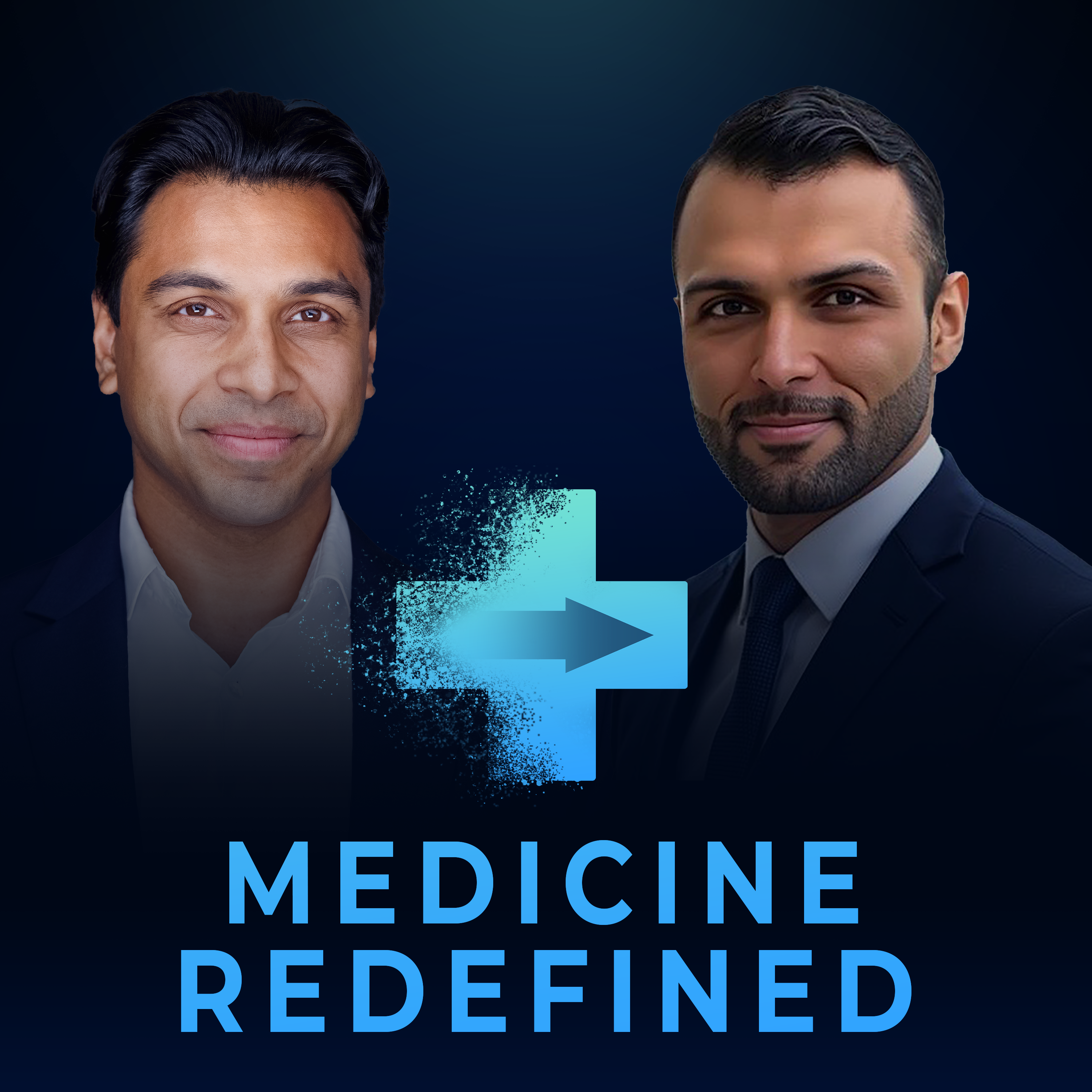
Diwesh Poudyal, strength and conditioning coach at Champion Physical Therapy and Performance in Massachusetts joins us to discuss exercise programming, assessing functional needs and wants, the roles of warm-up and cool-down, how to build aerobic capacity, and last but not least - figuring out fitness during COVID!
Instagram - @diweshpoudyal @championptp
Hello everyone, I'm Dr. Darsha Shah, and I'm Dr. Altamash Raja, and welcome to Medicine Redefined, a podcast where we will explore the often overlooked but necessary components of health, what we consider to be the fundamentals. We will investigate topics and practices that can give you and your patients the best chance to optimize a healthy lifestyle. It's time to move the needle forward and put the health back in healthcare. Before we get into the show, here's a quick message from Physician Financial Services, a business widely recognized in the Physician community for disability insurance. Lawrence B. Keller, CFP, has been in the insurance and financial services industry since 1990. Unlike medicine, which has a standardized path that physicians must take to gain the education, training, and experience requirements necessary to obtain board certification, the insurance and financial services industry does not. While he might not be a doctor's first phone call regarding their insurance needs, he is often their last. Find Larry at Drpodcastnetwork.com or slash Larry Keller, or at the link in the description of this show. Alright everyone, today our guest is Diveesh Podil, and he is a strength and conditioning coach, actually at champion physical therapy and performance in Massachusetts, just like our last guest, Dan Pope. Diveesh is also ultimately his personal trainer. So in this episode, we really get into exercise programming. We start to talk about how does Diveesh exactly understand his client's needs? How does he functionally assess somebody to understand how to get them improved? We also delve into things like squats, you know, is it necessarily good or bad to squat over your toes? We also delve into warm ups and cool downs, right? So a lot of us have heard of dynamic stretching or static stretching. Well, is there one that's better than the other? And then lastly, we finish it off with talking about returning back to fitness, especially during these hard times with COVID, with closed gyms. Now, understandably, things are opening back up. So how can you best prepare yourself to getting back into the gym or getting back into fitness? All right, without further ado, let's get it cracking. All right, guys, welcome back to another episode of Medicine Redefined. Diveesh, what's going on, Bra? Hey, man, how are you? I'm good. I'm good, man. I'm super excited for this topic. We're today, we're going to be talking about pretty much all things exercise. It's one of my favorite things to exercise. It's one of my favorite things to talk about and also do, of course. So you might see some bias in a lot of things. So you guys will try to bring me back to mid-line. But for our listeners who don't know much about you or what you do, why don't you briefly tell us about yourself and your background and what brought you to where you are now? Yeah, so a little bit of background on me. I went to school for exercise science at the University of Massachusetts Blull. I got my degree in exercise physiology there with a minor in nutrition. And since I graduated, I've been working at Champion Physical Therapy and Performance. We're a high performance facility that works with athletes of all levels, high school college, professional athletes, we're a very cool and unique facility and that we're kind of want to like the earlier facilities that do a really good job of combining physical therapy and strength conditioning. So we kind of take care of the entire spectrum of rehab and performance. We take a ton of pride in doing that well serving our athletes of all levels, achieving a lot of the performance goals and a lot of their life goals. So that's kind of a little bit about the facility that I work at as far as the role that I'm in. I'm currently the head of fitness at Champion, so I manage and oversee our staff strength coaches. I am also very fortunate to oversee our internship programs. So I get to handle a lot of the education for a lot of the younger coaches coming up in the industry, a lot of students that are in their junior senior year of college looking to kind of pursue this as a passion and as a career. So I get to kind of get my hands in on the user end of things from like a coaching standpoint, but also from like a client end of things and being in the trenches every day coaching our people. So has Mike officially promoted you to director of strength conditioning yet? I know he talked about it a couple of times on a bunch of episodes, because fitness managers doesn't quite have the same ring to it, man. Yeah, I don't know. I think like titles and roles are just kind of like, they get handed out to Champion when we like are bored of a title, you know, I'm just going to, that's how I'm going to refer to you from now on and that's how we're going to promote this in social media and hopefully Michael get a whiff of and that's what's going to be right there, love it. So yeah, man, like I said, we're going to talk all thing exercise. I think Varsenai, you know, there aren't many things, or again, this is our bias, but a lot of different health ailments and things that we tend to see in our clinic and our patients. Exercise has a role in it, right? You know, whether it's cardiovascular disease, whether it's obviously musculoskeletal medicine, whether it's mental health, exercise is a, you know, it's complex in the sense that it mechanistically affects every system of the body. So part of our treatment plan, essentially, when we're looking at overall health and wellness is exercises in there in some form or fashion, right? But I think before we even do that, we want to take a step back and we want to talk about getting a good diagnosis before you create treatment plan, right? And to me, what you're looking at where diagnosis is incorrect me if I'm wrong is that's where the assessment comes in. So why don't you talk about the process of how if somebody comes into you before you formulate an exercise prescription plan, you will do an assessment and do the testing portion of it. What's that look like for you? Yeah. So that's an awesome question. So I think it looks a little bit different depending on what type of client that I have in front of me, you know, if it's someone that is a younger athlete that's chasing athletic goals, that assessment is going to look slightly differently. If I have a older adult client that's looking for just general health, you know, obviously they have goals for themselves, but it might look slightly different in the sense that they're not really chasing performance necessarily. They might just be chasing longevity, you know, feeling good, maybe looking good, and just kind of sustaining like a long, healthy lifestyle. So I'll try to kind of break it up between the two different types of assessments. So I'll quickly talk about the athlete one. I know that's not really like the big focus as far as like what you guys are, you know, really kind of talking about with this podcast. I think it gives people like an insight as far as what performance looks like versus what general health looks like. And there is obviously going to be a little bit of a carryover and like a mixing between the assessments, right? Some portion is a bit is we got to understand that a human as a human, right? Human first, athlete second. So, you know, obviously keep in mind that it's going to be a little bit crossover. But if I have an athlete come in, you know, we'll sit down, we'll first do just sit down a little meet and greet. One of the big things that I really try to prioritize and I really harp on like teaching my interns is first build report, build relationship, right? And I think this goes a super, super long way, especially in healthcare in medicine. I think as soon as a person that you're working with can trust you in any way, right? You're going to have much better outcomes, right? You're going to have much better results with your medicine practice, with your coaching, you know, whatever field it is that you're in as soon as you build that trust and confidence, you're going to have better outcomes, right? So, I was trying to make sure that I get to just know people, get them to like know that I'm just a regular authentic dude that's just like generally trying to help them with their goals. So that's my step one. Step two is, you know, I talk a lot about just goals establishing, all right? What is it that you came to be asking for help with, right? How can help you get there? So make sure we kind of establish goals and that from there, you know, it's just some of like the background information, injury history, training history, what have you done in the past? You know, what kind of information might affect my programming, my coaching, so this kind of way I get my general intake, you know, if they've had any surgeries and you like major health issues, anything like that, keeping a note on, and then lastly, it's just kind of all about timing, right? How many times a week do I have you for in the gym? How long procession can you ideally commit? And then if they have like a goal that's kind of set within a time period, right? How soon do you want to achieve that goal? It's a really getting a concrete idea of what, when, and I guess where, right? And how is kind of like my part, let's usually where I step into the conversation and I can start dictating a little bit about, you know, what I think is best and start developing game plan. So that's just a sit down meat free, right? After that, we go in, take some baseline, just height weight measurements, and then we do our movement screen. I'm sure, I don't know if you guys familiar with the FMS, right? I think you guys both familiar with the FMS at this point. So that's like the movement screen system that's out there. It's been out there and it's very popular. So what we've actually done at champion is we've kind of adopted some of the principles of FMS, and we've created our own movement screening system, right? So we call it the CPS, the champion performance specialist. And what we've done is we've kind of put together these big, gross movement patterns that we believe that every human should be successful at, and we just want to see how they move and all these different patterns, right? So this looks as just overall total full body movement. And then after that, what we get to really see is, all right, if I see any sort of compensation within those big movement patterns, right, what I can have an idea of in my head is, all right, if I saw this in a movement, right, let's say a squat test in our movement screen, I saw a compensation of like a hip shift, right? So what I can do there is I'll have that in the back of my head or I, you know, I know tated down on my scoring sheet, and then I can say, all right, I want to look into this a little bit further, you know, after my movement screen, let me put you on the table. Let me start assessing some mobility, a little bit of joint play to get a deeper look at that specific area and just gather more information, right? So for the adults, this is typically where I stop, right, just a movement screen, and then the breakdown table assessments to dig a little bit further into whatever it is that I'm seeing. And then for the athletes, we take it up to one more step. So for our middle school, high school, college and pro athletes, we move on to our performance testing, right? This is where we start getting some metrics for performance measures that we find to be super important, right? So we're going to test them on linear acceleration, we're going to test on vertical power, we're going to test them on lateral power, we're going to test their elasticity, and we're even going to try to create like a forced velocity profile, and, you know, this might be a little advanced for the non-transmission and crowd, but this is just getting, again, a little bit more of an idea of trying to customize the training for the athlete. So, you know, the general, like, easy example that I'm going to give is, you know, we've all kind of met that athlete that is super, super strong, but, you know, might be a little slow. They're what we call force guys, but we've also had the guy that's like super bouncy, elastic, and quick, but not super, super strong, right? So essentially, we're trying to figure out what this force velocity profile is, where do they fit on this spectrum, right? Are they, you know, super polar on one end versus the other? Are they kind of right in the middle? And we try to just bring them to be a really good mixture of the two while at the same time, enhancing what I call their superpower, right? And I haven't coined that term. I think someone else that I look up to in the field that I should remember who I picked up from at this point had actually might have been the guys at Exos or Altis, but they talk a lot about, you know, taking someone's super powers and making them even better. So if I find a guy that's like super elastic, right, I'm going to try to help them get a little bit better at the force end of things, but I'm going to try to really maximize his elasticity even more. So as far as, like, trying to have like a really good picture of who I have in front of me, you know, I think throughout her full assessment between the movement screen, the table breakdown assessments and performance testing, I think we get a really good, clear idea of who's in front of us. Dude, I love that. Talk about a comprehensive assessment. But that's, I mean, that's ultimately what it is. I think people would appreciate, you know, that you need to kind of have a good assessment. I mean, what is it? I don't know if it's Eric Cressy, he's the first one who says that if you're not assessing you're guessing, right? I mean, that's kind of what he's always talking about. So I love that. And I love that you're talking about building a rapport in the history. I don't know if you remember, I think I must have given you a laundry list of the injuries and everything when I said that. You probably read that a long time ago, though, two things stood out to me there as you're talking about doing the assessments, particularly they're getting somebody on the table when, you know, if you see like a hip shift or something, if an individual, whether it's an adult client or, you know, quote unquote, non-athlete or just an athlete, if somebody starts having pain with a movement and stuff like that, is that when you'll refer out to like the PT guys, which is kind of across the hall from you? And then the other thing is, if you're allowed to, if you mentioned the squat, what are the other five movement patterns, the basic functional movement patterns that you're looking at, if you don't mind? Yeah, sure. Let me answer that first part. So if I see pain or if I hear pain being mentioned, right, I will try my best to get the PT involved. Now if it's a discomfort or they just feel like, you know, not comfortable with a certain movement pattern, that to me is probably either a more control issue, a mobility issue or a stability issue. Right? So that's kind of like my two distinctions. If it's a discomfort and I just don't feel like athletic or fluid doing this movement pattern, right? That means it's probably my job to make you a little bit more competent in that movement pattern or whatever exercise or, you know, whatever it is that they're doing. If they say, oh, like this hurts, right? This is pain. Now I'm thinking, all right, this is this is kind of out of my scope of practice. Let me get my six studs that I have on the other side of the glass in our facility. And let's have them take a look at you. So it's a really cool model, especially for us, that we have that in-house. But, you know, obviously not every strength coach is as fortunate as I am to have a bunch of stud PT's next door, so I would say for people like that, just having a really good network of PT's that you trust and other healthcare providers that you trust in general, right? I mean, I think you guys being functional medicine docs, like you guys definitely have a role to play in this. So having a good network of people is definitely the way to go. And then answer the second part of your question, the other movement patterns that we test. And there's a bunch. We do hinge squat, a step down, a lunge, lateral lunge, a rotation, a total body rotation. So now like an isolated T spine or anything, that one we actually do is like a breakout on the table, but we do a total body rotation, and then we do push and a pull and then posture. Super cool. Man, I really want to just quickly go back to what you were talking about. You said human first, athlete second, that resonates with me so much. I mean, you know, and when I'm in the hospital, I'm starting to now ask about exercise in my patients. But even more so, the way you're going about building a rapport and then figuring out the goals is very, very similar to kind of what we do in the hospital, right? In our, in what we call the soap process. So the subjective portion, which is where you're trying to understand the patients, kind of what happened overnight or how they're feeling. And then after that, after you build that rapport, you go into those objective findings similar to your FMS, right? Where for us, we're looking at vital signs, then physical exam. And then we go into our assessment and plan, but here's the key is that you're focusing on the client's goals. And I think oftentimes as physicians, we get caught up in our goals and what we want to see in the patient. So that was just really cool to see just the similarities between those. So I want to transition now into the time where, you know, after you have your clients, you got your assessment, you got your goals, it's time to rock and roll, time to get into that exercise. But before you do that, right, you're going to have some sort of warm up. Can you take us through what you're looking to do with your clients in a warm up? Yeah, so this is, this is where we start to like, at least when I teach my interns, this where I get to start wowing our clients and athletes, right? This is what, this is us saying, all right, I really paid attention in that assessment that we did. I really took all the information to heart from what you told me from your subjective, and what I saw from my assessment. And now here's that being implemented right away to make your customized program, right? So to answer your question, every warm up is going to look a bit different. Meaning, right, and I think all the mushrooms speak a little bit about this because I've been programming for him for over two years and have been brutalizing him a little bit. But you know, a lot of that, a lot of the stuff that shows up to the warm up is stuff to optimize the athletes movement at the very, very beginning of that session, right? So if we found any computations in our movement screen or if we saw any deficiencies in our mobility and stability, testing on the table, you know, that's going to show up right away. So it's hard to say exactly what we do, but I can give you like a rough outline as far as like, what I typically plan out. So for an athlete starting their session, right, they'll typically do some sort of a positional awareness breathing drill, you know, whether it's some of that shows up in massive amounts of extension. I want to bring them back a little bit more poster of tilt, a little bit more flexion, get them back to closer to neutral to start some sort of positional breathing drill, some sort of course, stability drill, hip mobility if they need it, T-spin mobility if they need it, hip activation. You know, shoulder mobility, shoulder stability, ankle mobility, and then our dynamic warm-up and prep. But again, I always keep in mind like all that stuff is like if you need it, right, or if I find that you'll benefit from it, that'll show up on there. So I'll have some athletes that now don't really have a whole lot of conversations. They look like there's red or red rock and roll. I might do a quick little like course stability drill, pop right into dynamic warm-up, you know, skips, more like sprint prep, and then get them going. Other people might have a whole host of like mobility and stability issues, and they might spend, you know, five, six, seven, eight minutes kind of working on like some basic groundwork stuff to just improve baseline mobility and stability. So you mentioned dynamic warm-up. Can you explain what that is and how that's different than what static warm-ups might be? Yeah, so like a static warm-up would be like just hanging out on like single stretch for a singular muscle and just kind of holding that position. A dynamic warm-up is a little bit more like total body integrative, so we're talking less muscles and we're talking more movement. So that's just using multiple body parts in different planes and positions to basically get your body to start moving in an athletic manner instead of just hanging out, talking on a singular joint. Is there one that's better than the other? I know like back when I was doing track in high school, we would strictly only do dynamics as a warm-up, and then we would do static stretching as a cool-down. Yeah, so this is, I think this is where some arguments can start coming into play. I think there's definitely, you know, and I think a while ago there was a little bit of research that showed that static stretching was actually bad for you, right? And for people that can't see me, I'm glad in quotations. But I think there was a research that came out and said that if you static stretch before working out, you're going to have a decrease in power, right? Right. I think people jumped on that little piece of research and said, holy crap, static stretching is bad, don't do it. You should only be doing dynamic warm-up. Well, here's what we've kind of concluded at this point. It wasn't necessarily the static stretching that made you decrease your power. It was just having a response in your nervous system that said, hey, I'm going to relax this system or this area of body, or area in the body, and then ask you to do something very powerful and contractual without giving enough time. So it turns out that we found out that if you do static stretching and then dynamic warm-up, your power decrease is minimal to not exist in, right? But then what else we found out was that it wasn't necessarily the dynamic warm-up that negated the static stretching. It was just the amount of time, right? If you static stretch and just hang out and literally do nothing for like two, three, four minutes, which is how long it takes to do your dynamic warm-up stuff, right? That decrease in power is not existed. It's minimal. So it's not that static stretching is bad, right, or it's not that dynamic warm-up fixes the power decrease from static stretching. It's just you need a little bit of time to go from very parasympathetic, which is what happens when you do your static stretching, to then ask your system to be very sympathetic. Does that make sense? I'm going to make it. Yeah, that's interesting, man. I actually knew that that was kind of outdated now, but I wasn't sure if there is there data out there that actually supports that even, like let's just say you stress the hamstrings for a couple of minutes and then you just stay in there for 10 minutes. That transient effect is going to just fade out, like even if you do nothing, is there data supporting that? Okay, that'd be cool to kind of check out. You know, you talked about the debate, which is we used to get pretty hated. I actually used to be in that camp maybe 15 years ago, when that first issue came out because back in class and you learned about it, you're like, oh, I'm not doing that. And again, it always goes back to that pendulum, just swings from one extreme to the other. It sounds like we're all having a similar debate, maybe we're not, but a lot of people are having the debate with self-mife-assure at least now, right? Whether you want to do it in prior to or after a workout, because again, I think that most people are agreeing that we're not actually breaking down any facial adhesions who are actually just, you know, modulating tone. And so some people will say, well, why would you want to go into a parasympathetic state prior to a workout? I know what your thoughts are, but just so for the people who can understand it, you know, it's for more foam rolling, where would you put that into a program? Yeah. So I mean, listen, as a facility, we're a fan of it. And there's a couple of reasons why. I think foam rolling for one, it makes people just feel better, all right? That's a huge win. If I can have any client or athlete come into the gym and they feel good to start their workout, dude, that's powerful, that's super powerful. So if it means that it's not super, super supportive of our research, so like say that it breaks down tissues and like breaks up knots or whatever, I don't care, right? Like we know that we know that it's just affecting the nervous system. And I'm willing to just accept it for what it is. But if it makes you feel better, we're again a foam roll. And then I think the other part of it is, and you know, this is a concept that a lot of like younger strength coaches and people that are a little bit on the outside in the industry have a hard time grasping, because we start talking about like parasympathetic versus sympathetic, right? And people start saying like, all right, so like we want, we want to work out to be sympathetic, right? We want to kind of get into like high exertion mode. So why do we want to start with parasympathetic? Right? And it's a question that I get a lot from my interns that come in every single intern class. And you know, my answer is always this. I think what people undervalue is parasympathetic is a much better environment to learn and make change. All right, especially early on in the training session, right? We want our warm up and prepped to start with slightly more parasympathetic because it gets our body in a better state to learn in general, right? And to make changes that might affect better positioning and better alignment within our system. Does that make sense? So that's what we do for our positional breathing grill. Get them more parasympathetic, get them into better alignment. And then when we need to turn that up and get sympathetic, when we start doing our sprinting and our plyos and our heavy lifts and stuff, like our system can change, right? It's not like an on-off switch where I go parasympathetic and I'm stuck there, right? I can slowly start transitioning my body from parasympathetic to synthetic. So when you're having that decreased muscle tone, right, with the parasympathetic, that's where the body can kind of become more flexible, get them mind, muscle, connection, go in. And it's easier to train those mobility patterns, I guess that's what you're saying. Okay. Exactly. Yeah. Those mobility changes just come easier and they, again, they tend to stick around and last a little bit longer because we're in a better state of learning and better state of making change. Change doesn't happen well when you're sympathetic, man. For hardwired to run away from tigers when we're sympathetic, that's not the best time to make change. So how about running as a warm-up, right? Like a quick five-minute jog? I mean, obviously that's getting your heart rate off your sympathetic's going, is there ever a time where you're using that or is a lot of your warm-up more about those muscle patterns and training stretching and all that? No, absolutely. Yeah, I mean, again, let's say like, again, athlete that has little to no conversations, they don't need a whole lot of help for alignment or posture and mobility and stability, right? Then my focus shifts into being just, you know, more on body temperature and heart rate, right? And that's kind of like the progression of my warm-up anyways. As I kind of mentioned, we start with a lot of like the ground-based mobility stability work, but then we transition into dynamic warm-up in our like sprint prep, which is like the skipping and high knees and stuff like that. And you know, you can throw in jogging or even biking for older adults that might not have the capacity to take on a lot of that pounding force, where we do have to prioritize the body temperature and just heart rate getting slightly higher to start getting into that threshold of slightly sympathetic. Gotcha. I love that, Darsh. Darsh, keep it around here. So yeah, so I mean, so we spend a lot of time talking about the basic, the appetizer. I'm going to skip the main course for a second and talk about the dessert, right? Because that's what I like. So we talked a lot about the warm-up, and I love the concept that you're talking about. When we were trying to make those, you know, you're kind of rewiring a lot of these motor patterns, and we're talking about making these changes stick. It's good to be in the parasympathetic. But then what about the cool-down? I mean, you know, obviously, I think that on a lot of times, I know that when we program, we do a lot of the mobility in the beginning and towards the end. I mean, that's just the nature of what I need, I understand that. Is it, is that just as important? Is that also a time where you can put some things, or, you know, in terms of going back to the mobility stuff? Is it necessary, or can somebody just be, like, dialed up high intensity and just jump around the shower and go about their business? Yeah, so I think it kind of depends, right? And obviously, there's an answer that's, like, the ideal, right? Ideally, if I had, you know, a lot of time for my clients and athletes, and, you know, I wasn't on to, like, my next group of athletes coming hand in stuff. Like I would, I would really harp and make sure that every single one of my athletes got back on the foam roller, just brought their, like, overall tone and, like, system back down to be a little bit more, like, chill a little bit more relaxed, and then maybe even use some of our, like, recovery aid stuff, like at our gym. We have hypervote guns, vibrating foam rollers, normal tech boots, you know, you name it, like, all the tech to, like, help people feel a little bit better. In an ideal world, I would say, you know, definitely, you know, implement some of that stuff. Put in a world where, you know, people are usually on to the next thing, right? I can't always convince everyone to be like, hey, like, hang around for 10 more minutes and, like, do this, right? And like, it's like, now, like, yeah, homework to do, better, like, I get all, like, get ready for practice, like, get to eat, so, like, I typically just say, like, you know, really prioritize some of the other stuff that you need to be taken care of outside the gym. So, like, go, like, go drink a lot of water, right? I usually try to push kids, like, take electrolyte tabs along with their water, go get some good food, you know, de-stress for a little bit, and then, you know, go through your day, whether it's homework or, you know, exams or whatever it may be, and then for adults, like, if you have a little bit extra time, do a little bit of that breath work again, foam roller, pretend, again, prioritize your nutrition, your hydration, all that stuff. Yeah, it's kind of hard to get somebody. I mean, I guess most sessions are split up into 60-minute sessions or something like that, to, again, people want to go balls to the wall, right? And it's kind of getting them, if you spend too much time spending, hey, let's just sit here and breathe, probably going to lose the client a little bit, I imagine. So, it's a little hard to get them to do that. So, on that note, you mentioned, you know, it depends on how much time you have with the individual, right? For, yeah, four hours a week, or you've got 60-minute sessions, whatever it might be, staying with that thread, I want to talk about kind of extra, I'm quoting, extra long workouts, or longer workouts. When I kind of used to be on the front lines, there was this big push, you want to keep your workouts within 60 minutes or less, right? Because we know when it comes to exercise and the chronology, the hermetic effects, your cortisol is going to be spiked up, right? When the hormone is going to be elevated, testosterone will be elevated for a brief period of time, but particularly the cortisol that's going up in order to, you need it, right, to mobilize energy and free fatty acids and glucose and all that stuff, you don't want that hormone to be elevated. And, again, obviously, there's new answers to this stuff, but most people, when they look at cortisol, they're like, okay, this is a stress hormone, you don't want to be elevated for it. You want to go into, quote, unquote, anabolic state immediately after, right? Dr. Arnold was here recently talking about how post-exercise insulin is going to be low. We know insulin is a very endabolic hormone. My question for you is, on that note, is, what are your thoughts about, like, longer workouts? Is that something that you stress about, maybe not for the general adult population, but for your athletes as you're getting closer to their season? Are you worried about 90-minute sessions of strength training, or maybe even longer than that? Yeah, so this is a good question. I think it can speak a lot about, like, not so much like the X's and O's are training sometimes, and, again, sometimes just be about, like, the culture of a place, right? So I think our place is pretty cool in that, like, you know, take COVID out of the picture right now. You are actually, like, a little bit limited in time and, like, we got to get people in and out, but in our typical model, believe it or not, we don't have a time cap. Like, for athletes who want to come in and they want to hang out for three hours during their workout, like, they're more than welcome to, right? And I'll have athletes, like, in the summertime when our college kids are back and they don't, like, have any of their college buddies to hang out with. And they'll come hang out with us at the gym. So they'll elongate their workout to, like, two hours, like, and it's one of those things where it's like, I'm not going to yell to the kid to be like, hey, like, finish this workout, like, right now, like, get it done. Like, I understand that, like, some of the, you know, physiological things that you kind of mentioned as far as the cortisol and some of that stuff goes, like, yes, that's a factor. But I don't know that it's as big of a factor as someone that really loves coming to our gym and loves working out, loves hanging out with us. And they just, like, developing that relationship with us. And that actually makes them a better athlete. So believe it or not, like, I don't think that I've seen any negative effects from having our athletes trained for an hour and a half, two hours. Yeah, I love them. And I think that sometimes, I know that our, the scientists in us, keep trying to ask the efficacy question, right? And, you know, again, one of our guests last time he was there, we're always trying to figure out what the minimum effective dose is, right? Whether it's medication, whether it's workout and stuff, like, what's the least amount can I do and get the most benefit? But, you know, something awesome that he said was, you know, he's also interested in finding out the max tolerable doses. And then once you know the opposite ends of the spectrum, then you can kind of figure out the sweet spot in the middle. But what you're saying essentially is building that camaraderie and getting the athletes to, you know, buy into the system of the culture and stuff like that. That's what keeps them bringing. And nothing more than consistency and showing up ultimately is going to, you know, pay dividends down the road. So I do love that. But on that note, though, what about the minimum effective dose, right? Obviously, COVID is an issue. It's been a big issue for less, I guess, we're up to a year now, essentially. And people have been working out either at home or they have to go to gym for a limited time. Maybe they want to limit the exposure. What would you say about the minimum effective dose? Again, I understand it's very unique to what the goals are. But for, let's just talk about Gen Pop, right? Somebody who's just looking for general fitness and stuff like that. What's the minimum effective dose of strength training and maybe even cardiovascular training on a weekly basis? Yeah, dude. Like, I think, I think it's lower than a lot of people think. Like I can get people improving their fitness with 30, 230 to 45-minute sessions a week, right? And then for cardiovascular gains, like, again, like, maybe two 30-minute sessions to, you know, 25-minute sessions a week will be enough to slowly start improving their fitness. Now, we'll make astronomical gains, you know, in a matter of a few months, probably not. But if you're in it for the long haul, you know, you can definitely have super, super effective workouts that are 30, 45 minutes long, certainly in an hour. I know now with us, like, we're pretty much stuck to a time crunch of 60 minutes. And like, our results have not gotten down, right? Whereas, like I said in the past, like, we had our athletes and a lot of our adults would hang around for an hour, an hour and a half, our 45 just like chill and do their thing. And the results are not that different, you know, they're pretty similar. So, yeah, I mean, the minimal effect of doses is achievable and attainable for most people, I would say. So, how about, you know, obviously, as Ultimoch alluded to with COVID and all, a lot of people, you know, with gyms closed are knocking that workout in. I know I'm somebody where, if the gyms closed, it's tough for me to do a home workout because I'm just so used to just lifting weights. And unfortunately, I don't have a home gym and Ultimoch keeps rubbing it in my face. But what's your, what's your advice to people who have, you know, a pro long layoff to whatever exercise regimen that they were previously on? Is there anything that they should really be taking into consideration? Yeah, well, I would say first off, if you're not converting your dining room into a gym, you're doing it wrong, right? Like my boy, Ultimoch, you're actually doing it wrong. That's right, man, priorities. You don't need a dining room table. Absolutely. It's quite rare in the dining room to get to go. No, but I mean, I think this is definitely like a big loaded question, right? And it's something that I got very frequently. So, so during the COVID shutdown, when our gym was like not active whatsoever, one of the things that we really try to do is we try to make sure that we kept in communication with a lot of our clients and athletes. We would do like, you know, multi weekly Zoom sessions, whereas more just like check-ins and like group hangouts with our clientele. And on a sort of like individual like, Hey, how are you doing with your workouts? Like not like coaching or anything like that, but we'd have like a group of our adult clients, all of our coaches all on like the same Zoom. And we just kind of talk about like how they're doing as far as like just general life goes. And are they trying to like add in a little bit of fitness, sprinkle some of that stuff in, just kind of maintain whatever level of health that they want to achieve? So I would say in that regard, if you've had like a long layoff period, which, you know, we all kind of got the experience through COVID, is again, it's almost like a little bit of that conversation, minimal effect of dosage, right? It just might look a little bit different than what you're used to and might not involve weights or a whole lot of resistance. And we kind of bring it back to the basics. So, you know, I recommended a lot of people just do a little bit of walking, you know, and like really try to bump up the frequency there, right? Not something that you're going to get very tired doing. But, you know, slowly some of that walking might turn into you going out and be like, Oh, like I saw this cool little trail. Let me go on this quick little hike, right? Well, I guess what? That hike increases your intensity of exercise by pretty large degree, right? And I've, and I had a couple of clients that like literally went down this like path of their like COVID shutdown training and that hike slowly turned into, oh, let me like, let me try to jog a little bit, right? And then like that would turn into a little bit of running. Like I had, I had a client who would never run more than two miles before the COVID shutdown. And this is running half marathons like all over the place now, right? And I just like that slow push of like hey, it's just like go out there and move a little bit, right? Or like, go on this hike, like, and he would like report back and be like, yeah, like I went on this really cool trail. Like you tell like the rest of the members in that group about it and like they've got kind of like excited about it because there's just like something to do outside. And then it's just like these little like little bricks that just kept getting piled on top of each other. And slowly you start building that foundation and just some, some lens of fitness, right? And that's already looking for you know, it's not something you need a gym or or squat rack in your dining room that that leads to high levels of fitness. It's it's sometimes all talking just eating, eating games for breakfast. So just eat the barbell, bite the barbell. So I love that. I love that. And it's funny because I think COVID in that sense was kind of a blessing in terms of exercise, right? I wrote, I remember I wrote a tweet saying, hey, now that gyms are closed, it's time for us to realize that mobility stretching, just simple movement is all we need. And oftentimes I think we forget that to the point where even me, I'm so guilty of this where if I'm at a long day in the hospital and I say, oh, I can't, I can't make it to the gym. I guess I'm just going to skip out completely. Well, no, I can I can go home. I can do some burpees. I can do some squats. I can just get moving, right? And I think that's such a that's such a crucial thing that I think people, you know, hopefully, hopefully understood and are starting to understand more and more is that movement's key. Yeah, but on that note, man, let's just maybe this is a good time to maybe talk about some training modifications, right? So I think that we know COVID is not going away anytime soon. I mean, maybe a lot of facilities are going to continue to have these abbreviated hours and some exceptions and who knows what the features can hold. Hopefully with the vaccine things are going to get better. But maybe some folks don't feel comfortable going back. What are some easy modifications people can make to do at home exercises? You know, what might be some things that they might not consider, it could be external load. Obviously, I think that people, you want them to be able to move well, good quality movement, unsure, you know, under their own body weight. But after they do that, maybe you could talk about how you were able to program for somebody and, you know, get creative, basically. Yeah, for sure. I guess I can give you two ends of this, this potentially extreme spectrum, right? I think there's like the super simple crowd that we'll just kind of like find whatever is just kind of like basic and easy to use and easy access stuff. You know, I've had clients just load up like a backpack with books and, you know, do like bear hug squats with the backpack. You know, they'll do like rose with the backpack. There's definitely ways to start progressing on loading. And then there's obviously other factors that we can start manipulating, like tempo and, you know, stuff like that to make it a little bit harder. But then there's definitely another crowd of people, right? I've had a couple of athletes like high school slash college athletes that went out to freaking home depot, got water jugs, filled it with sand and water, right? PVC pipe and like metal bars to make like makeshift barbells out of, put together squat racks, made out of wood, and you know, plug that into like a cement block and stuff. Like some people are going all in, man. So there's definitely like, you know, certain, certain levels of creativity there. But I would say for most people, you can definitely get creative with household objects, and then just manipulating some variables within strength, condition, and principles like increasing the number of sets and reps or, you know, making the tempo or time under tension longer, things of that nature. Same more about that. What does that mean when you say tempo or time under tension? Yeah. So, you know, like typically when we do an exercise, we have a very distinct like fairly slow, like fairly like normal pace going down our next exercise and going back up in our exercise. Like let's use like a squat, for example, you know, the typical person spends anywhere from one to maybe one and a half seconds going down into a squat, and then maybe just about a second or maybe a little bit less coming up on the squat. An easy way to make that squat exercise hard now might be going three to four seconds on the way down, right? Maybe even adding in a little pause when they get to the bottom of that squat and then spending three to four seconds on the way back up. So now if you think about how much time the muscle groups in that squat pattern are under tension, right? You just increase that by an X number of times, right? Like if you're doing a three-second eccentric, you're increasing the time and attention by three times as much as you normally would. So obviously the stress on the muscle culture is going to be much much greater inducing a better response for hypertrophy and potentially even force development, and then, you know, if we start going into the higher rep stuff, that can also start having a little bit of cardiovascular benefit. So we're talking just spending more time within that movement. Yeah, I love them, and speaking of the squat, this is a question that I want to ask you again, you know, I think that at some point when we're talking about that pendulum again, people started to have, I mean, you know, knee pain is so incredibly prevalent, right? And so when we were teaching the squat, especially with the younger kids, they would come back and, you know, as you, if you tell them a squat, they're going to go down, their heels are going to come up off the floor, their knees are going to track way in front of their toes, and they'll be on the balls of their feet, and it's just doesn't look pretty, right? And so an easy cue would be kind of like pretend there's a chair behind you and sit back in the chair. Tell me why that's not a good cue. And actually, I actually learned this from you and actually was kind of a game changer in a lot of ways. So yeah, tell us why that's not a great cue for everybody. This is this part by by recent Instagram posts that I made for champion. I actually didn't see it, but no, I'm, yeah, I can check it out. Did you, did you, did you? Yeah, yeah, we made a little, a little Instagram TV video talking about, we, we call the myth, myth busted, the age old don't squat with your knees past your toes, myth, but no, I mean, I think that's a very big topic. It's something that's been around forever, right? I think a lot of these things tend to stick around and no one really remembers where it originally came from, but we just continue to kind of like repeat this, you know, strength coaches, personal trainers coming up will like hear this and then they repeat its clients, those clients are repeating it to their friends, and it becomes this just freaking cult, right? If you see anyone squat with their knees past their toes, people are like blowing each other up on social media being like, whoa, dude, you're like kneecaps can explode at the front of your knee. It's crazy. Like, like, my fiance's got in comments about like squat videos that she'll pose. People start like attacking her. She's in like a bottom position of her clean, and she's freaking super strong, like super resilient, and like she crushes them. Yeah, she's got pretty good look for whatever, because you're teaching on Olympic lifts, right? Yeah, and she's crushing, yeah, right? But she's got, she's got a ton of like ankle mobility, she's very high for mobile in general, like people are like a factor on the internet. I'm like, whoa, like, you shouldn't be squatting with your knees past your toes. You're gonna like hurt your knees, your bust your kneecap out of your knees. I'm like, all right people, like, let's slow down here, right? So maybe say why that is, like what tends to happen when, you know, you have that positive shin angle, like why do people freak out about that? Yeah, so I think people freak out because obviously, right, some study came out some time ago that said that when your knees go past your toes, right, as incremental amount of knee forward travel, past your toe happens, there's increased stress on the potato, uh, potato femoral joint, right? Well, great, but is stress always bad, right? Is stress something that we can't ever adapt to? So if we have a really good program, right, and we're able to get athletes more resilient as they add more stress to a certain position, our body is going to adapt and learn how to fight against that, right? So like, I'm also a good example of this. I squat with you. If you measure my knees past my toes on the bottom, my front squat, I'm probably like seven inches past my toes. I have still shots of my shin literally touching like the front of my shoe lace on my shoe. Like it's freaky, right? And like my knees are probably the healthiest joints of my body, right? And like what's the reason for that? I just let my body adapt to that stress, my knee going past my toe, right? So it's not necessarily that the knees past the toes is just bad for your knees. It's just more stress on your knee that you got to give your body enough time to adjust to and adapt to. And then, you know, if you do a good job of slowly progressing to this, you'll probably be fine, right? But now on the other side, right? You flip the coin on the other side and you start getting people saying, all right, like we know that fore knee travel causes, causes knee pain, right? Or, you know, whatever the myth is is currently saying and they say, all right, you got to say your butt way back on a squat. What happens when you shift your way, your butt way back on a squat, you put more stress on your hips and your back, right? You take someone that's got back pain, right? And ultimately, I think you're a pretty good example of this, right? When we first started working together, your whole bit of hip pain, you had a little bit of back pain, and you were told forever, you got a squat with your butt back. Well, you ended up taking a structure that was already irritated, right? And it was already not feeling great and you were constantly queued. Hey, sit back, sit back, load that structure more, right? Cause more stress that your body's not quite ready to handle yet on that exact structure, right? And you just kept doing it because that's just what was like the message out there, right? And as soon as we start turning your squat to be a little bit more vertical, your knees go forward a little more, your knees that were just healthier than your back and your hips were, right? And we slowly started getting rid of a little bit of the back pain relative, yeah, relative speaking, right? But it's always a give and take, right? It's a little pushpull. But you know, all it really is is we're just kind of manipulating the, the joint angles and positions to buy us a little bit more stress on one structure versus another structure. So if you've got knee pain, right? Maybe don't lay your knees go past your toes a lot, right? But it doesn't mean that everyone should never squat with your knees past your toes, or it's same thing if you've got back pain, don't say your butt way back on a squat, find somewhere in the middle or help let your knees go way forward past your toes, alleviate the stress off your back and continue training. Yeah, I mean, this is, this is why that you spend so much time on that initial assessment, that initial history, getting the injury history, finding out about, you know, what type of squat pattern is going to be ideal? Like if somebody comes in and is like, yeah, you know, I've had knee surgery, I've had a couple ACL tears and might have some early arthritis or you have an inkling that they might present with that. I'm pretty sure you're not going to be loading up like massive amounts. You know what I mean? So, yeah, it just kind of goes back into, you know, you've got to do a good assessment and good plan. And that's kind of how it's that N equals one that would always keep talking about on this show essentially. You know, we recently had Dan on this on this show. I know you know that and I kind of wanted to talk to him about this. I think you guys have talked about this or Mike's talked about some of the podcasts before that we were talking about, you know, FAI, the incidence of FAI has creeped up over the last 20 years or so, right? I mean, obviously some of that could be because of just hip arthroscopy in general. We've made these strides over the last two to three decades and it's a testament to that. I wonder, this is this is a long chat and tell me if you guys have talked about this. I wonder if our programming and our queuing for the squat has anything to do with it. This is like a crazy theory. That's something that you guys have talked about, you know, amongst yourselves at all. Yeah, dude, I don't think it's that crazy. I don't I don't think the idea that you've brought forth is that crazy even idea. I think I think including myself right early on in my career, I think I've damaged some hips in my career. Yeah. I think a lot of strength conditioning and personal training professionals have damaged and even physical therapists, right? The people that are supposed to be like helping rehab the stuff. I think we've damaged a lot of hips over the course of time. Yeah, I mean, it's like sports performance wasn't, I mean, you know, at least at the adolescent level, it wasn't such a big thing 20 years ago, 25 years ago, right? I mean, and so these people were coming to Parisi. I mean, I had kids at the age of six years old, old 9, 10, 11, 12, and you're just drilling in their mind in Parisi. He's just hips back, hips back, hips back, he's like, oh yeah, that looks perfect, you know, and you're just constantly demonstrating. I remember myself, you know, that like it's hard for me to kind of keep my torso up, because of, I guess, my anatomy in that sense. And so I'd be demonstrating pushing back when basically my torso was parallel to the ground, it would just be terrible. But my knees would not go over the toes, so that's a win, right? And it's just so funny when you look back and hindsight and it's just like, the hell was that doing? Yeah, that's crazy, man. So. Yeah, no, I think for sure, we've definitely like at some point, we swung the pendulum too hard, and we got super good dominant. Like, I don't know if you guys remember, like, you guys read Teenation back in the day? Like in, in Teenation, like, you'd probably see one article a week that was like, posterior chain is king, hamstrings are king, wheat are king. But everyone's talking about how like, like everything on the backside is like the only thing they should really focus on when when it comes to lower body training. And like everyone forgot the like quads or a thing, everyone forgot that like the knee joint and the ankle joint were like supposed to move. And it's just yeah, like a little absurd. And I think like in that same narrative, I think, I think we've damaged some some people by causing some impingement acquisitions on her repetitive basis with tons of loading. I think I think some some of the the old school like parallel thing, marked ribato, west side style squats for everyone, might have done some damage. Yeah, I was I was telling all this. I mean, even for me, I went to the ED literally, I went to the emergency room because I was squatting a year and a half ago. And I like my my number one rule was I can't go past my toes. And like you said, I had to L5S what herniation the past about 10 years ago. And I was just putting so much strain that hypertenicity in my back, I fell to the ground, I really cannot get back up. And I had to tell my roommate, hey, you got to call the ambulance because I cannot get up right now. So it's just yeah, I mean, now it's like I'm looking at front squats. So much easier on my back. So that's kind of my question is when when we're dealing with squats and cues, what cues are using? Is it more center of gravity? Are you focusing more on a muscle to focus on? Whether it's the glutes or the quads? How do you kind of approach that? Yeah, so I'm a big fan and I do this whether I'm teaching my athletes or my interns, right? I'm a big fan of breaking up or breaking down the movement pattern until it gets core philosophy, right? For a squat, I wanted to look squatty, meaning I want the hips traveling downward, not backwards, right? I want the knees moving out of the way so that the buck can just drop right in between the knees, right? That's going to look a little bit different for everyone. If you've got a ton of ankle mobility and you can stay super super upright because of that by shoving your knees forward, right? You're going to have a super upright torso, knees forward and out and butt down. But if you don't have a ton of ankle mobility but you're blessed with some great hip anatomy, you might be able to have your knee like get just to the toes, or maybe not even quite to the toes, but you'll be able to sit your butt right in between your knee cap or not your knee cap, like in between your two knees and stay super super tall. So like for me, the two biggest cues that I give is find midfoot, right? I want weight pressure being the middle of your foot. And then I always just say, you know, sit your butt in between your knees. And nine out of ten times, it's the only cue I get to give to someone. Everyone knows where their knees are. Everyone knows where their butt is. Put your butt right in between your knees. We don't need to overcomplicate it. Absolutely. Yeah. No, I follow a squat university here in Hortja, and I think you guys have had some talks with them. That kind of, I know he has a new book out, so you don't have to read that too to just get get some more squat tips, especially with like foot deep positioning. And my ankles are terrible from the amount of basketball I've played in the times I've sprayed them. So definitely something very important. I hope the listeners take away is ankle mobility and just the whole movement pattern, right? Not just the weight you're lifting, but just the movement pattern itself. Yeah, definitely, definitely got to find like the limiters for for any, any pattern, right? If we're talking to deadlift, like we had to make sure we're assessing, right? It goes back for the whole conversation about assessments, but like on a squat, if you're not assessing ankle mobility and hip internal rotation, then you're doing your clients at the service. And you've got to know some of that stuff going into into like your training session. Like I never guess about where the athletes fit to be, how much degree of turnout, any of that stuff, right? I'm pretty sure like, ultimately, I don't know if you remember, but like I'm pretty sure I remember like giving you pretty explicit instructions as far as like where I want your feet, how wide, like how much toe out and stuff, like before you even did a set of squats with me when we started training, right? And it was like we kind of took some of the info that we had and we kind of started dictating, all right, here's what your anatomy really likes to this because your anatomy likes it, right? Not because someone told you in some book that you got to squat with your feet completely straight, you know, 10 degrees of turnout or whatever, right? There's like no one size fits off of this stuff. Well, not only that, I'll take it a little bit further. I remember that, again, this might be because of some of my injuries, I have a much more difficult time recruiting my left glute when I'm doing single leg bridging variation or single leg hip thrust variations. I remember talking to you about that. I'm like, I just can't, I seem to feel a lot more in my left hamstring. And I remember you talking about, well, okay, maybe externally internally rotate and play around with, you know, the rotation, which is the concept that I never thought of. So, yeah, again, it's like you said, it's applicable just beyond the squat. The other exercise too. Yeah, for sure. So talking about injuries, let's talk about training around them, right? So what's your perspective when you have an athlete or a client that's injured? How are you rehabbing them? How are you getting them back to performance? Yeah, so we're like the ultimate at trying to make sure that people continue training through an injury or post-op. You'll see some of our like UCL repair our Tommy John guys be in the gym with their freaking elbow brace two weeks post-op and they're just training their other three limbs, right? Or ACL people will be in training. There are other three limbs that they have available to them. So we're big fans of making sure that we just kind of modify and adjust training to fit around an injury or, you know, any discomfort, any pain that they're having and continue working on some of the other qualities that we can continue improving on, right? So we really just focus on like our train will menu that is available. We focus not a whole lot on the stuff that they can't do, right? So we're all about like, all right, like here's what's available to you, but to really get good at this stuff, let's hammer this stuff and we can continue better at these things while this other thing is healing, right? And again, we're super fortunate that, you know, we have PT in house. It's some of the best therapists in the world. So I can, you know, oftentimes like if we do have someone that's injured, they're rehabbing with one of our PT's and they're doing training and conjunction with us. So, you know, our PT's will take care of the specific rehab for that specific injured joint. We'll develop a broader strength commissioning program for the other joints that we have available and we just kind of go about it that way. But we're definitely big on modifying and adjusting and continue having our athletes train rather than just saying, all right, like you broke your wrist, like just take six weeks off right because you're in a cast. There's plenty of stuff you can do with three limbs and potentially an elbow and shoulder. The way I want to really emphasize on this point because I think that again, I mentioned briefly on our discussion with Dan is I remember again with all my injuries, maybe hurting an ankle or something and I'd be in the gym on crutches, like doing upper body and people would be looking at me like I'm a nut job, right? Same thing, my parents yelling at me like I need to just sit at home and not do anything. We haven't explicitly talked about this, you and I, but I imagine that you're encouraging athletes that, you know, after an injury, when it's really kind of hard, especially when you're in season and you're bummed out as an athlete, you know, because you identify yourself pretty much being part of the team and you don't feel like there's so many issues with that. I imagine that you're really encouraging them to come into the gym and continue training. If you do, why do you do that? Why will you really make it a point that they have to continue training during that time? Yeah, I mean, this is definitely definitely like a two points on this, right? One point being there's obviously lots of progress in other parts of the body that we can continue making, right? Like the physical progress that we can continue to make is definitely out there. The other part, it's like logically. Again, I'm a big fan of just having our athletes just gain and build confidence and continue to like have their spirits behind even when they are injured, right? They're obviously going to be bummed that they're like unable to play their sport or, you know, they're bummed like even some of our adult clients, like they might hurt their back doing something, you know, that they're not really expecting them to hurt their back doing and they feel like they're a little hobbled, they feel they've kind of like lost their identity, they might start getting the feeling of like, oh, shit, like maybe I'm actually getting really old and stuff. We try to do is we like try to show them like, hey, there's so much other stuff that you can do, like physically, right? Don't think of yourself as broken, you're still very capable, right? So let's come in and find the stuff that you can do and let's get better, right? Let's find some way to get better and let's get moving and let's continue moving. So I think two parts, like the physical aspect and like the chance that we can continue to make, but definitely the bigger one I think is just the psychological feeling of like feeling capable. Yeah, and I want to emphasize that point because I think it's really important, you know, just again, like you talked about somebody if they had resurger, they broke their wrist. I mean, if you continue to train with the opposite arm, you are going to minimize, like from an adaptation standpoint, you are going to minimize the the atrophy on the opposite side, the side that's injured, the side that's hurt, and even from a strength standpoint, the loss of strength, right? So you're going to minimize that, and I mean, we do this with something called constraint induced movement therapy, which is for individuals who've had a stroke, right? Basically, what you do is they're hemiparetic side, you kind of leave that open and then the good side, quote unquote, that's completely functional, you'll tie that side down, and so they have to use that, and then you do that vice versa. So the more they continue to use the good side, there's a carryover in the opposite side as well. So yeah, I mean, that's that's very much just like motor learning one-on-one. Another question I want to ask you, we've been spending a lot of time talking about strength training specifically, but you know, and when it comes to agility and change direction type stuff and movement stuff, I was recently, I think, listening to a sports medicine discussion where somebody came on and talked about training, basically, some conversation that I think they were just like looking for some type of knee brace and talking about rotary training, essentially what the person was asking is the importance of training in the frontal and transverse plane. I mean, I think we are, I thought that we were outside, like we were past that's just training sagittal plane over and over and over again, right? And for those who don't know, sagittal plane is kind of just moving forward and backwards, right? And the way we walk, not many people walk laterally from side to side and transverse would be rotational movements. Are we not past that? Are you still finding athletes come to you in season after season where most of their programs are in the sagittal plane dominant like that? Are we still stuck there? Yeah, man, I mean, for sure, it's like every time I have like one of my athletes show me like their high school training program or, you know, even some of these like, I don't want to like put like companies' names out there because you know, I don't feel good about bashing other people but like, I'll see it up. Yeah, we'll last anything. But yeah, there's still even like these bigger like recognizable training facilities that, if I look at like one day's worth of programming or like a week's worth of programming, there's maybe like 5% non-sagital plane work, like it's still just super, super sasional. And like they're working with field and sports athletes that are very multi-directional, very multi-planar. It's like, it's crazy. I think it's definitely like a big, big gap that we got to try to fill as an industry and just like start again, start with, start with an assessment, right? But also start with like the needs and analysis of an actual sport, right? If you have an athlete that is super, super sasional plane dominant and that's what's required for their sport, great, right? Maybe they don't need a ton of frontal transverse plane work. But if you're working with like basketball, soccer, football, baseball, like if you're not doing a rotational stuff, a frontal plane stuff, you're probably not getting that athlete as good as you can get them to be. Yeah, absolutely. That's a great point. And I think even more so, I've really lost the ability, you know, I was a basketball player growing up, tennis, track and field. And now I see myself just training in that sasional plane. And luckily, Ultamash gave me a great training program that incorporates a lot of those rotational movements. And I'm really seeing a difference, honestly, in that muscle adaptation. So I think that's something a lot of people need to put into their training. I wanted anything else, Ult, that you wanted to follow up on that point. Yeah, well, what I will say is I remember that sometimes we'd have at least that precede, like, you know, we had different classes, right? You would have a speed class, you would have a change of direction class, you would have a strength class, and that's kind of how athletes, but parents would always ask me, even if my child can only be in one or two classes, like, which one should I emphasize? And I would always say change of direction. I think I'm trying to think, either then maybe, unless you're a track and field athlete, where you're just going to run in one direction, I mean, even swimming, there's some change of direction happening most of the time, unless they're doing like 50, right? That I would say, I mean, that's where your most bang for buck is going to be. That acceleration deceleration component training. I mean, that's where a lot of the injuries are happening, too, right? I mean, so ultimately, you know, what are the most the most important, important ability is availability. And so, yeah, I mean, so that's, I think that a lot of people should double down on that a lot more. And how do you do that? Find the wish. If he has any time left, it's too busy now. They got to get in there. But dude, let's, unless you've gears a little bit, right? Let's talk a little bit about, we spent a lot of time on, on a strength training. Let's talk a little bit about zone two training, because I know Darsh has some questions about that. Yeah, so, you know, all of us, if, you know, if all of us can kind of pitch in here, talking about zone two training, what it means. And the role of cardio, you know, there's a lot of things that I'm saying on Instagram lately that say, oh, you don't really need cardio, you know, weightlifting can kind of take the place of it. But then when you go to gyms, a lot of people who start off tend to stick to the walking and running, because I guess, you know, it's kind of the thing we're most used to, it's the easiest. Let's just get into cardio then, and Robic fitness. So, whoever wants to go in terms of, what is zone two training? Because it's a lot of talk that I'm hearing for people who listen to Peter Atia, and I think it's like the new thing that a lot of people are starting to gain traction on. Yeah, so I mean, essentially, so what zone two training is, it's kind of, I think that from a pragmatic standpoint, it's not really a great thing. But essentially what that's saying is, the level of activity you can do while keeping your blood lactate levels below two, right? An average individual, all three of us sitting here are lactate levels are probably in that 1.0 range, anywhere from 0.7 to like 1.1. Anything probably beyond that, it's probably not good. People who are in the far end of insulin resistance, like type two diabetics who have really inefficient mitochondria, their lactate levels might be a little bit higher. Same thing with individuals who have some type of mitochondrial deficiency, those mitochondrial abnormalities, they might have higher lactate levels. Again, that's not a good thing. So that's essentially what zone two training is said. I think that he recently, you talk about Peter Atia, he recently had this famous coach Phil Matt phone who talked about the math, which is like the maximum aerobic function. I forget what exactly the acronym stands for. But the way that I think they're very similar, it's a great marker for an individual to be able to track their heart rate, and it's a good proxy for zone two training. And what the number is, you take your, you take your age, so you subtract your age from 180, right? So for me, I'm 30, I'm 31 years old, so 180 minus 31, so for me, it's around 149. And there's give or take depending on if you have any comorbidities, if you're in any medication and that kind of stuff. So 149 is kind of would be with my probably 65% of my VO2 max. And I think when you go to the gym, and a lot of times people calculate, like nobody really knows their VO2 max. I mean, I don't even know if you've ever done it. I had the opportunity to do it. It's a miserable experience with Dr. Aaron in his lab. It's just, but no people aren't doing that, right? And so they say that that fat burning zone, cardio zones, anyway, it's like 65% of your maximum heart rate. And so this marker is much better. And that's essentially what zone two is. The zones are all the way from zone one through five. And as they increase in zone, the intensity and where your heart rate is going to be is going to increase. And as a result, the lactate levels are going to go higher too. And when you go with higher lactate levels, that's that burn feeling, the miserable feeling that people can't sustain for a long time. So I think just for the general population, looking at as aerobic fitness is a good way, right? We know that the, is it American Heart Association recommends 150 minutes a week? Or is it who am I going to do it? Yeah. Yeah. I think so. Yeah. American Heart Association. Yeah. So AHA says a minimum of 150 minutes a week. And this is what they're talking about. Moderate intensity and talking about aerobic exercise. How do you, because I imagine you're seeing a lot of performance-based athletes and stuff, especially with, you know, who are in the field sports and stuff like that, they probably don't dig being on an elliptical, being on a treadmill 150 minutes a week. So how do you, what are some of the creative ways you'll build that aerobic capacity in terms of their training? Yeah. And I mean, before you even jump into that, I want to kind of like bring it back to what Darsha started out with. And the fact that like, for whatever reason that we still have this narrative of like, you don't need to do cardio that cardio is done, like we get to get past this point, especially in strength conditioning. I can't, I feel like just a gym bro at like a bodybuilding gym that like you don't want to do cardio exceed. I don't think it's cool enough like whatever, that's fine. But if we're promoting that stuff for like our field and sports athletes, holy crap, we're missing the boat man. So I think first of all, like let's not forget that cardiac output where I can just aerobic conditioning. It's super, super important for just having a good base of fitness and a good potential for recovery. I think we like miss on this, right? The most aerobically fit athletes for the ones that can recover from training sessions quicker. They're the ones that can replenish their their like higher threshold output within games and practices quicker, right? So I think we tend to like forget this. But as far as like how we're implementing a lot of this like zone two aerobic fitness work is yeah, like you said, ultimately I should go our athletes don't want to sit on a bike and bike for 20, 20, 25, 40 minutes. They definitely don't want to do the elliptical. We sold the only elliptical that we had because I hated that bag. But there's definitely ways to sneak that in, right? And we're big fans of using tempo intervals. So we'll have guys and girls do tempo runs, right? For anyone that doesn't know tempo, it's just simply taking like any form of exercise, whether it's, you know, tempo on a bike or running, we take some ones like max output and we have them do like 65 to 70% effort or if we're going to be able to be more specific, we might figure out what they're like max heart rate on, let's say like a hundred meter or like a hundred yard dashes, right? Something that's a little bit more applicable to sport. We might say, all right, I want you to operate at 70% of that. So if it takes you X amount of time to run the 100 when you're going all out, right? It's going to take you a little bit longer if you're going 70% I want you to just repeat this. So you're going to go 70% effort, right? You're going to run down, you're going to rest for 30 seconds, maybe a minute, and you're going to run back, right? Against 70% effort, and you're going to repeat this 10 to 12 times. So now we're adding in a little bit of specificity. You're getting some more with like good positions and postures that you might actually be using in the games, but now you're actually getting a little bit more of like a longer term, like aerobic conditioning basics. We're not going super, super hard and going into like the Placolidic zone or being super aggressive and like sprinting and going hot off the gates and getting into the creating phosphate system. So we love doing tempo stuff early on like aerobic training work. Yeah, and what I'll add on to that, you know, obviously, a conversation that we've been having a lot around nutrition, right? And we talked a little bit about sleep. We're talking about exercise now, the three of the five main pillars that Darshan and I talk about in terms of just good health, right? And what's the biggest problem in this country right now, or an epidemic of obesity, cardiovascular disease, right? And so just metabolic ill health, I think all over the media, there was a recent study talking about how 88% of the population has at least one of the five criteria for metabolic syndrome. So it's really a metabolic ill health. Something worth noting is that with moderate or, you know, aerobic exercise where your heart rate isn't high, when we talk about that post-exercise period, you know, again, John Verdi, we all respect him. They talk about trying to eat your carbohydrates pre or post work in that period work at window. Why do they say that is because that's when you're most insulin sensitive, right? We know that you don't need insulin because the way your muscles work, it's like passively that allows sugar to come in. Interestingly, if the intensity is too high, right, your cortisol levels are going to actually increase your glucose and then you're going to have a higher insulin response. So really in order for that insulin sensitive, you appear to truly be insulin sensitive where you keep your low and the muscles just absorb glucose, that's where you need the moderate or lower intense your exercise. So high intensity exercise, it's actually, it's going to be kind of neutral when it comes to insulin sensitivity from that perspective. Does that make sense? Yeah. So I think that was something that I wasn't really aware of. I think that, again, considering epoch or epoch, whatever you want to call it, for the next 24 hours, you're still going to be better off. But if you're looking at it purely from a metabolic and from an endocrinological standpoint, that's kind of the role of insulin. That's just something that's really important to keep in mind too. Yeah, the hormonal response is pretty nuts. And I'm not an expert on that by any means, definitely like the relationship of cortisol and the excessive uptake of oxygen pose exercise, that's the response that we get more so through cardio-couple training to me get from max effort work. Do I wish I wanted to ask you, in terms of tracking data, whether it's through weight lifting and strength stuff or with aerobic fitness, is there anything you guys are using in the gym, or is there anything that you're seeing with your clients that you like? For instance, I got a WOOP, Ultimates that the aura, or a ring. Is there anything that you're in it? Yeah, so we don't have a set system within our gym that everyone uses, but we do have plenty of clients that use their Apple Watcher, their Garmin, or their WOOP. I think WOOP's gotten super popular for recovery and heart rate variability stuff. So we don't do anything very set up as a system. The only thing that I can think of that we really track as a company-wide tracking thing for strength conditioning is how I kind of mentioned our performance testing metrics during our assessment. We do retest that every four to five weeks and keep a log, and we actually visualize and measure the data for our improvements and speed, agility, power, and all that stuff. But as far as general recovery goes, kind of up to the user, really. Dude, real quick, are you using HRV at all in terms of either modifying the training day, like if any athletes have that, even people have it on their phones now. Yeah, you know, honestly, I wish we could get into that more. That's one thing where our model actually does limit us quite a bit because we're very customized and semi-private. We just have people walking in with different goals, and they're walking in at different times, and it's just hard to coordinate. I would love to have a bunch of monitors up in the gym, and it shows our ones current heart rates, it shows them when they're in, and it shows even that sort of they work out what their heart rate variability is, what their recovery score is. I think all that stuff would be cool. It's just like for us, not super practical right now. Now, I will say, again, I do have plenty of clients that use a loop. I actually have a client in the morning, and she's one of ourself in this client, so she's like a badass mom that comes in, kicks me ass in the morning, and leaves. But she'll have her phone propped up against her phone roller interstations that will have her her strain score on their entire time. The entire hour, 15, or whatever matter of time she's in the gym. She has her current strain just up there. She's obsessed with it. Sometimes I will take a look at the athlete or client's strain score and their recovery score compared to if there's a big discrepancy between the two. We might modify training and make it a little bit easier, or if I see that their consistent strain is simply not high enough. I find out that some of their performance metrics aren't going up. I know that they probably need to either be pushing harder themselves within the program, or I have to rethink my program and I just have to make that thing harder. Again, we don't use it a ton, but in the instances that I do have an athlete that owns a loop or anything that provides data and feedback. I'll try to utilize it. Yeah, absolutely. I love my loop. I use the strain. I don't check it every, you know, have it all very second, but I definitely use the workout just to see if there's any improvement, right? If I'm doing, let's say, legs on a Monday, and I'm doing that same exact workout, you know, three weeks from then. Is there any improvement? Is there any cardiovascular adaptation? But also just like being in the hospital is an anxiety driven environment, and I'm looking to see when my heart rate kind of gets spiked and looking at things outside of just exercise in terms of a synthetic drive and where the parasympathetic start to kick in. So, you know, I think wearables are awesome. I'm somebody who loves data. I'm very data heavy, but it's not necessarily for everyone. And so a lot of the patients that we're seeing in the hospital, you know, coming with chronic disease and a lot of them don't exercise. So, you know, upon discharge from a physical therapist standpoint, what are those things that you would tell these patients? How do they initiate exercise into their life? Get out and do something. I know that's like super, super blunt and like just simple, but you know, at some point, I think if we are talking about someone that like, you know, is not the most motivated and like has not really had exercises like a priority in their life, whether it's like cultural reasons or just something that they personally are like not really a fan of. You know, hopefully they see some value in that, you know, if they want to increase their markers for health, they probably do need data in some of that physical activity. And if, you know, some sort of external wearable provides a little bit of that feedback or like accountability or, you know, just a little bit of that like kick in the butt, then like, hell, like yeah, go out and buy a whoop, go out and buy a Fitbit, like if a Fitbit dinging at you, saying, hey, go for a walk or move is going to get you going. Like, I'm a huge fan of it. Like, I don't think there's any shame in saying I need a little thing on my watch that says, hey, go for a walk. I think it's worth disclosing that none of us here are getting paid by whoop. We've been talking a lot about whoop and all of the things. I wish we were, but they're definitely not paying us. Yeah, no, I really love that. It just, again, it goes back to where you starting, right? What's the starting point? You need to know that in order to determine what you're going to do with the next activity can be. It might be just five minutes of walk, right? It might be just doing 10, sitting into a chair and standing up, you know, even prescribed that for patients. But let's just talk about the individuals who are motivated, right? I think spring is around the corner any day now. It's snowed here again down at Baltimore. They was really disgusting. I'm sure it did up there where you are too, but hopefully springs around around the corner. Maybe again, going back to the idea, people might not be comfortable being indoors, but they want to get back out there. They might want to play some weakened sports. We can warriors go for running, just pick up half marathon things to that nature. What would be your advice to somebody who's going to start getting up and all of a sudden get back to activity? Maybe not necessarily a long layoff. Maybe they were somewhat active indoors, but they really want to ramp it up, right? As they get back and get moving, get running as the weather gets better. What would you recommend? Yeah, I would say first and foremost, have a plan, right? And just going out there and saying, I think I'm just going to run five today. Usually stack that over the course of the weeks. You're probably going to have a little bit of knee pain, maybe a little bit of back pain, like have a plan. You need help devising a plan, reach out to someone that can help you come up with a plan. You know, I know this example gets thrown around a lot, but like if your car breaks down, you go to a mechanic, you don't try to fix it by yourself, right? Same thing, like if your body starts talking at you, saying like, hey, I might need like a little tune up, like go see someone that can help you out. But number one, devise a plan. And two, just understand that the stresses of outdoor fitness, right? Just because you are going to be doing it on a surface that surface and just like modalities that probably are going to have a little bit more like a pounding and impact force. You're probably going to have to just adjust accordingly and just know that it's going to be a different stress than what you're used to transitioning from indoor fitness, right? If you've been lifting weights all winter, right? And all of a sudden the spring comes around and you want to do sprints, right? Maybe don't jump into sprints, maybe start with a little bit of tempo stuff, maybe start with just like a little bit of aerobic capacity work, just like even if it's like some like hopping and like variations like that, I know all it's not for you. Like a program like just some hopping, skipping and stuff early on and like when we start doing some more like outdoor stuff to prep you for your actual sprinting, right? So like just know that the stresses are definitely different on pavement, on concrete, even on turf outside as opposed to when you're doing like your squats and deadlifts in a gym and you know, or in your dining room. Stop that baby. Yeah, just keep that mind. Awesome, man. Well, this is this, honestly, I've been an amazing conversation. I'm super grateful for having you on here. You know, it's it's it's people like you who are willing to come onto this platform and really help, you know, these people who are hearing this that that might be that encouragement to get out. But just looking into the future of exercise, you know, science and rehab and sports performance, what are what are you most looking forward to? Is there anything coming out? Anything you're experimenting with? Oh, man, that's a load of question. My brain's one of those that doesn't really like ever rest as far as like where I want to be, where I want like champion of the facility that I work out to be, you know, the direction that we're going in. And honestly, even like the direction that this industry is heading in, I think I think the future is pretty bright. You know, I get reminded that every time I get like a study and turn through the doors and you know, hopefully we can keep them in higher. But you know, if they if they happen to go off and work for someone else, we know that like at least the industry in general is in good hands. So I think like overall, I think I'm excited about how much knowledge is being gained by the upcoming professionals in the industry. And I think the large part of that is honestly like again, like platforms like you guys that's kind of bringing in and mixing the minds of different like avenues of health and wellness and fitness, right? I think, you know, finally we're past the point of saying, all right, like personal trainers, prank coaches, only learn from personal trainers and strength coaches, right? There's a lot of learning to be had if we all just collaborate between, you know, strength coaches, PT's, doctors, you know, car practice, like you name it, like I think the social media age and the information and like the connectivity age is really making an impact as far as where the industry is headed. And I know it's definitely headed in the positive positive direction as far as like me personally. Yeah, lots to lots to grow, lots of lots of things that I want to continue to do with champion, you know, I don't want to like give anything away because you know, nothing's ever really set, but a lot of, you know, a lot of stuff that I want to try to improve on and just continue providing a really good surface for our clients and athletes and hopefully help everyone reach their goals and, you know, perhaps other. It's a teaser, man. It's nice teaser. No, I mean, it's nothing crazy, but like, yeah, like my brain's always just like charting as far as like, all right, how do we make our systems just like really good, right? And I'm one of those people that just like aims kind of high, like I just don't, I don't like being like, yeah, we just want to be like a good gym, like I want to be the best freaking gym in Boston, you know. Absolutely. Oh, some Titans to compete against though in that area, you know, right? I mean, it's definitely a bad area. I know. Again, like those guys are like, well, I consider mentors and, you know, you know, it's slowly like moving up to being peers, which is kind of cool, but again, it's like it's motivating to know that there's so many people in this area that are doing such an amazing job at providing great service, but also just educating and continuing to push the the entire industry of health and wellness forward. So definitely, you know, keeps the fire under my butt lit. How far is Mike Boyle's facility from you? Like 20 minutes. Dude, this is Boston, Boston's a hotbed. Are you in the city? It's all pretty out of the suburbs for champions. We're not like a super circle. Like we're still like a pretty big city. But like the city of Waltham, where we're located is like 15, 20 minutes away from like the city of Boston. And then Jim, Jim's like Mike Boyle's and like Eric Cressy and, you know, places like that are like very close by. Gotcha. Yeah, I know. I know Alt was going to come, you know, come to the facility. My wife is actually from Westford. So it's like 30 minutes from you guys, probably from Walton. Yeah. So I would have to make it down one day, whatever I go back up. Southwest, baby, 50 bucks. Yeah, you guys should both go down. Yeah. Alt's not just coming to hang out with me in Pope for a couple days. That should be a blast. That's all it's all right. We're gonna have to make it up there. Yeah. So let me ask you this for the people listening. If they do want to get in touch with champion, do you, are you only in person training? You'll do it also like telehealth in a sense or, you know, training online? Yeah. So we do all of it. You know, I think we do the best in person, right? I'm a big fan of saying like nothing beats in person like like service and just like the ability for like me to use my like full coaching tools. But yeah, I mean, we definitely provide online training. Alt must has been when my personal training clients for online coaching for over two years, almost three years at this point. You know, so we do offer that service as far as getting in contact with our PT's for physical therapy and rehab. We do offer telehealth. Again, another one of those like we are blessings from COVID, I guess we didn't really have this before, but you know, I think it's definitely something that people have requested it. We've kind of kept that service alive. So yeah, we definitely have online training options. We have 12 health options. And then obviously if you want to, you know, train with us in person, champion physical therapy performance is awesome. The spot. And yeah, that's some, that's amazing man. I'm definitely going to have to come down for sure. And before we let you go here, where if people want to get more information about the things you're talking about, especially like squats and things like that to get more information, where can they find you? What kind of socials are you on? Yeah, so I'm not super active on my personal Instagram. You know, but if you if you want to get in touch with me, you're just like, you know, ask any questions, you can, you know, feel free to to mess with me on Instagram. My handle is just to Wesh Podel, D-I-W-E-S-H-P-O-U-D-Y-A-L on Instagram. I'll pop up on there. But honestly, like, and you guys can put this in your show notes if you want, but if people want to reach me, just feel free to just shoot me an email, which is my first and last name at champ.pt. I love talking shops. If you want to reach out and, you know, if you're a health professional, just want to talk shop, we can do that. If you're quiet, her potential client, you have questions or, you know, you want to inquire about training or whatever, feel free to reach out. The other place that you can get plenty of good info is, you know, me and my fiance, we actually work together and we're trying to put out some pretty good content on our, our Instagram page for Champion. If you look up Champion, P-T-P, Instagram, you'll find us on there. We're trying to put out some good health information for both physical therapy and fitness on there, so you can definitely check us out there. All right. Can you tell us a little bit more about your weekly clubhouse? Oh, yeah, true. I forgot about that one. Yeah, so it's new, it's new and it's not one of those things. It is. Yeah. So Dave Tilly, who's one of the physical therapists that I work with, he's an absolute beast in the gymnastics realm, but also just amazing strength coach and physical therapist himself. So myself, Dave Tilly and Aaron Horshik of squat university have been teaming up and doing some just weekly talking shop on Tuesday evenings on clubhouse. So, you know, if you want to join in, kind of try to get an invite from someone. I think I have two invites left, so and fiance is looking over at me saying I got three invites. So, you know, if you guys want to get some invites for clubhouse, we could probably get you set up on there. But yeah, we'd love for you to join the discussion and just come in and listen and ask questions and, you know, we'll continue to kind of push this this plan. What time is that on Tuesday evenings? 7.30 pm is like the the standstill. If there's any change, you know, Dave usually alerts all of us and then we can't have to adjust, but that's Easter standard time. Easter standard time, yep. Clubhouse. Yeah, clubhouse is great. I mean, I've been loving it and it's a great place to connect. So, for those of you guys that aren't on it, definitely find someone to get an invite from. Yeah, for sure. Awesome. Awesome. Well, the wish man, thank you so much for joining us. This has been fun and thanks for your time. I appreciate it. Yeah, thanks for having me guys. It's been a blast. I can't believe we've gone almost an hour and a half and it feels like we're just kind of hanging out chatting. So, it was, it was cool. Thanks guys. No problem. Thank you. That was such a great show with Duage. But before we end, don't forget to reach out to Larry Keller of Physician Financial Services for your disability insurance needs. He's been around for a while in many physician communities helping them with the coverage they need. Find Larry at doctorpodcastnetwork.com or slash Larry Keller. Now, time for that quick disclaimer. Everything in this podcast is for educational purposes only. It does not constitute the practice of medicine and we are not providing medical advice. No physician patient relationship is formed and anything discussed in this podcast does not represent the views of our employers. We recommend that you seek the guidance of your personal physician regarding any specific health-related issues. And once again, I just want to thank you all for joining us. Please show us some love and be sure to rate and review this podcast. And if you feel like any of these episodes are really beneficial for your loved ones or any friends, be sure to share with them until next time.